


I had heard Aspremont Summer Palace in Bratislava mentioned as this slightly obscure baroque gem that most tourists skip. That combination of low expectations and niche appeal is usually my sweet spot: a bit of architecture, a bit of history, and ideally a quiet corner away from the crowds.
After finally weaving it into a Bratislava trip and spending time both in the palace and the surrounding Medical Garden, I came away with mixed feelings. There were details I really loved, and a few frustrations that made me question whether I would prioritize it again. If you are wondering whether Aspremont Palace deserves a place on your limited Bratislava itinerary or if you can safely skip it, my experience may help calibrate your expectations.
First Impressions: Finding a Working Palace Hiding in Plain Sight
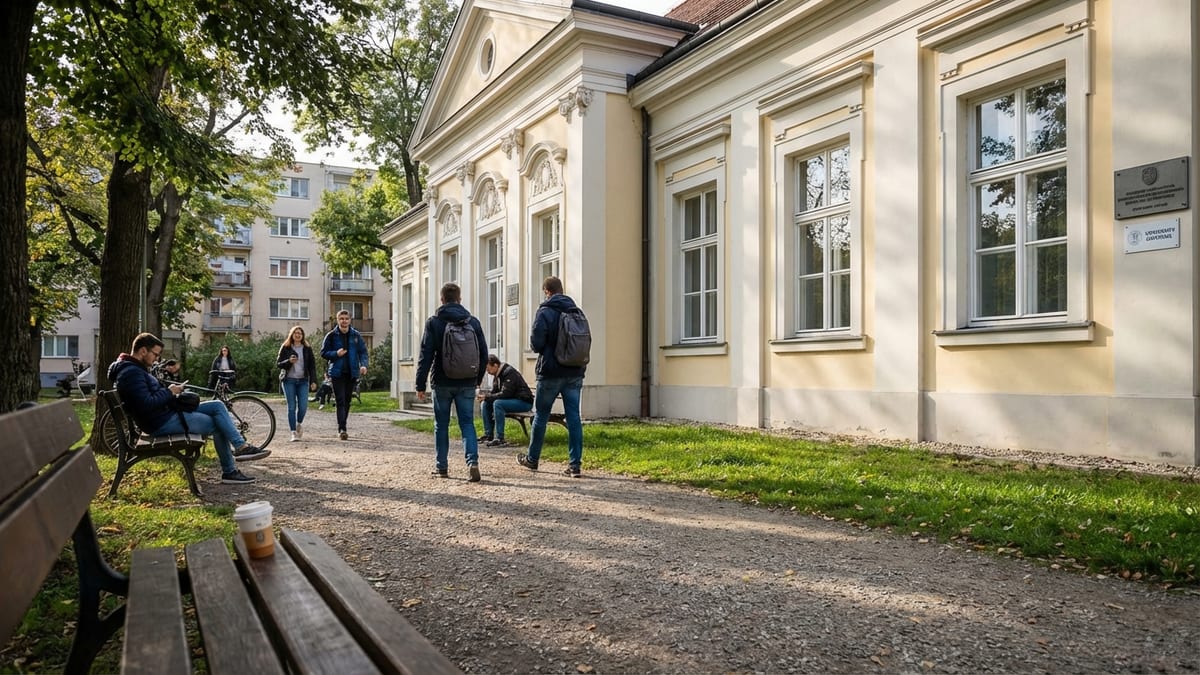
My first surprise was just how un-touristy Aspremont Palace felt. On paper it sounds like a classic Central European city palace: an elegant baroque residence with a garden, commissioned in the 1770s by Count Johann Nepomuk Gobert d’Aspremont-Lynden. In reality it is now a working building of the Faculty of Medicine at Comenius University, with offices inside and students criss-crossing the courtyard. That dual identity shapes the entire visit, and not necessarily in ways a casual traveler would expect.
Getting there was straightforward enough. The address on Špitálska Street put it squarely within the Old Town’s broader orbit, but a bit off the main postcard views. I walked in from the city center in under fifteen minutes, passing tram lines and fairly ordinary blocks of flats. If you are coming with a mental picture of a standalone palace on a grand square, you adjust that expectation as you go. Aspremont is more tucked into the urban fabric, and the contrast between the main street and the calm of the Medical Garden behind it is part of the charm.
The second surprise was the entrance itself. There is no big ticket booth, no multilingual signboard trumpeting opening times or exhibitions. The facade is attractive but understated, and the dominant signage relates to the university. I actually hesitated on the pavement wondering whether I had the right place or if I was about to wander into a building where I had no business being. That awkward uncertainty is a recurring theme of visiting a palace that has not really been converted into a tourist attraction.
Access, Opening Realities and the Awkward Question of “Can I Go Inside?”
Before going I had tried to find solid, official information on visiting hours, guided tours, or even whether the interiors were open to the public at all. That is where things already felt a bit shaky. Unlike Bratislava’s headline sites, Aspremont Palace does not have a dedicated visitor website or a neat booking system. Most reliable sources agreed on one basic fact: the building now houses the dean’s office of the Faculty of Medicine, and the formerly residential rooms have been adapted to institutional use. In practice that means there is no regular museum-style public access to the ceremonial interiors.
On my visit that blurred boundary was palpable. The courtyard and the Medical Garden behind the palace were clearly accessible. Locals were lounging on benches, children were playing around the lawns, and students were cutting through as they moved between buildings. But any attempt to step properly into the palace itself felt like intruding into a working university rather than entering a tourist site. There were no posted “visiting hours” for the palace as such, just open doors that seemed to be meant for staff and students.
Because of that, my visit quickly settled into a compromise: treat Aspremont as an architectural backdrop and a focal point for enjoying the garden, rather than as an interior palace tour. If you are hoping to wander through pristine baroque salons, see the decorative stucco work up close, or marvel at the chapel’s paintings and marble altar, you are likely to be disappointed on a casual drop-in. Access to those spaces tends to be restricted to special occasions or organized events, not something you can reliably count on without prior arrangements or local connections.
The Architecture: Elegant, Subtle and Hard to Fully Appreciate
Even with that limitation, there is still something to enjoy from the outside. The palace is a late baroque structure with clear classicizing influences, and that mix comes through in the restrained rhythm of the facade and the decorative details. You notice the symmetry first: a compact one-story building with a dignified, almost villa-like presence, set at the edge of what used to be a proper aristocratic garden and is now the Medical Garden park.
From the garden side the building is easier to appreciate. The proportions feel very human-scale, particularly compared to the grander palaces closer to Bratislava Castle. The decorative language is rooted in the Louis XVI vocabulary: laurel wreaths, ribbon garlands, and medallions worked into the plaster. Knowing that these motifs are supposedly preserved particularly well inside the ceremonial hall made it slightly frustrating to be kept at a distance. I found myself circling the exterior and peering through windows, catching glimpses that hinted at more elaborate interiors without fully revealing them.
I should be clear: if you are not especially interested in architectural history, this might not strike you as anything extraordinary. Unlike, say, Grassalkovich Palace with its more obvious grandeur and political symbolism, Aspremont is relatively modest. Its charm lies in the details and in the idea that a noble summer residence has been quietly absorbed into the everyday life of a city and a university. Standing in the garden looking back at the palace, I did appreciate that sense of continuity, but I also felt a tension between what I knew on paper and what I could actually experience on the ground.
The Medical Garden: The Part You Actually Experience
In practice, most of my time at Aspremont Palace was really time in the Medical Garden. This park was created along with the palace in the 18th century and has evolved into a much-loved urban green space. Walking through the gates from Špitálska, the noise of traffic fell away and I was suddenly in a tree-lined, carefully tended park dotted with benches, paths, and small open lawns. Locals used it the way only locals do: reading on benches, chatting over takeaway coffee, pushing strollers, and scrolling phones in the shade.
From a visitor perspective, the garden is the most straightforwardly enjoyable part of the experience. It is free, open during typical park hours, and requires no explanation or booking. It is simply a very pleasant place to take a break from sightseeing, with the palace as an architectural backdrop. I sat for a while watching people pass and trying to imagine the garden as it might have been under the Esterházy family, or later under the merchant Karol Schiffbeck when the property changed hands in the 19th century. The layering of owners and uses over time is palpable, even if the signage does not emphasize it.
On the downside, there is very little contextual information available in the garden itself. I did not find any detailed plaques explaining the history of the palace, its various owners, or the architectural program. If you arrive without having done your homework, you could easily sit in the Medical Garden and never realize that the unobtrusive building at one end is historically significant. Part of me appreciated that absence of tourist infrastructure; part of me wished for at least one well-produced panel to anchor the experience and give a sense of what I was looking at.
Expectations vs. Reality: What I Hoped For and What I Actually Got
Going in, my mental picture was loosely based on other Central European city palaces that have been converted into museums. I imagined, perhaps naively, that I might be able to see at least a few historic interiors: a staircase, a ballroom, maybe the baroque chapel with its Old and New Testament allegories and its marble crucifixion altar that I had read about in advance. I also thought I might find a small fee-based exhibit, or at least a clear sign explaining when and how the public could visit inside.
The reality is more nuanced and, for a short-stay visitor, a bit unsatisfying. Yes, the building exists and is in good condition. Yes, it has that baroque classicist elegance that history buffs appreciate. But the lack of any organized public access program or interpretive material makes it feel more like an incidental backdrop than a site in its own right. I never felt unwelcome exactly, but I did feel like I was loitering at the edges of a campus rather than visiting a recognized cultural monument.
That mismatch between expectation and reality is the main reason I would be cautious about recommending Aspremont Palace to every traveler. If you put time aside specifically to seek it out, especially out of a tight Bratislava schedule, you may well leave thinking, “That was it?” Your appreciation depends heavily on how much context you bring with you and how much you enjoy quiet, low-key places as opposed to full-fledged attractions.
Practicalities: Getting There, Time Needed, Seasonal Considerations
On the practical side, Aspremont is easy enough to fold into a day in Bratislava if you are willing to treat it as a park stop with a historical bonus. From the historic core around the Main Square, you can walk there in about ten to fifteen minutes, depending on your pace. Public transport connections along Špitálska are frequent, so if you are already using trams or buses you will likely pass near it at some point.
There is no ticket office because there is no regular ticketed access to the palace. The Medical Garden has typical public-park hours and can be closed at night, so it is worth checking current opening times locally, especially in winter when daylight is short and parks sometimes shut earlier. In my case I visited on a mild afternoon, and the garden felt lively and safe. I would not make a special trip in the dark or late evening; part of the appeal is the light on the palace facade and the relaxed daytime atmosphere.
Seasonally, the experience will vary. In spring and early autumn you balance greenery with manageable temperatures, and locals still claim the park. In high summer the garden offers welcome shade but will be busier, and the city’s main highlights already demand time and energy. In winter the park inevitably feels barer, and without leaves or flowers the palace itself has to carry more of the visual weight. If your visit to Bratislava is in the colder months, I think the case for prioritizing Aspremont becomes even weaker unless you are very specifically interested in baroque architecture and urban parks.
How It Compares to Other Bratislava Highlights
What ultimately determines whether Aspremont is “worth it” is not just what it offers in isolation, but how it ranks against everything else you could do with the same hour or two. Bratislava is not a huge city, but it does have a dense cluster of historic and cultural sites: the castle with its Danube views, the compact old town streets, churches with accessible interiors, the riverside promenade, and museums with curated exhibitions and clear visiting logistics.
Measured against that backdrop, Aspremont Palace feels like a secondary or even tertiary stop. You cannot go inside in any reliable, meaningful way, there are no guided tours that you can simply book and show up to on a random day, and the educational component on site is almost nonexistent. The Medical Garden is lovely, but there are other parks and viewpoints in Bratislava that deliver more obviously memorable experiences if you are time-poor.
For architecture enthusiasts trying to understand the spectrum of baroque and classicist palaces in the region, Aspremont has genuine interest. It stands as a rare surviving example of an 18th century garden palace integrated into a modern city and a university campus. But that kind of appreciation hinges on prior knowledge and a willingness to fill in a lot of gaps yourself. If you travel with kids, or if you prefer attractions with interactive exhibits, immersive interiors or strong storytelling, you will likely find more satisfying options elsewhere in the city.
What I Would Do Differently Next Time
If I found myself back in Bratislava with more than a day and a half to play with, I might still return to the Medical Garden, but I would frame it differently. I would treat it as an intentional coffee-and-park break rather than as a palace visit. I would bring a book, pick up a takeaway drink, and give myself permission to just sit, watch the rhythm of the city, and enjoy the greenery with the palace as an architectural bonus rather than the main event.
If I absolutely wanted to see the interior, I would try to plan much further in advance and contact the Faculty of Medicine directly to ask whether any occasional open days, conferences, or events include access to historic rooms. I would do that in the full knowledge that such attempts might go nowhere and that even on special occasions the building’s primary function is academic, not touristic. For most people, that level of effort will not be worth the uncertain reward.
I would also combine Aspremont with a structured walk across the less touristy parts of the city: start at a better-known site, then deliberately route myself through Špitálska and the Medical Garden as a quiet interlude. Recasting it as a nice detour rather than a centerpiece would probably leave me more satisfied and remove the sense that I had “invested” scarce sightseeing time in something that did not fully deliver.
The Takeaway: Who Should Go, Who Can Skip It
After my visit, if a friend asked me whether Aspremont Palace is worth seeing, my answer would be a careful “it depends.” If this is your first time in Bratislava and you have only a day or two, I would not put Aspremont anywhere near the top of your list. The combination of limited access, lack of onsite information, and the modest scale of what you can actually experience makes it easy to skip without feeling that you missed something essential about the city.
If, on the other hand, you have more time in Bratislava and you enjoy exploring quieter spaces, urban parks, and minor aristocratic residences in their present-day context, Aspremont starts to make more sense. Go in the daytime, ideally in a pleasant season, when you are already nearby. Treat the Medical Garden as the real destination and the palace as a historical layer that you acknowledge but do not expect to fully penetrate. If you do that, the visit can be a gentle, almost contemplative experience that broadens your sense of the city beyond its headline sights.
In that sense, Aspremont Palace is “worth it” for slow travelers, architecture nerds, and repeat visitors who enjoy filling in the quieter corners of a place they already like. For everyone else, especially those on tight schedules, high on curiosity and low on patience for logistical ambiguity, you can safely skip it, focus on Bratislava’s more accessible highlights, and not feel guilty in the slightest.
FAQ
Q1. Can I visit the interior of Aspremont Palace as a regular tourist?
In practice, no. The palace functions as part of the Faculty of Medicine at Comenius University, and there is no regular museum-style access to its historic interiors. Unless you happen to be there for a specific event or open day arranged through the university, you should not expect to tour the inside.
Q2. Do I need a ticket to see Aspremont Palace?
You do not need a ticket to see the building from the outside or to enjoy the Medical Garden behind it. Both are accessible as part of the public urban landscape. There is no staffed ticket office, and no standard admission fee specifically for the palace.
Q3. How much time should I allow for a visit?
If you are just walking through the Medical Garden and taking a look at the palace from the outside, thirty to forty-five minutes is plenty. If you want to linger on a bench, people-watch, or use the park as a break between other sights, you might naturally stretch that to an hour or more.
Q4. Is Aspremont Palace suitable for children?
As a destination focused on interiors or interactive exhibits, not really, because there is nothing set up for visitors inside. As a park stop, yes: the Medical Garden offers open space, paths, and a relaxed environment where children can wander a bit while adults rest. Just be aware there is no specific playground equipment and the appeal is more about greenery than attractions.
Q5. How do I get to Aspremont Palace from the Bratislava Old Town?
The palace is within walking distance of the historic center. From the main squares and pedestrian streets, you can reach Špitálska Street in about ten to fifteen minutes on foot. Public transport runs along the main roads nearby if you prefer to take a tram or bus, but for most visitors walking is the simplest option.
Q6. Is there any information on site about the history of the palace?
When I visited there was very little in the way of detailed signage or interpretive panels. You might find a basic plaque, but you should not rely on the site itself to tell you the palace’s story. If historical context matters to you, it is worth reading up in advance or bringing a guidebook or offline notes.
Q7. Is Aspremont Palace accessible year-round?
The building itself remains in use year-round as part of the university. The Medical Garden is generally open in all seasons, though hours can be shorter in winter and occasionally affected by weather or maintenance. The overall experience is most pleasant in spring, summer, and early autumn when the garden is green and comfortable.
Q8. Can I combine a visit to Aspremont Palace with other nearby attractions?
Yes. Because the palace sits within the broader downtown area, you can easily combine a quick stop there with more obvious sights such as the old town squares, churches, and the riverside. I found it worked best as a mid-day pause rather than as a standalone destination.
Q9. Is it worth going to Aspremont Palace if I only have one day in Bratislava?
Honestly, probably not. With just one day, you will get more value from focusing on the castle, the old town, the riverfront, and one or two well-organized museums or churches that are properly set up for visitors. Aspremont becomes more interesting if you have multiple days and a desire to explore secondary layers of the city.
Q10. Who will appreciate Aspremont Palace the most?
People who enjoy low-key urban spaces, have an interest in baroque and classicist architecture, and like seeing how historic buildings live on in contemporary roles will get the most from it. Slow travelers, students of architecture or urban history, and repeat visitors to Bratislava are most likely to find the palace and its garden quietly rewarding, provided they go in with realistic expectations.