


More news on this day
Passengers traveling through Athens International Airport in recent days have experienced knock-on delays after scheduled inspections of aircraft navigation systems coincided with peak afternoon traffic, constraining arrivals and departures at Greece’s busiest gateway.
Get the latest news straight to your inbox!
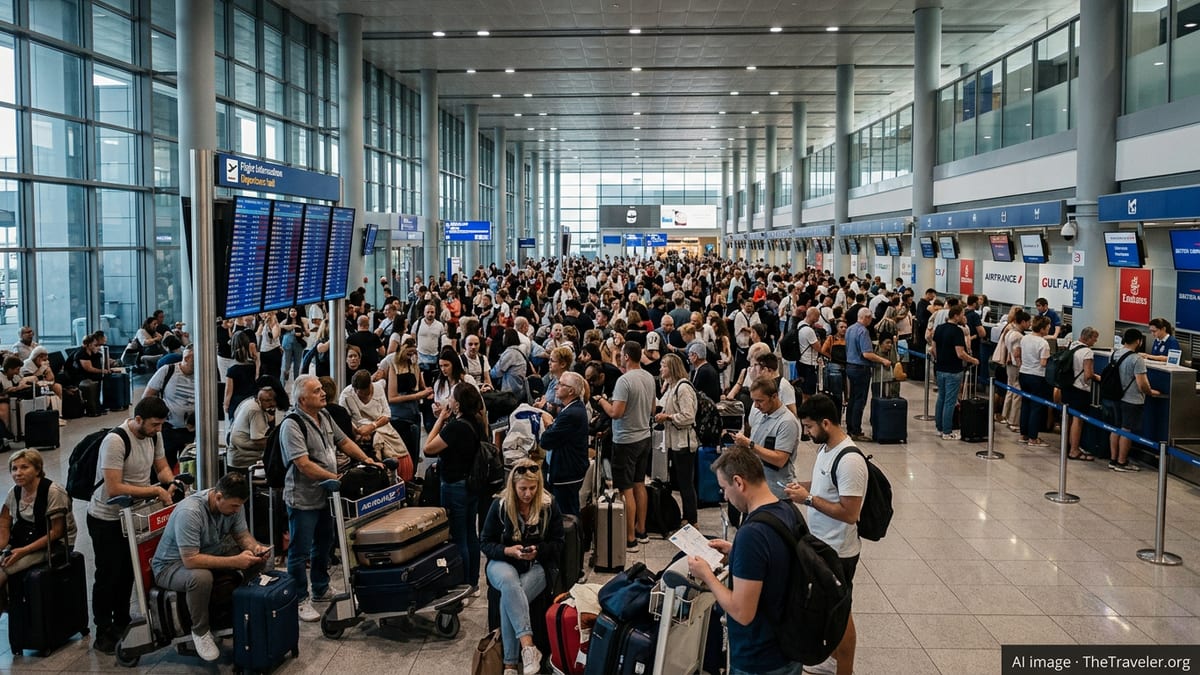
Peak-hour checks trigger bottlenecks
Recent coverage from Greek media and aviation outlets indicates that flight operations at Athens International Airport were significantly affected on June 10 and 11, when checks of approach and navigation aids were carried out in the late afternoon, typically among the most congested times of the day. The procedure limited available landing and takeoff capacity, resulting in delays that rippled across both domestic and international schedules.
Reports suggest that the inspections focused on radio-based approach systems that help guide aircraft safely onto the runway, a routine process that must be conducted several times a year. While such test flights and calibrations are standard practice in commercial aviation, the timing of this particular round, reportedly between mid-afternoon and early evening, coincided with heavy traffic flows into and out of the Greek capital.
Flight-status boards and independent tracking platforms showed departure and arrival times slipping by up to an hour or more on affected services, with some knock-on disruption continuing into later evening rotations. For travelers connecting onward to Greek islands or long-haul destinations, the combination of congestion and reduced airspace capacity translated into missed connections and unplanned time on the ground.
Publicly available information also indicates that airlines serving Athens have been operating close to full summer capacity, leaving limited slack to recover after a period of restricted runway use. With aircraft and crews tightly scheduled, even a short window of lower airspace throughput can take several hours to unwind.
Why navigation systems must be regularly inspected
The navigation checks at the heart of the disruption are part of a recurring safety process that verifies the accuracy and reliability of radio beacons, instrument landing systems and related approach aids. Aviation safety guidance requires that these systems be periodically flight-tested, often by specialized calibration aircraft that fly repeated approaches and patterns aligned with the runway.
According to publicly available technical material, such inspections confirm that signals used by onboard instruments match published procedures, including glide paths and lateral guidance. Any discrepancy can have serious implications for flight safety, especially in poor visibility, which is why regulators and navigation service providers schedule regular verification flights throughout the year.
In this case, Greek coverage indicates that the local authority had to rely on an aircraft provided by another European aviation body, after its usual calibration aircraft was temporarily unavailable due to maintenance. That constraint may have limited the options for scheduling, contributing to the decision to conduct checks on specific June afternoons when the borrowed aircraft was available.
Industry practice generally favors scheduling such work during lower-traffic windows at night or in off-peak daytime periods, to reduce impact on passengers and airlines. However, when fleet availability or regulatory timelines become tight, inspection slots can converge with busy operating banks, creating precisely the kind of short but sharp disruption now reported at Athens.
Growing traffic heightens sensitivity to disruption
The timing of the navigation system checks comes as Athens International Airport continues to post strong growth in both passenger numbers and flight movements. Recent statistics released by the airport show that total flights in the first quarter of 2026 rose compared with the same period a year earlier, with international services recording some of the steepest increases.
Travel industry data and local media reports point to a sustained rebound in tourism demand across Greece, with Athens serving as both a primary city-break destination and a major transfer point to island airports. That role as a hub means that even relatively modest delays at the capital’s airport can propagate outward to regional networks as aircraft cycle through daily rotations.
Travel forums and passenger accounts gathered over recent weeks highlight how the combination of higher passenger volumes, new border control requirements for non-EU nationals and episodic technical issues can quickly lengthen queues and extend total journey times. In that context, the temporary constraint on runway capacity caused by navigation inspections added another layer of strain to an already busy operating environment.
Airlines and ground handlers operating in Athens have also been contending with wider European challenges, including air traffic control staffing constraints and congested airspace on key routes. When external factors already limit schedule resilience, any localized operational restriction at a major gateway is more likely to be felt directly by passengers.
Advisories urge passengers to build extra time into plans
In parallel with the navigation checks, Athens International Airport has continued to advise travelers to allow generous time for departure formalities, particularly since the rollout of the European Union’s Entry/Exit System for many third-country nationals. The airport’s own passenger information pages recommend that travelers arrive well ahead of departure to clear check in, security and passport control, noting that waiting times can lengthen during peak hours.
While the navigation inspections themselves are now understood to have been time-limited, residual delays and congested terminals can persist after such events, especially when they intersect with holiday travel peaks. Travel specialists note that passengers with tight self-connecting itineraries, such as separate tickets to domestic island destinations, are especially vulnerable when departure banks are disrupted.
Consumer-rights organizations and passenger advocacy groups routinely encourage travelers to monitor flight status closely on the day of travel, particularly when flying through busy transfer hubs like Athens. In situations involving technical inspections or airspace capacity restrictions, airlines may adjust departure times, swap aircraft or rebook affected customers, actions that are easier to navigate when travelers receive and act on updates early.
Reports also indicate that Greece’s recent experience with an earlier nationwide airspace shutdown, linked to communication system issues, has intensified public scrutiny of how air navigation infrastructure is managed and modernized. The latest episode involving peak-time inspections at Athens is likely to add to that ongoing debate, even as the underlying purpose of the checks remains rooted in maintaining high safety standards.
Calls for improved planning as summer season builds
As Greece moves deeper into the 2026 summer season, attention among airlines, tourism operators and frequent travelers is turning to how future inspections and technical work will be scheduled at the country’s primary gateway. Commentators in Greek business and aviation press have noted that more transparent planning and clearer impact assessments could help minimize disruption during any future rounds of navigation checks.
Publicly available statements from industry groups emphasize the importance of aligning safety-critical inspections with operational realities, striking a balance between regulatory obligations and the need to protect the travel experience at a time of record demand. Suggestions include concentrating calibration work in overnight windows, coordinating more closely with airlines on schedule adjustments, and issuing earlier public notice when temporary capacity restrictions are expected.
For now, commercial data for mid-June show Athens International Airport operating with a full slate of daily departures, indicating that the most severe effects of the navigation inspections were limited to the specific days and time bands in question. Nonetheless, the episode provides a pointed reminder of how intertwined technical infrastructure and passenger experience have become at major European hubs.
With pressure on air traffic systems expected to remain intense throughout the summer, the way navigation checks and other maintenance activities are handled at Athens is likely to be watched closely by both the aviation industry and the traveling public. For passengers planning trips through the Greek capital, building in additional time and flexibility may remain the most practical hedge against any future inspection-related delays.