


More news on this day
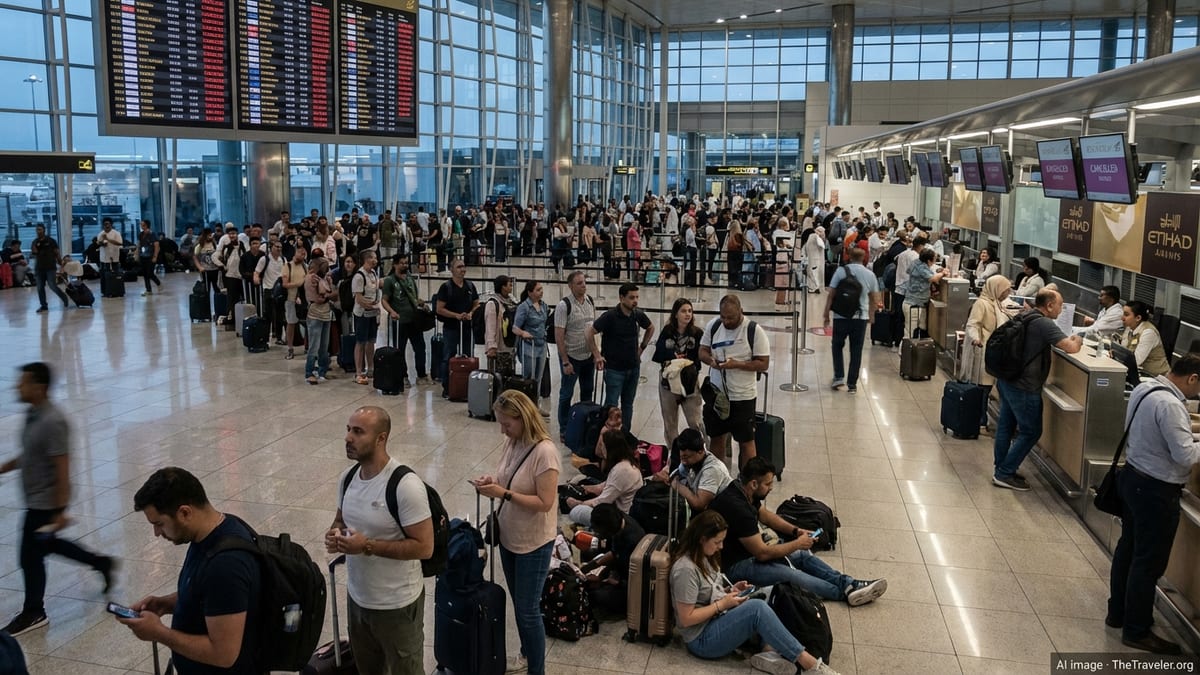
Australia’s Smart Traveller advisory system has moved to ease its stance on travel to the United Arab Emirates and Qatar, a shift that is already reverberating through airline schedules and booking platforms as travellers rush to lock in flights via the Gulf hubs of Dubai, Abu Dhabi and Doha.
Get the latest news straight to your inbox!
From Blanket Warnings to Calibrated Caution
The change follows a period in which both the United Arab Emirates and Qatar were listed at the highest advisory tier for Australians, effectively discouraging all but essential travel and prompting many carriers and passengers to reroute away from major Gulf hubs. Recent updates on the Smart Traveller platform now reflect a more differentiated assessment of risk, aligning the UAE and Qatar with destinations where heightened awareness is advised rather than wholesale avoidance.
Publicly available information on how Smart Traveller is structured shows that its four-tier system ranges from routine precautions to a strict “do not travel” level. A shift down from the top tier generally signals that while security and geopolitical risks remain, they are no longer considered so acute that all travel should be avoided. Instead, travellers are encouraged to stay informed, take out robust insurance and monitor developments closely.
Travel analysts note that these advisory recalibrations do not remove underlying concerns about regional tensions but indicate an environment where risks are seen as more manageable. The advisory language now sits closer to that applied to other busy international hubs, where issues such as terrorism, cybercrime and local legal differences are acknowledged but not viewed as prohibitive for most visitors.
For Australian travellers in particular, Smart Traveller advisories are often used as a benchmark by insurers and tour operators. A lower warning level for the UAE and Qatar therefore has implications beyond government guidance, shaping both the availability of cover and the appetite of companies to resume or expand services through the region.
Gulf Hubs Regain Their Place on Long-Haul Maps
The easing of advice has come at a time when demand for long-haul connections between Australia, Europe and Africa is already rebounding. Gulf airports such as Dubai, Abu Dhabi and Doha have historically functioned as crucial waypoints on so-called “Kangaroo Route” itineraries, concentrating passenger flows between Australasia and the rest of the world.
According to published coverage from regional airlines and airport operators, carriers based in the Gulf have been steadily rebuilding their global networks, with several announcing additional frequencies and new destinations for the northern summer 2026 season. These expansions were initially tailored around broader post-pandemic recovery and shifting geopolitical patterns, but the latest Australian advisory moves are now adding further momentum.
Industry observers point out that even incremental relaxations in government travel advice can quickly alter booking behaviour. Once a destination or transit hub drops out of the highest warning category, many corporate travel policies and institutional risk frameworks allow staff to resume flying through affected airports, often with added approval steps or documentation rather than outright bans.
As a result, travel agencies and online booking platforms are reporting stronger interest in Gulf-connected itineraries, particularly for itineraries to Europe where non-stop options are limited and often priced at a premium. For cost-conscious travellers, the return of wider choice on one-stop Gulf routes is starting to restore a competitive dynamic that had been constrained while the strictest advisories were in place.
Airlines Move Quickly to Capture Returning Demand
With the risk bar now set lower in official guidance, airlines are acting quickly to position themselves for what many see as a robust northern summer and southern spring travel season. Capacity planning data and recent schedule updates indicate that carriers operating via Dubai, Abu Dhabi and Doha are adding seats on key trunk routes from Sydney, Melbourne and Perth, as well as stepping up frequencies to secondary Asian and European cities that feed into Gulf hubs.
Some Asia-Pacific and European airlines that codeshare with Gulf carriers are also adjusting their offerings, reinstating through-ticketing options that had been reduced or suspended when warnings were at their peak. Public timetables show a growing number of one-stop options between Australian cities and European, African and Middle Eastern destinations that rely on smooth transfers in the UAE and Qatar.
At the same time, airlines continue to highlight flexible booking policies and itinerary change options for passengers concerned about the possibility of renewed instability. Travel updates published by several major carriers in recent weeks reference fee-free date changes and rebooking windows, designed to reassure customers who might otherwise hesitate to commit to flights that cross or connect through the broader Middle East.
Analysts suggest that competition between Gulf megacarriers and rivals in Asia and Europe is likely to sharpen if advisory settings remain at their current levels. Fare data compiled by industry watchers already suggests a softening of prices on some long-haul corridors where capacity is returning faster than demand, a trend that could benefit leisure travellers planning trips later in 2026.
Travel Risk, Insurance and Passenger Preparedness
While the downgrading of travel warnings for the UAE and Qatar has been welcomed by airlines and tourism operators, Smart Traveller’s underlying framework continues to emphasise personal responsibility and preparedness. Its guidance on what different advisory levels mean makes clear that a lower tier does not equate to an absence of risk, particularly in regions where geopolitical tensions and complex security environments persist.
Travel insurance is one of the clearest areas where advisory changes have a practical impact. Insurers commonly reference government warning levels when determining coverage for trip cancellations, medical emergencies and security-related incidents. When a country or transit hub sits at the strictest tier, some policies may exclude cover altogether. A shift downwards frequently opens the door to more comprehensive protection, albeit sometimes with higher premiums or specific exclusions.
Risk management specialists advise that travellers transiting the UAE and Qatar should continue to monitor developments, including any new advisories, airline notices or airport security updates, even as routes reopen. They also point to the importance of understanding local laws and customs, particularly in relation to digital privacy, alcohol and dress codes, which can differ markedly from norms in Australia and other Western countries.
Government advice pages stress that travellers should register with relevant alert systems, keep copies of key documents and have contingency plans in place in case of disruptions. In practice, the combination of restored air links and better risk information is encouraging many would-be visitors to perceive travel through Gulf hubs as acceptable again, provided they take sensible precautions.
The Race to Book as Peak Seasons Approach
The most immediate consequence of Smart Traveller’s softer stance is the surge in bookings, as Australians and other long-haul travellers move to take advantage of improved flight availability. Booking patterns highlighted by online travel agencies suggest that itineraries involving Gulf transits are climbing back toward pre-warning levels, particularly for departures from late August onward.
With school holidays, major sporting events and the lead-up to the European Christmas season all within typical planning horizons, many travellers are locking in complex multi-city trips that depend on the extensive connectivity offered by Dubai, Abu Dhabi and Doha. Travel search data points to increased interest not only in Europe-bound journeys but also in Africa and South Asia, where Gulf carriers provide some of the most convenient links.
Capacity constraints are still evident on certain days and routes, especially where aircraft and crew resources are stretched from prior disruptions, and this is contributing to pockets of higher fares and limited seat availability. Nonetheless, the prevailing expectation among industry forecasters is that as advisory conditions stabilise and more flights return, pricing will gradually moderate.
For now, the mix of recalibrated travel warnings, revived flight schedules and pent-up demand is driving a rapid upswing in Gulf-related travel. The coming months will test whether the new equilibrium holds, and whether travellers continue to view the UAE and Qatar as viable and attractive gateways in a still-uncertain regional landscape.