


More news on this day
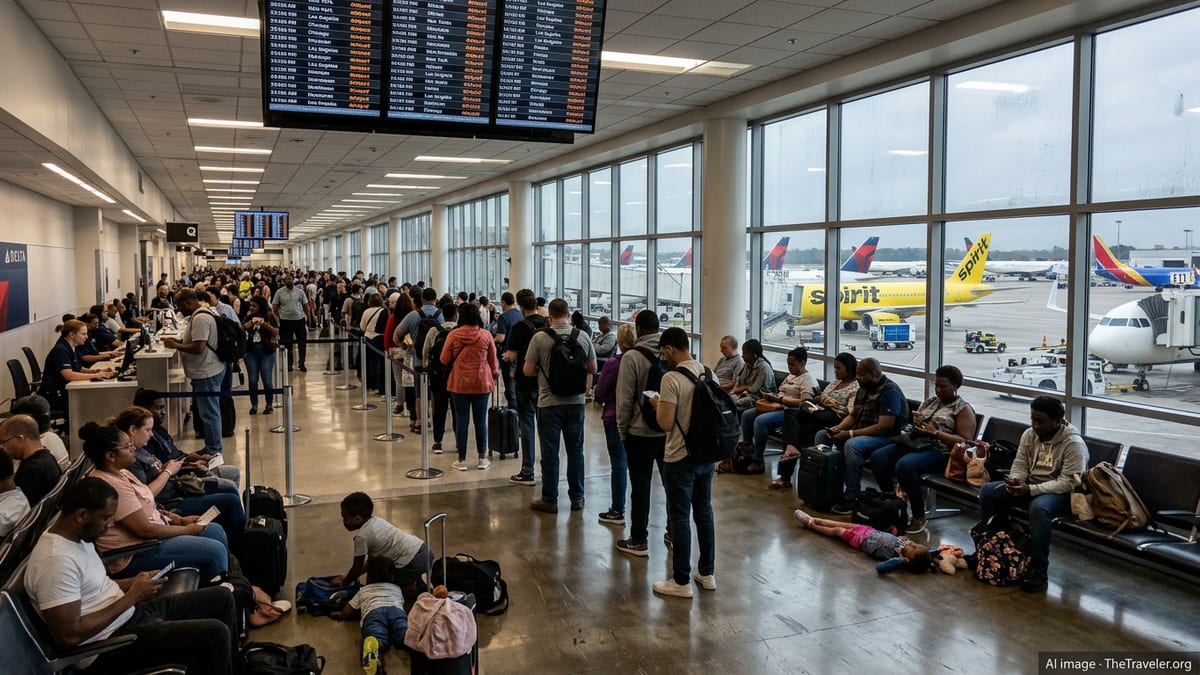
Travelers moving through Hartsfield-Jackson Atlanta International Airport faced fresh disruption as tracking data showed around 225 flights delayed and five canceled, affecting a broad mix of domestic and international services operated by major U.S. carriers.
Get the latest news straight to your inbox!
Broad Disruptions Across Major Airlines
Publicly available flight-status data indicates that the latest wave of disruption at Hartsfield-Jackson is touching nearly every corner of the airport’s complex network. Services operated by Delta Air Lines, Southwest Airlines, American Airlines, United Airlines, Spirit Airlines, Frontier Airlines, and several smaller carriers have all recorded delays, pushing back departure and arrival times across key domestic and international routes.
The pattern reflects the airport’s role as one of the world’s busiest hubs and a central connecting point for U.S. air travel. With hundreds of flights scheduled each day, even a few dozen late departures can ripple through the schedule. On this occasion, roughly 225 delayed services and a handful of cancellations have translated into missed connections, rebooked itineraries, and extended waits in terminals for passengers already in transit.
Reports from flight-tracking dashboards and airport information platforms show that the delays are not limited to a single airline or region. Flights between Atlanta and major East Coast cities, key Midwestern hubs, and transatlantic destinations are all experiencing schedule adjustments, underlining the interlinked nature of operations at a mega-hub like Hartsfield-Jackson.
Although most services continue to operate, the cumulative effect of the rolling delays is significant. Each additional pushback time requires carriers to reposition aircraft and crews, while passengers must navigate shifting departure boards and uncertain arrival times, especially when trying to connect onto onward legs.
Operational Strain at a Global Mega-Hub
Data compiled by aviation reference sources describes Hartsfield-Jackson as one of the world’s largest airline hubs, with Delta Air Lines alone operating just over 1,000 flights a day to more than 200 destinations. Under normal conditions, that scale allows the airport to offer frequent connections across the United States and beyond. When disruption hits, however, the same density magnifies the impact for both airlines and passengers.
Recent operational snapshots show that even on relatively routine days, Atlanta can see minor gate-hold and taxi delays as traffic builds during peak periods. When additional pressures are layered on top of this baseline traffic, delays can accumulate quickly, spilling over into later time slots and affecting flights that were originally scheduled to depart on time.
Historical performance data and recent news coverage illustrate how weather, crew availability, and broader network issues can combine to challenge punctuality at Hartsfield-Jackson. Earlier this year, separate episodes of storms and staffing constraints led to spikes of cancellations and heavy delay days at the airport, underscoring its sensitivity to disruptions both locally and at other hubs that feed into its route map.
The current episode, involving more than 200 delayed flights and a smaller number of cancellations, falls short of the most severe events recorded in recent months but still represents a meaningful interruption for thousands of travelers. For many, the experience is one more instance in a broader pattern of irregular operations during a busy travel period.
Weather, Demand, and Network Knock-On Effects
While a single, definitive cause is not immediately clear from public data, recent air-traffic and weather reports highlight several factors that frequently influence operations at Atlanta. Federal aviation updates for late June note the potential for thunderstorms over the southeastern United States, including the Atlanta region, as well as localized wind and cloud conditions that can constrain arrivals and departures.
When storms develop in or around the airspace, controllers may slow arrival streams or impose ground delays to manage safety and spacing between aircraft. Even relatively short restrictions can create a backlog, particularly during morning and evening peaks when banks of connecting flights converge at the hub. Those queues can in turn cause aircraft to depart late from their origin points, leading to a sequence of delayed legs through the day.
In addition to weather, strong seasonal demand continues to place pressure on airline networks. With many flights operating near capacity during peak travel periods, carriers have less flexibility to rebook disrupted passengers on alternative departures. Any maintenance checks, crew-time limitations, or technical issues that arise on the day can therefore have an outsized effect on the operation, especially when they occur during periods of unsettled weather.
Network knock-on effects can stretch beyond Atlanta itself. Disruptions at other major hubs feeding into the city can trigger further delays as aircraft and crews arrive late for their next rotations. Publicly available tracking tools in recent weeks have highlighted several instances in which weather in other regions contributed to late arrivals and schedule changes for flights bound for Hartsfield-Jackson.
Stranded Passengers and Terminal Congestion
As delays accumulated, the impact inside the terminal became increasingly visible. Passengers faced long lines at customer service desks, busier-than-usual gate areas, and heavier demand for rebooking assistance as they tried to salvage missed connections or secure seats on later departures. Crowded seating zones and boarding areas added to the strain, particularly around heavily affected banks of flights.
Travelers connecting through Atlanta, including those heading to international destinations in Europe, Latin America, and the Caribbean, were particularly vulnerable to knock-on disruption. A late inbound domestic leg could mean a missed transatlantic or long-haul connection, forcing passengers onto later flights or, in some cases, requiring overnight stays before continuing their journey.
Airport planning documents show that Hartsfield-Jackson maintains contingency procedures for extended tarmac delays and irregular operations, outlining how passengers are to be managed if they remain on aircraft for prolonged periods or need access to essential services. While there is no immediate indication of widespread tarmac hold incidents linked specifically to this disruption, such plans form part of the broader toolkit for handling days when operations deviate from the norm.
Concessionaires, parking facilities, and ground transport services also tend to feel the effects of irregular operations. Extended dwell times in the terminal can increase demand for food, beverages, and seating, while late-running flights can push pickups by ride-hailing services, shuttles, and private vehicles into the overnight hours, shifting traffic flows on the airport’s access roads.
What Travelers Can Expect in the Coming Hours
Real-time airport status pages show that, despite the volume of delays, core operations at Hartsfield-Jackson remain open, with arrival and departure flows continuing under adjusted schedules. General arrival and departure delay indicators have fluctuated around the lower end of the scale, suggesting that the airport is not in a full ground-stop scenario but is instead managing a high number of localized, flight-specific disruptions.
For passengers already booked to travel through Atlanta, publicly available guidance from aviation and consumer resources emphasizes the importance of monitoring flight status frequently, using both airline apps and airport display boards. Same-day schedule changes are common on days with heavy disruption, and departure times may shift multiple times before a final decision is made on whether a service will operate as planned.
Analysts who track airport performance note that major hubs such as Hartsfield-Jackson can take much of a day to recover from a sharp spike in delays, particularly if issues emerge during morning banks of flights. Once aircraft and crews fall out of position, restoring normal patterns requires several cycles of on-time operations. Travelers departing later in the day may therefore still feel the aftereffects of disruption that began hours earlier.
With summer travel volumes remaining strong and weather patterns in the southeastern United States often unsettled at this time of year, aviation data and recent history suggest that occasional days of pronounced disruption at Atlanta are likely to continue. Passengers planning trips through the hub in the near term may benefit from allowing extra connection time, considering earlier departures where possible, and preparing for the possibility of schedule changes when conditions put additional stress on the system.