


Choosing travel insurance in 2026 is no longer just about picking a policy. It is about choosing a platform that matches how you actually travel. For many international travelers and digital nomads, that often comes down to two very different options: VisitorsCoverage, a large marketplace that lets you compare dozens of insurers and plans, and SafetyWing, a specialist brand built around long-term travelers and remote workers. Each can be a great fit, but for very different people and trips.
Get the latest updates straight to your inbox!
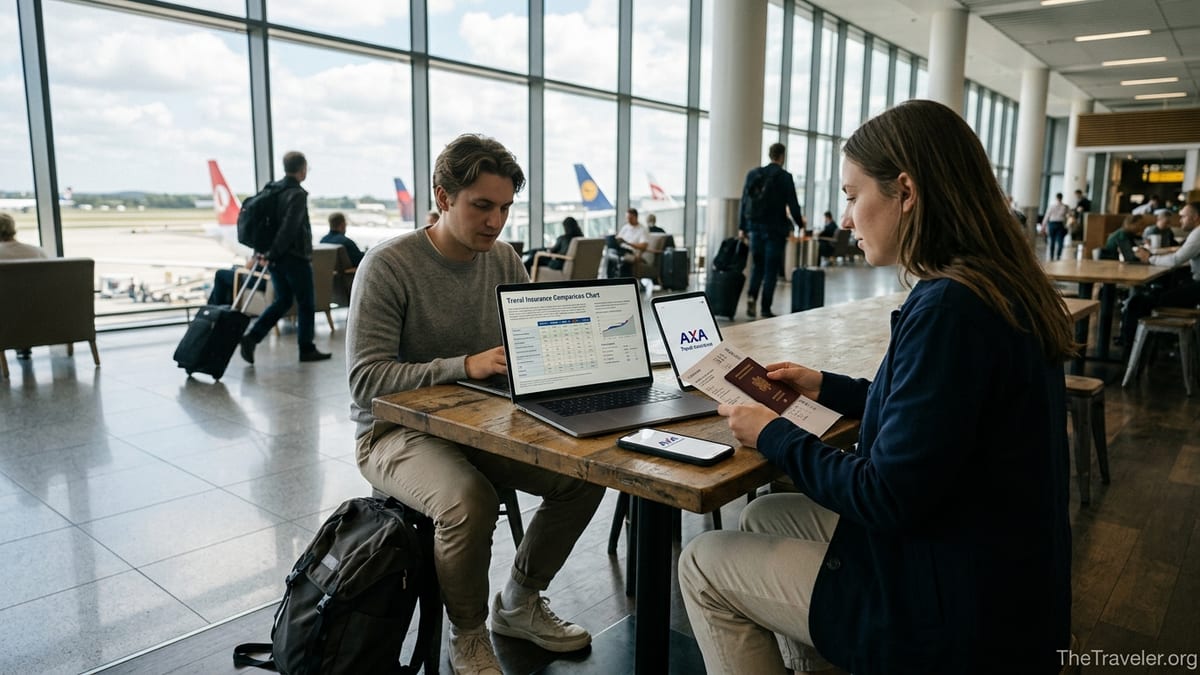
VisitorsCoverage vs SafetyWing at a Glance
VisitorsCoverage and SafetyWing both sell travel insurance, but they approach it in very different ways. VisitorsCoverage is a Silicon Valley based online marketplace used by millions of travelers worldwide to compare and buy policies from multiple underwriters. It is particularly strong for visitors to North America, international students, and families wanting higher coverage limits or very specific benefits. In 2025 the company received several Travel Weekly Magellan Gold Awards for customer service and platform experience, which gives an indication of its scale and maturity as a marketplace.
SafetyWing, by contrast, is a single-brand solution. Its flagship Nomad Insurance is designed for people who live and work abroad for months at a time. Instead of comparing lots of policies, you mostly choose between SafetyWing’s Essential and Complete versions and decide whether to add extras like United States coverage, adventure sports, or electronics theft. In June 2026, the Essential plan for a 28-year-old typically costs a bit over 60 US dollars per 4-week period for worldwide coverage excluding the US, while the Complete plan is closer to 175 dollars per month for the same age group, with broader benefits.
If you imagine a month-long backpacking trip around Southeast Asia with flexible dates and no fixed return ticket, SafetyWing’s subscription-style cover that renews every 28 days is an obvious contender. If, instead, you are a 63-year-old parent visiting adult children in Toronto for three months and want coverage of up to 1 or 2 million Canadian dollars plus options for pre-existing conditions, you are more likely to find what you need by comparing plans on VisitorsCoverage.
The key question is not which platform is “better” in absolute terms, but which one is better for your trip type, age, health profile, and risk tolerance. That is where their differences in coverage, flexibility and claims experience matter.
How Coverage and Limits Actually Compare
SafetyWing Nomad Insurance Essential is first and foremost a travel medical plan. For travelers aged 18 to 39, the Essential version in mid 2026 offers an overall medical limit of about 250,000 US dollars per insured period, with coverage for hospital stays, diagnostics such as MRIs, emergency dental up to roughly 1,000 dollars, medical evacuation, travel delays, and limited benefits for lost checked luggage and trip interruption. Claims for COVID-19 are generally treated the same way as other eligible illnesses as long as they are not linked to a known travel health warning at the time of booking.
The Nomad Insurance Complete plan behaves more like global health insurance plus travel coverage. It includes ongoing medical care, some routine and preventive services, mental health, and higher limits, and can be renewed indefinitely if you keep paying. This is closer to what a full-time digital nomad or remote worker might need if they spend years abroad and do not maintain comprehensive domestic health insurance. However, the price is correspondingly higher and still subject to important exclusions, especially around pre-existing conditions.
VisitorsCoverage, because it is a marketplace, spans a much wider range of products. You can find short-term visitor plans to the United States with coverage limits from around 50,000 to 2 million US or Canadian dollars, and deductibles that range from zero to several hundred dollars. For instance, a Canadian traveler heading to Florida for two weeks might see one plan with a 1 million dollar limit and a 250 dollar deductible, and another with a 2 million dollar limit and no deductible, each from different insurers. There are also specific packages tailored to Schengen visas, international students, cruise passengers, and expatriates.
In practical terms, if you are a healthy 30-year-old and you mainly want emergency medical care up to 250,000 dollars while you slow-travel through Mexico, Colombia, and Spain, SafetyWing Essential is usually enough for many travelers. If you are 55, have a history of high blood pressure, and are flying from India to the United States to visit family, you might prefer a VisitorsCoverage plan that offers higher ceilings and optional pre-existing condition coverage, even if the premium is significantly higher, because your potential medical costs in US hospitals could easily exceed 250,000 dollars in a serious emergency.
Pricing, Deductibles and Real-World Cost Examples
For budget-conscious nomads, SafetyWing’s recurring pricing is one of its main attractions. As of early 2026, the Nomad Insurance Essential plan for ages 18 to 39 sits around the low 60-dollar mark for each 4-week period without US coverage. If you add US coverage or adventure sports, the price increases, and older age brackets pay progressively more. SafetyWing also offers the option to pay for a full 364-day period in one go, typically with a 10 percent discount compared to rolling 28-day renewals, which can be useful if you are planning a full year abroad and want to lock in your costs.
Complete, the more comprehensive version, starts roughly in the high 100-dollar per month range for the same age group. That is still cheaper than many traditional international health insurance products, which can easily exceed 300 or 400 dollars per month for comprehensive coverage, but it is a substantial step up from the Essential plan. For a digital nomad couple in their early thirties planning a year in Portugal and Thailand, that could mean budgeting well over 4,000 dollars per year if both choose Complete with US coverage, versus a little over 1,500 dollars per year if they stick to Essential without US access.
On the VisitorsCoverage side, pricing varies far more depending on which underlying insurer and benefit structure you choose. A healthy 35-year-old European taking a 10-day trip to New York might find options starting around the 35 to 60 US dollar range for emergency medical coverage up to 100,000 or 500,000 dollars, while more generous policies with 1 million dollar limits and low deductibles can push the premium comfortably into three figures. For a 65-year-old traveler with some pre-existing conditions, a three-week visit to the United States might cost several hundred dollars through a VisitorsCoverage-listed plan, especially if they choose a low or zero deductible, but that higher cost reflects the reality of age-related risk and US healthcare prices.
Deductibles present another important difference. Many older reviews noted that SafetyWing Nomad Insurance had a 250 dollar deductible, which meant you had to pay the first 250 dollars of eligible costs before coverage started to reimburse. In 2025 and 2026, the Nomad Insurance Essential documentation highlights that there is no deductible on the plan, though older policy versions may still exist. VisitorsCoverage, by contrast, lets you actively pick your deductible when you compare plans. You might choose a 0 dollar deductible and pay more upfront for a policy, or opt for a 500 dollar deductible to reduce the premium if you are comfortable self-insuring smaller expenses.
Who Each Platform Serves Best
SafetyWing was built specifically with remote workers and long-term travelers in mind, and its strongest use case remains that audience. If you are a software engineer from Argentina slow-traveling through Eastern Europe with no fixed return ticket, the ability to buy Nomad Insurance while already abroad, start coverage on a chosen date, and let the plan renew automatically every 28 days until you cancel fits naturally into that lifestyle. The inclusion of limited home-country coverage is also useful for nomads who go home for a few weeks each year but do not carry robust domestic insurance.
The Essential plan works well for relatively healthy travelers aged under 50 who prioritize emergency medical cover and evacuation rather than routine care. For example, a 29-year-old designer working from Bali might use SafetyWing Essential as a safety net for hospitalizations and serious illness, while visiting local clinics out of pocket for things like minor infections or checkups, which are often inexpensive in Southeast Asia. If they later decide to settle permanently in Spain, they might switch to local social security and drop SafetyWing altogether.
VisitorsCoverage, on the other hand, is particularly strong for more traditional trip profiles and for travelers who need to satisfy very specific visa or program requirements. A Brazilian student accepted into a university in Germany might use VisitorsCoverage to find a Schengen-compliant plan that satisfies embassy proof-of-insurance rules. A 70-year-old retiree planning a 60-day tour of national parks in the United States may find more age-appropriate options through VisitorsCoverage, including plans that accept older ages and offer higher lifetime caps.
Families and mixed-age groups also tend to benefit from marketplace flexibility. Imagine a family of four based in Canada organizing a three-week trip to Japan in October. The parents are in their mid forties, one grandparent in their seventies is joining, and two children under 12 are traveling as well. Through VisitorsCoverage, the parents might select one plan with robust emergency cover, the grandparent might buy a senior-focused product with higher maximums and specific heart condition language, and the children could be added on either plan or to a separate child-friendly policy. On SafetyWing, by contrast, the structure is simpler: you can add children to an adult’s Nomad Insurance plan, with up to two children under 10 included at no extra cost per adult, but the underlying coverage terms are not heavily customized by age beyond pricing.
Visa Requirements, Compliance and Fine Print
One of the most practical differences between VisitorsCoverage and SafetyWing emerges when you are dealing with visas, residency permits, or other bureaucratic requirements. SafetyWing itself is very clear in its help center that Nomad Insurance Essential cannot guarantee meeting every country’s visa insurance rules. For example, some Schengen countries or new digital nomad visas demand minimum coverage amounts, specific repatriation benefits, or explicit wording about pre-existing conditions. SafetyWing encourages travelers to send their visa requirements to support so the team can check alignment, but the responsibility remains on you to confirm acceptance with consular authorities.
For a standard 90-day tourist stay in the Schengen Area, many travelers report that generic travel medical policies showing sufficient medical and repatriation limits are accepted without much scrutiny. However, for more specialized schemes, such as Spain’s non-lucrative visa or certain long-stay French permits, consulates can be particular about wording. In those cases, VisitorsCoverage’s marketplace can be advantageous because you can actively search for “Schengen visa” or “long-stay” plans that are designed to comply with those requirements, and sometimes see documents or sample certificates that embassies already recognize.
Fine print is critical in both ecosystems. SafetyWing’s policy documents emphasize exclusions for pre-existing conditions, routine care, elective treatments, and most cancer-related care on the Essential plan. Some benefits, such as evacuation due to civil unrest or coverage related to pandemics when an official health warning already exists, have strict conditions and limits. Similarly, VisitorsCoverage does not underwrite policies itself; instead, each insurer behind the platform has its own definitions of pre-existing conditions, acute onset coverage, and look-back periods, which can range from a few months to a couple of years.
As a real-world example, consider a 52-year-old traveler from the Philippines with controlled type 2 diabetes planning a four-month visit to family in California. If they choose SafetyWing Essential, any complications clearly tied to their pre-existing diabetes may not be covered. Through VisitorsCoverage, they might instead seek out a plan that offers limited coverage for an “acute onset” of pre-existing conditions up to a certain dollar amount, acknowledging that a sudden complication could arise even when a condition is managed. That does not mean every diabetic episode will be covered, but some protections may be broader than those in a nomad-focused plan.
User Experience, Claims and Customer Support
In terms of buying experience, both platforms are relatively modern and mobile-friendly. SafetyWing leans into a minimalist interface: you choose your start date, indicate whether you want US coverage, select any add-ons, and confirm your age group. Many digital nomads appreciate that you can purchase or extend your plan while already abroad and manage renewals online without speaking to an agent. VisitorsCoverage offers more filters and comparison tools because its core value is letting you see multiple options side by side. The trade-off is that new travelers can feel overwhelmed by long benefit tables and insurance jargon if they are not sure what they need.
Claims and support are more complex to compare because they involve third-party administrators and underwriters. SafetyWing works with partner insurers and assistance companies behind the scenes, and travelers submit claims through its own portal or an affiliated administrator depending on the policy version. Online reviews and digital nomad community discussions show a mix of experiences. Many customers report relatively smooth reimbursement for straightforward emergencies such as a broken bone from a scooter accident in Bali or appendicitis treatment in Mexico. Others describe frustrations with documentation requests, slow response times, or denials related to suspected pre-existing conditions, COVID-19 interpretation, or weather-related trip issues.
With VisitorsCoverage, claims are handled by whichever insurer you ultimately choose. The platform itself provides customer service, guidance on plan selection, and help liaising with insurers in some cases, but it is not processing medical bills. This means user experience can vary widely: one traveler using a particular US-based carrier for a trip to the United States might rave about fast claim processing after a skiing injury in Colorado, while another using a different insurer for a cruise in the Caribbean might encounter delays or disputes. VisitorsCoverage has received industry awards for service, but individual outcomes still depend heavily on the underlying company and how carefully you documented your claim.
In practical terms, whichever platform you choose, your own preparation matters. Keeping digital copies of receipts, getting written medical reports in English when possible, and contacting the assistance number before major treatments or evacuations can significantly improve your odds of a smooth claim. Travelers who treat travel insurance as a reimbursement tool for routine care or minor issues are almost always disappointed. Both SafetyWing and typical VisitorsCoverage plans are primarily intended for unexpected, serious events, not regular doctor visits that your home-system insurance would otherwise cover.
Which Should You Choose for Different Trip Scenarios?
For a three-month backpacking trip through Vietnam, Laos, and Thailand, taken by a 26-year-old Australian who expects to work remotely and may extend their travels, SafetyWing Nomad Insurance Essential is often a natural fit. They can start coverage a day before leaving Sydney, keep it rolling while they figure out whether to move on to Europe, and cancel online the week they finally return home. If they add a short side trip to the United States later, they can adjust their plan to include US coverage for that period and then remove it again.
For a family from the United States taking a two-week vacation to Italy and France, especially with older relatives in the group, VisitorsCoverage tends to be more suitable. The parents, aged in their forties, might already have domestic health insurance that covers emergencies abroad but want extra protection for medical evacuation and trip cancellation, so they can shop for one plan. The grandparents, in their seventies, may need a specific Schengen-compliant plan with a higher medical maximum and explicit repatriation coverage. Children could be added to either plan depending on which offers better pediatric emergency benefits.
For a Colombian software developer accepted into a one-year master’s program in Canada, VisitorsCoverage’s student-focused products are usually more relevant. Canadian institutions often require evidence of health coverage with minimum limits and, in some provinces, specific waiting-period provisions before local coverage kicks in. Using VisitorsCoverage, the student can search for “international student” policies tailored to Canadian or North American requirements, compare a handful of options, and choose one that satisfies their school while fitting their budget.
For a 33-year-old US citizen who has sold their belongings and plans to live indefinitely between Lisbon, Chiang Mai, and Medellín, the calculation leans toward SafetyWing Complete or a similar long-term product. They may keep a low-cost domestic policy for emergencies back home but rely on SafetyWing Complete for day-to-day healthcare and travel incidents abroad, valuing the ongoing coverage, mental health support, and nomad-friendly design. If they later take a salaried remote job that provides group global health coverage, they might cancel SafetyWing or downgrade to Essential just to retain evacuation and emergency benefits during long weekend trips.
The Takeaway
VisitorsCoverage and SafetyWing occupy different but overlapping corners of the travel insurance world. VisitorsCoverage is best understood as a powerful comparison engine: you can find policies for many ages, trip types, and destinations, including high-limit plans and options that address visa and pre-existing condition issues. SafetyWing is more like a subscription-based safety net crafted specifically for digital nomads and long-term travelers who value simplicity, flat recurring pricing, and a globally portable policy.
If you are primarily a short-trip leisure traveler or you need to satisfy exact visa wording, VisitorsCoverage’s breadth and specialization are strong advantages. If you live a location-independent lifestyle, accept clear exclusions around pre-existing conditions and routine care, and want coverage you can buy or adjust while on the road, SafetyWing remains one of the most accessible options in 2026. In both cases, the right choice depends less on marketing promises and more on carefully matching your personal circumstances, destinations, and risk tolerance to the details of the policy.
Before you buy, take the time to run realistic scenarios: How much would a worst-case emergency in your destination cost? How likely is it that a pre-existing condition could flare up? How important is visa compliance versus price? Answering those questions honestly will usually make the choice between VisitorsCoverage and SafetyWing much clearer, and can turn your insurance from a vague afterthought into a solid, confidence-building part of your travel planning.
FAQ
Q1. Is SafetyWing or VisitorsCoverage cheaper for a month-long trip? For healthy travelers in their twenties or thirties without US coverage, SafetyWing Nomad Insurance Essential is often cheaper for a flexible month because it charges a flat 4-week premium, while a VisitorsCoverage plan might be less predictable and sometimes more expensive if you choose high limits and low deductibles. However, for older travelers or those with specific health needs, a carefully chosen VisitorsCoverage policy might offer better value despite a higher price.
Q2. Which platform is better for digital nomads working abroad long term? SafetyWing is usually better suited to digital nomads, especially those doing multi-country, open-ended travel, because its Nomad Insurance can be started and renewed while abroad, includes some home-country coverage, and offers a Complete plan that functions more like ongoing health insurance. VisitorsCoverage is stronger for defined trips with clear start and end dates rather than indefinite nomad lifestyles.
Q3. Can I use VisitorsCoverage or SafetyWing to meet Schengen visa requirements? Many policies sold through VisitorsCoverage are specifically marketed as Schengen-compliant and are designed to satisfy typical embassy requirements around medical and repatriation limits. SafetyWing Nomad Insurance may work for standard tourist stays, but the company explicitly states it cannot guarantee compliance with every visa rule, so you should check your consulate’s requirements and, if necessary, choose a plan that is clearly labeled for Schengen or long-stay visas.
Q4. How do pre-existing conditions affect my choice between VisitorsCoverage and SafetyWing? SafetyWing’s nomad-focused policies generally exclude pre-existing conditions except for limited “acute onset” situations and do not cover long-term cancer care or routine management of chronic illnesses on the Essential plan. Through VisitorsCoverage, you can sometimes find plans that offer partial coverage for acute onset of pre-existing conditions or more generous terms depending on age and destination. If you have significant medical history, it is especially important to read each policy’s definition of pre-existing conditions and look-back periods before deciding.
Q5. Do either VisitorsCoverage or SafetyWing cover routine checkups and preventive care? Most travel medical policies, including those sold via VisitorsCoverage and SafetyWing’s Nomad Insurance Essential, focus on unexpected illness and injury rather than routine checkups, screenings, or vaccinations. SafetyWing’s more expensive Complete plan includes some routine and preventive benefits, but it is priced and structured closer to global health insurance. Travelers who want comprehensive preventive care often combine local public or private health coverage with travel insurance focused on emergencies.
Q6. Can I buy coverage after I have already left my home country? SafetyWing is designed to allow purchase and extension while you are already abroad, which is one of its biggest advantages for spontaneous nomads who forgot to arrange insurance before departure. With VisitorsCoverage, whether you can buy a plan after departure depends on the specific policy and underwriter; some require you to be in your home country at purchase, while others permit buying or extending coverage from abroad, so you need to check each plan’s rules.
Q7. Which platform is better if I am traveling with young children? Both platforms can work for families, but they do so in different ways. SafetyWing lets you add children to an adult’s Nomad Insurance plan and often allows up to two children under 10 to be included at no extra cost per adult on certain plans, which can be cost-effective for nomadic families. VisitorsCoverage, however, offers more granular control, letting you select child-friendly plans, higher maximums, or specific benefits for pediatric emergencies based on age and destination, which some parents prefer for traditional vacations.
Q8. How reliable are claims with SafetyWing and VisitorsCoverage plans? Claims reliability depends heavily on the specific policy, underwriter, and how well you follow procedures. SafetyWing users report a mix of smooth payouts for clear emergencies and frustrations where claims were denied due to exclusions or insufficient documentation. With VisitorsCoverage, experience varies by insurer; the platform itself provides support but does not pay claims. In both cases, reading the policy wording, contacting the assistance line before major treatments, and keeping detailed receipts and medical reports significantly improves your chances of a successful claim.
Q9. If I mainly worry about expensive US hospital bills, which should I pick? If your primary concern is the high cost of medical care in the United States, it can be worth looking at VisitorsCoverage plans that offer very high limits, such as 1 million or 2 million dollars, along with options for acute onset of pre-existing conditions and clear emergency evacuation benefits. SafetyWing does offer US coverage as an add-on, but its standard Essential medical limit of about 250,000 dollars may feel low for the worst-case scenarios in US hospitals, especially for older travelers or those with known health risks.
Q10. Can I switch between VisitorsCoverage and SafetyWing as my travel style changes? Yes, many travelers use different solutions at different stages of their lives. You might rely on VisitorsCoverage marketplace plans while taking occasional vacations or studying abroad, then move to SafetyWing Essential or Complete once you adopt a full-time nomad lifestyle. Later, if you settle in one country or secure employer-sponsored coverage, you could drop nomad insurance and keep only short-trip policies from a marketplace when needed. The key is to reassess your coverage before each major change in your travel pattern rather than assuming one product will always fit.