


More news on this day
Rail traffic is moving again through a rural stretch of Oconee County, South Carolina, after crews repaired track damaged when a Norfolk Southern freight train derailed near the Cleveland community on Friday evening.
Get the latest news straight to your inbox!
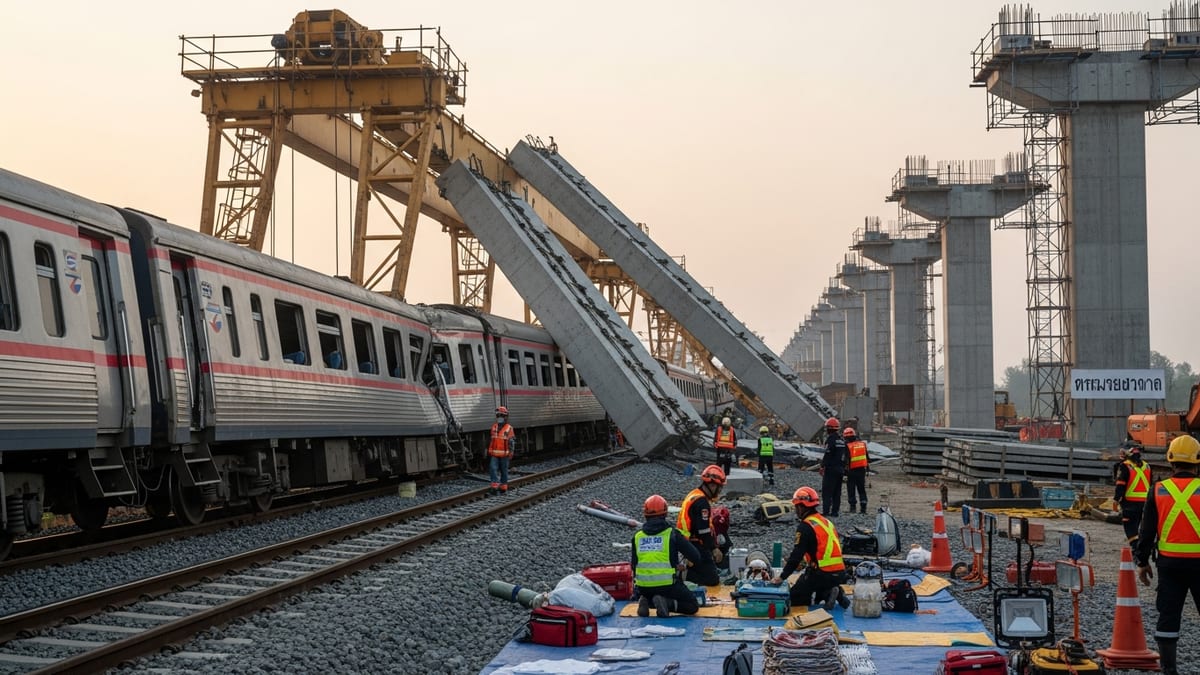
Freight Service Resumes After Overnight Work
Published coverage from regional outlets indicates that rail operations restarted on Saturday morning, less than a day after several freight cars left the tracks near Mile Marker 540 in northern Oconee County. Earlier reports described a line of derailed cars beside the main track, with emergency responders and railroad crews working into the night to stabilize the scene and prepare the line for repairs.
Information shared by local media states that no injuries were reported in connection with the incident and that there was no release of hazardous materials from the train. That assessment allowed engineers to focus on clearing the cars from the right of way and inspecting the rail bed so that replacement ties, rails, and ballast could be installed. By Saturday, video from the scene showed freight cars moving again through the area, signaling that at least one main track had been restored to service.
According to publicly available details, the train was traveling through a sparsely populated corridor near the community of Cleveland, limiting the impact on local homes and businesses. However, the derailment briefly disrupted rail traffic across a broader stretch of the Norfolk Southern network in the Upstate, as dispatchers routed other trains around the damaged section or held them outside the affected zone until the track was cleared.
Emergency Response Focused on Safety and Containment
Initial alerts shared by local fire departments and news outlets on Friday evening described a large multi-agency response to the derailment site. Units from nearby volunteer departments, Oconee County emergency services, sheriff’s deputies, and railroad personnel converged on the location after reports of several cars leaving the tracks along the rural line.
Publicly available information indicates that responders established a perimeter around the site while they assessed whether any hazardous materials were involved. Updates from the scene reported that the derailed cars were not leaking and that the incident did not create an immediate environmental or public health threat. That assessment reduced the need for evacuations in the surrounding community and allowed responders to concentrate on protecting workers and keeping onlookers away from heavy equipment.
As is common in freight derailments where tank cars or industrial materials are present, crews inspected each affected car to confirm its contents and structural integrity before beginning major clearing operations. Once those checks were completed, cranes and specialized rail equipment were brought in to separate damaged cars, move rolling stock to sidings, and open access for track repair teams.
Track Repairs Restore a Key Rail Corridor
The line running through northern Oconee County forms part of a regional freight corridor that connects industrial sites in the Upstate with markets across the Southeast. Rail industry data and local planning documents highlight the importance of this route for moving raw materials and finished goods, including forest products, aggregates, and manufactured items.
In the wake of the derailment, maintenance crews worked to remove damaged rail, ties, and hardware before installing new sections of track. Similar incidents documented elsewhere in the region show that such work often involves rebuilding several hundred feet of line, followed by alignment checks and stress testing to verify that trains can operate safely at normal speeds.
Once the replacement rail was in place, inspectors would have conducted a series of tests, including visual inspections, geometry measurements, and slow-speed test runs, to confirm that the repaired section met federal and company standards. Only after those steps were complete did freight trains begin moving through the Cleveland area again, albeit at reduced speeds typical for recently repaired track.
Travel Impacts for Drivers and Nearby Communities
While the derailment occurred away from major population centers, it still created short-term disruptions for people traveling through this corner of Oconee County. Reports from the scene indicate that at least one local road crossing near the derailment was temporarily closed while emergency vehicles and heavy equipment operated along the right of way.
Drivers using rural routes around the Cleveland community were encouraged to seek alternate roads until the rail cars were cleared and equipment removed. For residents who rely on these smaller corridors for daily errands or commutes toward Westminster and other nearby towns, the closures added time and distance to routine trips.
From a broader travel perspective, the rapid reopening of the line limited the impact on freight timetables and helped keep truck traffic from spilling onto regional highways as an alternative. Long rail disruptions can shift additional cargo to the road network, adding congestion and wear to already busy corridors. In this case, the relatively quick repair effort appears to have minimized those knock-on effects.
Derailment Adds to Ongoing Rail Safety Discussion
The Oconee County incident comes amid continuing national attention on rail safety, particularly in rural communities where freight lines run close to homes, farms, and waterways. Recent derailments across the United States have prompted renewed questions about track inspection practices, train length, and the movement of hazardous materials.
Federal safety data and past investigation reports cite issues such as track defects, equipment failures, and human factors as recurring contributors to freight derailments. In similar events, investigators often examine rail wear, tie condition, ballast stability, and train handling to pinpoint what went wrong and recommend changes.
For residents and travelers in the Upstate, the swift restoration of service in Oconee County underscores both the resilience and the vulnerability of freight corridors that support local economies. While the repaired track now carries trains once more through the Cleveland community, the episode is likely to feature in future conversations about infrastructure investment, inspection technology, and emergency preparedness along South Carolina’s rail lines.