


More news on this day
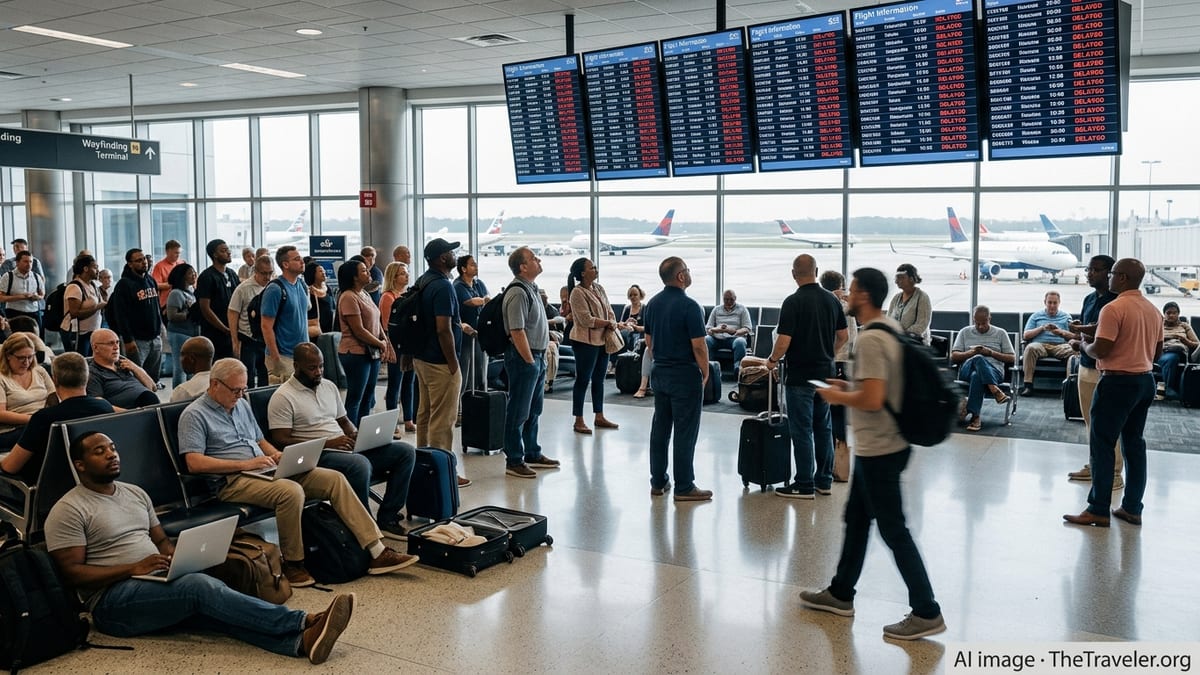
Travelers moving through Hartsfield-Jackson Atlanta International Airport on June 23 faced a fresh round of cancellations and rolling delays, as at least 15 flights were scrapped and more than 100 departures and arrivals on American Airlines, Southwest, Frontier and affiliated regional carriers experienced significant schedule disruptions across North America and Europe.
Get the latest news straight to your inbox!
Weather, Congestion and Staffing Combine Into a Difficult Day
Publicly available flight-tracking data for Sunday night into Monday morning showed a sharp uptick in disrupted operations at Atlanta, with clusters of cancellations and long delays building around peak departure banks. The total number of affected flights remained small relative to Atlanta’s daily volume, but the concentration of disruption at specific times created pronounced congestion throughout the terminal complex.
Reports from airline-focused forums and passenger posts indicated that the immediate triggers ranged from thunderstorms moving through the Southeast to lingering staffing and maintenance constraints. When weather slows traffic in and out of Atlanta, aircraft and crews can quickly fall out of position, and recovery takes hours even after storm cells have passed.
The impact was amplified by Atlanta’s role as a major connecting gateway for domestic and transatlantic travel. A single delayed arrival from the Northeast or Midwest can cascade into missed onward connections to Europe, while European flights returning to the United States are vulnerable to knock-on effects if they departed late from hubs such as London, Paris or Amsterdam earlier in the day.
Industry data and recent consumer reports also show that several large U.S. carriers have been operating with tight staffing and aircraft availability in 2026. Under those conditions, a modest weather event or isolated ground-system issue can translate into widespread passenger disruption when buffers in the schedule are limited.
American, Southwest and Frontier Feel the Strain
American Airlines, Southwest and Frontier were among the carriers most visibly affected by Monday’s pattern of disruption at Atlanta, according to public flight-status boards and independent monitoring services. The three airlines operate very different networks, but each uses Atlanta as an important spoke or focus city linking domestic routes and, in some cases, transatlantic connections.
American’s customers reported a mix of maintenance- and crew-related delays on social platforms in recent days, including rolling departure times that stretched into overnight holds on some routes. Travel discussion threads described flights repeatedly pushed back in short increments, a pattern that keeps passengers close to the gate but can lead to long periods of uncertainty and fatigue when it continues for hours.
Southwest, which currently serves more than 100 destinations across the United States and nearby international markets, has been adjusting its broader route network in 2026 while dealing with the same weather and staffing pressures affecting the rest of the industry. The carrier’s point-to-point model can provide flexibility, but it also means an aircraft held up in the Southeast can ripple into unrelated routes later in the day if there is no spare plane or crew to take over.
Frontier, which has been expanding at Atlanta over the past year, has also featured prominently in anecdotal accounts of lengthy delays and day-of-travel cancellations. Passengers noted that the airline’s low-frequency schedule on some city pairs leaves limited options when a single flight is scrubbed, leading to extended rebooking windows or overnight stays when alternate routings are full.
Regional Carriers and European Connections Hit Hard
Regional affiliates operating flights under the American and other major airline brands also reported a spike in cancellations in recent weeks when storms or low ceilings have threatened East Coast and Mid-Atlantic hubs. Publicly shared passenger itineraries show that these smaller jets, which often connect secondary cities into Atlanta, can be among the first to be cut when schedules must be pared back due to airspace or airport constraints.
The disruption in Atlanta coincided with lingering schedule instability on transatlantic routes. Travelers and aviation observers have highlighted days when a majority of flights from Atlanta to major European gateways showed substantial delays, often tied to a backlog created by earlier weather or air-traffic control restrictions over northern Europe. Even when long-haul departures ultimately operated, pushed-back boarding and later arrivals caused missed connections onward to regional airports in both North America and Europe.
Because many European flights are overnight services with limited daily frequency, a single delay or cancellation can strand passengers far from home for an extended period. Travelers relying on American, Southwest codeshare partners, Frontier’s international links, or regional affiliates feeding larger carriers often face complicated multi-leg rebookings when a connection through Atlanta fails.
Airline operations specialists note that transatlantic flying is particularly sensitive to small shocks. Crews are narrowly scheduled due to duty-time limits, and aircraft utilization is high during the summer peak. When an inbound European flight arrives late into Atlanta, the onward aircraft turn and crew start time are automatically compressed, leaving less margin for any additional ground or weather delay before the next departure.
Passenger Impact: Missed Connections and Overnight Stays
Travelers caught up in Monday’s disruption described a familiar pattern: rolling departure times, last-minute gate changes and, in some cases, cancellations announced only after hours of waiting. Public posts from recent days show passengers on American and its regional partners recounting delays of 10 hours or more, followed by overnight cancellations when crews or maintenance teams reached the end of their limits.
Similar experiences were shared by customers on Southwest and Frontier, with some reporting that relatively short domestic trips turned into multi-day journeys after missed connections in Atlanta or other hubs. For budget-conscious travelers, the cost of unexpected hotel stays and meals can quickly outstrip the original price of a low-fare ticket, especially when rebooking options are limited at the height of the summer season.
Consumer advocates point out that passenger protections differ substantially between regions. Under European regulations, travelers departing from the European Union on American, Frontier or other non-European airlines may be entitled to compensation in certain cases of delay or cancellation, while comparable flights departing the United States are governed by looser rules that focus primarily on refunds rather than financial penalties.
In practical terms, this means that two passengers on similar itineraries involving Atlanta and a European hub can have very different rights depending on which side of the Atlantic their disrupted segment originated. Many travelers remain unaware of these distinctions until they attempt to claim compensation or seek reimbursement after a severely delayed or canceled flight.
What Travelers Can Expect in the Days Ahead
Operational experts note that a burst of 15 cancellations and more than 100 delays at a major hub like Atlanta often reflects both immediate conditions and deeper structural strains within airline networks. While Monday’s disruptions may ease as weather stabilizes and aircraft are repositioned, current demand levels and tight fleet utilization suggest the risk of further irregular operations remains elevated through the busy summer period.
Travel planning guides based on recent data recommend that passengers connecting through Atlanta and other large hubs build additional time into their itineraries, particularly when linking domestic flights to transatlantic services. Early-morning departures are often less vulnerable to the sort of rolling delays that accumulate as the day progresses, and nonstop routes can reduce exposure to cascading problems at intermediate airports.
For those booked on American, Southwest, Frontier or regional affiliates, experts advise monitoring flight status closely in the 24 hours before departure, using both airline channels and independent trackers. When disruptions appear likely, same-day rebooking through alternative hubs or on earlier departures may offer a better outcome than waiting at the gate as cumulative delays build.
With airlines continuing to operate near capacity and summer storm patterns intensifying across both North America and Europe, the scenes that played out in Atlanta on June 23 serve as a reminder that even a relatively small number of cancellations can produce an outsized impact when they hit at the wrong moment in an already stretched global network.