


More news on this day
Recent cancellations affecting at least four Air Inuit flights serving Aupaluk and neighboring Nunavik communities have disrupted medical, work and family travel, underscoring how dependent the region remains on a small number of critical air links.
Get the latest news straight to your inbox!
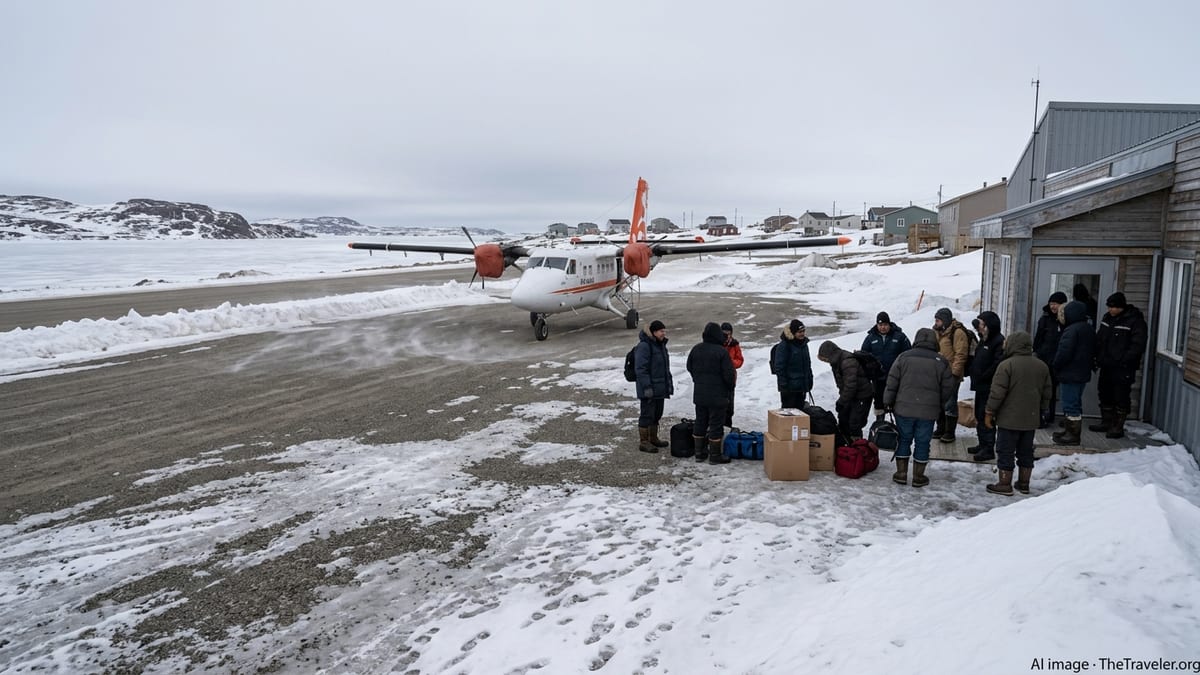
Cluster of Cancellations Hits Key Nunavik Routes
Publicly available schedule trackers and regional travel coverage indicate that a group of four Air Inuit flights serving the Aupaluk corridor were scrubbed within a short window, affecting services that normally connect Aupaluk with Kangirsuk, Kuujjuaq and other Ungava Coast villages. The affected flights formed part of a thin network in which a single round trip often carries both passengers and cargo essential to community life.
The cancellations appear to have coincided with a broader pattern of disruptions in late May and early June, when separate reports highlighted multiple Air Inuit flights being grounded at Kangirsuk Airport. In that case, at least four flights in one day were removed from the schedule, representing a substantial share of the community’s normal operations and leaving travelers scrambling to rebook on later services.
Because Nunavik communities such as Aupaluk and Kangirsuk are not linked to the provincial road network, interruptions of even a handful of regional flights can quickly cascade into missed connections in Kuujjuaq and Montreal. Travelers heading south for medical appointments, school terms or rotational work placements are particularly exposed when same-day links disappear from the schedule.
Carriers serving the region regularly cite a combination of weather, runway conditions and operational constraints as drivers of last minute changes. In the case of the recent Nunavik disruptions, publicly available information does not point to a single cause, but the concentration of cancellations on a small number of days has renewed attention on the resilience of the network.
Thin Schedules Leave Little Room for Error
Air Inuit’s published timetable for 2026 shows that many Nunavik communities are served by only a few flights per week on specific corridors linking them to Kuujjuaq and larger southern hubs. For Aupaluk and Kangirsuk, the regular schedule often relies on multi-stop itineraries where one aircraft shuttles between several villages in a single rotation, leaving limited redundancy when a flight is removed.
On the Ungava Coast, the airline recently adjusted departure times and flight numbers in an effort to streamline operations. The updated schedule, which took effect in April, includes services that combine Kuujjuaq, Kangirsuk, Aupaluk and Tasiujaq on the same routing. While such multi-leg flights maximize coverage with a small fleet, they also mean that a disruption at one airfield can ripple quickly along the chain.
Travelers in Nunavik routinely plan around these narrow windows, with some itineraries designed to connect the first morning flight out of a village with southbound services through Kuujjuaq. When cancellations occur, rebooking options can be limited to the next available flight days later, particularly for passengers who need to remain on subsidized or contract fares linked to regional health and education programs.
Observers note that these schedule characteristics are not unique to Nunavik, but are common to remote air services across the Arctic, where small aircraft, severe weather and infrastructure constraints shape the pattern of travel. The recent cluster of cancellations on the Aupaluk and Kangirsuk routes nevertheless illustrates how quickly routine adjustments can escalate into a significant interruption for residents.
Essential Travel Disrupted Across Aupaluk, Kangirsuk and Beyond
Regional media, community updates and aviation-focused outlets have documented how recent Air Inuit disruptions have affected communities beyond the immediate origin and destination points. At Kangirsuk, grounded flights limited movement not only to and from Kuujjuaq, but also for passengers connecting onward to Aupaluk, Quaqtaq and other nearby settlements served on shared rotations.
In communities the size of Aupaluk, which has only a few hundred residents, even a single cancelled flight can delay urgent travel. Many passengers on these services are heading south for medical appointments arranged through regional health authorities, while others may be students traveling to secondary schools and colleges in larger centers, or workers commuting to mining and construction projects.
Flight cancellations also affect cargo, including groceries, mail, spare parts and seasonal supplies. While essential goods are often stockpiled and alternative modes such as sealift play a role during ice-free months, air freight remains vital for fresh food, pharmaceuticals and urgent shipments. When multiple flights in a short period are cancelled, shelves can empty faster and local services can face short term strain.
Travel reports from across northern Canada show that many passengers caught up in similar events face long waits in small airport terminals with limited services, compounding the stress of uncertainty. In Nunavik, where winter weather and rapidly changing conditions can close runways with little warning, communities are accustomed to some degree of delay, but the recent concentration of cancellations has drawn particular attention.
Operational Pressures and Infrastructure Constraints
The cancellations on the Aupaluk and Kangirsuk routes come at a time when Air Inuit is both modernizing parts of its fleet and managing ongoing operational challenges across its network. The airline, which is owned by the Inuit of Nunavik through the Makivik Corporation, has introduced a re‑engineered Boeing 737‑800 combi aircraft on longer routes, while continuing to rely on turboprops such as the Dash 8 and Twin Otter for smaller airfields.
Many Nunavik airports, including Aupaluk and Kangirsuk, are government owned gravel or compacted surfaces that can be sensitive to weather, thaw cycles and maintenance issues. Public documentation about airport ownership and safety highlights that carriers depend heavily on runway upkeep by external authorities, and that temporary closures or weight restrictions can impact flight planning and dispatch decisions.
In recent years, filings and regional discussions have raised questions about runway maintenance standards in parts of Nunavik, with carriers citing concerns about operational risk and reliability. While the immediate causes of the latest flight disruptions have not been fully detailed in public advisories, observers note that any combination of runway condition alerts, low ceilings, crosswinds or mechanical issues can be sufficient to remove a small number of flights from a tight schedule.
Aviation analysts following northern operations also point to staffing considerations, aircraft availability and regulatory duty limits as potential constraints. When a flight is delayed beyond certain thresholds, it can trigger crew rest requirements that ripple through subsequent rotations, leaving operators with limited ability to mount extra sections or rapid recovery flights on short notice.
Calls for Greater Resilience in Northern Air Links
Coverage of the Aupaluk and Kangirsuk cancellations has fed into a broader conversation about how to improve the resilience of northern air service in Quebec and across the Canadian Arctic. Community leaders, regional organizations and travelers have repeatedly highlighted the need for dependable links that can support medical evacuations, economic development and cultural connections between remote villages and southern centers.
Policy discussions have increasingly focused on a mix of fleet renewal, enhanced airport infrastructure and contractual guarantees around minimum service levels. In Nunavik, long term agreements between regional bodies and carriers such as Air Inuit already exist for passenger and cargo services, but recent disruptions have prompted questions about whether additional safeguards or contingency arrangements are required.
Some analysts argue that investments in longer, more resilient runways and improved navigation aids could give operators greater flexibility in marginal conditions, while upgraded terminal facilities would help accommodate travelers during unplanned overnight stays. Others emphasize the importance of transparent, real time communication with passengers when cancellations occur, allowing communities to adjust medical appointments, work schedules and school plans more effectively.
As the summer travel period approaches, attention is likely to remain on whether the network serving Aupaluk, Kangirsuk and neighboring communities stabilizes under the revised spring schedule. For residents whose daily lives depend on a small number of aircraft linking scattered communities across the Ungava coast, even a modest reduction in last minute cancellations would represent a meaningful improvement.