


More news on this day
Travel to the Middle East in mid‑2026 is being reshaped by ongoing security concerns, shifting front lines and disrupted flight corridors, prompting fresh government advisories and airline schedule changes across the region.
Get the latest news straight to your inbox!
Government advisories tighten across the region
Publicly available information from Western governments shows a patchwork of heightened travel advisories across the Middle East, with much of the region now covered by “reconsider travel” or “do not travel” guidance. Recent summaries of United States advisories indicate that Iran, Iraq, Lebanon, Syria, Yemen and Gaza remain under the highest warning level, while many Gulf states and Israel are rated one step lower due to the potential for sudden escalation.
Updated UK travel advice for Israel and the Palestinian territories in mid June highlights continuing restrictions around Gaza and parts of the West Bank, alongside warnings about rocket fire, border closures and movement controls. Guidance notes that civilian crossings out of Gaza remain effectively closed, and that conditions can deteriorate quickly, limiting consular support and evacuation options for foreign nationals.
Separately, information released under European freedom of information rules shows that national crisis units have been advising citizens registered in countries including Israel, Palestine, Qatar and the United Arab Emirates to monitor official travel advice closely and to ensure authorities have up to date contact details. This reflects growing concern that even destinations perceived as relatively stable can be affected indirectly by wider regional tensions.
Health agencies are also tracking the impact of the conflict. A global situation report issued in June details pressure on hospitals and health services in several Middle Eastern states, underlining that visitors could face limited access to medical care in the event of injury or illness, particularly in areas close to recent fighting.
Airspace closures and shifting flight corridors
For many travelers, the most visible effect of the current crisis is in the sky rather than on the ground. Aviation safety bulletins and regional media reports point to one of the most constrained airspace environments in decades, with overlapping closures above Iran, Iraq, Lebanon, Israel, Syria and parts of the Gulf at various points since large scale hostilities flared in late February.
Europe’s aviation safety regulator has advised airlines to avoid certain Middle Eastern skies entirely, while some national authorities have gone further by prohibiting their carriers from entering specific flight information regions at any altitude. Analysts note that this has effectively shut the traditional “Silk Road” corridor over Iran and Iraq that once carried a large share of Europe to Asia traffic.
As a result, airlines have been diverting flights onto longer southern and northern bypasses, increasing fuel burn, flight times and the risk of knock on delays. Industry associations and scheduling data describe a network forced into two primary routes: one over Egypt, Saudi Arabia and Oman or the Gulf, and another looping via Turkey, the Caucasus and Central Asia when available.
Despite a ceasefire that has reduced some of the most intense fighting since April, air traffic reports indicate that many of these reroutings have become semi permanent. International bodies have urged states and carriers to conduct fresh risk assessments before resuming direct overflights of previously affected areas, slowing any return to pre crisis patterns.
Airlines balance restoration and caution
Airline responses to the upheaval have varied widely by region and carrier. In the immediate aftermath of the February escalation, several European and Asian airlines suspended flights to major Middle Eastern hubs and halted overflights across multiple countries, citing security reviews and insurance constraints. A number of European brands sharply cut services to Israel, Saudi Arabia, Qatar and the United Arab Emirates, while rebooking passengers over alternative routes.
Since then, some networks have cautiously rebuilt their presence. Coverage from regional media shows that Dutch carrier KLM, for example, has restored flights to Israel, the UAE and Saudi Arabia after an earlier pause, while continuing to avoid particular airspace segments. Gulf airlines such as Emirates, Etihad Airways, Qatar Airways and Saudia have gradually reactivated connections to Europe and Asia from their hubs, often operating on longer routings that skirt the most sensitive zones.
At the same time, airline monitoring services and passenger communications reveal a steady stream of travel waivers tied to “Middle East unrest,” allowing free itinerary changes for trips touching affected airports or overflight regions. Some waivers have been extended multiple times through mid and late 2026, signalling that carriers do not yet expect a rapid normalization of schedules.
Behind the scenes, operational updates from international aviation bodies describe continued coordination to manage traffic flows, particularly across the high seas between Saudi Arabia, Bahrain, Qatar and the UAE. While flights in these corridors have resumed, officials note that volumes remain below previous peaks and that contingency plans for further disruption remain in place.
On the ground: fragmented risk and practical challenges
Security and mobility conditions for travelers differ sharply across the Middle East, often within the same country. In parts of Israel and Lebanon, recent cross border exchanges and strikes around major cities have led to intermittent shelter in place warnings, disrupted public transport and localized power outages. In Gaza and some surrounding areas, movement remains highly restricted, with foreign nationals facing limited options to exit.
Elsewhere, popular destinations in the Gulf continue to welcome visitors, but are affected indirectly by regional risk. Reports from tourism and trade publications note that hotels in cities such as Dubai, Abu Dhabi and Doha have adjusted booking policies to add flexibility, while business events and conferences have introduced more robust contingency planning, including hybrid formats and last minute venue changes.
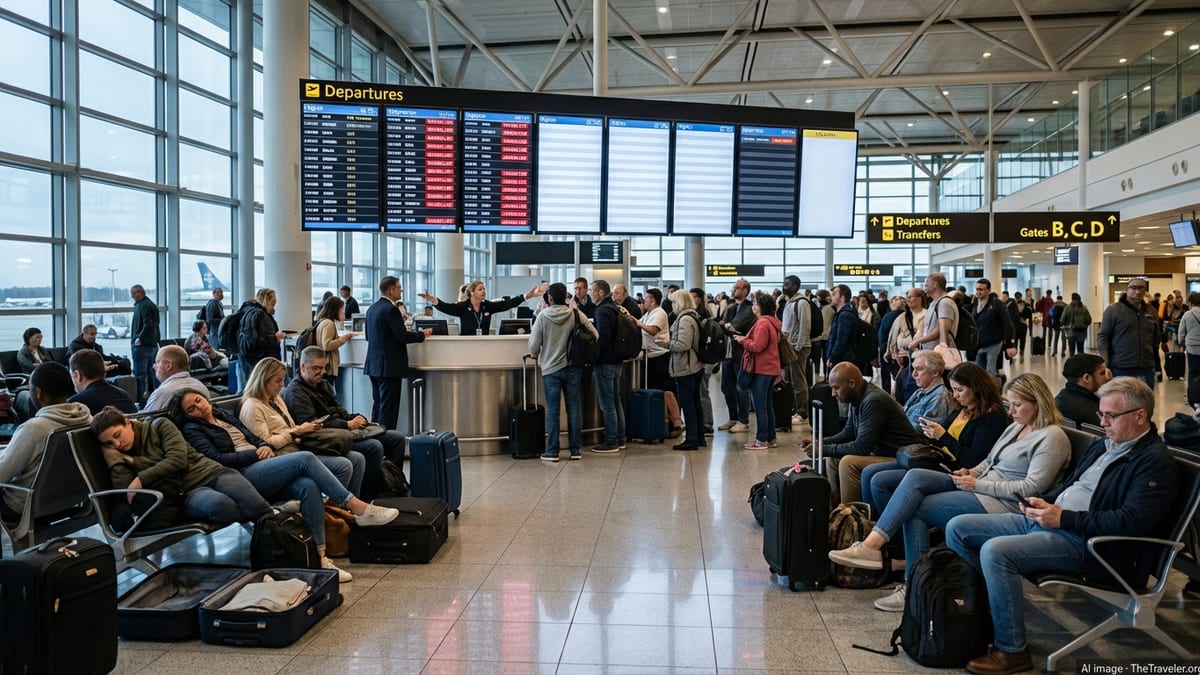
Travel logistics can be unpredictable even where day to day life appears relatively normal. Sudden changes in airline schedules, temporary airport closures and tightened security checks have produced longer connection times, unexpected overnight stays and baggage delays for some passengers transiting the region. Logistics bulletins warn that cargo flows on key Europe–Middle East–Asia routes also remain vulnerable to disruption, which can affect the delivery of consumer goods and spare parts.
Prospective visitors are being advised by travel risk consultancies and consumer groups to pay close attention to the specific cities and regions they plan to visit, rather than assuming a uniform situation across entire countries. Access to consular services, hospital capacity, local transport resilience and the availability of safe accommodation can vary markedly within a few hundred kilometres.
What travelers should monitor next
With conditions changing quickly, specialist travel risk analysts highlight several key indicators for anyone planning a journey to or through the Middle East. The first is the trajectory of the post April ceasefire and related diplomatic efforts, which will shape the likelihood of renewed large scale hostilities and further airspace closures. Any breakdown in current arrangements could trigger new waves of flight suspensions and evacuation operations.
The second is regulatory guidance from aviation safety authorities. Advisories from bodies overseeing European and regional airspace are being updated regularly and can influence which routes airlines are willing to sell, how long flights take and where technical stops are made. Travelers booking months in advance may find that their routing changes several times before departure as carriers respond to new assessments.
A third factor is the evolution of government travel advisories and consular messaging. Changes in formal advice, particularly upgrades to higher risk levels, can affect travel insurance coverage, corporate travel approvals and the willingness of tour operators to run itineraries. Monitoring these notices in the days immediately before departure has become increasingly important.
For now, publicly available guidance from travel organizations stresses flexibility. Passengers are encouraged to monitor bookings frequently, keep contact details up to date with airlines and embassies, allow extra time for connections and be prepared for last minute schedule changes. While large parts of the Middle East remain open to visitors, the combination of fragile ceasefires, complex airspace restrictions and uneven ground conditions means that trips require more preparation and a higher tolerance for disruption than in previous years.