


Maryland packs a surprising amount of variety into a relatively small state. Within a few hours of each other you can stroll cobblestone streets in Annapolis, kayak beside wild ponies off Assateague Island, sip wine in historic small towns, or hike to rocky overlooks in the Blue Ridge foothills. The key to planning the perfect Maryland getaway is to match your destination to the kind of trip you want. Whether you are craving a quick culture-heavy weekend, a classic beach holiday, or a quiet cabin in the woods, these are the best places to visit in Maryland based on your travel style.
Get the latest updates straight to your inbox!
For a Culture-Filled City Break: Baltimore
If you want a long weekend packed with museums, food, and neighborhoods you can explore on foot, Baltimore is the obvious starting point. The city’s Inner Harbor is still the easiest base for first-time visitors, with major attractions like the National Aquarium and the historic ships clustered within a few blocks. Many travelers choose hotels around Harbor East or the Inner Harbor so they can walk to dinner and waterfront promenades without worrying about parking.
Art and history travelers should build in serious time for Baltimore’s museums. The Baltimore Museum of Art and the Walters Art Museum both offer major collections with free general admission, which makes it easy to drop in for a few hours between meals or neighborhood walks. Down by Federal Hill, the American Visionary Art Museum focuses on outsider and self-taught artists in an offbeat building that mirrors the city’s creative, slightly scrappy personality.
Beyond the museums, Baltimore’s appeal is in its rowhouse neighborhoods. In Fell’s Point you can wander cobblestone streets and duck into independent shops and oyster bars. Hampden has a denser cluster of vintage stores, record shops, and creative restaurants along 36th Street. Food-wise, expect dinner entrees in the 20 to 35 dollar range at midrange spots, with higher prices at the city’s top seafood restaurants that specialize in local blue crab when it is in season.
Practically speaking, Baltimore works best if you are comfortable mixing driving with ride-hailing. The city’s light rail and bus system can be useful, but most visitors rely on a combination of walking, rideshares, and hotel parking. If you are flying in, Baltimore/Washington International Airport sits less than 20 minutes by car from downtown in light traffic, making it a straightforward city break even if you only have two or three days.
For History and Waterfront Charm: Annapolis and the Chesapeake Towns
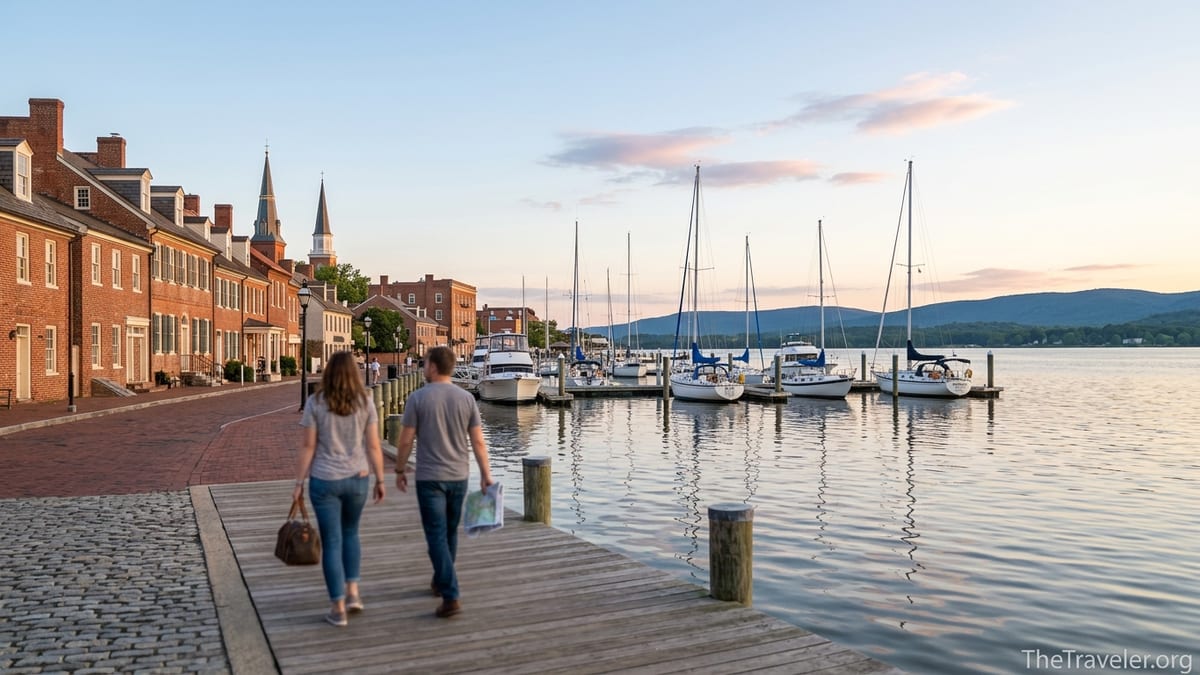
Travelers who picture brick streets, 18th century buildings, and sailboats bobbing on the water will feel at home in Annapolis and Maryland’s small Chesapeake Bay towns. Annapolis, the state capital and home of the U.S. Naval Academy, is one of the state’s most walkable historic districts. You can spend a day wandering between the Maryland State House, brick-lined streets like Maryland Avenue, and the waterfront at City Dock, where sailing tours and harbor cruises depart regularly in warmer months.
Lodging in Annapolis ranges from historic inns in the compact downtown to chain hotels along West Street and the highway. Expect in-town rates similar to a midrange East Coast city, with higher prices during Naval Academy events and major sailing regattas. Many visitors pair a half-day guided walking tour of the historic district with a boat cruise, then linger over crab cakes at a dockside restaurant looking out at the moored yachts.
If you prefer smaller, quieter places, look east toward towns like St. Michaels, Oxford, and Cambridge on the Eastern Shore. St. Michaels has become one of the region’s go-to romantic getaways, with boutique inns, a maritime museum, and seafood restaurants lining a walkable main street. Prices here reflect the demand: rooms at popular inns often book up on summer weekends and during fall foliage season, so advance reservations are wise.
These Chesapeake destinations are ideal for travelers who want a mix of gentle activity and downtime. Typical days blend a bike ride on flat country roads, a visit to a local maritime or history museum, and time on the water in a rented kayak or on a short sailing charter. Driving times are manageable too: from Baltimore or Washington, D.C., you can usually reach Annapolis in under an hour and the Eastern Shore towns in about two to three hours, depending on Bay Bridge traffic.
For a Classic Beach Vacation: Ocean City and Assateague Island
When Marylanders talk about going “down the ocean,” they are usually headed to Ocean City. This Atlantic resort town delivers exactly what many families want from a beach trip: a long stretch of sand, a wide boardwalk lined with arcades and snack stands, and a dense collection of hotels and vacation rentals. In peak summer, the boardwalk hums well into the evening with mini golf, rides at the amusement piers, and soft-serve ice cream stands doing brisk business.
Ocean City works best if you are prepared for a lively, commercial atmosphere and summer crowds. Budget-friendly motels and basic condos sit near the lower-numbered streets close to the boardwalk, while higher-rise hotels and larger rentals stretch north along Coastal Highway. Restaurant prices cover the full spectrum, from inexpensive pizza slices and crab pretzels to sit-down seafood dinners with entrees typically in the 20 to 40 dollar range. Parking can be tight near the boardwalk, so many visitors choose a hotel within walking distance or use the city bus that runs along the main strip.
For a more natural version of the Maryland beach, head a short drive south to Assateague Island. The Maryland side of Assateague includes both a state park and a national seashore, with long undeveloped beaches, bayside marshes, and the famous wild horses that sometimes wander across the sand and park roads. Here the focus is on simple pleasures like swimming, shelling, and watching shorebirds rather than boardwalk attractions.
Assateague appeals to campers and nature lovers who are willing to trade nightlife for quiet. Campsites in the dunes book up early for summer weekends and most sites offer minimal shade and simple facilities, so bring a solid tent, sand stakes, and plenty of sun protection. Day-trippers often base themselves in Ocean City or nearby Berlin and drive in for the day, paying a modest vehicle fee at the park entrance. Mosquitoes and flies can be intense in warmer months, especially near the bayside marshes, so insect repellent and long-sleeved layers are as important as your swimsuit.
For Mountains, Cabins, and Four-Season Outdoors: Western Maryland
If your version of a perfect Maryland trip looks more like a cabin surrounded by trees than a waterfront inn, point your car west. Western Maryland, especially around Deep Creek Lake, Cumberland, and the state parks along Catoctin and South Mountain, offers rolling mountains, cool summer nights, and colorful fall foliage. Deep Creek Lake has evolved into a four-season resort area where visitors can spend one day paddling on the lake and the next hiking or skiing at nearby Wisp Resort.
Cabin and vacation rental choices around Deep Creek range from simple A-frames tucked in the woods to large homes with multiple bedrooms, hot tubs, and lake views that cater to extended families or groups of friends. Prices vary widely by size and season, but summer and winter weekends typically command the highest rates. Many rentals are set up for self-catering, which keeps food costs manageable, though there are also brewpubs and casual restaurants around McHenry and Oakland for nights when you do not want to cook.
Farther east but still in the foothills, state parks like Cunningham Falls, Catoctin Mountain, and Gambrill near Frederick offer miles of hiking, scenic overlooks, and campgrounds. Gambrill State Park, for example, is popular for its panoramic views over the Middletown Valley and its mix of hiking and mountain biking trails, with modest per-vehicle entrance fees for both Maryland residents and out-of-state visitors. Many of these parks participate in ongoing programs that encourage people to hike or visit a certain number of sites in a year, which can be a fun framework if you return regularly.
Western Maryland also caters to travelers who want to mix outdoor time with small-town exploration. Cumberland retains handsome late 19th century architecture and access to the Great Allegheny Passage bike trail and the Western Maryland Scenic Railroad, which offers excursion rides into the mountains. Frostburg, a college town, adds coffee shops, pubs, and music venues. These destinations suit travelers who do not mind driving winding roads and who are comfortable with mountain weather that can change quickly, especially outside summer.
For Small-Town Strolls and Wine Weekends
Maryland’s smaller towns work especially well for relaxed weekend trips built around walking, eating, and perhaps a winery or brewery visit rather than a long checklist of attractions. On the Eastern Shore, places like Chestertown, Easton, and Havre de Grace have become popular precisely because they combine historic streets with a compact set of things to do. In Chestertown, for example, you can browse bookshops and galleries around the brick-lined downtown, then take an afternoon river cruise when the weather is warm.
Havre de Grace, at the mouth of the Susquehanna River, offers a waterfront promenade, a historic lighthouse, and views across the head of the Chesapeake. Travelers often pair a morning spent on the promenade and in small museums with an afternoon at one of the wineries or breweries scattered through Harford County. Prices in these towns are generally a bit lower than in bigger-name destinations like Annapolis or St. Michaels, though waterfront lodgings still command a premium on summer weekends.
In central Maryland, Frederick has grown into a favorite for people who want an urban-feeling weekend without the scale of Baltimore. Its revitalized downtown is lined with independent shops, restaurants, and breweries, and Carroll Creek Linear Park gives the city a pleasant waterside spine. It is easy to stay in a downtown hotel or bed-and-breakfast and spend most of your time on foot, using your car only to reach nearby state parks or wineries.
For couples or friends looking for a low-key but polished escape, these small towns can be ideal. Expect to spend your days wandering historic streets, sharing tasting flights at local breweries and wineries, and booking dinner at one of a handful of standout restaurants rather than racing from sight to sight. Because many of these towns rely on weekend tourism, restaurant reservations and lodging bookings are a good idea from late spring through fall.
For Nature, Hiking, and Active Trips
Maryland’s geography makes it easy to build trips around hiking, paddling, and cycling without traveling far. Gunpowder Falls State Park north of Baltimore spreads across multiple sections with over a hundred miles of trails, trout streams, and summer tubing runs on the river. Rocks State Park in Harford County offers shorter but steeper hikes up to the King and Queen Seat rock outcrop, where careful visitors are rewarded with broad views over forest and farmland.
Closer to Washington, D.C., Patapsco Valley State Park is a favorite for trail runners, hikers, and mountain bikers, with multiple access points along the Patapsco River west of Baltimore. Trails range from flat riverside paths to rocky climbs up into the hills, and some sections pass the ruins of old mills and railroad infrastructure that hint at the region’s industrial past. Day-use fees are moderate, and many locals invest in annual state park passes if they plan to visit often.
On the Eastern Shore and Southern Maryland, outdoor trips often revolve around waterways and wildlife. Blackwater National Wildlife Refuge near Cambridge is a magnet for birders, kayakers, and cyclists who ride the quiet refuge roads and flat country lanes. Farther south, Calvert Cliffs State Park combines wooded trails with a small beach where visitors often hunt for prehistoric shark teeth and other fossils eroding from the cliffs, especially at low tide.
For multi-day active trips, some travelers connect several areas in a single itinerary. A long weekend might start with two days of hiking around Catoctin Mountain and Cunningham Falls, followed by a day of tubing or kayaking on the Gunpowder River, then finish with a coastal paddle in the tidal marshes near Assateague. Because many Maryland state parks are within a two-hour drive of the Baltimore and Washington metropolitan areas, you can adjust your plans on the fly if weather or crowds push you toward a different trailhead or river access point.
For Family-Friendly Fun
Families visiting Maryland typically look for destinations where activities, food options, and lodging are all within easy reach, and the state offers several spots that fit the bill. Ocean City is an obvious choice, with its broad beaches, kid-friendly boardwalk rides, mini golf courses, and casual restaurants where nobody blinks at sandy feet and beachwear. Many families prefer hotels or rentals with kitchenettes so they can prepare simple breakfasts and lunches before splurging on a nightly boardwalk treat.
In the central part of the state, a base near Baltimore or Frederick allows parents to mix educational outings with outdoor play. In Baltimore, families can pair a morning at the aquarium or a science-focused museum with an afternoon exploring playgrounds and waterfront promenades. Around Frederick, families often set aside a day to hike an easy trail in Cunningham Falls State Park, visit a farm market, and end with ice cream on Frederick’s main streets.
Western Maryland’s Deep Creek Lake area is also well suited to multigenerational trips. A single rental house can accommodate grandparents, parents, and kids, who can then choose their own activities each day. Younger children might spend the morning playing on small sandy lakefront beaches while older kids try stand-up paddleboarding or zipline courses at nearby adventure parks. In winter, families who enjoy snow sports can ski or snowboard at Wisp, then return to a rental house with a fireplace and board games.
Even in more historically focused destinations like Annapolis and the Chesapeake towns, there are ways to keep younger travelers engaged. Many boat tours on the bay are suitable for children, and small maritime museums often include hands-on exhibits or boatbuilding demonstrations. Choosing lodging within easy walking distance of the main attractions reduces time spent in the car, which can make a big difference for families with toddlers or teens who tire quickly of driving.
The Takeaway
Maryland rewards travelers who think in terms of trip style rather than just individual sights. If you want galleries and great restaurants, focus on Baltimore or Frederick. If your ideal escape involves a porch swing overlooking the water and a seafood dinner you can walk to, look toward Annapolis and the Chesapeake Bay towns. For sand between your toes and boardwalk lights at night, Ocean City and nearby Assateague deliver different flavors of the beach experience, one lively and one wild.
Those drawn to cooler air and quiet trails will find plenty to explore in Western Maryland’s hills, from Deep Creek Lake to the historic towns along old rail lines. Active travelers can build hiking and paddling-focused itineraries almost anywhere in the state, while families will appreciate how compact distances allow you to change plans if the weather shifts or kids need a slower day. However you like to travel, there is a corner of Maryland that matches your pace, your budget, and your idea of a memorable trip.
FAQ
Q1. What is the best time of year to visit Maryland for a beach trip?
For classic beach weather, most travelers aim for mid-June through late August, when ocean temperatures are warmest and boardwalk businesses in places like Ocean City are fully open.
Q2. When should I visit Maryland for fall foliage and mountain scenery?
Western and central Maryland usually see the most reliable fall color from early to mid-October, though exact timing can shift slightly each year with temperature and rainfall.
Q3. Is Maryland a good destination for travelers without a car?
It is possible but limiting. Baltimore and parts of Annapolis and Frederick are walkable, but many state parks, beaches, and small towns are easiest to reach by car or organized tour.
Q4. How many days do I need for a first trip to Maryland?
A long weekend of three to four days is enough for one region, such as Baltimore and Annapolis or Ocean City and Assateague. To sample multiple parts of the state, plan a week.
Q5. Are Maryland’s state parks suitable for beginners?
Yes. Many parks offer clearly marked, shorter trails, picnic areas, and ranger stations with maps and advice, making them approachable for new hikers and families.
Q6. How expensive is Maryland compared with other East Coast destinations?
Costs vary by region, but overall prices tend to sit between those of major cities like New York or Washington and smaller coastal regions, with budget options available in most areas.
Q7. Can I combine city, beach, and mountains in one Maryland trip?
With a car and a week or more, you can reasonably link Baltimore or Annapolis, the Ocean City or Assateague coast, and Western Maryland’s mountains in a single road trip.
Q8. Is Maryland a good choice for food-focused travel?
Yes. The state is well known for blue crabs and seafood along the Chesapeake, but cities like Baltimore and Frederick also offer diverse global cuisines and strong craft beer scenes.
Q9. Do I need advance reservations for popular areas?
In summer and fall, it is smart to book Ocean City, Deep Creek Lake, and Chesapeake Bay town accommodations weeks or months in advance, especially for weekends and holidays.
Q10. Is Maryland suitable for year-round travel?
Yes. Summers favor beaches and boating, fall highlights foliage and hiking, winter draws skiers to Western Maryland, and spring is ideal for city breaks and small-town exploring.