


More news on this day
Dozens of passengers at Austin-Bergstrom International Airport faced extended waits on Tuesday as Southwest Airlines, American Airlines and Delta recorded 27 delays and one cancellation affecting flights to New York, Chicago, Los Angeles and several other U.S. destinations, according to live tracking data and airport status boards.
Get the latest news straight to your inbox!
Wide-Ranging Disruptions Across Major U.S. Routes
Publicly available flight-tracking boards on Tuesday showed a cluster of delays among departures and arrivals operated by Southwest, American Airlines and Delta at Austin-Bergstrom International Airport. The disruptions were concentrated on high-demand routes to major hubs, including the New York, Chicago and Los Angeles areas, but also affected connections to other domestic cities.
Data indicated that, in total, 27 flights associated with the three carriers were operating behind schedule, while one departure was listed as canceled. The pattern meant tighter connections were at risk across multiple airports, with knock-on effects for travelers attempting to reach secondary destinations via hubs such as Dallas-Fort Worth, Chicago O’Hare, New York’s LaGuardia and Los Angeles International.
While individual delay lengths varied, several flights showed late departures of 30 minutes or more, pushing some services into peak evening periods. For travelers banking on same-day connections, even relatively modest schedule slips were enough to force rebookings or overnight arrangements.
The affected services included a mix of point-to-point flights popular with leisure travelers and business-focused routes linking Austin’s fast-growing tech and corporate sector with major financial and media centers.
Possible Weather and Air-Traffic Factors
Live national airspace status information suggested that broader operational headwinds may have contributed to the disruptions, with pockets of weather and air-traffic constraints affecting several large coastal and Midwestern hubs. When such conditions arise, airlines often adjust departure flows and spacing between aircraft, which can translate into cascading delays far from the original trouble spot.
Even when Austin itself is reporting normal runway and visibility conditions, flights to or from the city may be held or slowed if destination or en route airspace is under tighter control measures. Industry reports frequently describe how a single region affected by storms or strong winds can ripple through an airline’s network, particularly on high-density routes such as those linking Texas with New York, Chicago and Southern California.
In recent months, periodic ground delays and traffic-management initiatives at major Northeast and Midwest hubs have been cited in public aviation updates as key contributors to nationwide disruptions. Against that backdrop, the cluster of delayed departures from Austin fits into a broader pattern of U.S. carriers managing increasingly complex networks in changeable conditions.
Operational data compiled by transportation analysts also shows that large carriers can experience notable day-to-day swings in their on-time performance, especially during busy travel periods or when recovering from earlier system strain.
Passenger Impact at Austin-Bergstrom
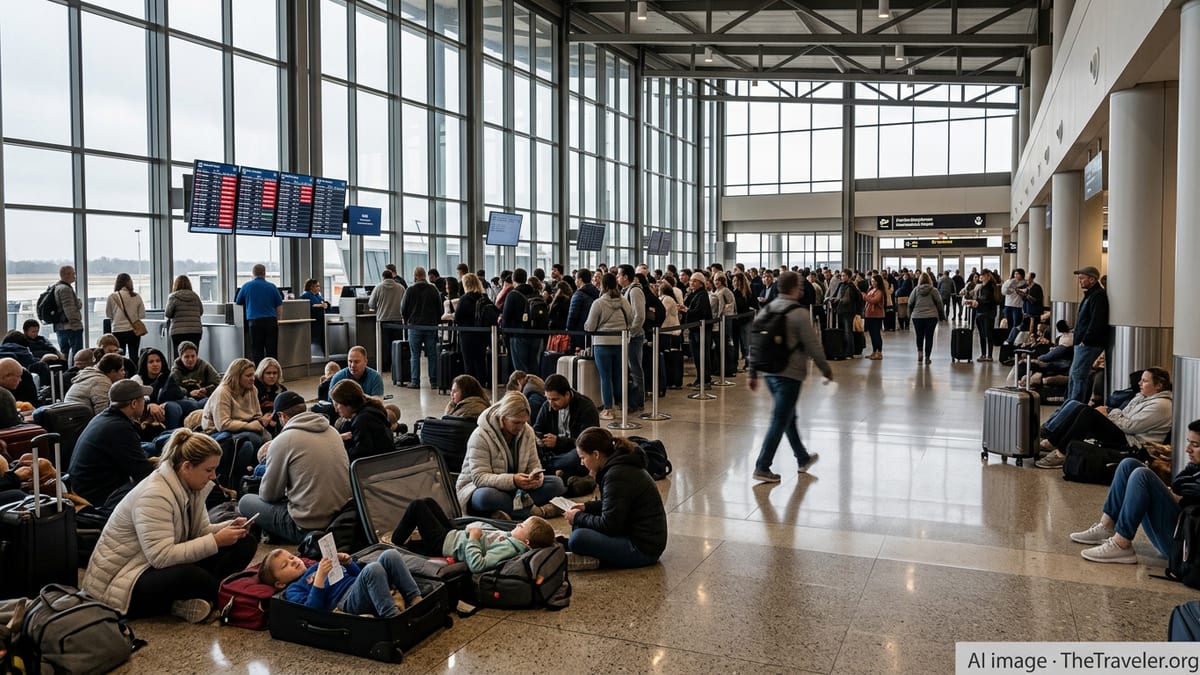
Travelers at Austin-Bergstrom reported crowded gate areas and longer-than-usual waits as delayed departure times were updated in stages throughout the day. For some, the late-running flights meant missed meetings in New York or Chicago; for others, it disrupted connections to regional airports served via Los Angeles or other hubs.
Published guidance from consumer travel advocates notes that when delays build gradually, passengers often receive multiple rolling updates instead of a single definitive timetable change. That can leave travelers weighing whether to stay at the gate, attempt to change flights or adjust hotel and ground-transportation plans on short notice.
The lone cancellation tied to the current disruption added another layer of uncertainty, especially for passengers whose trips relied on limited-frequency routes. When departures operate only once or twice daily, a canceled leg can force an entire itinerary to be rebuilt, sometimes involving overnight stays or reroutes through less direct connections.
Families traveling with children, as well as passengers with tight schedules or mobility needs, may be particularly affected when gate changes, late boarding and reassignments occur with little buffer time. Austin’s busy central terminal, which already handles a rapidly growing schedule of domestic and international flights, can quickly become congested when several departures slip at once.
How the Three Carriers Have Fared on Reliability
Historical performance data collected by federal transportation agencies and aviation analytics firms shows that Southwest, American Airlines and Delta consistently rank among the nation’s busiest carriers by number of flights and passengers. That scale can magnify the visibility of disruptions when they occur on a single day at a single airport.
In prior reporting periods, each of the three airlines has experienced waves of delays linked to a mix of causes, including weather, air-traffic control measures, technical issues and crew availability. Analyses of past disruption events show that recovery times vary by airline, by hub and by time of year, but all three carriers have faced scrutiny from travelers during periods of heavy rescheduling.
Industry statistics also note meaningful differences in how often flights are canceled versus simply delayed. While delays like those seen at Austin-Bergstrom on Tuesday are inconvenient, cancellations are typically more disruptive because they require full rebooking and may reduce options later in the travel day.
Aviation observers point out that as Austin continues to grow as a focus city, pressure on gate space, runway capacity and ground handling can intersect with airline-specific operational challenges, increasing the likelihood that localized issues will be felt across multiple carriers simultaneously.
What Stranded Travelers Can Do
Consumer-rights guidance and airline policy summaries indicate that passengers affected by delays and cancellations have several immediate steps available. Travelers are widely advised to monitor their airline’s mobile app and text alerts closely, since gate and timing changes usually appear there before they are announced at the airport concourse.
When delays stretch beyond an hour or threaten to break key connections, passengers can often explore same-day changes through digital channels rather than waiting in line at service desks. Many airlines allow rebooking to alternative routings or slightly earlier or later flights when significant disruptions occur, though availability depends on seat inventory and fare rules.
For cancellations, publicly posted policies from major U.S. carriers typically outline options that may include refunds, rebooked travel at no additional fare, or credits for future trips when the airline is unable to operate the original flight. Travelers are encouraged by advocacy groups to retain documentation of disrupted journeys, including boarding passes and delay notifications, which may support later claims.
With Austin-Bergstrom continuing to expand and demand for flights to coastal and Midwestern hubs on the rise, analysts expect that occasional clusters of delays like Tuesday’s event will remain a feature of the travel landscape. For passengers caught in the latest round of schedule disruptions, preparation, flexible planning and real-time information can help reduce some of the strain of an unexpectedly long day at the airport.