


More news on this day
Flight operations across several of China’s busiest airports faced significant disruption today, with tracking data indicating 799 delays and 212 cancellations affecting services in Shenzhen, Beijing, Shanghai, Chengdu and other major hubs.
Get the latest news straight to your inbox!
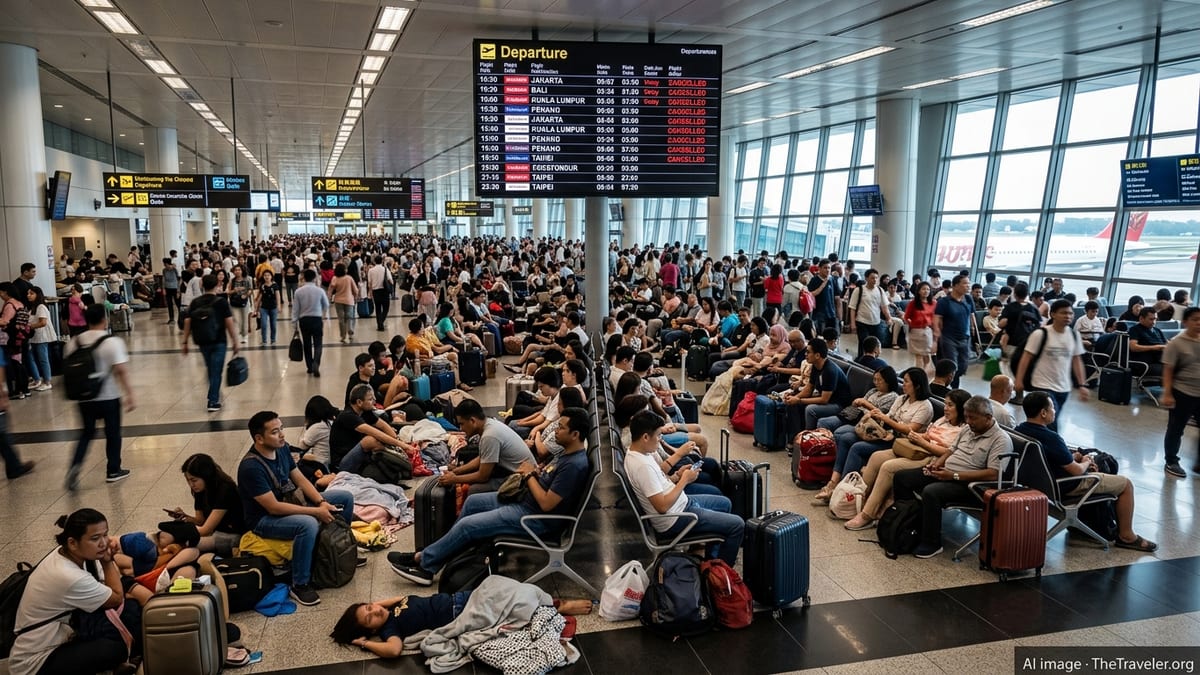
Major Chinese Hubs Grapple With Widespread Disruptions
Publicly available flight tracking dashboards and operational summaries for May 12 indicate that disruption has spread across China’s key aviation centers, led by Shenzhen Bao’an International Airport, Beijing’s two primary airports, Shanghai Pudong and Hongqiao, and Chengdu’s twin hubs. The combined tally of 799 delayed services and 212 outright cancellations has translated into a difficult operating day for carriers and travelers alike.
Data snapshots from airport and third-party tracking platforms show that the impact is not limited to one region. Shenzhen and Guangzhou in the south, Beijing and Tianjin in the north, and Shanghai and Hangzhou along the eastern seaboard are each registering elevated delay indices compared with typical midweek traffic. Chengdu, which has emerged as a major inland hub, is also reporting an above-normal volume of last-minute schedule changes.
While the disruption is concentrated on domestic sectors, it is also affecting a number of regional and long-haul connections, with late-arriving aircraft forcing knock-on delays on onward legs. The pattern mirrors previous periods in which congestion at a handful of major hubs produced schedule ripple effects across the national network.
The latest irregular operations follow earlier episodes in recent weeks that saw thousands of flights delayed across China and dozens cancelled in single days at major airports, according to aviation-analytics commentary. Today’s figures underscore how quickly performance can deteriorate when several large hubs experience operational strain at the same time.
Shenzhen Airlines, Air China and China Eastern Among Most Affected
The disruption is being felt across a wide mix of carriers, but Shenzhen Airlines, Air China and China Eastern appear among the most exposed because of their strong presence at the affected hubs. Live status boards for Shenzhen and Chengdu list multiple Shenzhen Airlines departures as cancelled, alongside delayed and cancelled flights from Air China and China Eastern serving trunk routes such as Shenzhen to Shanghai and Chengdu to coastal cities.
Operational data from Chengdu Tianfu International Airport on Tuesday morning shows several departures on Shenzhen Airlines, Sichuan Airlines, China Southern and Air China marked as cancelled within a short time window, particularly on links to Nanjing, Shenzhen, Guangzhou and Nanning. Parallel reports from Shanghai and Beijing indicate recurrent delays on high-frequency corridors connecting the capital region with the Yangtze River Delta and southwest China.
Smaller and low-cost operators are also being drawn into the disruption. Carriers such as 9 Air, Ruili Airlines and regional brands based in Jiangxi, Guangxi and Yunnan are reporting schedule changes where their operations intersect with the busiest hubs. For these airlines, even a modest number of cancellations can have an outsized effect because of thinner schedules and fewer spare aircraft.
Travel discussion forums and passenger-facing platforms in recent days have highlighted individual cases involving Shenzhen Airlines and Air China cancellations, with some travelers reporting short-notice schedule changes and rebooking challenges. While anecdotal, these accounts are consistent with the broader pattern of pressure visible in aggregated delay and cancellation statistics.
Weather, Airspace Management and Capacity Constraints Behind the Strain
Recent analytical coverage of China’s domestic aviation market points to a combination of factors behind the latest round of disruptions. Intermittent adverse weather around the Yangtze River Delta and the Beijing region, together with airspace and air traffic control constraints, continues to place limits on the number of movements that can be handled safely in peak periods.
Industry tracking from earlier this spring documented days on which more than 3,000 flights were delayed nationwide after bottlenecks formed at Guangzhou and other southern hubs, with secondary impacts at Beijing, Shanghai and Shenzhen. That pattern appears to be recurring, although at a smaller scale, as storms, low visibility or congestion in one region translate into holding patterns, ground stops or flow restrictions elsewhere in the system.
Chinese airlines are also operating close to pre-2019 domestic capacity levels, according to recent capacity analyses, which means there is limited slack in fleets and crew rosters when irregular operations occur. When a morning wave of departures is disrupted, aircraft and crews can quickly fall out of position, making it harder for airlines to recover schedules by later in the day.
In this context, carriers like China Eastern, Air China, China Southern and Shenzhen Airlines face a difficult balancing act as they attempt to maintain high utilization of aircraft to offset fuel and operating costs, while retaining enough buffer to absorb shocks from weather and airspace restrictions. The latest tally of 799 delays and 212 cancellations illustrates how narrow that margin can be on a busy travel day.
Knock-On Effects for Passengers Across Domestic and International Routes
The operational turmoil is translating into missed connections and extended travel times for passengers, particularly those relying on tight transfers through Beijing, Shanghai, Shenzhen and Chengdu. Domestic travelers on high-density routes such as Shanghai to Beijing or Shenzhen to Chengdu are encountering gate changes, rolling departure estimates and, in some cases, same-day cancellations.
International itineraries are also affected where they involve domestic feeder legs. Travel forums in recent weeks have carried posts from passengers whose long-haul flights to or from Europe and Southeast Asia were disrupted after the domestic segment into a hub was altered or cancelled. In several reported instances, travelers faced the prospect of rebooking onto alternative dates or different carriers when same-day options were limited.
Consumer experiences described online indicate that rebooking and refund processes can vary widely between carriers and booking channels. Some passengers report being offered free changes or hotel accommodation when disrupted, while others describe prolonged waits at service counters or difficulty reaching customer-service hotlines at peak times. These mixed accounts reflect both the scale of current irregular operations and the complexity of Chinese airlines’ service and compensation policies.
Travel advisers note that disruption risk is highest for itineraries involving multiple domestic connections on tightly timed schedules. Passengers booked through online travel agencies or consolidators may also need to coordinate between airline and intermediary when seeking changes, which can add another layer of complexity if systems have not synchronized updated flight information.
What Travelers Flying Through China Should Do Now
Given the elevated level of delays and cancellations reported today, travelers planning to fly through Chinese hubs in the coming days are being urged by travel information services to monitor their bookings closely. Airline apps and airport flight-status pages typically provide the most current departure and arrival information, including gate assignments and estimated departure times.
Passenger rights and service commitments for disrupted flights vary by carrier and ticket type, and may depend on whether a delay or cancellation is classified as weather-related or due to operational reasons. Publicly available customer-service guidance from major Chinese airlines states that options can include free rebooking within a specified window, refunds under certain fare conditions or, for longer disruptions, assistance with accommodation and meals.
Travel specialists often recommend allowing longer connection windows when planning multi-leg journeys through Beijing, Shanghai, Shenzhen or Chengdu, especially during seasons prone to storms or low visibility. Opting for itineraries that keep all segments on a single ticket and, where possible, with a single airline or alliance can also simplify support if irregular operations occur.
While today’s numbers on delays and cancellations are notable, analysts point out that China’s aviation network has demonstrated an ability to recover from previous spikes in disruption within one or two operating days once weather and airspace conditions stabilize. For now, however, travelers across the country are contending with a day of unusually challenging conditions in the skies and at the gate.