


More news on this day
Australia has eased its travel warning for several Gulf states, in a move that restores limited confidence in Middle Eastern transit hubs and offers a timely boost to airlines that connect Australia with Europe, Africa and Asia.
Get the latest news straight to your inbox!
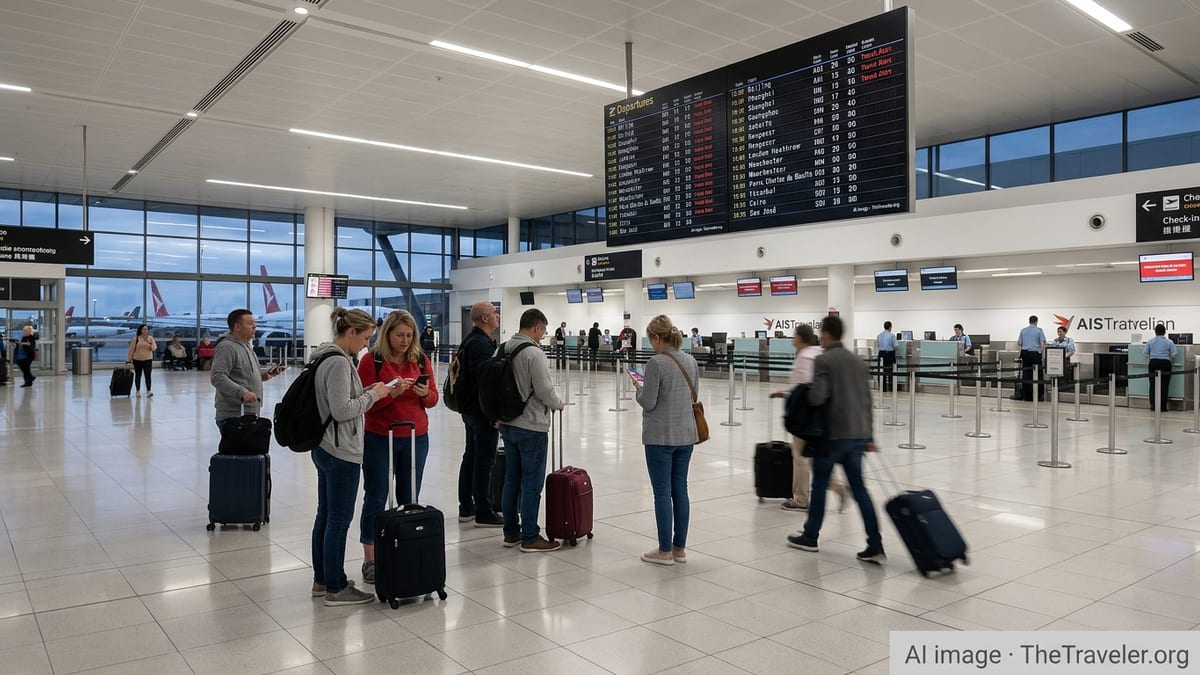
Travel Advice Shift Opens Space for Cautious Return
Updated guidance from the Australian government has lowered the travel advisory level for Bahrain, Kuwait, Qatar and the United Arab Emirates from “Do not travel” to “Reconsider your need to travel.” According to publicly available information, some parts of Israel remain under the strictest warning, but major Gulf hubs that had effectively been off-limits are now accessible to Australians who are prepared to accept higher levels of risk.
The change follows an interim agreement between the United States and Iran aimed at reducing hostilities in the wider Middle East. International reporting indicates that the deal has reduced the immediate threat to key aviation corridors, even though officials and analysts continue to warn that conditions could deteriorate again with little notice.
While “Reconsider your need to travel” remains a high threshold in the Smartraveller system, it marks a significant departure from the blanket red warning that had discouraged Australians from even transiting through the Gulf. Industry observers note that the revised stance is likely to influence airline scheduling decisions, travel insurance settings and consumer sentiment ahead of the busy northern summer travel period.
Government travel advice does not compel airlines to operate, but historically these advisories have shaped demand and corporate travel policies. Travel agents and comparison platforms monitor such changes closely, as they affect both pricing and the range of viable route options they can present to customers.
Middle Eastern Airlines Regain Strategic Advantage
The Gulf’s big network carriers, including Emirates, Qatar Airways and Etihad Airways, rely heavily on flows between Australia and Europe, often via Dubai, Doha or Abu Dhabi. After months of disruptions linked to conflict and airspace closures, published industry analysis shows these airlines have been steadily restoring services, albeit with schedule tweaks and contingency routings to avoid higher-risk areas.
With Australia no longer advising its citizens to avoid these countries outright, aviation experts suggest that Middle Eastern airlines may see a gradual return of Australian passengers who had shifted to alternative hubs in Singapore, Hong Kong or Bangkok. Prior to the escalation of tensions, Gulf carriers accounted for a substantial share of one-stop itineraries between Australian cities and European destinations.
Travel industry commentary also indicates that these airlines may move to reinforce their market position through promotional fares and capacity adjustments targeted at Australian origin and destination traffic. Some independent travel blogs and frequent-flyer communities have already been tracking discounted long-haul fares via the Gulf, framed as attempts to entice risk-tolerant travelers back to traditional stopover points.
Nevertheless, analysts caution that airlines will remain sensitive to any renewed instability. Routes that cross or border conflict zones can be adjusted or suspended at short notice, and carriers are expected to preserve flexibility in fleet deployment so they can pivot if the security outlook worsens.
What the Change Means for Australian Travellers
For Australian leisure and business travellers, the move effectively reopens a network of one-stop itineraries to Europe, Africa and parts of Asia that had become difficult or impossible to book under the previous advice. Aviation and travel advisories compiled in recent months show that many Australians faced detours, long layovers or higher fares when avoiding Middle Eastern hubs at the height of the crisis.
Travel guidance from insurers and specialist agencies continues to emphasise careful planning. Many policies include specific clauses related to government “Do not travel” warnings, and while the shift to a lower level reduces some exclusions, travellers are still urged to check policy wording, particularly for transit-only stays in Gulf airports. Some providers maintain watch lists of countries or regions where cover may remain restricted even if official advice has softened.
Consumer-facing travel advisories also encourage passengers to stay in regular contact with airlines and agents before departure, given the possibility of renewed airspace closures or schedule changes. Flexible tickets, longer connection windows and up-to-date contact details with airlines are being promoted as practical ways to manage residual risk.
On the ground, recent traveller accounts from the region describe relatively normal airport operations in Dubai, Doha and Abu Dhabi, albeit with heightened security and occasional last-minute gate changes. For many Australians weighing up their options, the calculus now rests on balancing cost and convenience against a still-elevated but somewhat moderated risk profile.
Competitive Jolt for Qantas and Asian Hubs
The relaxation of Gulf travel advice arrives at a sensitive moment for Qantas and key Asian competitors such as Singapore Airlines and Cathay Pacific. During the period when much of the Middle East was covered by “Do not travel” warnings, publicly available data and commentary indicated that passengers shifted towards non-Gulf routes, bolstering demand for nonstop and Asian-hub connections to Europe.
Qantas has recently announced additional long-haul capacity to Europe and promoted routings that avoid the Middle East, capitalising on traveller caution and Australia’s previous stance. With the Gulf now partially back in play, analysts suggest that some of this traffic may migrate back to Middle Eastern carriers, especially on price-sensitive itineraries where one-stop Gulf routes often undercut alternatives.
Asian hubs are also watching developments closely. Travel industry reporting notes that cities such as Singapore, Hong Kong and Kuala Lumpur benefited from extra connecting traffic while Gulf options were constrained. A normalisation of flows through the Middle East could ease pressure on these airports but may also slow the rapid growth in Asia-focused long-haul operations that emerged during the disruption.
In the medium term, the new environment could spur competitive responses, from tactical fare sales to network refinements and joint ventures. Airlines on all sides of the Indian Ocean are vying for Australia’s outbound travellers, a market that is highly seasonal and particularly sensitive to safety perceptions and exchange-rate movements.
Risks Remain as Region Tests Fragile Calm
Despite the more permissive Australian travel advice, regional security analysts continue to describe the situation in the Middle East as fragile. Reports tracking airspace notices and maritime security advisories point to lingering concerns about missile activity, drone incursions and attacks on shipping, any of which could again affect civilian aviation.
Some travel commentators argue that Australia’s revised stance brings it more closely into line with the approach of several other Western governments, which have warned against travel to specific conflict areas while avoiding blanket bans on transit through major hubs. Even so, the wording of the Australian advisory underlines that “Reconsider your need to travel” is not a return to pre-conflict normality.
For Middle Eastern airlines, the easing of restrictions is an opportunity to rebuild their Australian markets, but one that depends on the conflict remaining contained and on continued coordination with aviation safety bodies. For travellers, the Gulf is once again an option rather than an outright no-go zone, but it is an option that still warrants careful thought, close monitoring of developments and a realistic assessment of personal risk tolerance.