


More news on this day
Australia has joined a growing group of Western partners in loosening travel warnings for parts of the Middle East, downgrading its advice for the United Arab Emirates, Qatar, Bahrain and Kuwait in a move that signals cautious confidence in the region’s major aviation hubs even as wider security risks persist.
Get the latest news straight to your inbox!
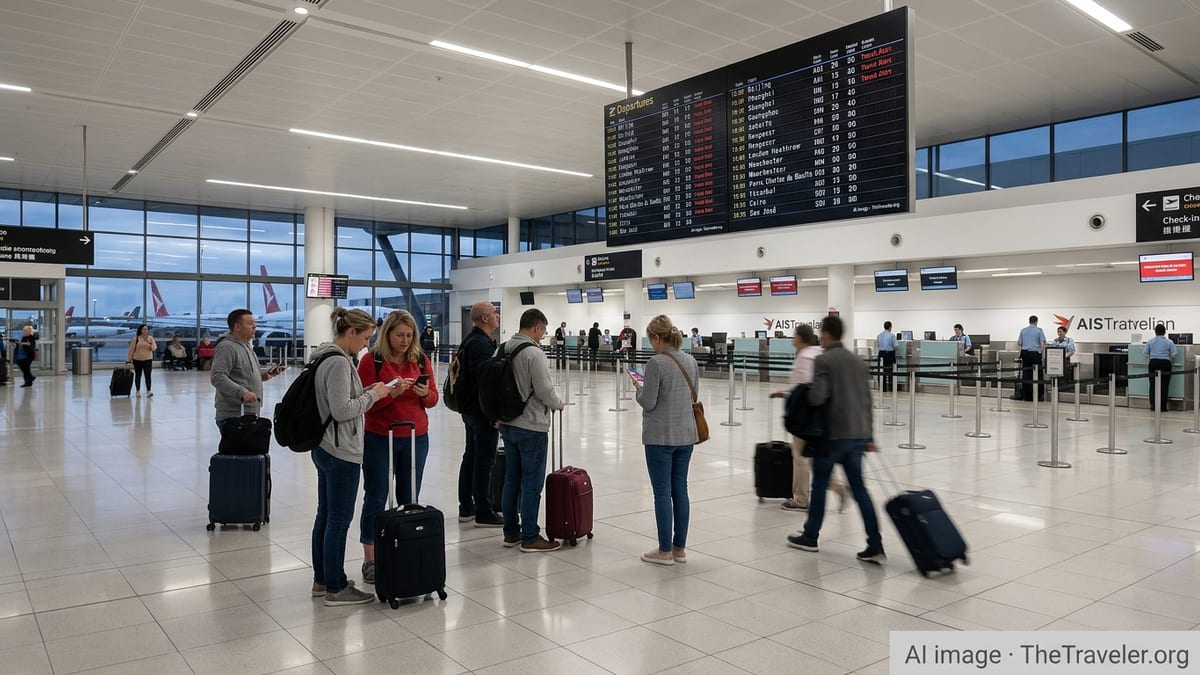
Canberra Softens Stance on Gulf Transit Hubs
According to recent updates on the Australian government’s Smartraveller platform and a separate notice from the Department of Foreign Affairs and Trade, the travel advice for the United Arab Emirates, Qatar, Bahrain and Kuwait has shifted from the highest “Do not travel” level to a lower tier that urges travellers to reconsider their need to travel rather than avoid the countries entirely. Publicly available information indicates that Israel also saw a parallel easing, though it remains subject to extensive security caveats.
The revised advice, published on 17 June 2026, follows months in which Australia had effectively discouraged all non-essential movement through the Gulf in response to heightened regional tensions and concerns about airspace safety. The reset now brings official guidance more in line with the reality on the ground, where airlines have continued to operate dense schedules through Dubai, Abu Dhabi and Doha, and where Australian travellers have remained heavily dependent on these hubs for connections to Europe, Africa and parts of Asia.
Travel industry commentary in Australian media describes the downgrade as a relief for tour operators and long-haul carriers that rely on Middle East stopovers. However, the messaging from government remains cautious, with travellers urged to closely track destination-specific alerts, monitor aviation disruptions, and maintain flexible booking arrangements in case of sudden changes in the security environment.
Risk analysts note that the shift in language is less a declaration that the Gulf is back to business as usual and more a recalibration that distinguishes between frontline conflict zones and regional transport corridors that have proven more resilient than expected.
How the UK, US, Canada and EU Are Adjusting Their Advice
Australia’s recalibration comes as other major outbound markets reassess their own Middle East advisories. In the United States, the Department of State continues to maintain elevated caution levels for the United Arab Emirates, Qatar, Bahrain and Kuwait, generally framing them as destinations where travellers should reconsider non-essential trips rather than countries subject to outright bans. Recent advisories highlight ongoing concerns about the potential for armed conflict, missile or drone activity and sudden airspace restrictions, but do not discourage travel as categorically as during previous peaks in regional tension.
Canadian travel advisories have also been updated in recent weeks, with the federal travel portal describing a complex but manageable risk environment in the Gulf. The guidance underscores the need for robust travel insurance, contingency planning and awareness of local security conditions, particularly for travellers transiting onward to higher-risk neighbours. A separate communication from the Canada Border Services Agency earlier this year introduced a temporary halt on removals to the United Arab Emirates, Kuwait, Bahrain and Qatar, underlining how migration and border policy are being adjusted in parallel with tourism and business travel considerations.
In Europe, several EU member states have refined their Middle East advice on a country-by-country basis, often differentiating more clearly between major airline hubs such as Dubai and Doha and areas closer to active frontlines. While some national foreign ministries still advise against non-essential travel to parts of the region, many have moved away from blanket “do not travel” notices, especially where there is no direct conflict and where local authorities are seen as maintaining effective internal security.
In the United Kingdom, travel industry briefings and recent public discussions point to a gradual easing in official guidance for visits to and transit through the UAE and other Gulf hubs after months of stricter advice. Tour operators based in Britain have reported that updated wording from the Foreign, Commonwealth and Development Office has helped shore up traveller confidence, although airspace risks and insurance conditions remain under constant review.
What the Downgrade Means for Airlines, Hubs and Travellers
The coordinated softening of language across Australia, the UK, North America and parts of Europe is already being interpreted by aviation analysts as a vote of confidence in the risk management measures put in place by Gulf carriers and airport authorities. Airlines based in the UAE and Qatar have maintained extensive safety buffers, including route diversions, altitude changes and close coordination with air traffic control to avoid sensitive flight corridors.
For travellers, the downgrades do not eliminate risk, but they do expand options. Many global itineraries between Australasia, Europe and Africa are structured around one-stop connections in Dubai, Abu Dhabi or Doha, and the harshest warnings over the past year had pushed some passengers toward longer routings via East Asia or North America. With advisory language now less severe, pricing and schedules through the Gulf are expected to become more attractive again, potentially reversing a portion of the recent traffic shift away from Middle Eastern hubs.
Travel insurers are likely to play an outsized role in how quickly demand rebounds. Policies that were previously voided by “do not travel” classifications may again be valid under the downgraded categories, though many providers are still excluding coverage for disruptions linked directly to armed conflict or closure of specific airspace corridors. Industry guidance encourages travellers to read the fine print carefully and confirm that connections through particular airports are covered.
Hotels, tour operators and destination marketing bodies in the UAE, Qatar, Bahrain and Kuwait are meanwhile weighing how aggressively to signal that they are open for business. Several have been slow to launch major new campaigns while the headline global narrative remained focused on instability. The more nuanced advisories now emerging from Western governments could give them greater scope to promote city breaks, stopover packages and conference travel without appearing to downplay regional realities.
Persistent Risks Keep Focus on Monitoring and Flexibility
Despite the easing of formal advice levels, official travel pages across Australia, the UK, North America and Europe continue to stress that the broader Middle East remains volatile. Notices highlight the possibility of short-notice airspace closures, changes to overflight permissions and sporadic missile or drone activity that could affect civilian routes even far from areas of direct confrontation.
Publicly available guidance typically urges travellers heading to or through the Gulf to register contact details with their home government, keep copies of key documents in both digital and physical form, and remain alert to local developments via reputable news sources and airline channels. Transit passengers are being advised to allow generous connection times, as even minor schedule adjustments can cascade into missed links when carriers are rerouting around sensitive zones.
Security experts caution that the very interconnectedness that makes the Gulf such an efficient global transit hub also exposes it to wider regional shocks. Disruptions in one neighbouring country can cause changes to flight paths across several national airspaces, affecting itineraries that may not appear, at first glance, to be directly linked to active conflict areas.
For now, the consensus among major advisory issuers appears to be that carefully managed travel to the United Arab Emirates, Qatar, Bahrain and Kuwait remains feasible for informed, risk-aware passengers. The shift away from outright warnings toward more conditional guidance reflects an attempt to balance ongoing security concerns with the economic and logistical importance of Middle Eastern aviation corridors for global mobility.
Outlook for Peak Travel Season and Long-Haul Demand
With Northern Hemisphere summer approaching, tour operators and airlines are racing to interpret what the latest advisory changes will mean for bookings. Industry forecasts released in recent weeks had projected a significant decline in Middle East arrivals for 2026, as travellers weighed security headlines against convenience and price. The recent downgrades, particularly in Australia and among key European markets, may soften those projections if confidence continues to improve.
Airlines are already adjusting capacity in anticipation of renewed demand. Schedules published for the coming months show additional frequencies on some Australia–Gulf–Europe routes, alongside contingency plans that allow carriers to pivot via alternative waypoints should regional tensions flare again. Network planners say that the flexibility built into current timetables reflects a new normal in which geopolitical risk is treated as a core variable, not an occasional shock.
For travellers considering trips in the next few months, the practical takeaway is that itineraries involving the UAE, Qatar, Bahrain or Kuwait are once again being framed as viable, provided that passengers stay informed and are prepared to adapt. Flexible tickets, comprehensive insurance and close attention to official advisories remain central tools for navigating the changing landscape.
As governments calibrate their messaging and the industry tests the strength of demand, the Middle East’s major hubs are likely to remain under intensive scrutiny. The latest wave of advisory downgrades suggests that, for now, they are being viewed less as no-go zones and more as manageable gateways within a region that continues to command both caution and global travel interest.