


More news on this day
An interim investigation by the Australian Transport Safety Bureau into a severe storm at the Port of Brisbane has found that delayed emergency tug assistance and limited port procedures were significant factors in four ships breaking away from their moorings during the event.
Get the latest news straight to your inbox!
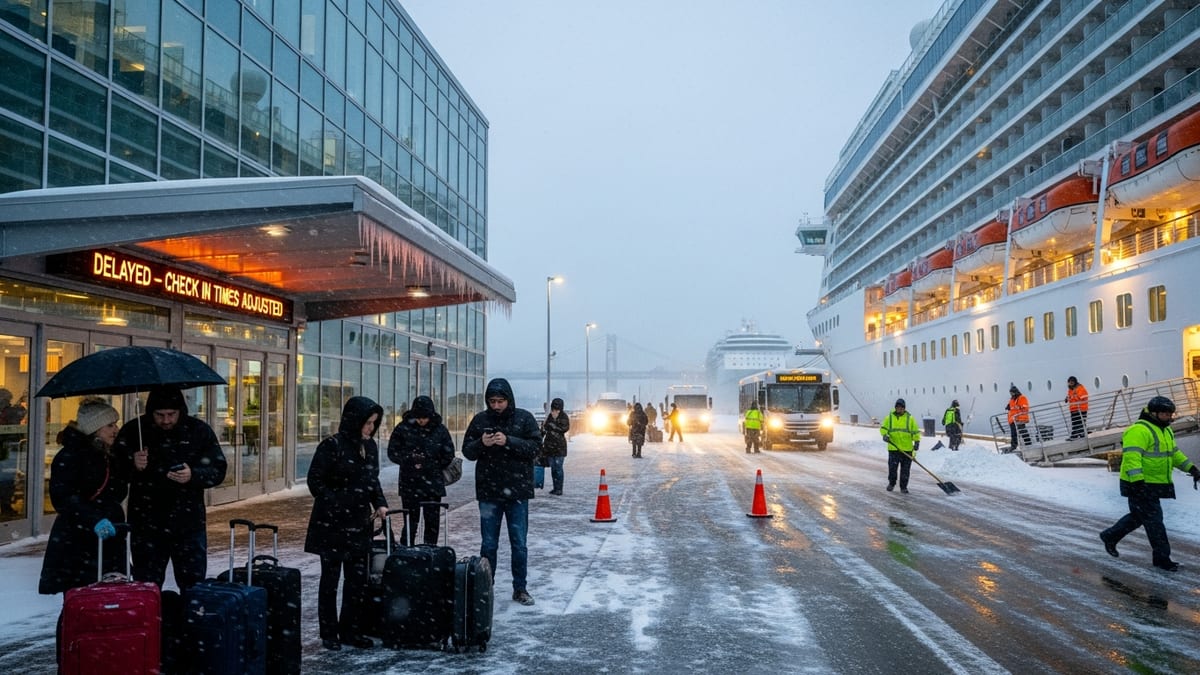
Storm Turns Routine Port Day Into High-Risk Emergency
According to publicly available information from the Australian Transport Safety Bureau, the incident occurred on 24 November 2025, when hot, humid conditions over South East Queensland produced a line of intense afternoon thunderstorms sweeping toward the Port of Brisbane. Marine forecasts earlier in the day had already highlighted the possibility of storms, but subsequent severe weather briefings warned of “very dangerous” thunderstorms with destructive winds and giant hail likely to impact the region.
Container ships, tankers and other commercial vessels were alongside berths or at anchorage, conducting routine operations as conditions deteriorated. As the thunderstorm cell moved closer, wind speeds increased rapidly and visibility dropped, placing strain on mooring lines and terminal equipment. Cargo work on several container ships was suspended and shoreside personnel began to leave the exposed wharf areas.
As the front passed directly over the port, the combination of sudden wind gusts, shifting loads and limited room to maneuver in the confined river environment contributed to multiple vessels parting their moorings. The interim report notes that four ships ultimately broke away during the storm, drifting from their berths and increasing the risk of collision, grounding and damage to port infrastructure.
Initial assessments indicate that while individual ship crews and pilots reacted to deteriorating conditions, the wider port response was complicated by the speed of the storm’s onset and the availability of critical support assets such as tugs.
Delayed Tug Assistance Highlighted as Key Safety Issue
The ATSB’s interim findings emphasize that delayed emergency assistance, particularly in the form of tug support, was an important factor in the developing situation. Published accounts of the incident describe pilots and bridge teams seeking additional towage as the weather outlook worsened and forecast winds climbed beyond 30 knots, a level that can significantly increase the risk of mooring failures for large, high-sided vessels.
In one case described in publicly available coverage, concerns were raised that limited tug availability could leave an inbound car carrier without dedicated assistance while navigating a narrow channel in strengthening winds. A request was made for tugs to remain with the vessel, but only two units were immediately available and a third tug had not yet been crewed, prompting delays and schedule adjustments.
As the storm intensified, tug resources already tasked with routine movements or standing by for arriving and departing traffic had to be reassigned to emergent situations. That process, combined with the rapid escalation of conditions, meant that several ships were exposed to peak wind loads with less support than pilots and port operators had anticipated earlier in the day.
The ATSB notes in other recent investigations into breakaway events that the timeliness and coordination of external assistance can significantly influence outcomes once moorings begin to fail. Where tugs and other response assets are positioned, how quickly they can be mobilized, and the clarity of decision-making triggers all play a role in whether drifting vessels can be brought under control before they hit structures or other ships.
Port Preparedness and Planning Under Renewed Scrutiny
The storm-related breakaways in Brisbane come against a backdrop of wider concern about how ports prepare for and manage extreme weather events. In a separate final report into an earlier Australian river port breakaway, the ATSB identified issues such as the absence of readily usable evacuation plans, a lack of priority lists for which ships should be moved first, and no documented thresholds to trigger port-wide responses to high current or wind conditions.
In that earlier case, safety investigators highlighted that decisions about whether to keep ships alongside or to evacuate them to safer anchorages were made under severe time pressure and without formal procedures or consistently recorded risk assessments. The report found that the risk of a ship remaining at the berth was underestimated, and that once a vessel broke away, the resulting grounding and subsequent recovery posed a far greater hazard than a more pre-emptive maneuver might have.
The interim Brisbane findings echo several of these themes. Public information indicates that while severe weather warnings were passed to the vessel traffic service and to ships at container berths, the operational translation of those forecasts into concrete preparatory steps was uneven. Instructions to take additional mooring precautions were issued, but questions remain over whether port-wide triggers for suspending movements, reallocating tugs to emergency standby, or ordering early relocations of high-risk vessels were sufficiently defined.
Safety specialists note that modern port safety management systems are increasingly expected to integrate meteorological data, traffic patterns and real-time risk assessments into structured plans. These frameworks typically include predefined escalation levels, decision matrices for closing berths or approaches, and clear responsibilities for initiating emergency responses when conditions deteriorate quickly.
Global Context: Breakaway Risks Rising With Extreme Weather
The Brisbane incident forms part of a growing body of international cases where ships have parted moorings during storms or high river flows, sometimes resulting in multi-million-dollar damage to infrastructure and vessels. Recent Australian investigations into port river traffic have documented how strong currents and changing hydrodynamic conditions can expose mooring systems to forces beyond their design envelope, particularly when large ships are berthed in close proximity.
In parallel, accident reports from other regions, including the United States and Europe, have described bulk carriers and container ships breaking free in strong winds, drifting into neighboring terminals or grounding on riverbanks. These investigations frequently cite a combination of factors: limited tug availability at critical moments, mooring arrangements not fully optimized for prevailing conditions, and port procedures that do not clearly define when to halt operations or adjust traffic flows.
Climate and weather experts have warned that intense convective storms, similar to the cell that hit Brisbane, are expected to become more frequent in some coastal regions. Stronger and more erratic wind gusts, rapid pressure changes and localized squalls can challenge traditional safety margins around mooring design and operational decision-making. For port and terminal operators, this has reinforced calls for more conservative planning assumptions and more robust real-time monitoring of both weather and ship movements.
For travelers and the wider tourism and trade sectors, the resilience of major ports under such conditions is increasingly important. Cruise ships, vehicle carriers and container vessels depend on reliable access to terminals that can manage sudden storms without prolonged disruption or elevated risk to passengers, crew and cargo.
Next Steps in the ATSB Investigation
The ATSB’s work on the Brisbane storm incident remains ongoing, with investigators continuing to review data from voyage data recorders, port systems and meteorological records. Public information indicates that the final report will examine in more detail how port procedures, towage operations, mooring practices and emergency preparedness interacted during the event.
The bureau has stated in previous cases that when critical safety issues are identified during an investigation, relevant organizations are usually advised so they can consider taking timely action even before a final report is published. In earlier Australian breakaway events, this process has led to revisions of port operating manuals, clearer weather-related thresholds, and improved communication practices between pilots, harbour masters and shipping lines.
Industry observers expect that the Brisbane findings will add to a broader global discussion on how ports sequence ship movements in deteriorating weather, how quickly additional tug capacity can be mobilized, and what kind of contingency planning is needed for complex multi-berth terminals. Particular attention is likely to focus on ensuring that the highest-risk vessels, such as large car carriers or fully laden tankers, have access to prompt assistance when conditions start to exceed normal operating limits.
Until the full report is released, the interim findings serve as a reminder that rapid-onset storms can turn routine port traffic into a high-stakes emergency within minutes, and that the timing of emergency assistance can be as critical as the strength of mooring lines themselves.