


More news on this day
Australia has sharply escalated its travel warnings for parts of the Middle East, urging citizens not to travel to Saudi Arabia and nearby conflict zones after a deadly Houthi missile strike in Yemen killed at least 53 troops and renewed attacks hit Saudi airports.
Get the latest news straight to your inbox!
Deadly strike in Yemen triggers fresh alarm
According to publicly available reporting from international conflict trackers and regional media, a Houthi missile strike on a military training camp in Yemen’s Shabwa governorate in mid-October 2026 killed at least 53 Yemeni government-aligned soldiers and injured dozens more. The attack, which used ballistic missiles against assembled troops, has been described in open analysis as one of the deadliest single incidents since the conflict re‑escalated over the northern summer.
The Shabwa strike followed weeks of intensified fighting between Houthi forces and Saudi-backed Yemeni units along the Red Sea coastal plain and around key strategic locations such as Mokha and Bab al Mandab. Security analysts note that Houthi units have combined frontline engagements with long-range drone and missile attacks, targeting both Yemeni government positions and sites deeper inside Saudi Arabia.
Travel-risk assessments compiled by think tanks and security consultancies highlight that these battlefield developments have unfolded alongside an ongoing Houthi campaign against commercial and military assets in the Red Sea and Gulf of Aden. For foreign travellers, including Australians, the combination of ground fighting, missile activity and persistent airstrikes has significantly raised the risk profile of the broader region.
Australian government travel advisories have long warned against any travel to Yemen itself, citing armed conflict, widespread insecurity and the risk of kidnapping. The latest guidance reiterates that consular help is “extremely limited” or effectively unavailable for anyone who enters Yemen despite the highest-level warning.
Saudi airports under fire as Houthis widen their reach
The deadly incident in Yemen coincided with a renewed wave of Houthi missile and drone attacks on airports and aviation infrastructure in Saudi Arabia. Open-source chronologies of the conflict indicate that between 6 and 12 October 2026, Houthi forces launched coordinated strikes on multiple Saudi airports, including King Khalid International Airport in Riyadh and facilities in the country’s south.
These attacks left at least 20 people dead and more than 370 injured across several incidents, according to aggregated casualty figures published by international media and research organisations. A strike on Riyadh’s main international airport on 10 October killed at least a dozen people and injured hundreds, among them foreign nationals. Earlier and subsequent attacks targeted airports in the south of the kingdom and in the Yemeni port city of Aden.
Television images and social media footage verified by newsrooms showed damaged terminal buildings, shattered glass facades and grounded aircraft, while aviation notices documented repeated closures and diversions. The European aviation regulator also broadened its guidance for flights using Saudi airspace, highlighting a heightened risk to airports and related infrastructure from long-range Houthi projectiles.
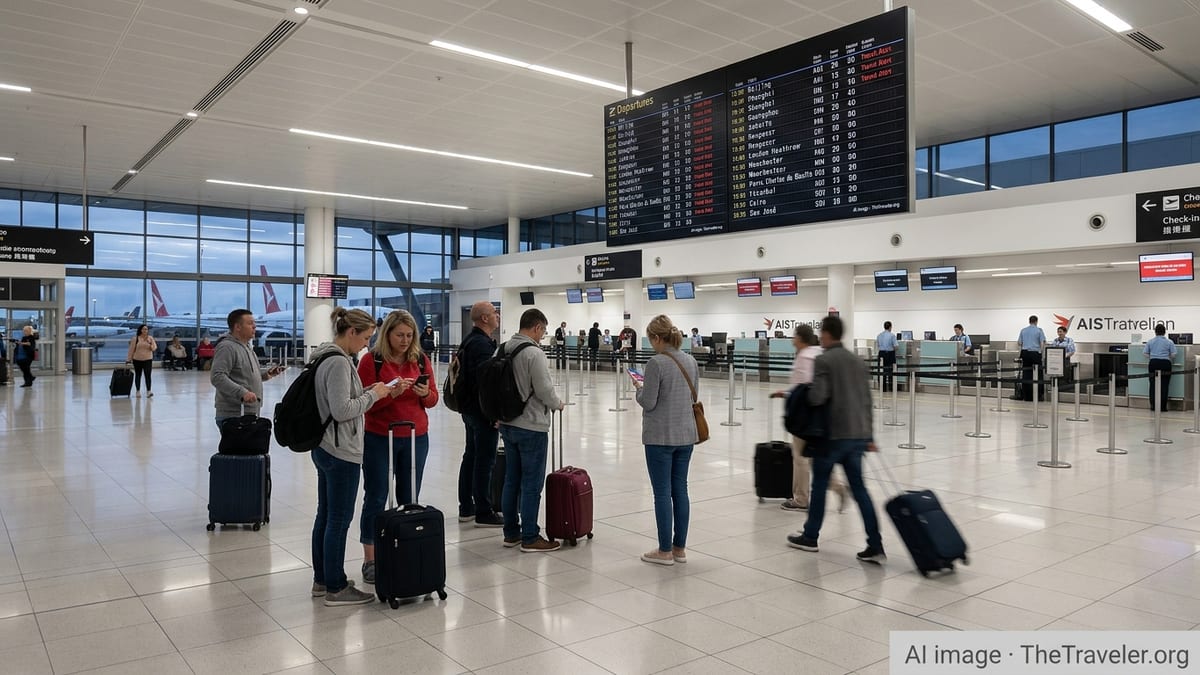
For travellers, these developments translate into a tangible risk of being caught up in an attack on an airport concourse or nearby facilities, as well as the practical disruption caused by sudden closures, mass flight cancellations and lengthy detours. Travel agents and airlines have been advising passengers to monitor schedules closely and to be prepared for last-minute changes or re-routing.
Canberra raises Saudi Arabia advice to ‘do not travel’
In response to the escalating pattern of attacks, publicly available updates on the Australian government’s Smartraveller platform show that overall advice for Saudi Arabia was raised to “do not travel” in early October 2026. Previously, the country had been at a lower advisory level, with warnings focused on specific border regions and provinces.
The latest advisory language urges Australians to avoid all travel to Saudi Arabia due to the threat of missile and drone strikes, terrorism and volatile regional tensions linked to the war in Yemen and broader Middle East instability. The guidance explicitly warns against going to King Khalid International Airport in Riyadh, citing recent deadly incidents and the risk of further strikes against aviation infrastructure.
Sm artraveller’s country page for Saudi Arabia also singles out the southern provinces of Asir, Jazan and Najran and areas within 30 kilometres of the Yemeni border as particularly dangerous. These areas have experienced repeated cross‑border shelling, drone launches and military operations over several years, and are now again described in public advisories as locations where Australians should not travel under any circumstances.
By elevating Saudi Arabia as a whole to level four, the same category used for active war zones, the Australian government is signalling that the combination of targeted attacks on airports, regional conflict dynamics and the potential for sudden escalation presents an unacceptably high risk to visitors.
What the new warning means for Australian travellers
The “do not travel” designation has practical implications for Australians contemplating work trips, religious tourism, stopovers or onward connections via Saudi Arabia and neighbouring hotspots. Travel insurers commonly refer to official advisories when assessing coverage, and many policies exclude cover for trips taken to destinations that are at the highest warning level at the time of departure.
Industry commentary notes that travellers who book flights or packages after a “do not travel” alert is issued may find they are not covered for cancellations, medical costs or evacuation related to conflict or terrorism. Those already in affected countries may retain some cover, but are usually encouraged to leave as soon as it is safe and commercially feasible to do so.
Australians with existing itineraries routed through Riyadh or other Saudi airports are being advised, in publicly accessible guidance, to contact their airline or travel provider before heading to the airport and to consider options to re-route through alternative hubs in the Gulf or Asia. Some carriers have temporarily suspended services to Riyadh or reduced frequencies, while others have lengthened flight paths to avoid certain airspace.
For Australians employed in the region, particularly in the energy sector, construction and aviation services, the heightened advisory level may require discussions with employers about duty of care, contingency planning and potential relocation. Companies with Australian staff in Saudi Arabia are reported to be reviewing security protocols, travel approvals and emergency communication arrangements.
Heightened risk in Red Sea and regional transit routes
The latest advisory shift also reflects ongoing concern about the wider security environment in the Red Sea, Bab al Mandab Strait and Gulf of Aden. Since late 2023, maritime security reports and vessel-tracking data have recorded numerous missile and drone incidents attributed to Houthi forces, targeting commercial shipping and naval vessels in or near key sea lanes.
These attacks have prompted several navies, including those of the United States and European partners, to increase patrols and provide additional escorts for merchant ships using the Red Sea corridor. Shipping companies have, in some cases, re-routed vessels around the Cape of Good Hope, extending voyage times and increasing costs, which in turn has implications for global supply chains.
Australian travel guidance highlights that cruise itineraries and ferry services operating in these waters may face itinerary changes, delays or cancellations at short notice if the security situation deteriorates. Travellers are advised to pay close attention to cruise line updates and to be aware that evacuation or diversion options could be limited in the event of a serious incident at sea.
More broadly, the escalation in Houthi activity and retaliatory strikes by regional powers add another layer of uncertainty for travellers transiting the Middle East, including via nearby hubs that are not directly targeted but could be affected by shifting airspace restrictions or heightened alert levels. Australians are being encouraged, through publicly available advisories, to closely monitor government updates, reconsider non-essential trips and ensure they fully understand the risks before committing to travel in or near the affected areas.