


More news on this day
Azerbaijan’s Ministry of Foreign Affairs has issued a travel warning for France, advising citizens to avoid non-essential visits and exercise heightened caution if already in the country, following several days of urban unrest and violent protests in major French cities.
Get the latest news straight to your inbox!
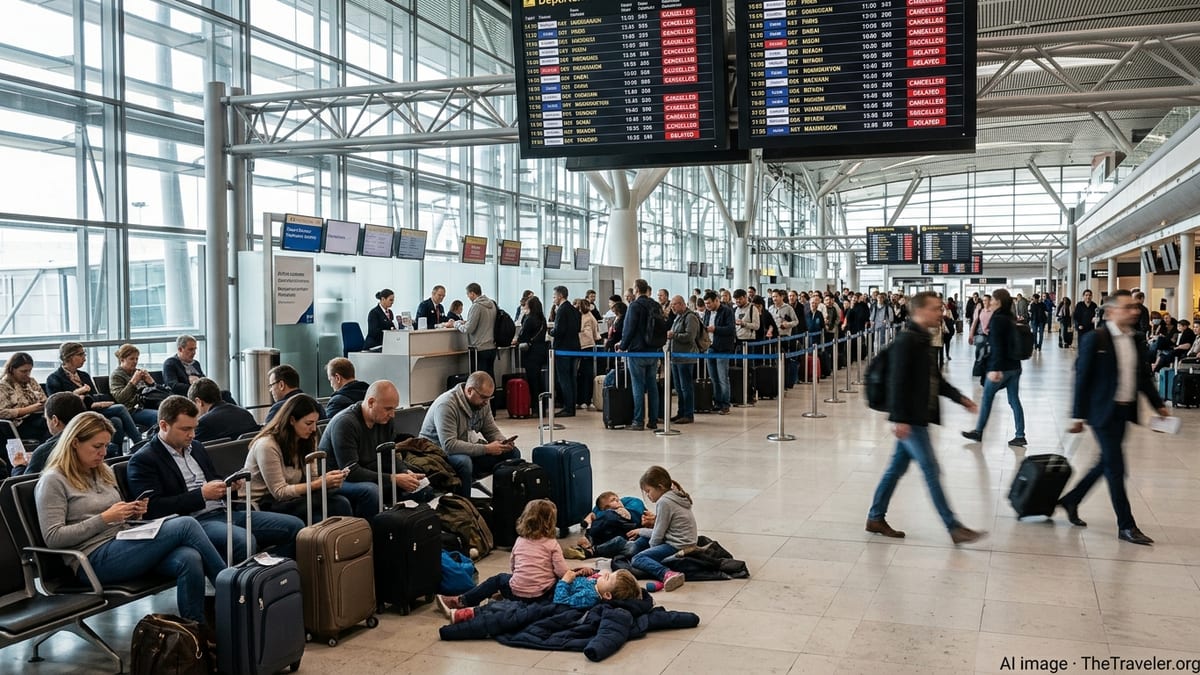
Details of Azerbaijan’s New Advisory
According to information published by Azerbaijani news outlets and official statements, the travel warning for France was issued on 20 October 2026. The advisory cites what it describes as widespread unrest, violence and acts of civil disobedience across parts of France in recent days. Citizens are urged to refrain from traveling to France unless necessary, while those who are already there are encouraged to remain vigilant, stay away from large gatherings and closely monitor local developments.
The advisory emphasizes that trips deemed non-essential, such as tourism and discretionary business travel, should be postponed until the situation stabilizes. Travelers who decide to proceed are encouraged to keep their families informed of their whereabouts, maintain regular contact, and pay attention to local guidance on curfews or restrictions in specific neighborhoods.
Publicly available information shows that Azerbaijan’s foreign ministry is also advising its nationals in France to ensure that their travel documents, health insurance and contact details for Azerbaijani diplomatic missions are up to date. Citizens are encouraged to register with consular services so they can be reached quickly if the security environment deteriorates further or transport links are disrupted.
The new warning fits into a broader pattern of Azerbaijan updating its travel guidance for destinations experiencing instability. Previous advisories in 2026 have addressed risks in zones affected by armed conflict or maritime security incidents, with the foreign ministry urging citizens to avoid areas where authorities consider the security situation fragile.
Unrest in France and Impact on Visitors
The Azerbaijani warning follows several days of protests and sporadic violence in France, particularly in large urban centers. International media coverage describes a mix of student-led demonstrations, labor mobilizations and renewed activity among social protest movements that have periodically filled French streets over the past decade. Recent gatherings have seen clashes with police, vandalism targeting public property and episodes of looting in some districts.
French and international outlets report that authorities have introduced localized and time-limited curfews in parts of Paris and other major cities to protect businesses and public infrastructure. These measures, combined with temporary closures of metro stations, traffic diversions and crowd-control operations, have created pockets of disruption for residents and visitors, especially in central areas where demonstrations are concentrated.
Travel advisories from several foreign governments currently highlight the risk that protests in France can flare with relatively short notice, affecting public transport and access to major landmarks. Guidance typically stresses that, while most visits to France continue without serious incident, travelers may experience delays, route changes, or closures of popular sites on specific days when marches or rallies are announced.
For visitors, the main practical consequences involve mobility and trip planning rather than blanket security threats across the entire country. However, images of burning vehicles, damaged shopfronts and tense stand-offs with riot police have raised concerns among potential travelers and prompted some national authorities, including Azerbaijan, to adopt a more cautious stance toward non-essential travel.
Bilateral Context: Strained Relations Between Baku and Paris
The travel warning comes against a backdrop of already tense relations between Azerbaijan and France. Over the past several years, disagreements have surfaced over Nagorno-Karabakh, regional security in the South Caucasus and France’s political alignment in disputes involving Armenia and Azerbaijan. Criticism of Azerbaijan’s domestic policies and human rights record in segments of the French political sphere has further complicated the relationship.
Earlier in 2026, the Azerbaijani foreign ministry publicly rejected French travel guidance that highlighted risks of arbitrary detention and concerns about fair trial guarantees in Azerbaijan. Official commentary from Baku at the time described the French position as biased and politically motivated, and accused Paris of overlooking its own challenges related to law enforcement, discrimination and civil unrest.
Analysts of South Caucasus diplomacy note that travel advisories can sometimes serve a dual purpose, functioning both as safety information for citizens and as a signal in broader political disagreements. Against this backdrop, the decision to spotlight unrest in France carries diplomatic overtones, appearing to mirror earlier French warnings about travel to Azerbaijan.
At the same time, public statements from both sides refer to security and human rights concerns in the other’s territory, underscoring how domestic issues are increasingly feeding into bilateral narratives. The new advisory thus reflects not only a response to events on French streets but also the current low point in political trust between Paris and Baku.
What the Warning Means for Azerbaijani Travelers
For Azerbaijani citizens planning trips to France, the advisory raises practical and insurance-related questions rather than imposing a formal ban. The guidance uses cautionary language, urging travelers to postpone non-essential journeys and be especially careful if they proceed. It does not, based on current public information, prohibit travel outright or invalidate existing tickets and reservations.
Prospective visitors are encouraged to check whether their travel insurance covers disruptions caused by civil unrest, curfews or strikes. Policies frequently distinguish between routine delays and losses linked to known events such as announced protests, meaning coverage conditions can vary significantly. Travelers booking new trips are advised to read policy terms closely, particularly around cancellations or itinerary changes due to public order disturbances.
Those already in France are recommended to follow local news, pay attention to municipal announcements regarding demonstration routes and avoid approaching protest sites, even out of curiosity. Advice from multiple governments notes that, while many rallies remain peaceful, situations can change quickly, and bystanders can encounter tear gas, crowd surges or sudden confrontations between protesters and police.
Transportation planning is also important. On days when large demonstrations are expected, metro stations along march routes in Paris and other cities may close temporarily, and tram or bus lines can be diverted. Rail unions and other sectors sometimes coordinate strike actions to coincide with major protest dates, which can complicate onward travel to airports or regional destinations.
Broader Implications for Regional Travel and Perception
Azerbaijan’s warning for France adds to a patchwork of cross-border advisories that reflect shifting perceptions of risk across Europe. In 2026, several European countries have experienced overlapping waves of student mobilizations, cost-of-living protests and sector-specific strikes, each prompting nuanced updates in foreign travel guidance rather than sweeping bans.
The decision by Baku to call out unrest in a leading Western European destination may influence how Azerbaijani travelers, and potentially other visitors from the South Caucasus region, weigh European city breaks against alternative destinations in the short term. Some tour operators catering to this market may adjust marketing campaigns, highlight quieter regional options within France, or offer more flexible booking conditions for trips scheduled in the coming weeks.
For France, the advisory is another reminder that domestic protests resonate internationally, shaping how the country is portrayed in foreign media and official communications. While cultural attractions, transport links and overall visitor numbers remain robust, repeated cycles of unrest, even if localized and time-limited, can prompt moments of hesitation among prospective tourists.
Travel industry observers suggest that the immediate impact of a single national advisory is likely to be modest, but cumulative perceptions matter. As authorities in both Azerbaijan and France continue to refine their respective guidance, travelers are encouraged to focus on verified, up-to-date information, distinguish between localized protests and nationwide instability, and make decisions that balance personal risk tolerance with the considerable draw of France’s cities and regions.