


More news on this day
Australia has begun recalibrating its highest-level travel warnings for parts of the Middle East, joining Israel, Lebanon, the United Arab Emirates, Bahrain, Qatar, Kuwait and other states in reassessing risk as a fragile US–Iran peace framework ushers in a tentative calm across the Gulf.
Get the latest news straight to your inbox!
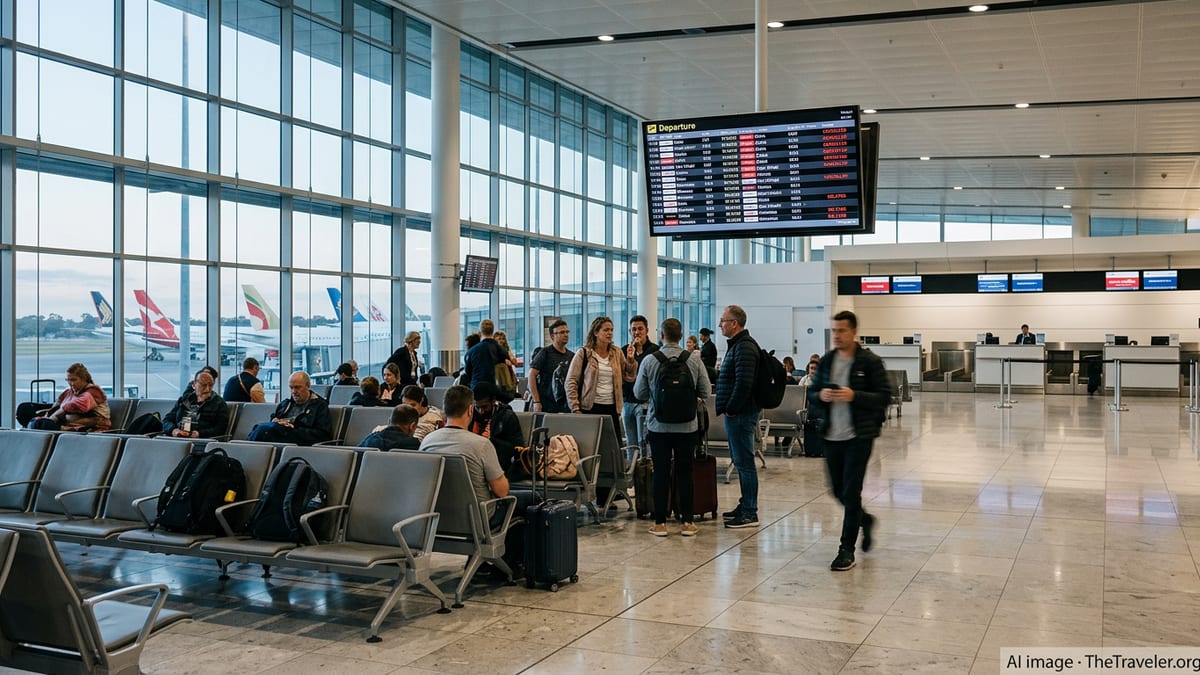
From blanket red alerts to more granular guidance
Publicly available advisory summaries show that, through late May and early June, Australia’s Smartraveller service maintained broad “do not travel” warnings for multiple Gulf and Levant destinations, including the United Arab Emirates, Qatar, Bahrain, Kuwait, Iran, Iraq, Israel and Lebanon, as regional airspace closures and missile strikes disrupted civilian traffic. Recent intelligence and industry digests indicate officials are now moving toward more differentiated, corridor-by-corridor guidance as conditions shift around the Gulf.
Similar recalibration is under way elsewhere. Regional security assessments collated by commercial risk firms this week describe a patchwork of changing entry rules, flight resumptions and localized curfews, replacing the near-total shutdown that followed the opening salvos of the 2026 Iran war. Rather than blanket bans, several governments are starting to emphasise route planning, contingency options and insurance requirements for anyone who still chooses to travel.
This evolving posture reflects a broader move among states directly affected by the conflict, from Israel and Lebanon to the Gulf monarchies, to align public-facing advice with a reality that is neither full-scale war nor genuine peace. The aim is to keep pressure on travellers to exercise extreme caution while avoiding language that could further depress aviation, tourism and business links if the lull holds.
For travellers, the shift means that rigid red lines are gradually being replaced by more nuanced, frequently updated guidance that distinguishes between transiting major hubs, visiting coastal business centres and venturing into exposed border regions.
US–Iran peace deal brings fragile calm, not full stability
The advisory overhaul is being driven by a rapidly changing strategic backdrop. Over the past week, the United States and Iran have announced an interim peace framework intended to end months of conflict, reopen the Strait of Hormuz to commercial shipping and extend an already fragile ceasefire. Coverage by international outlets describes the agreement as a 60-day window designed to halt large-scale attacks and allow more comprehensive negotiations on nuclear issues and sanctions relief.
Analysis by think tanks and security consultancies stresses that the deal has eased immediate fears of a wider regional war but leaves core disputes unresolved. Maritime control in and around the Strait of Hormuz, Iran’s missile arsenal, and the future of proxy forces in Lebanon, Iraq and Syria remain contentious. Western military briefings suggest that major naval and air deployments in the region will stay largely in place until compliance with the agreement can be verified.
For aviation and tourism, this creates a paradoxical environment. On the one hand, the reopening of key sea lanes and reduced risk of cross-border missile salvos is already calming energy markets and encouraging airlines to schedule test flights back into certain Gulf hubs. On the other, sporadic incidents, including strikes in and around Beirut and contested airspace over parts of the Levant, underline how quickly the situation could deteriorate if the truce falters.
Travel advisories are attempting to capture that dual reality: a short-term reduction in existential risk alongside a persistent possibility of sudden escalation.
Gulf hubs weigh reopening against security flashpoints
Prior to the ceasefire, major carriers across the Gulf suspended routes, diverted long-haul services around closed airspace and, in some cases, temporarily halted operations to and from Dubai, Doha, Abu Dhabi, Manama and Kuwait City. Port circulars and airline notices from February and March highlighted a chain reaction of closures after US and Israeli strikes on Iran triggered ballistic missile launches, drone attacks and airspace shutdowns stretching from Israel to Iraq and the lower Gulf.
As prospects for a durable US–Iran deal have improved, route maps are beginning to change again. Industry updates issued this week note that some Gulf airlines are cautiously reinstating select services, often with extensive rebooking flexibility, while keeping contingency plans in place should security alerts spike. Cruise operators and regional ferry companies are also monitoring the phased reopening of the Strait of Hormuz, seeing potential for limited resumption of itineraries that had been suspended since late February.
Yet commercial risk assessments published on 16 June still characterise Gulf security as highly volatile. Analysts point to Iran’s stated intention to retain a greater degree of control over Hormuz traffic, debates over any new transit fee regime and the risk of spoilers on all sides who may seek to test the ceasefire with opportunistic attacks on energy infrastructure or shipping.
For travellers, that means gateway cities such as Dubai and Doha may move from outright no-go zones to tightly managed transit points where overflight permissions, insurance cover and airline-specific safety assessments matter as much as the headline travel warning level.
Levant front line remains tense despite advisory shifts
While Gulf states focus on maritime access and aviation corridors, Israel and Lebanon remain at the centre of the broader security equation. The Iran war has been closely intertwined with cross-border clashes, rocket fire and airstrikes along the Israel–Lebanon frontier, as well as political instability in Beirut. Even as the US–Iran framework takes shape, recent reporting highlights continued incidents in and around Lebanon that have complicated diplomatic efforts and underscored the fragility of the calm.
Risk bulletins tracking the situation through mid-June continue to flag northern Israel, southern Lebanon and parts of Syria as areas of extreme danger, with a combination of military activity, damaged infrastructure and constrained emergency services. Advisory language from multiple governments reflects this, often making a clear distinction between coastal urban centres that may be slowly reopening and border regions where non-essential travel remains strongly discouraged or prohibited.
Australia’s updated travel posture appears to mirror those nuances, maintaining its highest warning levels for conflict-adjacent zones while signalling that risk assessments for specific cities and corridors will be revisited as the ceasefire beds in. That mirrors the approach taken by several European states and by regional governments themselves, which have every incentive to revive tourism without exposing visitors to unacceptable danger.
The result is a complex risk map in which neighbouring districts can fall under very different advisory categories, challenging traditional notions of country-wide guidance.
What the overhaul means for travellers and the industry
The shift from blanket prohibitions to more tailored warnings has significant implications for airlines, tour operators, insurers and individual travellers. Insurers often peg coverage decisions and premium levels to official advisory tiers, so any downgrading from “do not travel” to “reconsider travel” in key Gulf markets could gradually reopen the door to corporate travel and high-yield leisure segments, even if mass tourism remains some way off.
Airlines are likely to move cautiously, using short scheduling windows, flexible ticket policies and dynamic routing to test demand and monitor security conditions. Airport operators in the Gulf and Levant, many of which have invested heavily in becoming global transit hubs, will be watching closely for signs that passenger confidence is returning as news of the US–Iran framework filters through.
For travellers, the message embedded in the new wave of advisories is clear: the immediate risk of large-scale conflict has eased, but this is not a return to pre-war normality. Governments are still urging a high degree of caution, recommending that anyone considering a trip to the region maintain robust contingency plans, closely track local developments and remain prepared for abrupt changes to flight schedules or entry rules.
As the 60-day peace window progresses, further adjustments to travel warnings are likely. Whether those changes bring a genuine reopening of Middle East tourism or simply a brief respite in a longer cycle of disruption will depend on how firmly the current agreement between Washington and Tehran can be anchored in the complex politics of the wider region.