


More news on this day
As peak holiday travel crowds return to airports, a growing body of expert advice is focusing less on accepting long queues as inevitable and more on how passengers can actively reduce the chances of getting stuck in lines and delays.
Get the latest news straight to your inbox!
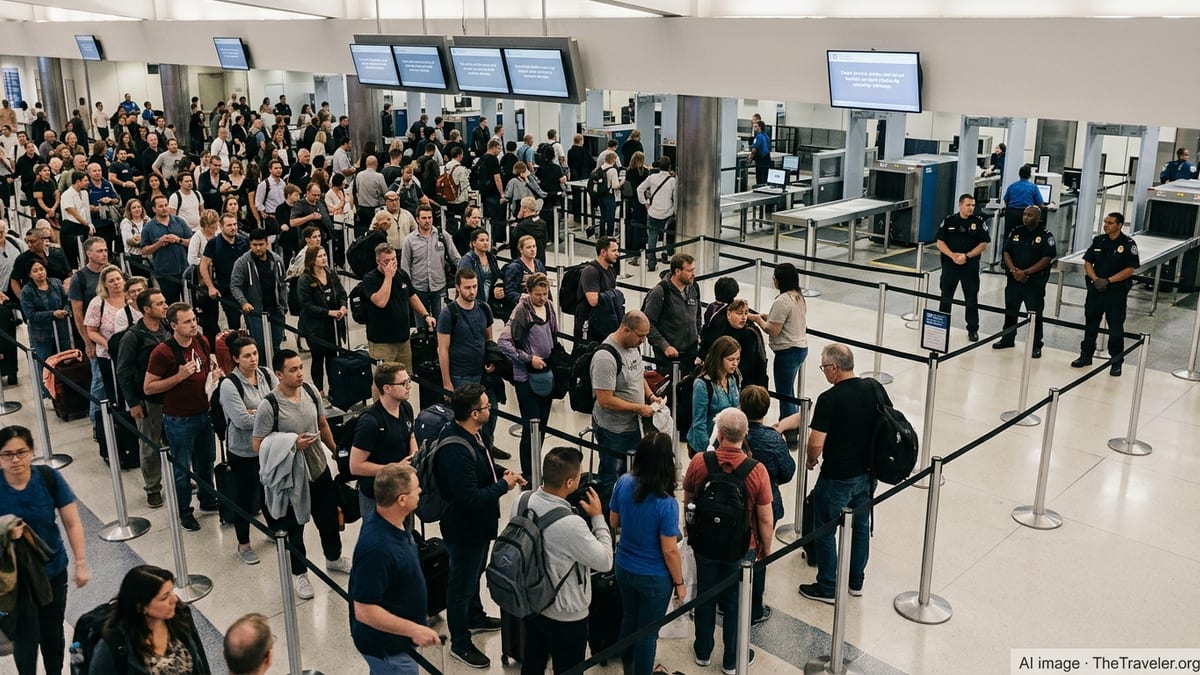
Early planning now seen as the strongest defence
Recent travel coverage indicates that the biggest gains in avoiding queues and disruption are made well before passengers arrive at the terminal. Analysts note that selecting flight times carefully, checking historical punctuality and allowing realistic connection windows all play a role in reducing exposure to bottlenecks.
Morning departures are frequently highlighted as a lower risk option, with data and expert commentary showing that first-wave flights are less affected by knock-on delays from earlier disruptions and weather systems. Choosing earlier departures during school holidays and long weekends is being promoted as a practical way for families to keep queues manageable and flight schedules more reliable.
Reports also stress the importance of monitoring flight status in the days and hours before departure. Airline apps and airport dashboards can reveal patterns of repeated delays on specific routes or carriers, giving holidaymakers the chance to adjust plans where flexible tickets permit, or at least to build in additional time for check in and security if disruption appears likely.
Travel industry guidance further suggests that passengers consider the overall performance of connecting hubs when building itineraries. Large transfer airports with chronic congestion can significantly increase the risk of missed flights, even when individual legs appear reliable on paper.
Targeted use of security fast tracks and trusted traveller schemes
Security queues remain one of the main sources of passenger frustration, but experts caution that not all solutions marketed to travellers offer the same value. Consumer research in Europe has found that paid fast track security services can be expensive for families while sometimes shaving only a few minutes off waiting times. Analysts recommend checking recent reviews and airport performance data before paying extra for premium lanes.
In contrast, longer term programmes such as trusted traveller schemes and pre-vetted security lanes are widely cited as more effective for frequent flyers. Public information shows that these programmes continue to expand and, where lanes are properly staffed, can significantly reduce security waiting times compared with standard queues.
However, travel specialists emphasise that these benefits are not guaranteed at every airport or at every time of day. Passengers are urged to treat expedited screening as one component of a wider plan, rather than a replacement for arriving early at particularly busy periods such as school holidays, major events and long weekends.
For travellers who do not hold membership in an expedited screening programme, recent guidance points to smaller steps that still help avoid congestion. Using mobile boarding passes, travelling with hand luggage only where practical and ensuring liquids and electronics are prepared before reaching the belt can all speed individual screening and keep lines flowing.
Rethinking when to arrive at the airport
Traditional advice to arrive two hours before domestic flights and three hours before long haul journeys is being revisited in light of recent congestion and staffing challenges. Articles from travel publications and consumer advocates suggest that these guidelines are now a minimum for busy periods, with some recommending that holidaymakers add an extra hour during peak seasons or when flying from airports known for long queues.
At the same time, experts warn against arriving excessively early, which can create crowding in terminals and contribute to the very congestion passengers are trying to avoid. Analysis from consumer advocates notes that anxious travellers who camp at gates many hours ahead of departure can put pressure on limited seating and facilities, making the experience more uncomfortable for everyone.
Current advice encourages travellers to tailor their arrival time based on several factors, including whether they need to check bags, the size and reputation of the departure airport, and whether they hold access to expedited security. Families with young children, people travelling with special items such as sports equipment, and those departing during early morning or late evening waves are all encouraged to build in additional time.
Experts also advise factoring surface transport into timing decisions. Road congestion, limited parking capacity and crowded public transport can all extend the journey from home to the check in desk, particularly around major holidays, so travellers are urged to plan for realistic transfer times instead of relying on ideal conditions.
Using technology to stay ahead of disruption
Technology is emerging as a key tool in helping holidaymakers avoid both queues and delays. Guidance from travel analysts consistently recommends downloading airline and airport apps, which can provide real time alerts on gate changes, security wait times and updated boarding schedules.
Airline apps in particular are highlighted as critical when flights are disrupted. Reports show that travellers who use digital tools to rebook, join standby lists or request assistance often secure alternative options faster than those waiting in physical customer service lines. This can prevent additional queuing at kiosks or desks during mass delays.
Some airports and transport agencies now publish live security wait times and terminal congestion indicators. Experts say checking these tools before leaving home can inform when to set out, which terminal entrance to use and whether to adjust transport plans. Where data shows unusually heavy queues, travellers may gain by leaving earlier or shifting to a less congested time of day if tickets are flexible.
Beyond official tools, travel commentators also point to independent flight tracking services and crowd-sourced apps that share real time experiences from other passengers. While not definitive, these services can give an early warning of disruption at specific airports, allowing holidaymakers to prepare mentally and logistically for longer lines.
Choosing routes and baggage strategies that minimise bottlenecks
Route and baggage choices are becoming increasingly central to delay avoidance strategies. Analysts note that nonstop flights reduce the risk of missed connections and lost luggage, even when they are slightly more expensive than one stop alternatives. For long haul holiday trips, a direct service is frequently described as a worthwhile investment in reliability.
When connections are unavoidable, public guidance recommends selecting longer layovers at historically congested hubs to absorb potential delays at security, immigration or boarding. Data driven research into airport queues indicates that processing times can vary significantly by time of day, making it sensible to avoid tight connections at known bottlenecks during peak hours.
Baggage strategy is another area where expert advice is evolving. Travelling with carry on bags only, where practical, removes the need to queue for check in desks and baggage belts, and eliminates the risk of checked luggage being delayed. For travellers who must check bags, using off airport or curbside check in options where available can help bypass the busiest counters inside the terminal.
Finally, travel specialists suggest that holidaymakers build flexibility into their plans wherever possible. Booking earlier flights on departure and leaving generous buffers at the start of a trip can mean that even if the first sector is delayed, onward connections and holiday reservations are less likely to be affected, reducing stress at the airport and beyond.