


More news on this day
Immigration attorneys and advocacy groups are increasingly warning foreign nationals in the United States that even routine domestic flights can carry heightened risks for some visa holders, particularly those with status gaps, pending applications or complex documentation.
Get the latest news straight to your inbox!
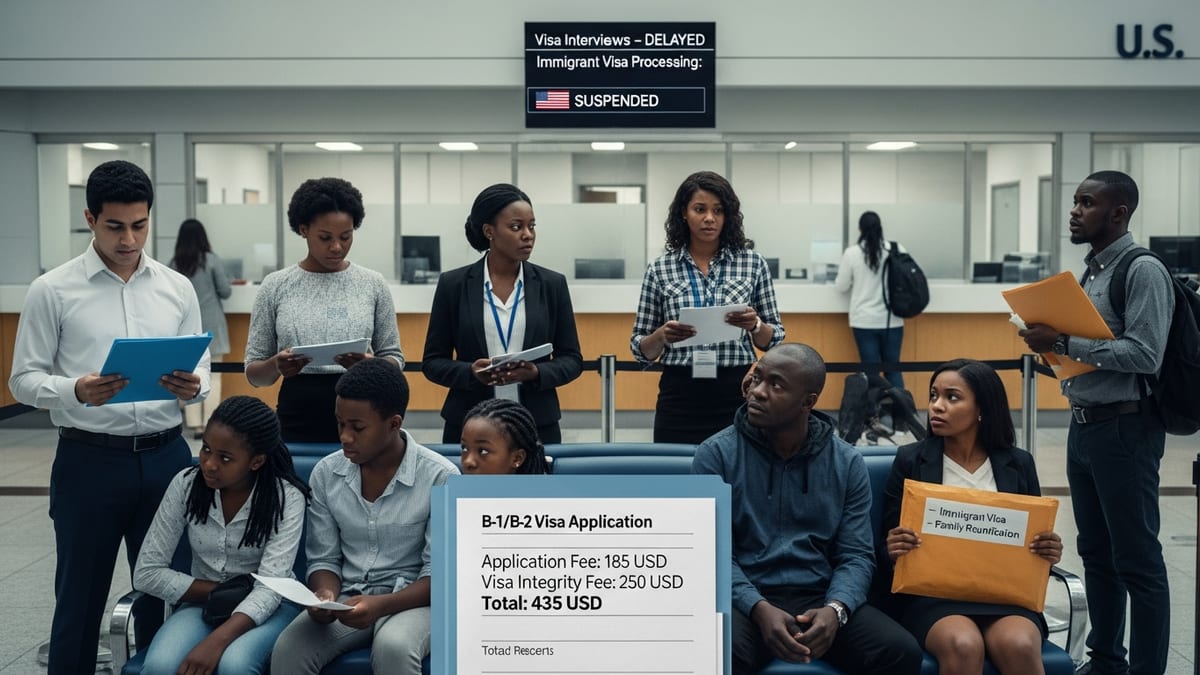
Growing Anxiety Around Domestic Air Travel
Recent online discussions and legal commentary suggest a noticeable shift in how immigration practitioners assess the safety of domestic flights for certain noncitizens. Attorneys cited in public forums report advising clients with unresolved immigration issues, including visa overstays and pending green card applications, to think carefully before booking trips that require airport security checks.
Concerns have intensified following reports shared in immigration-focused communities in late July 2026 describing incidents at airport gates involving travelers accused of overstaying their visas while attempting to board domestic flights. These accounts indicate that some individuals with expired visas or lapsed I-94 records have encountered enforcement activity at or near boarding areas.
The change in tone from parts of the immigration bar reflects a broader unease about how information held by border and security agencies is used inside the country. While domestic flying remains routine for millions of travelers every week, the combination of immigration databases, document checks and the physical presence of enforcement personnel at airports is prompting more cautious advice for people whose status is not clearly in order.
Why Status Gaps and Paperwork Errors Matter More
Immigration law places heavy weight on the I-94 arrival and departure record as the controlling proof of how long a noncitizen is allowed to remain in the United States. Federal guidance explains that the admit-until date on the I-94, rather than the visa stamp in a passport, generally governs the authorized period of stay. If that date has passed, the individual may fall out of status even if a visa foil or petition approval remains unexpired.
Specialist legal resources note that mismatches between I-94 records, visa stamps and petition approvals are common, particularly for work-visa holders. Situations include I-94s shortened to match passport expiration dates, I-94s issued with dates that do not align with later approval notices, or travelers who fail to notice errors made at inspection. In these cases, a person may believe they are in status while their electronic record shows an overstay.
The consequences of overstaying an I-94 can be serious. Immigration guidance points to statutory provisions that can void a visa automatically when the holder remains in the country beyond the authorized period. Advocates worry that if airport checks surface such discrepancies, travelers could face questioning or referral to enforcement agencies while away from home, sometimes without immediate access to legal support or complete documentation.
Because of these risks, many attorneys are urging clients to audit their records before travel. This includes confirming the most recent I-94 entry in government systems, comparing it with any approval notices, and resolving clear errors with the appropriate office rather than assuming that an employer petition or pending application will resolve potential status problems at the checkpoint.
REAL ID, TSA Checks and the Role of Identification
Domestic air travel in the United States is also being reshaped by the full implementation of REAL ID standards. Public information from federal agencies states that, beginning in May 2025, adult passengers will need either a REAL ID compliant license or another accepted identity document, such as a passport or certain federal travel cards, to clear Transportation Security Administration checkpoints.
For noncitizens, REAL ID eligibility is tied to proof of lawful status. Regulatory text and agency guidance emphasize that states may only issue temporary or limited-term REAL ID licenses to people who can document their legal presence and immigration category. As a result, visa holders whose underlying status has lapsed, or whose documentation is not readily accepted by state motor vehicle offices, may struggle to obtain compliant identification.
Commentary from immigration-focused legal sites stresses that TSA’s primary mandate is transportation security, not immigration enforcement. The agency’s procedures are designed to verify identity and screen for security threats, not to adjudicate visa categories. At the same time, DHS oversight reports describe a growing reliance on agency databases and immigration documents when noncitizens present alternative forms of ID, which can expose inconsistencies if records are outdated or incomplete.
For travelers who rely on foreign passports or limited-term state IDs, this evolving environment means that every ID check is effectively also a check against federal records. While that does not turn TSA officers into immigration agents, it can increase the chance that mismatched or expired immigration information will surface when a traveler is already at the airport.
Interior Checkpoints and Transportation Enforcement
Separate from TSA screening, border agencies operate interior checkpoints and conduct transportation checks away from the land border, including on highways and at some transportation hubs. Department of Homeland Security documents describe these activities as tools to detect undocumented individuals and other violations inside the country, as well as to interdict contraband.
Semiannual public reports from Customs and Border Protection show continued use of these checkpoints and transportation inspections into 2024, with statistics that include encounters with noncitizens lacking valid documents. While domestic airline terminals are not mentioned as primary sites in these summaries, the broader enforcement picture contributes to anxiety among visa holders who may interact with CBP officers in secondary areas of major airports.
Oversight materials released in 2024 also highlight concerns about noncitizens traveling on domestic flights without conventional identification and the reliance on immigration paperwork for identity verification. These findings note gaps in how risks were assessed when people without standard IDs were cleared to travel using department-issued forms, reinforcing the message from immigration advocates that travelers should not assume their paperwork will be interpreted uniformly in every setting.
For many noncitizens, the distinction between TSA screening, CBP activities and the role of Immigration and Customs Enforcement is not always clear in practice. The possibility of being referred from one agency to another during what begins as a routine trip adds to the perception that domestic flying now carries more uncertainty than in previous years for anyone with a complex status history.
What Immigration Practitioners Are Urging Travelers To Do
In response to recent incidents, immigration lawyers and community organizations are using public channels to circulate practical guidance. A recurring theme is that noncitizens should travel domestically only when their status is clearly documented and up to date, particularly if they are in categories that historically draw closer scrutiny, such as recent entrants, individuals with prior overstays or those with pending change-of-status applications.
Practitioners frequently advise visa holders to carry a complete set of documents when flying, including passports, the latest I-94 printout or record, approval notices, receipt notices for pending applications and any employment authorization cards. The goal is to be able to demonstrate, if questioned, how the person is lawfully present and how different documents fit together.
At the same time, many experts encourage people with complicated histories to weigh alternatives to air travel. For some, this may mean postponing nonessential trips until after an extension or adjustment has been approved, or opting for land travel that does not require passing through airport-style security. Others are steering clients toward individual legal consultations before booking flights, so that specific risks can be assessed in light of personal timelines, prior entries and any periods of unlawful presence.
Advocates stress that there is no single rule that applies to every traveler, and that millions of noncitizens fly domestically each year without incident. Even so, the convergence of stricter identity requirements, active interior enforcement and closer scrutiny of immigration records is changing the risk calculation for many visa holders. For those whose status is anything less than straightforward, the message coming from much of the immigration community is to pause, review their records carefully and seek legal advice before heading to the airport.