


More news on this day
Austrian Airlines is set to introduce a nonstop seasonal route between Vienna and Mytilene in June 2026, a move expected to bolster tourism on the island of Lesvos and support Greece’s broader travel sector.
Get the latest news straight to your inbox!
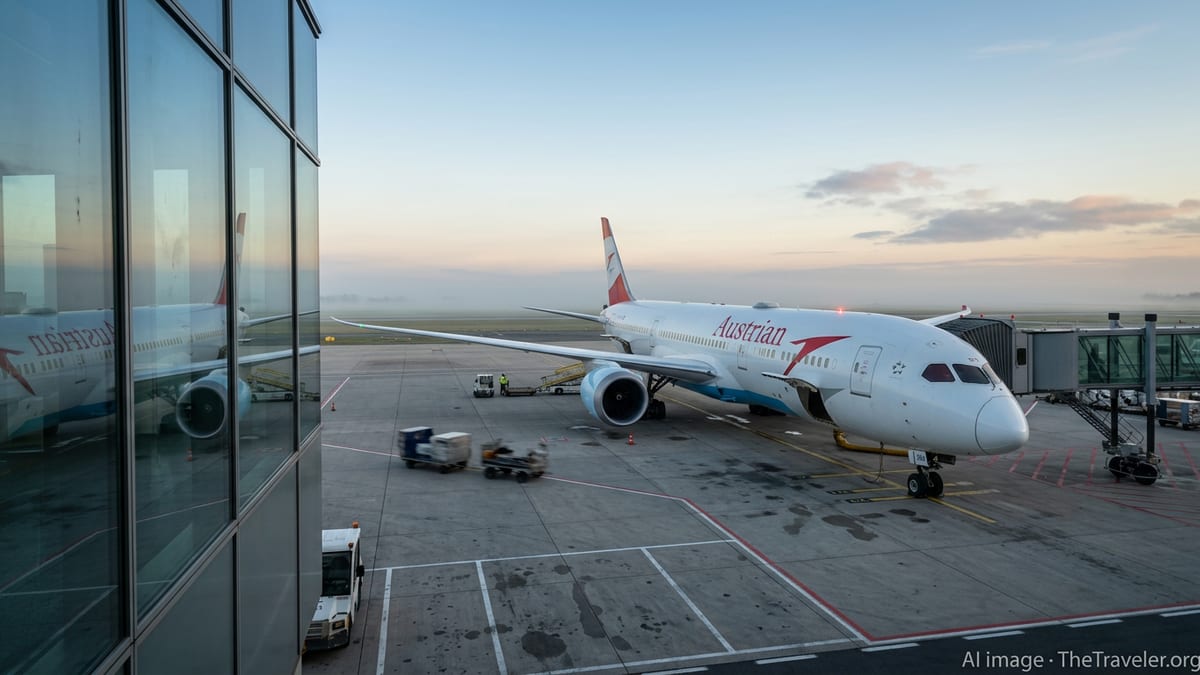
New Vienna–Mytilene Link Returns Lesvos to the Network
According to the airline’s published summer 2026 schedule, Austrian Airlines will add Mytilene, the capital of Lesvos, as a direct destination from Vienna for the first time in several years. Industry reports indicate that the service will run as a seasonal route from June to September, reinstating Lesvos on the carrier’s leisure map after a prolonged absence.
Route data compiled by aviation analysts shows that Mytilene is part of a seven-strong group of new European leisure destinations introduced for summer 2026, alongside Alicante, Bilbao, Ponta Delgada in the Azores, Ohrid, Bastia and Bergen. The flights are framed within a broader push to increase capacity to Mediterranean holiday markets during the high summer period.
Information outlined in airline and tourism trade coverage suggests the Vienna–Mytilene service will be operated once weekly, with departures concentrated on peak travel days to maximise connectivity with Austrian’s European and intercontinental banks at Vienna International Airport. This structure is intended to make Lesvos accessible not only for travelers from Austria, but also for connecting passengers from Central and Northern Europe.
The service will use Mytilene International Airport, the main gateway to Lesvos. Airport data shows the facility has been handling a steady mix of domestic and international summer traffic, positioning it to accommodate additional capacity from full-service European carriers in 2026.
Strengthening Greece’s Island Tourism Portfolio
Greece remains one of Austrian Airlines’ key leisure markets, with the airline highlighting the country as a central pillar of its 2026 summer program. Publicly available planning documents point to a total of 21 Greek destinations served from Vienna, including established island favorites such as Crete, Rhodes, Corfu and Kos, as well as a growing roster of secondary and lesser-known islands.
Lesvos, and Mytilene in particular, fit into a strategy of broadening the geographic spread of tourism beyond the country’s best-known hotspots. Tourism publications frequently describe the island as a destination for slower-paced, culturally rooted travel, marked by traditional villages, extensive olive groves and a coastline that is less intensively developed than some Aegean competitors.
By connecting Lesvos directly to a Central European hub, the Vienna–Mytilene route is expected to assist local efforts to extend the season and attract visitors outside the absolute peak weeks of July and August. Airline network planners have signaled a preference for schedules that facilitate early and late summer trips, periods which Greek tourism stakeholders increasingly view as crucial for balancing visitor flows.
Regional tourism bodies have emphasized in recent seasons that air access is a decisive factor in directing demand to emerging island destinations. Against that backdrop, the reintroduction of Mytilene into Austrian’s network is seen as adding visibility and reliability, two elements that tour operators and independent travelers often cite when choosing where to book.
Connectivity Gains for Austria and Central Europe
The Vienna hub plays a central role in Austrian Airlines’ strategy, offering coordinated banks of departures and arrivals that feed traffic across Europe and on to long haul markets. Network analyses of the summer 2026 schedule underline that the new Mytilene route is timed to integrate with this structure, providing one-stop access to Lesvos from a wide catchment area.
For travelers in Austria, southern Germany and neighboring Central and Eastern European countries, the direct Vienna–Mytilene link simplifies journeys that previously required transfers in Athens or on other European carriers. Published route maps show that travelers from cities such as Munich, Prague or Warsaw will be able to reach Lesvos via Vienna on a single ticket with through-checked baggage.
According to aviation market commentary, this improved connectivity is also relevant for outbound tourism from Lesvos. Local residents and diaspora communities gain easier access to Austrian’s wider European network, as well as to long haul destinations in North America and Asia that are served from Vienna. The mutual flow of leisure and visiting-friends-and-relatives traffic is often cited as a key driver of route sustainability for secondary island airports.
Industry observers note that Vienna’s position as a Star Alliance hub further raises the profile of Lesvos among frequent flyers and package tour organizers. The addition of a new Greek island to the alliance’s routings can influence how itineraries are composed, particularly for multi-destination holidays that combine city stays in Central Europe with beach time in the Aegean.
Implications for Greece’s Wider Travel Sector
The introduction of the Vienna–Mytilene route comes at a time when Greece is working to consolidate record visitor numbers achieved in recent years while navigating economic uncertainty in key source markets. Tourism-focused analysis in 2026 points to robust airline capacity being deployed into the country for the summer season, even as booking patterns have become more last-minute.
Market reports suggest that airlines and Greek tourism stakeholders are increasingly targeting diversified, experience-led travel rather than purely volume-based growth. In this context, the decision to prioritise Lesvos aligns with a strategy of promoting destinations that can absorb arrivals without putting excessive strain on infrastructure.
Travel sector commentators have also highlighted the role that additional international flights can play in supporting local investment. Reliable air access is frequently cited by hotel groups, small accommodation providers and tour operators as a prerequisite for upgrading or expanding their offerings. The presence of a flag carrier route from a major European hub is often interpreted as a vote of confidence in the destination’s long-term prospects.
Beyond tourism, enhanced connectivity between Lesvos and Vienna may facilitate cultural and educational exchanges, as well as shorter business and conference trips linked to the island’s growing profile in environmental research and cultural heritage initiatives. While such segments remain niche compared with leisure travel, they contribute to smoothing demand across the season.
Competitive Positioning in the Mediterranean Market
Austrian Airlines’ move to restore Mytilene to its network forms part of a broader competitive response to shifting capacity patterns in Vienna and the wider Central European market. Aviation industry briefings have documented reductions in activity at Vienna by some low-cost carriers over recent seasons, alongside a renewed focus by full-service airlines on high-yield leisure routes.
Analysts argue that adding selective Mediterranean destinations such as Lesvos allows Austrian to strengthen its position in the holiday travel segment while leveraging the connectivity of its hub. Rather than competing purely on price with point-to-point carriers, the airline is aiming to offer a differentiated product that combines network reach, schedule coordination and through-ticketing.
The Vienna–Mytilene route also complements a wave of new and expanded services to other Greek islands in the airline’s 2026 schedule. Industry summaries highlight Crete, Rhodes and Corfu as among the largest beneficiaries of additional capacity, with Lesvos and other smaller islands filling out a more granular portfolio of options for travelers.
As airlines across Europe adjust their networks for 2026 and beyond, the success of routes such as Vienna–Mytilene is likely to inform future decisions about which secondary Mediterranean destinations receive direct links to Central European hubs. For Lesvos, the upcoming seasonal connection represents both a practical transport upgrade and a symbolic return to the international tourism spotlight.