


More news on this day
Railways are turning to automation and data driven systems to keep increasingly busy networks in better condition for longer, and suppliers such as Plasser & Theurer are positioning advanced track machines and digital platforms at the center of that transformation.
Get the latest news straight to your inbox!
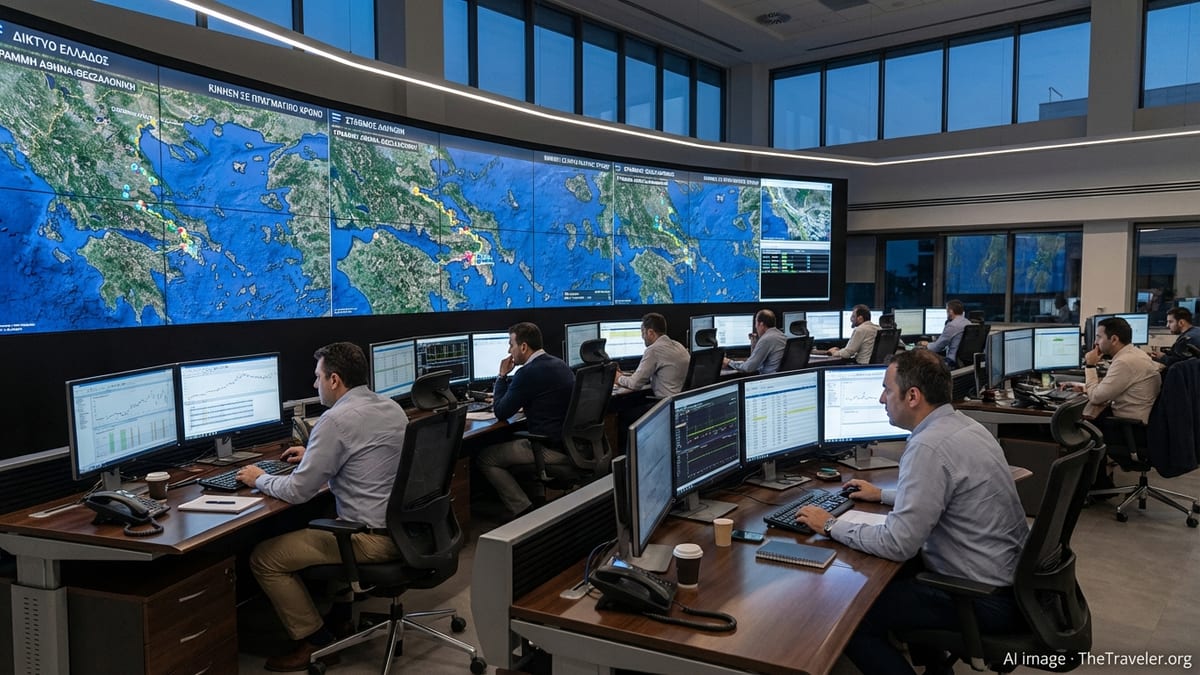
From Mechanisation to Intelligent, Automated Track Machines
Over recent decades, mechanised tampers, ballast regulators and stabilisers have replaced much of the manual work historically associated with maintaining rail infrastructure. Industry analyses indicate that this evolution has now entered a new phase, with automation and digitalisation becoming central to how track geometry is measured, corrected and documented across entire networks.
Plasser & Theurer, long associated with high capacity tamping and lining machines, has incorporated increasingly sophisticated control systems into its equipment. Publicly available product information describes tamping technology that calculates correction values independently for each rail, adapts them to the prevailing track geometry and uses assisted operating modes to support consistent quality even on complex layouts such as turnouts. These capabilities are designed to reduce operator workload while improving repeatability of maintenance results.
In parallel, dynamic track stabilisation, integrated into several modern machines, allows track to be consolidated immediately after tamping so that lines can reopen more quickly. Technical documentation shows that this function can support higher initial speeds and extend the interval until the next intervention, aligning with operators’ goals to maximise traffic capacity while containing life cycle costs.
Suppliers and researchers describe these developments as part of a broader shift from individual machines to networked, intelligent assets. In this view, automated functions on board the machine are one layer in a multi step journey toward autonomous work processes in which human staff supervise, rather than directly control, many routine tasks.
Five Levels of Automation and the Road to Autonomy
Recent material published by Plasser & Theurer outlines a staged model of automation for track maintenance, describing five levels that range from fully manual processes to autonomous work and running. At lower levels, the focus is on assistance systems that help operators position tools precisely and apply correct geometry corrections, for example through laser based measurement and rule based process monitoring.
At intermediate stages, semi autonomous functions take over core tasks under human supervision. In tamping, this can include automated lifting and lining cycles based on machine calculated correction values, or automatic control of work sequences in complex track components. Research presented at professional conferences highlights the use of algorithms such as long short term memory networks to monitor process quality, turning real time data from sensors into assessments of whether each work step meets specified thresholds.
The highest levels of the model envisage fully autonomous work processes in defined environments. Here, machines would navigate, position tools, carry out corrections and document results with minimal human intervention, while communicating continuously with a central data platform. Industry commentary suggests that such scenarios remain subject to regulatory, safety and labour considerations, but pilot projects in Europe are already exploring partially automated modes in controlled work zones.
Across all levels, automation is presented as a way to mitigate skilled labour shortages and standardise maintenance quality on networks facing rising traffic volumes and tighter engineering access windows. Instead of relying solely on individual experience, railways increasingly seek systems that embed best practice into software and sensors.
Data Platforms, AI and End to End Maintenance Workflows
Automation in track maintenance is closely tied to the growth of digital platforms that collect, store and analyse infrastructure data. Plasser & Theurer has promoted an end to end approach in which measurement trains, track machines and office systems are connected in a common environment. According to recent company publications, this includes tools for referencing track geometry to absolute coordinates and for sharing work orders, measurement results and maintenance histories between different stakeholders.
In this model, high speed measurement systems equipped with lasers, inertial sensors and imaging devices survey long stretches of line, detecting deviations long before they become critical defects. Machine learning techniques are increasingly used to classify anomalies and predict how they will evolve under traffic, allowing engineers to plan tamping or grinding campaigns in advance and group interventions efficiently.
Examples from both freight and passenger sectors illustrate how this data centric approach is gaining ground. In North America, regulatory waivers are supporting expanded trials of automated track inspection technologies that use geometry cars and on train sensor packages to supplement, and in some cases partially replace, visual walking inspections on selected routes. Reports indicate that these initiatives are structured around the concept of a central database where anomalies are logged, prioritised and translated into targeted maintenance jobs.
Academic work and industry trials also point to the growing role of edge computing and artificial intelligence in this ecosystem. Studies of FPGA based inspection systems and ultrasonic or moisture sensing platforms suggest that processing more data directly on vehicles or machines can reduce latency and bandwidth demands while still feeding aggregated insights into central decision support tools.
Safety, Standards and the Human Role in an Automated Era
The rapid spread of automation in track maintenance is being accompanied by detailed scrutiny from regulators, standards bodies and labour organisations. Public documents from United Nations transport working groups and national regulators emphasise that any move toward automated or remote supervised systems must preserve, and ideally enhance, existing safety margins. This includes rigorous validation of algorithms, clear procedures for exception handling and robust cyber security for connected machines.
In practice, current deployments remain hybrid. Automated inspection cars and intelligent track machines gather vast quantities of data, but human engineers typically review significant findings and decide on follow up work. Maintenance crews still carry out on site verification before large scale renewals or complex corrective tasks, using digital tools as an additional layer rather than a substitution for professional judgement.
Labour representatives and analysts have also highlighted the need to manage workforce transitions carefully. Automation can reduce repetitive physical tasks and exposure to hazardous environments, but it also shifts the skills profile toward data analysis, systems integration and remote diagnostics. Training programmes are increasingly designed to help experienced maintainers move into roles supervising automated fleets, configuring inspection parameters or interpreting rich condition data.
Industry observers note that the pace of change will likely differ across regions and network types. High density passenger routes with advanced signalling and traffic management may adopt higher automation levels sooner, while secondary lines and freight only corridors may continue to rely heavily on conventional methods. Nevertheless, recent policy discussions suggest that automation is now seen as a long term structural trend rather than a temporary experiment.
Plasser & Theurer’s Position in a Changing Market
As railways move toward more automated and data driven maintenance strategies, Plasser & Theurer has sought to align its portfolio with these priorities. Company material from recent years highlights a combination of proven mechanical platforms with new digital modules, from automated process controls on tampers to cloud connected data services designed to integrate with operators’ asset management systems.
Examples cited in trade press and technical literature include high capacity tamping machines that couple traditional ballast consolidation with integrated dynamic stabilisation and measurement, as well as specialised maintenance units developed in European research partnerships to address noise and wear on urban tram and metro tracks. These solutions are presented as part of a broader toolkit for extending rail asset life while meeting stricter environmental and acoustic requirements.
Plasser & Theurer has also emphasised sustainability in its latest corporate publications, noting that digitalisation and automation can contribute to lower fuel consumption, optimised work windows and reduced rework by getting corrections right first time. For customers, the business case is often framed around total cost of ownership, combining energy savings, fewer emergency interventions and longer intervals between major renewals.
For infrastructure managers, the sponsored technologies showcased under themes such as embracing automation in track maintenance point to a future in which fleets of intelligent machines, connected through common data standards, maintain increasingly busy railways with higher precision and fewer unplanned disruptions. As trials expand and standards evolve, the balance between human expertise and machine intelligence will continue to define how quickly that vision becomes everyday practice on the world’s tracks.