


More news on this day
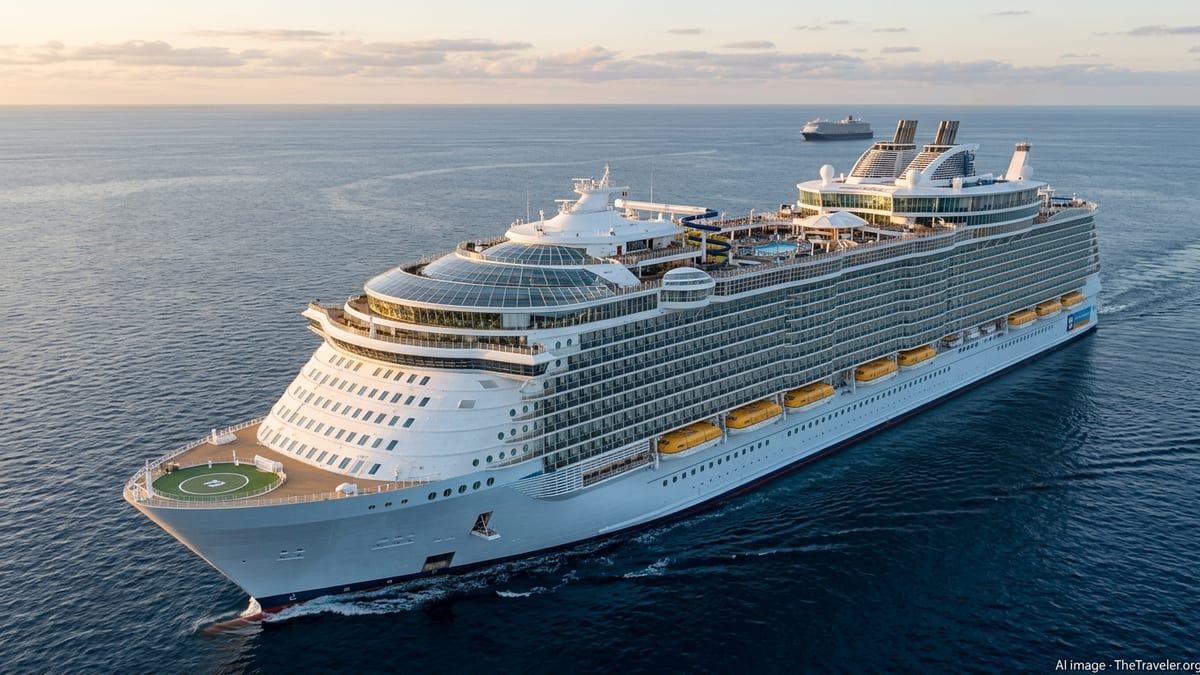
Royal Caribbean’s Icon of the Seas, now sailing as the world’s largest cruise ship, is rapidly becoming a touchpoint in the debate over whether mega-vessels can truly deliver a great family holiday at sea.
Get the latest news straight to your inbox!
A New Flagship for Family-Focused Cruising
Launched into regular service in January 2024, Icon of the Seas is Royal Caribbean’s first Icon-class ship and currently the largest cruise vessel afloat by gross tonnage and passenger capacity. It represents a deliberate shift toward what the company markets as “the ultimate family vacation,” with many of its most high-profile features designed around multigenerational travel rather than traditional couples or adult groups.
According to publicly available specifications, Icon of the Seas can carry around 7,000 guests at full occupancy and spreads its attractions across distinct “neighborhoods” intended to help families navigate such a vast ship. These zones, from the open-air Central Park to the high-energy Thrill Island, are laid out to concentrate similar activities together, so that parents and children can stay close to what interests them most without constantly crossing the length of the vessel.
Early reviews from cruise industry sites and independent bloggers indicate that the scale, once a concern for some travelers, often becomes a key selling point for families. The abundance of venues, from casual eateries to entertainment spaces, appears to ease crowding in any one location, particularly compared with earlier generations of large ships where bottlenecks were common during peak hours.
Surfside and Thrill Island Put Kids at the Center
The most talked-about family addition on Icon of the Seas is Surfside, a purpose-built neighborhood geared to families with younger children. Reports describe it as a “stay-all-day” space combining shallow pools, splash zones, a carousel, an arcade and multiple casual dining options within a compact footprint. The idea is that parents and children can move between play, rest and meals without leaving the area or dressing up for more formal venues elsewhere on the ship.
Surfside is complemented by Category 6, billed as the largest water park at sea. Located within the Thrill Island neighborhood, it features several record-chasing slides, including high-speed drops and raft rides that are drawing comparisons to land-based theme park attractions. For older children and teenagers, nearby activities such as the FlowRider surf simulator, a mini-golf course and a ropes-style attraction over the ocean have quickly become headline experiences.
Industry observers note that these amenities build on Royal Caribbean’s long-running strategy of using hardware to differentiate its brand, from the first rock-climbing walls at sea on older ships to surf simulators and ice rinks on Oasis-class vessels. On Icon of the Seas, that approach has been recalibrated specifically around family time, with many of the headline features designed to be watched or shared by parents and kids together, rather than segregated by age.
Cabins, Dining and Clubs Designed Around Real Family Routines
Beyond waterslides and pools, Icon of the Seas introduces a new generation of family-focused accommodation. Travel guides highlight Surfside Family Suites and other multi-room options that carve out separate sleeping areas for children behind curtains or partition walls, often with their own screens and storage. This reflects a broader move in the cruise sector toward treating cabins as functional living spaces rather than simply places to sleep between activities.
Dining has also been reworked with families in mind. The ship’s many casual venues, including buffets, grab-and-go counters and kid-friendly snacks in Surfside, aim to make it easier to feed children on their schedule instead of the ship’s. Reviews indicate that having multiple quick-service options clustered near pools and play areas reduces the need for families to return to a central buffet or main dining room every time a child gets hungry.
At the same time, the Adventure Ocean youth program and teen spaces familiar from other Royal Caribbean ships have been refreshed for Icon of the Seas. Reports from recent sailings suggest strong uptake among parents who use structured kids’ and teens’ sessions as a way to balance family time with quieter hours in adults-only lounges, shows or specialty restaurants. The mix of supervised programming and all-ages venues is emerging as a key factor in how well a large ship works for multigenerational groups.
How Icon of the Seas Compares With Earlier Mega-Ships
For years, Royal Caribbean’s Oasis-class ships such as Oasis of the Seas and Wonder of the Seas set the benchmark for large-scale family cruising, combining neighborhoods like Boardwalk and Central Park with extensive kids’ clubs and entertainment. Cruise analysts now describe Icon of the Seas as a next step rather than a break from that formula, incorporating lessons learned from more than a decade of operating some of the world’s biggest passenger vessels.
One of the clearest differences is the decision to dedicate an entire neighborhood to families with young children, something not found in the same way on Oasis-class ships. In addition, Icon’s deck plans show a stronger emphasis on sightlines and open spaces, from the reimagined Royal Promenade with its large windows to pool decks that distribute loungers and attractions across several zones rather than a single central pool.
Commentary from cruise-focused publications suggests that these design adjustments translate into more predictable crowd flows during busy times, such as sea days and evenings around show times. While the ship’s size still requires planning, particularly for securing spots at popular venues and dining times, many reviewers report that day-to-day movement feels more manageable than might be expected on a vessel of this scale.
Caveats, Costs and What It Signals for Future Family Travel
Despite the glowing coverage, Icon of the Seas is not without drawbacks, particularly around price and personal taste. Fares for early seasons have generally trended higher than comparable itineraries on older ships, reflecting strong demand and the premium placed on new hardware. Some travelers commenting in online forums and reviews question whether the additional cost is justified if their families will not fully use high-thrill amenities or extensive specialty dining options.
There are also broader concerns about crowds and atmosphere on very large ships. Personal accounts range from describing the vibe as high-energy and fun to highlighting noise, busy elevators and a resort-style feel that may not suit travelers seeking quiet sea days and traditional cruising rituals. For some, mid-sized or older vessels in the Royal Caribbean fleet, or ships operated by rival lines, remain a better fit.
Even with those reservations, the early performance of Icon of the Seas suggests that purpose-built family mega-ships are likely to shape the next decade of mainstream cruising. With additional Icon-class vessels already on order, Royal Caribbean is doubling down on the idea that families want theme-park-style thrills, flexible dining and kid-focused neighborhoods packaged into a single Caribbean itinerary. For many who have recently sailed on the line’s newest flagship, the experience appears to confirm that, in this corner of the market, Royal Caribbean has a strong claim to doing family cruises best.