


More news on this day
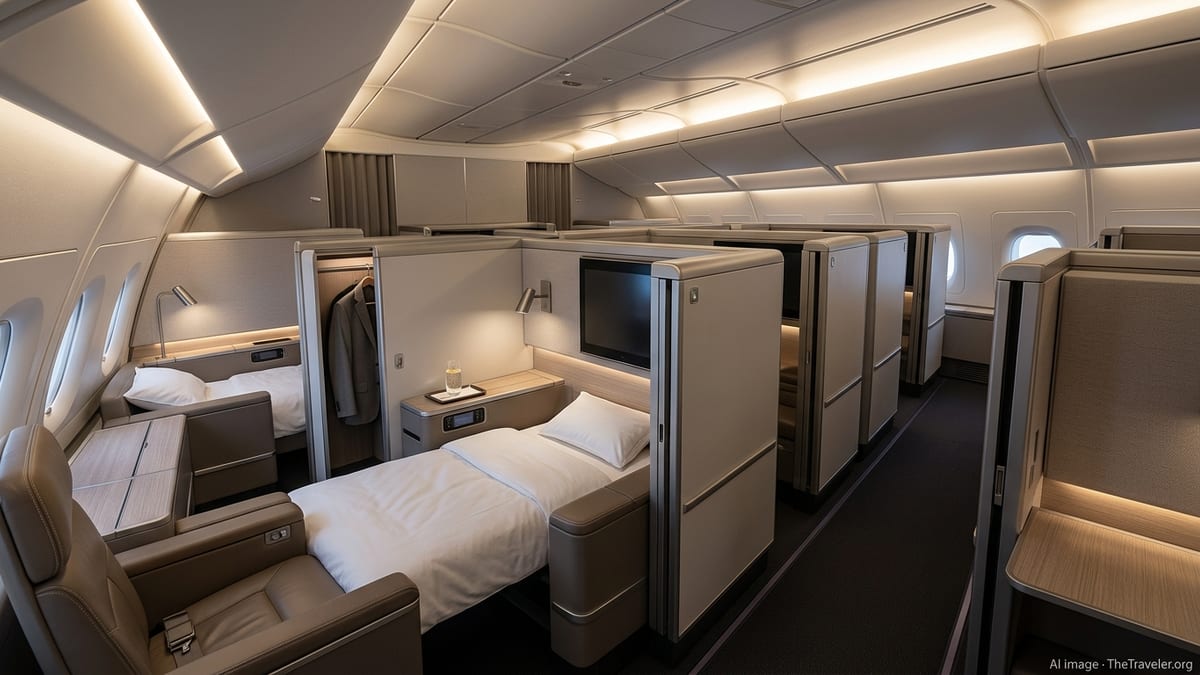
American Airlines’ premium cabin revamp reached a visible new milestone this week as the first Boeing 777 fitted with the carrier’s Flagship Suite business-class seats arrived at Dallas Fort Worth International Airport, positioning the airline’s largest hub at the center of its long-haul fleet transformation.
Get the latest news straight to your inbox!
A Landmark Arrival for American’s Long-Haul Fleet
The newly reconfigured Boeing 777 is the first of American’s existing widebody jets to emerge with the Flagship Suite product that has been rolling out on new Boeing 787-9 deliveries. Industry coverage indicates that the aircraft ferried into Dallas Fort Worth to rejoin the network after an extensive interior refurbishment that replaced the previous generation of lie flat business seats.
The arrival is a notable moment in American’s broader strategy to standardize its international premium experience. Publicly available information on the airline’s fleet plans shows that the 777 retrofit program is intended to bring the cabin closer in line with the layout on the newest 787-9s, emphasizing privacy, direct aisle access and higher overall seat density in the premium cabin.
While the airline has not yet detailed a full schedule for when the retrofitted 777 will begin regular passenger service from Dallas, industry trackers suggest it is expected to operate on key transatlantic and South America routes from the hub once final proving and crew familiarization flights are complete.
Flagship Suite: Doors, Privacy and More Storage
The Flagship Suite concept represents a significant step up from American’s earlier business-class seats on the 777. According to published descriptions, each suite features a sliding door for added privacy, an expanded work surface, and additional storage cubbies designed to keep personal items within easy reach during flight.
Reports on the configuration of American’s newest 787-9 aircraft, which already carry Flagship Suites, highlight integrated wireless charging pads, large high-definition screens and redesigned side tables. The refurbished 777 is understood to follow the same design language, giving business-class passengers on the older widebody a similar experience to those on the latest deliveries.
The move aligns American with a wider premium trend in long-haul travel, where enclosed suites and higher-tech seating have become a competitive differentiator among global airlines. With the 777 forming a substantial portion of the carrier’s long-haul fleet, the retrofit is expected to significantly increase the share of routes offering door-equipped suites from Dallas.
What Changes Inside the 777 Cabin
The 777 retrofit program involves more than simply installing new seats. Information released previously about American’s long-haul plans indicates that the airline is phasing out traditional international first class in favor of an enlarged and upgraded business cabin built entirely around Flagship Suites.
On the reconfigured 777, this means the former first-class cabin has been removed and that space reassigned to additional suites, improving overall premium capacity while simplifying the product structure. Premium economy and main cabin seating remain part of the layout, but with refreshed finishes intended to create a more consistent look throughout the aircraft.
The changes are also expected to deliver operational benefits. A standardized premium product and updated cabin systems can simplify maintenance and training while better matching what American offers on its latest 787-9s and forthcoming Airbus A321XLRs. For travelers, that should translate into fewer surprises when aircraft swaps occur on long-haul routes from Dallas.
Dallas Fort Worth’s Role as Flagship Suite Hub
Dallas Fort Worth has long served as American’s primary hub and testing ground for new products, and the arrival of the first 777 with Flagship Suites reinforces that role. Recent corporate materials and news releases have consistently highlighted Dallas as a launching point for new long-haul offerings, including forthcoming Flagship Suite service to destinations such as Brisbane.
Positioning the first retrofitted 777 at Dallas allows the airline to deploy the aircraft on some of its highest profile international routes, where demand for premium cabins is strongest. It also places the aircraft close to the airline’s main training facilities and operations center, which can ease the introduction of new onboard procedures and service elements tied to the suite layout.
For connecting passengers, Dallas already offers access to American’s Flagship-branded lounges, giving travelers a ground experience that is marketed as complementary to the upgraded in flight cabins. The presence of a 777 equipped with suites at the hub is likely to be used as a key selling point for high-yield corporate and premium leisure traffic.
What Travelers Can Expect Next
The first 777 with Flagship Suites in Dallas is widely viewed as an early example of what will eventually become the standard configuration across American’s long-haul fleet. Publicly available information on the airline’s fleet roadmap points to a multiyear program in which additional 777s will be removed from service for refurbishment before returning with the new interior.
Travelers booked in business class on future long-haul departures from Dallas may therefore find themselves on a mix of cabin types for some time, depending on the pace of the retrofit. Industry analysts suggest that, as more 777s reenter the fleet with suites, American will be able to schedule them more consistently on specific long-haul routes and market the product more explicitly in its booking channels.
For now, the arrival of the first reconfigured 777 at Dallas Fort Worth signals that the long-planned transition from traditional first and business cabins to a unified Flagship Suite offering is moving from concept to reality. For American’s largest hub and its international passengers, it marks the beginning of a new phase in the airline’s premium travel strategy.