


More news on this day
An American Airlines Boeing 737 experienced two blown main-gear tires after landing at Chicago O’Hare International Airport, briefly closing a runway and forcing passengers to deplane on the airfield before being transported to the terminal, according to initial local reports and eyewitness accounts.
Get the latest news straight to your inbox!
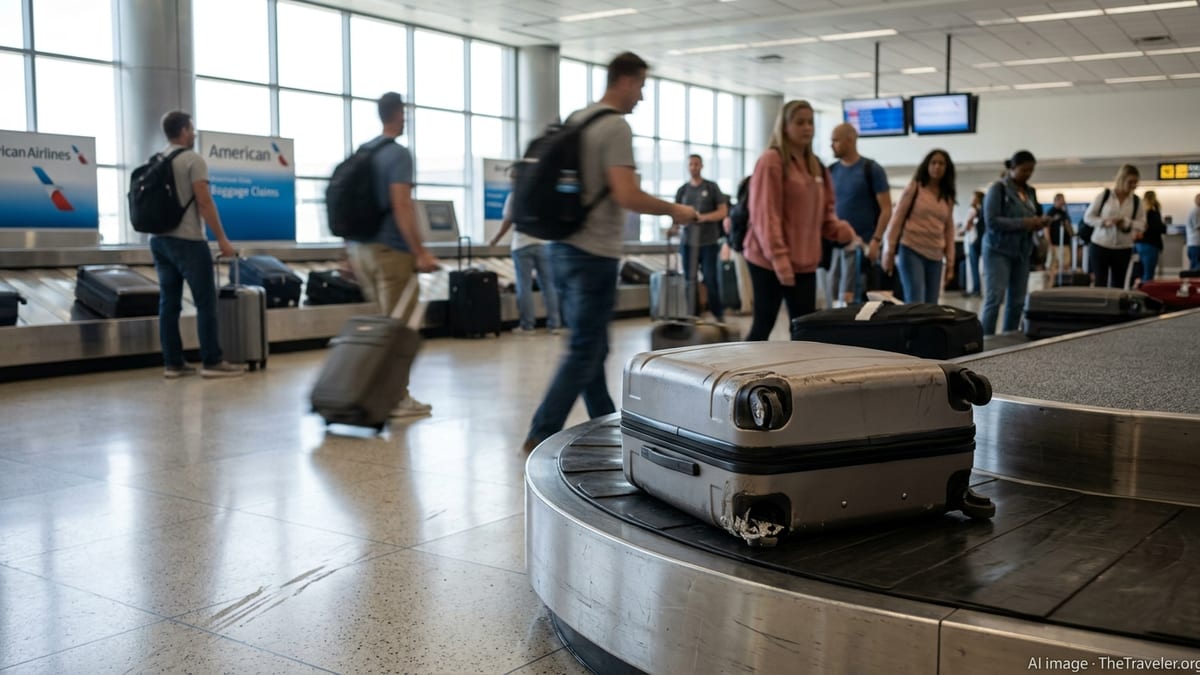
Incident briefly disrupts evening operations at major hub
Publicly available information and eyewitness descriptions indicate the incident occurred as the 737 was rolling out after touchdown on a westbound runway at O’Hare, one of the world’s busiest airports. The aircraft came to a controlled stop on the runway with visible tire damage on one of the main landing gear assemblies.
Accounts shared on aviation forums and social media describe passengers remaining on board while emergency vehicles surrounded the aircraft as a precaution. The crew reportedly shut down the engines on the runway, and passengers were later transferred to buses for transport back to the terminal rather than taxiing under the aircraft’s own power.
No injuries have been reported, and available coverage does not indicate any fire or structural damage to the airframe. The event nevertheless caused a localized disruption, with the affected runway taken out of service while the aircraft was inspected and the damaged tires were removed.
O’Hare’s complex runway system typically allows traffic to be rerouted when one strip is closed. However, a disabled aircraft on an active runway often results in flow delays and minor ground congestion while arrivals and departures are resequenced.
What is known so far about the landing and tire damage
Based on images and descriptions circulating publicly, the incident involved two tires on the same main landing gear, most likely on the left side of the aircraft. Observers have noted heavy rubber marks on the runway and the aircraft sitting slightly lower on one side, consistent with deflated or destroyed tires following landing.
Reports do not point to any problems during approach, and several passenger accounts describe the touchdown itself as relatively normal before the aircraft decelerated. Blown tires in such circumstances can result from factors including high braking loads, preexisting internal tire damage, foreign object debris on the runway, or heat buildup from previous operations.
In modern airliner operations, landing gear assemblies are designed with multiple wheels and tires to provide redundancy. The loss of one or even two tires on a main gear during rollout generally remains controllable, though it can lengthen stopping distance and require careful directional control by the flight crew.
At this stage there is no authoritative indication of a systemic aircraft design issue. Available incidents lists and historical records show that tire failures have occurred across various aircraft types and airlines, usually resolving with minor damage and no injuries.
Runway closure, inspections and recovery efforts
After the aircraft came to a stop, standard procedure would call for a runway inspection to check for debris, rubber fragments and any surface damage. Initial reports from passengers on nearby flights reference a temporary shutdown of the affected runway while ground teams and airport fire services attended the scene.
Once passengers disembarked via air stairs and buses, airport operations personnel would typically coordinate with the airline’s maintenance teams to jack the aircraft, replace the damaged tires and tow the jet clear of the active runway. Only after this recovery and a further sweep for foreign object debris would the runway be returned to regular service.
Such response actions are a routine part of large-hub operations. Major airports like O’Hare maintain contingency plans for disabled aircraft events, which include predefined tow routes, airfield access points for emergency vehicles and communication protocols between the airport operator, air traffic control and the affected carrier.
While the closure can cause reroutes and airborne holding, the impact is often limited to delays rather than cancellations when weather conditions are favorable and other runways are available.
Broader safety context for landing-gear tire failures
Industry data and historical safety reports show that tire-related events, including tread separations, deflations and blown tires, occur periodically across commercial fleets. These events are typically categorized as incidents rather than accidents when there are no injuries and limited aircraft damage.
Modern airliner tires operate under very high loads and pressures, especially during landing and rejected takeoff scenarios. Regular inspections, strict life limits and detailed maintenance procedures are intended to identify wear, cuts or heat damage before a tire reaches a critical state. Even with such controls, occasional failures still occur and are accounted for in the design of landing gear and braking systems.
Investigations into past tire events have highlighted multiple contributing factors, from runway contamination and foreign object debris to maintenance practices and operating conditions on very hot days. In many cases, airlines respond by reviewing inspection intervals, tire vendor guidance and runway condition monitoring at their busiest hubs.
The American Airlines 737 event at O’Hare fits a long-established pattern in which redundant systems, trained crews and coordinated airport responses prevent a mechanical issue from escalating into a more serious outcome. Further information from formal incident summaries and regulatory databases will clarify the precise sequence and any contributing technical factors in the days ahead.