


More news on this day
From Barcelona to Nairobi and Tel Aviv, a new wave of aviation strikes and industrial disputes is rippling through major airports, grounding aircraft, stranding passengers and turning once-routine announcements that a flight is boarding into a far more uncertain wait that, for many, never ends.
Get the latest news straight to your inbox!
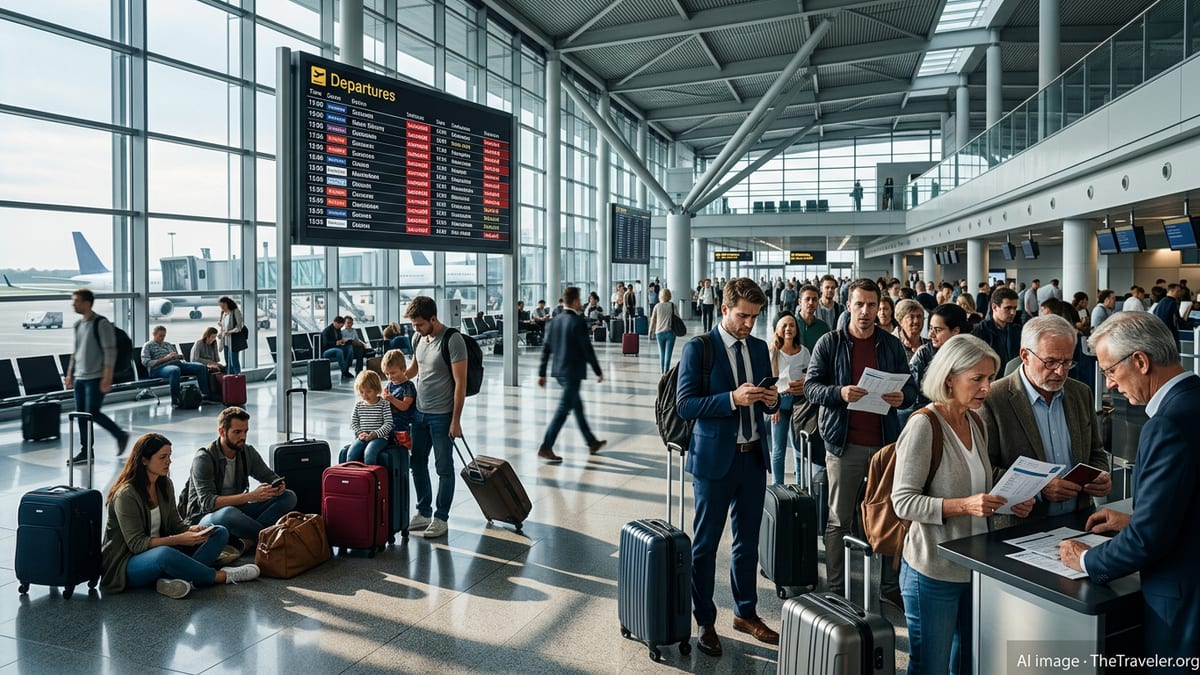
Ground Handlers and Airport Staff Walkouts Hit Summer Peak
Industrial action among airport ground handling staff is emerging as one of the most disruptive forces for travelers at the height of the northern summer season. At Barcelona’s Josep Tarradellas Barcelona El Prat Airport, an indefinite strike by Groundforce ground handlers that began on August 4 has affected check in, boarding, baggage handling and flight coordination for dozens of airlines operating at one of Europe’s key holiday gateways. Public information from Catalan authorities and local media describes a stoppage covering more than 1,000 workers and warns that delays and cancellations can be expected during peak travel days.
Travel forums and passenger reports describe long lines at check in counters, missed connections and baggage delays stretching into days. Some travelers have shifted to carry on only to avoid the risk of checked bags being stranded during ongoing industrial action. With the strike described as “indefinite,” there is little clarity on when full operations will resume, placing both local and international travelers in limbo during one of Spain’s busiest tourism months.
Elsewhere in Europe, official notices from the Catalan government and consumer authorities stress that passengers whose flights are canceled or heavily delayed due to strikes by staff subcontracted by airlines may have rights to compensation and assistance, depending on the circumstances. However, those protections do not prevent the immediate disruption on the day of travel, especially when several airlines rely on the same ground service provider.
Strikes at Major Hubs Leave Passengers Stranded
In Africa and the Middle East, labor disputes among aviation workers are also delivering severe shocks to local and transit passengers. At Jomo Kenyatta International Airport in Nairobi, a work stoppage by members of the Kenya Aviation Workers Union has recently slowed air traffic, with published coverage showing delayed and canceled flights and images of crowded terminals as frustrated travelers attempt to rebook or secure hotel accommodation.
Reports from Kenyan media state that the union is protesting over pay, staffing and proposed management changes at the country’s main international gateway. The strike’s timing, during a busy period for regional tourism and business travel, has magnified its impact, disrupting not only point to point journeys but also connections across East and Central Africa that rely on Nairobi as a hub.
At Israel’s Ben Gurion International Airport, a labor dispute described by local news outlets as a de facto strike has added to the global turbulence. Staff shortages and a protest by Israel Airport Authority workers prompted an emergency advisory that temporarily banned landings for several hours in late August. Airlines were forced to divert flights or adjust schedules, leaving passengers either rerouted at the last minute or waiting in overcrowded terminals for news on when services would resume.
These incidents highlight how quickly a localized workforce dispute can ripple across airline networks. When a hub like Nairobi or Tel Aviv reduces arrivals or departures, passengers all along a route network feel the effect, and even airports thousands of kilometers away can see knock on delays.
From Threats to Full Work Stoppages Across Airlines
Strikes and strike threats are not confined to airport operators and ground handlers. Airline employees from cabin crew to pilots and dispatchers are engaged in increasingly tense contract negotiations, with some disputes spilling into full work stoppages that erase entire sections of a carrier’s schedule overnight.
In Canada, WestJet’s network experienced severe disruption in early August when a work stoppage by cabin crew represented by the Canadian Union of Public Employees took effect. The airline announced it could not operate scheduled Boeing 737 and 787 flights while the stoppage was in place, forcing mass cancellations and leaving travelers scrambling for alternatives during one of the country’s busiest long weekends. A tentative agreement in early August brought that particular episode to a close, but only after several days of uncertainty and widespread rebooking.
In Australia, ground handling crews at Qantas have voted in favor of industrial action over pay and safety conditions, according to national media coverage on August 31. While no dates for a strike have been set at the time of writing, the vote underscores the broader pressure on aviation employers across the region. Earlier in August, separate reports detailed concerns about a series of runway and tarmac incidents at Sydney Airport, with unions arguing that chronic understaffing and rapid outsourcing of ground services have left the workforce “at breaking point.”
Across Europe, briefing documents prepared for the European Parliament point to a sector still absorbing the aftershocks of the pandemic. Analysts note that air transport workers faced intense job insecurity and changing schedules during the downturn, and that many are now attempting to recover lost earnings and strengthen job protections. That broader context helps explain why ground staff, cabin crew and pilots in multiple countries are willing to contemplate or undertake industrial action even during peak travel months.
Travelers Caught in the Middle of a Global Labor Recalibration
For travelers, the most immediate impact of aviation strikes is the simple reality that “flight is coming” announcements can change abruptly to indefinite delays or outright cancellations. In many recent disputes, passengers only learned of walkouts hours before departure, leaving little time to find alternatives.
Consumer agencies in Europe and North America emphasize that passengers should closely monitor communications from both airlines and airports, and confirm flight status before leaving for the terminal when strikes are threatened or announced. In several recent cases, including the Barcelona ground handler strike and the WestJet cabin crew stoppage, airlines have advised customers to rebook, request refunds or shift travel dates at no extra cost when their flights fall within defined disruption windows.
Legal protections vary widely between regions. Under European Union rules, passengers on flights departing from EU airports may be entitled to compensation, care and assistance when services are canceled or significantly delayed due to strikes by airline staff or contractors, though some categories of industrial action are classified as extraordinary circumstances. In other jurisdictions, passengers often rely on individual airline policies, travel insurance or credit card protections to recover costs.
As contract cycles across aviation converge in 2026, labor experts and industry observers suggest that more disputes are likely, not fewer. With inflation, staffing shortages and high demand putting further pressure on pay and working conditions, the tug of war between airlines, airport operators and their employees is poised to remain a defining feature of global air travel. For passengers on the concourse, that means the standard reassurance that a flight is on its way now comes with an asterisk, as the prospect of “never” departing feels far less remote than it did just a few years ago.
How Passengers Can Navigate Ongoing Disruptions
While travelers cannot prevent strikes, they can take practical steps to reduce the risk of being stranded when labor disputes flare. Aviation regulators and passenger advocacy groups consistently recommend booking directly with airlines where possible, enabling faster rebooking in case of cancellations. During known periods of industrial tension, passengers may also consider scheduling critical trips outside announced strike windows or avoiding tight connections through airports where industrial action is planned or ongoing.
Travel insurance that explicitly covers labor disruptions can provide an additional layer of protection, though policy terms differ significantly. Consumers are advised in public guidance to read exclusions carefully, as some policies limit coverage to strikes that begin after the insurance is purchased. Flexible fares, while more expensive upfront, can make it easier to change itineraries rapidly when a work stoppage is announced.
For those already at the airport when news of a strike breaks, experts recommend quickly exploring all available options, including rebooking on partner airlines, alternative routes or even rail connections where feasible. Recent disputes have shown that once a major hub experiences cascading cancellations, same day alternatives can disappear rapidly. Acting early, monitoring airline apps and being prepared for overnight stays can make a significant difference in how disruptive a strike ultimately feels.
Ultimately, the current wave of aviation labor unrest reflects deeper structural tensions over pay, safety and staffing in a sector that is still rebuilding. Until those issues are resolved more broadly, travelers are likely to keep encountering the new normal of last minute schedule changes and crowded service desks, where the promise that a flight is on its way cannot always be taken for granted.
Government of Catalonia: Passenger rights during Barcelona-El Prat strike
WestJet: Tentative agreement with CUPE and network disruption update
ABC News Australia: Qantas ground crews back industrial action over pay and safety
AP News: Workers’ strike at Kenya’s main international airport