


More news on this day
Azerbaijan’s Ministry of Foreign Affairs has issued a new travel advisory urging citizens to avoid nonessential trips to France, citing a recent escalation of unrest, violent incidents and acts of civil disobedience across multiple French cities.
Get the latest news straight to your inbox!
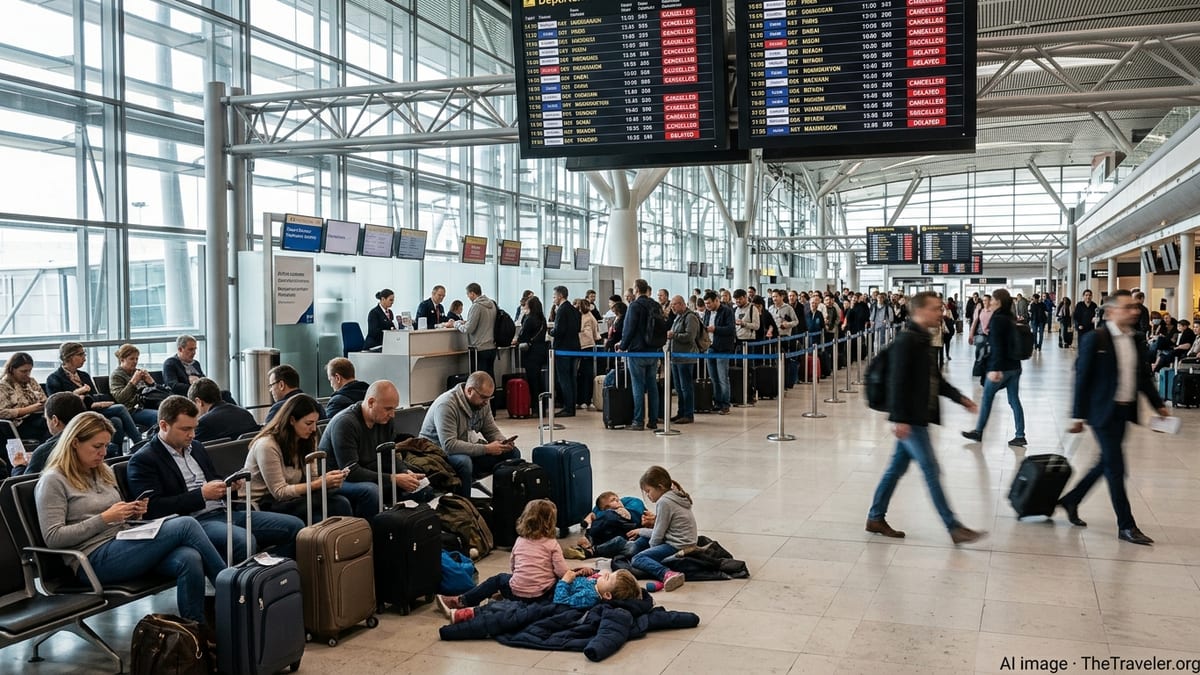
Travel warning issued on October 20, 2026
According to publicly available information from Azerbaijani media and official notices, the advisory was published on October 20, 2026. The guidance recommends that citizens refrain from travelling to the French Republic unless their journey is considered absolutely necessary, elevating France’s risk profile for Azerbaijani nationals who might otherwise travel for tourism, business or study.
Reports indicate that the advisory responds to a series of protests, localized clashes and disruptive incidents that have affected major urban areas in France in recent days. Coverage in regional news outlets describes a pattern of unrest and civil disobedience that has prompted several foreign ministries, including Azerbaijan’s, to reassess the security environment for their citizens.
The wording of the advisory frames the move as a recommendation rather than a prohibition. Flights between Azerbaijan and France continue to operate, and there has been no announcement of formal restrictions on air services or visas. However, the notice signals that leisure breaks, shopping trips and other discretionary travel are no longer encouraged while the situation remains volatile.
Azerbaijan’s message aligns with a broader practice of issuing country-specific advisories when security conditions deteriorate. In this case, the focus is squarely on short-term safety concerns related to public order, rather than on longer-term diplomatic or economic issues between Baku and Paris.
Guidance for Azerbaijanis currently in France
Alongside the call to postpone nonessential visits, the travel advisory contains targeted recommendations for Azerbaijani citizens already in France. Publicly available summaries state that travelers are urged to observe basic safety precautions, avoid large public gatherings and monitor local developments through official information channels and reputable media.
The guidance stresses the importance of staying away from protest sites, marches and other mass events that could quickly change in character or location. Travelers are encouraged to pay close attention to instructions from local transport operators, as demonstrations and police operations can lead to sudden closures of metro stations, tram lines or key road junctions in affected cities.
Information shared via Azerbaijani outlets highlights the role of the country’s embassy in Paris as the primary contact point in the event of an emergency. The embassy is located at 78, avenue d’Iéna in the 16th arrondissement, a central district of the French capital that is home to several diplomatic missions and within reach of major transport links.
The advisory notes that citizens facing urgent difficulties, such as loss of documents, detention, medical emergencies or immediate security threats, may seek assistance through the embassy’s published telephone numbers and WhatsApp hotline, as well as dedicated consular email addresses. Travelers are advised to keep these details accessible offline in case mobile data or local networks are disrupted.
How the advisory fits into wider security concerns
Azerbaijan’s decision to caution against nonessential travel to France comes at a time when several governments are updating their own foreign travel guidance in response to fast-moving events. France remains a major global destination, with tens of millions of international arrivals each year, but also experiences periodic waves of protest, labor action and localized violence that can affect visitors’ movements.
International travel advisories typically weigh a series of factors, including the frequency and geographic spread of incidents, their impact on transport and public services, and any indications that foreigners might face particular exposure to risk. In this instance, publicly available reports from Azerbaijani outlets emphasize generalized concerns over public order rather than specific threats directed at Azerbaijani citizens.
More broadly, the move reflects an increasingly cautious approach to outbound travel from many countries, particularly where there is limited consular capacity on the ground. Separate advisories, such as the Level 3 “Reconsider travel” notice that the United States maintains for Azerbaijan itself due to terrorism, armed conflict and landmine risks, illustrate how both origin and destination countries assess and communicate security challenges to their respective citizens.
For Azerbaijan, issuing an advisory on France underscores the expectation that travelers shoulder additional responsibility for monitoring conditions once abroad. The message encourages citizens to think carefully about whether a planned journey can be delayed, re-routed or insured, and to ensure that family or friends at home are informed of their whereabouts and contact details while in France.
Practical implications for upcoming trips
For Azerbaijani travelers who already hold tickets to France, the advisory does not automatically cancel their plans, but it may influence decisions regarding timing, itinerary and insurance coverage. Travel insurance providers sometimes treat official advisories as a factor in claims assessments, so affected travelers may wish to review policy wording and consult their insurers about options for postponement or rerouting.
Those who decide to proceed are encouraged to adopt a conservative approach to their movements, particularly in large cities such as Paris, Lyon and Marseille, where demonstrations are more likely to occur. Planning additional time for airport transfers, checking for updates on public transport disruptions and avoiding late-night travel through unfamiliar neighborhoods can help reduce exposure to potential disturbances.
Travelers transiting through France to onward destinations elsewhere in Europe may face fewer direct impacts, particularly if they remain airside in international terminals and do not venture into city centers. Nonetheless, the advisory signals that even short stopovers should be planned with an eye on potential schedule changes resulting from walkouts, road blockades or heightened security checks.
Prospective visitors who have not yet made firm bookings are likely to find that alternative European gateways remain available, including hubs in neighboring countries that offer comparable connections without the same level of current unrest. The advisory effectively invites these travelers to consider whether their objectives can be met through different routes or destinations until conditions in France stabilize.
What travelers should monitor in the coming days
Looking ahead, the key factor shaping Azerbaijan’s stance will be whether unrest in France subsides, intensifies or spreads to new areas. Developments on the ground, including the scale of demonstrations, the frequency of clashes with security forces and any impact on tourist districts, will influence how long the advisory remains in place and whether its wording changes.
Travelers are encouraged to follow updates from French and international media, as well as from airline and rail operators that may adjust schedules or routes in response to events. Particular attention should be paid to any announcements concerning curfews, restrictions on public gatherings or temporary closures of cultural venues, which could affect the feasibility of planned activities.
The advisory also serves as a reminder of the importance of registering contact details with consular services when traveling abroad wherever such services are available. While systems vary by country, many foreign ministries now operate online enrollment platforms or voluntary traveler lists that allow them to share security updates more efficiently during periods of disruption.
For now, Azerbaijan’s guidance stops short of a ban on travel to France, but clearly signals a more cautious posture. Citizens planning to travel in the coming weeks are encouraged to keep their plans flexible, stay informed about local conditions and remain prepared to adjust itineraries or postpone nonessential trips should the security environment deteriorate further.