


More news on this day
Azul is paring back part of its vast domestic network as it emerges from U.S. Chapter 11 protection, planning to exit 13 loss‑making Brazilian cities and reduce flight frequencies elsewhere, a shift that will be felt most in smaller “interior” destinations that long relied on the carrier for nonstop access to Brazil’s wider air network.
Get the latest news straight to your inbox!
From widest reach to a leaner, hub-focused network
According to Azul’s latest annual report for the year ending 31 December 2025, the airline operated around 970 daily departures to 160 destinations, including 144 Brazilian cities, giving it more domestic points served than any rival and a network of more than 390 nonstop routes at that date. The same filing notes that Azul was the only carrier in 94 Brazilian cities and the market leader in 134, highlighting how central it has been to regional connectivity rather than just trunk routes.
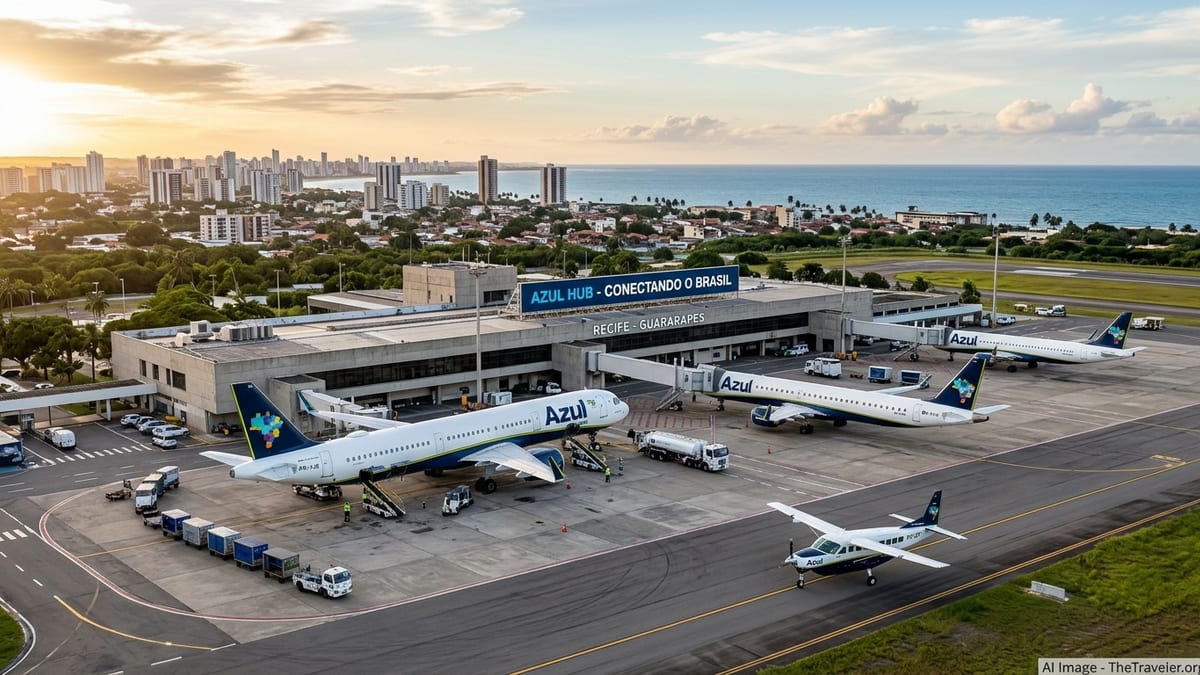
In a confidential investor presentation prepared during its 2025 Chapter 11 process, Azul lays out its 2025–2026 network strategy as a “lower‑risk” plan that keeps Campinas/Viracopos and Recife as primary connection hubs while explicitly calling for the exit of 13 unprofitable cities and a reduction in the number of destinations served from each city. The airline also targeted a 10 to 15 percentage‑point reduction in planned capacity growth for the second to fourth quarters of 2025 compared with earlier plans, with the goal of preserving margins after higher fuel costs and restructuring.
By mid‑2026, chief executive John Rodgerson publicly confirmed that Azul had already cut about 5% of its planned capacity for 2026 as jet‑fuel prices spiked following geopolitical tensions, and warned that additional frequency reductions were under review, particularly on interior routes where costs bite hardest. At that point, he said the focus was on thinning schedules and swapping to smaller aircraft, rather than announcing a fresh wave of city exits beyond the 13 already embedded in the post‑reorganization plan.
What is changing for smaller and “hidden gem” destinations
The restructuring plan’s reference to leaving 13 loss‑making cities is high‑level; Azul has not publicly released a single master list of which destinations will ultimately lose service or on what dates. Instead, changes have surfaced gradually in booking systems, airport notices and local media as routes are pulled or thinned. In several cases, Azul or its regional arm Azul Conecta had been the dominant or sole operator, meaning even a relatively small cut can sharply reduce options for travelers heading to lesser‑known destinations.
One concrete example lies in Azul Conecta’s evolving map. As of late 2025, the regional subsidiary listed around 50 destinations, many of them smaller interior cities that served as feeders to Azul’s mainline network. In individual markets, though, capacity has been steadily adjusted. At Patos de Minas in Minas Gerais, for instance, Azul’s service to Belo Horizonte has moved between aircraft types and reduced weekly frequencies in 2025, illustrating how fragile thin routes can be when fuel and other costs rise. In some cases, Azul Conecta has already exited airports it once served, although not all of those exits are necessarily part of the new 13‑city reduction.
For travelers, the immediate impact is most visible in thinner schedules and fewer nonstop links rather than wholesale isolation. Where Azul had operated multiple daily flights, some cities now see fewer weekly services or smaller aircraft, which translates into reduced seat availability and less flexibility on departure times. In cities where Azul was the only carrier, any full withdrawal can force a shift to longer routings via larger airports served by other airlines, or to long‑distance bus travel on Brazil’s extensive road network.
Regional connectivity under pressure, but not collapsing
Despite the cuts, Azul remains Brazil’s broadest domestic connector by cities served. Its 2025 reporting still describes a network that reaches more destinations than competitors, supported by a diversified model that includes Azul Conecta turboprops and caravans feeding larger jets at hubs like Campinas, Belo Horizonte and Recife. Brazil’s domestic air market as a whole carried record passenger volumes in 2025, even as cost pressures from fuel and financing intensified for carriers.
Industry analyses of Brazil’s route map over the past decade show that Azul’s strategy of opening smaller cities helped spread commercial air service beyond the largest state capitals, often giving “hidden gems” a first or more frequent connection to São Paulo or other major centers. The current trimming represents a partial unwinding of that expansion at the margins, rather than a retreat from regional flying altogether. Regulators and policymakers have so far framed the issue as one of maintaining minimum connectivity while allowing airlines to adjust unprofitable routes in response to costs.
For most travelers, that means Brazil’s interior remains accessible, but with more caveats. Some journeys that once involved a single short hop may now require a connection at a hub, a change of airline, or a mix of air and road travel. In tourism terms, destinations that lose nonstop links from São Paulo or other major cities may see trips become slightly longer or less spontaneous, even if they remain reachable for those willing to accept an extra connection.
How to plan trips as Azul’s map evolves
Because Azul’s 13 planned city exits are being implemented gradually and the airline has flexibility to adjust capacity in response to fuel prices and demand, travelers should treat the current map as fluid rather than fixed. Schedules and aircraft types for late 2026 and into 2027 are subject to change, particularly on thin regional routes where a single daily flight or a small Azul Conecta aircraft can be the difference between viable air access and a long overnight bus ride.
Anyone planning to visit smaller Brazilian destinations should check Azul’s booking engine and airport websites for the latest timetables and verify whether Gol or LATAM now serve the route, especially if traveling after schedule changes typically introduced around the northern and southern hemisphere seasons. Where nonstop flights disappear, connecting itineraries via Campinas, Recife or another hub may still be available, although with longer total travel times and, potentially, higher fares on peak dates.
Looking ahead, Azul has signaled that it aims to preserve its role as the country’s leading connector while adapting to a higher‑cost environment. That suggests further fine‑tuning of frequencies and aircraft deployment is more likely than a dramatic rollback of regional flying. For travelers, the practical takeaway is to book early on thinner routes, monitor reservations for schedule changes, and remain open to alternative routings as Brazil’s most expansive domestic network reshapes itself around a leaner, hub‑focused core.