


Choosing between Booking.com and booking directly with a hotel is no longer a simple question of which is cheaper. Prices can flip either way depending on destination, date, and even which device you use. At the same time, loyalty perks, cancelation rules, and customer service can matter more than a few dollars. If you are planning trips in 2026, understanding how Booking.com actually works behind the scenes, and how hotels set their own direct prices, will help you decide which option makes sense for each stay.
Get the latest updates straight to your inbox!
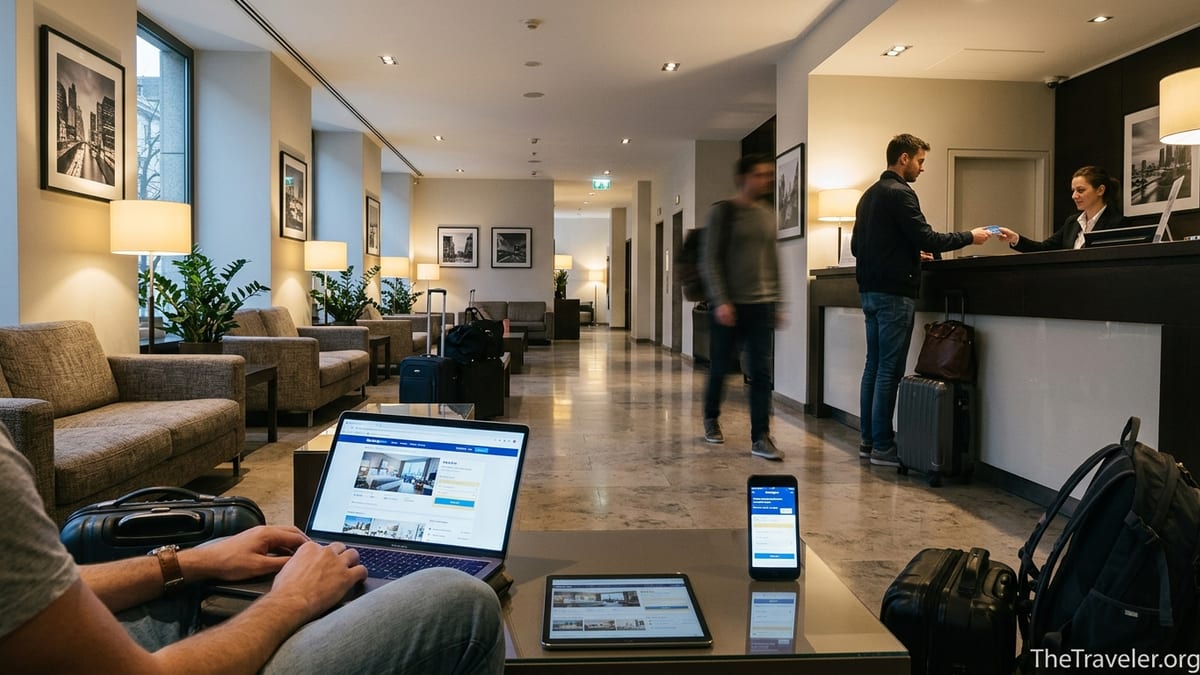
How Booking.com Really Makes Money, And Why It Matters To You
Booking.com is free for travelers to use, but it is far from free for hotels. Industry benchmarks in 2025 and 2026 put Booking.com’s typical commission in the range of about 15 to 18 percent of the room price, with some properties paying over 20 percent when they sign up for visibility-boosting programs. That means when you book a 200 dollar room through Booking.com, the hotel may only see around 160 to 170 dollars before taxes and card fees.
For hotels, this commission is the cost of marketing and distribution. For travelers, it shapes what you see and what you pay. Many hotels simply build that commission into the rate they load on Booking.com, so a room that sells for 200 dollars direct might be listed for 230 or more on the platform. Others hold their public rates roughly in line and treat the commission as a cost of doing business, hoping the extra volume makes up for it.
In practice this means you will find three types of pricing relationships. On some dates the Booking.com rate and the hotel’s own website are virtually identical. On others, the hotel site is clearly cheaper because the property is trying to steer savvy guests to book direct and save them the commission. Then there are dates where Booking.com is cheaper because it is stacking its Genius loyalty discounts or running a “Booking.com pays” promotion, temporarily absorbing part of the price itself to win the booking.
Imagine you search for a midrange hotel in Lisbon in October. Booking.com might show a standard double at 135 dollars per night, with a Genius discount down to 120. When you click through to the hotel’s own site, you might see a flexible rate at 130 and a nonrefundable advance purchase at 118. Which is better depends on whether you value flexibility and perks or the last couple of dollars of savings.
When Booking Direct Is Usually Better: Chains, Perks, And Problem Solving
For the big global brands, booking direct almost always unlocks benefits that Booking.com cannot offer. Marriott, Hilton, IHG, Hyatt and similar chains usually require you to book through their own channels to earn loyalty points and elite status credit. Those points are not trivial. On a 500 dollar stay at a typical chain property, you might earn enough points for 20 to 40 dollars of future value once you add in elite bonuses and occasional promotions, effectively lowering your long-term cost.
Direct bookings also tend to come with more flexible change and cancellation policies. A Marriott in Chicago might offer a “Member Flexible” rate on its own site that is cancellable until the day before arrival, while the same room on Booking.com shows only a stricter, nonrefundable option for similar dates. Business travelers, families with uncertain schedules, and anyone booking far ahead often find that the safer cancellation policy is worth paying a small premium.
Customer service is another quiet advantage of booking direct. If a snowstorm cancels your flight into Denver and you have a direct reservation with a Hyatt near the airport, you can usually call the front desk or central reservations and negotiate a waiver or same-day change. If you booked that same room via Booking.com, the hotel’s hands may be tied by the third party’s policies. Staff will often tell you they cannot change or refund the booking and that you must contact the platform, which can mean sitting in a call queue or arguing with chat agents during already stressful travel disruptions.
Then there are the small but real relationship perks. Boutique hotels and independent guesthouses, from a 20 room inn in Vermont to a riad in Marrakech, regularly say that they are more inclined to offer an upgrade, honor special requests, or be lenient with check-out when the guest booked direct. They see the full revenue from your stay and know they are not paying a large cut to an intermediary.
When Booking.com Can Beat Direct: Genius Deals And Regional Nuances
Despite the commissions, Booking.com is not always more expensive. Its Genius loyalty program, which unlocks extra discounts after a handful of stays, can occasionally undercut a hotel’s own website, especially for independent properties without strong loyalty schemes. At Genius Level 2 and above, typical displayed discounts run around 10 to 15 percent at participating hotels, and some promotions include small room upgrades or late check-out.
Real-world price checks show examples like a three night stay at a family-run hotel near Rome’s Termini station in shoulder season. The hotel site might show a standard double at 150 euros per night with breakfast, while a signed-in Genius member sees 170 euros crossed out on Booking.com and a “Genius price” of 140. In that case, if all other conditions are identical, Booking.com is genuinely cheaper upfront for the traveler even though the property is paying a steep commission in the background.
Regional regulation also matters. In the European Union, rules adopted in late 2024 removed so-called “rate parity” clauses that used to require hotels to keep their direct rates at or above the prices shown on Booking.com in many countries. As a result, in places like Spain, France, and Italy, you increasingly see hotels quietly posting lower prices or “member rates” on their own sites while still listing on Booking.com for visibility. In other markets, such as parts of Asia, parity clauses or informal expectations still lead many properties to keep rates aligned, so Booking.com and direct prices are closer.
Some Booking.com promotions further complicate the picture. Terms like “Mobile-only price” or “Booking.com pays” often indicate that the platform is subsidizing a discount or giving you some of its commission back in the form of a lower rate or travel credit. For a leisure traveler comparing a long weekend in Prague, that might mean a 110 dollar nightly rate on the hotel site but 105 dollars via Booking.com when using the mobile app, even after fees. In that narrow case, Booking.com might indeed be your best option for that specific stay.
Fees, Fine Print, And What You Actually Pay
A key reason travelers get confused is that Booking.com and hotel websites display taxes and fees differently. On many listings in the United States, Booking.com shows an attractive nightly “base rate” in the search results. Only when you click through and reach the final booking page do you see resort fees, service charges, and local taxes added. Direct hotel sites sometimes bundle more of those charges into the initial rate or highlight them earlier in the process.
Take a beach resort in Florida that advertises a 199 dollar room. On Booking.com you might see “199 dollars per night” in bold on the results page, then discover a 35 dollar nightly resort fee and 15 percent taxes just before confirming. On the hotel’s own site, the booking engine may show 219 dollars with taxes included and a clearly labeled 35 dollar resort fee. By the time you reach the final step, both channels are charging almost exactly the same total, even though the sticker prices looked quite different at first glance.
Cancellation terms are another area where assumptions can be costly. On Booking.com, you will often see labels like “Non-refundable,” “Partially refundable,” or “Free cancellation until X date.” Hotels can load multiple rate plans, and not all of them match what is on their own site. It is common to find that Booking.com is selling a cheap nonrefundable rate while the hotel’s website has a slightly higher flexible option that lets you cancel closer to arrival. For example, a city hotel in Toronto might list 150 Canadian dollars nonrefundable on Booking.com and 165 dollars flexible direct. Many travelers instinctively choose the cheaper number and only later realize how restrictive it is if plans change.
In rare cases, hotels add small “direct booking” fees or stricter deposit rules to their own sites while offering more lenient terms through Booking.com to broaden their reach. This can be true in heavily touristed areas of Japan or Indonesia where hotels rely on overseas visitors who feel more comfortable transacting through an international platform. This is why it is important not to assume that direct is automatically more flexible or cheaper without checking the details for your exact date and room type.
Real Trip Scenarios: Booking.com vs Direct In Practice
Consider a one week summer trip to Paris for a couple in July. You find a midrange chain hotel near the Gare de Lyon. On Booking.com, the total for seven nights in a standard double is 1,750 euros for a prepaid, nonrefundable rate, or 1,900 euros for a flexible rate that allows cancellation up to five days before arrival. When you check the brand’s own site, you see 1,800 euros for a flexible member rate that allows cancellation up to two days before arrival, and you will earn loyalty points worth roughly 70 to 80 euros in future stays. Even though the upfront price is slightly higher direct, the more generous cancellation window and the value of points might make booking direct clearly better.
Now imagine a different scenario: three friends booking a simple guesthouse in Budapest for a shoulder-season weekend. The property is independent, and its website is a dated single page with a contact form and bank transfer instructions. Booking.com lists an ensuite triple room at 90 euros per night, and as a Genius member you see a discounted rate of 78 euros per night, payable by credit card with instant confirmation. The guesthouse site quotes “about 80 euros” and asks you to email your credit card details or send a deposit via bank transfer. Here the clarity, protection, and speed of Booking.com likely outweigh a negligible price difference.
A third example is a last-minute booking during disruption. Your connecting flight through Dallas is canceled at 10 p.m., and you need an airport hotel for just one night. Booking.com shows live availability, recent reviews, and immediate confirmation at several properties. You quickly book a hotel for 170 dollars at midnight and head to bed. If you instead tried to navigate each hotel’s website on your phone, some might show outdated availability or special corporate-only rates. In such emergency situations, Booking.com can be the most practical tool, even if you know the hotel is losing part of the rate to commission.
These scenarios illustrate that the right answer changes depending on your priorities. For long stays at big chains where loyalty and flexibility add up, direct booking often wins. For short stays at small independents in unfamiliar markets, Booking.com’s interface, reviews, and secure payments can provide real value that justifies using it, especially when prices are close or slightly lower.
Risk, Security, And How Problems Get Resolved
Security and problem resolution are often overlooked until something goes wrong. Booking.com uses a centralized messaging system that keeps your conversations with the property inside its platform, and in most cases it processes payments through either virtual cards or secure gateways. That can protect your card details from being emailed around or stored in insecure ways by small hotels. It also gives you a clear communication thread if there is a dispute.
However, Booking.com’s scale has also made it a target for scams. There have been documented cases where attackers gained access to a hotel’s extranet and sent fraudulent messages to guests, asking them to re-enter card details on fake pages or threatening to cancel the booking. While Booking.com has since introduced additional security steps, such incidents are a reminder that no platform is perfect. Travelers should be suspicious of any payment requests that do not match the original booking method and should verify with the property via a trusted phone number if something feels off.
Booking direct can reduce some of these specific platform-related risks but introduces others. Very small guesthouses and apartments may use basic website builders and manual credit card forms that are less secure than the systems used by large intermediaries. If you email card details or pay via bank transfer, your recourse in case of fraud or nonperformance can be weaker than when using a card on a major platform that has established dispute procedures.
When a stay does not go as advertised, who you booked with largely determines who will help you. If you bought through Booking.com and arrive to find that your “sea view” is actually a parking lot, your first conversation will usually be with the hotel, but formal complaints and refunds often need to be handled through Booking.com. That can mean delays and back-and-forth between two parties that may blame each other. With a direct booking at a reputable chain or well-run independent hotel, the front desk can generally authorize room changes, partial refunds, or goodwill gestures on the spot.
The Takeaway
There is no universal winner between Booking.com and booking hotels directly. The best choice depends on who you are staying with, where you are traveling, and what you value most. For major chains and longer or more expensive stays, especially where you care about loyalty points, elite benefits, and flexible cancellation, booking direct through the hotel’s website or app usually offers better long-term value and more control when plans change.
For independent hotels, guesthouses, and apartments, particularly in foreign countries where language and payment methods are different, Booking.com’s combination of reviews, transparent availability, and strong card processing can be worth using, especially when its Genius program or mobile-only promotions give it a clear price edge. In these cases, read the fine print, compare total prices including taxes and fees, and check the hotel’s own site for hidden member deals before committing.
A practical approach for most travelers in 2026 is to treat Booking.com as both a research tool and a booking option. Start by using it to discover properties, read recent guest feedback, and get a ballpark sense of price. Then, for any hotel you like, open its official website in a separate tab, check member or promotional rates, compare cancellation policies line by line, and consider loyalty value if you belong to a chain program. Finally, decide whether the convenience and occasional discounts of Booking.com are worth more to you than the extra perks and direct relationship you gain by booking with the hotel itself.
FAQ
Q1. Is Booking.com always cheaper than booking directly with a hotel?
Not always. Sometimes Booking.com is cheaper thanks to Genius or mobile-only discounts, but hotels often undercut those rates on their own sites, especially in Europe and for members of their loyalty programs. Always compare total prices with taxes and fees before deciding.
Q2. When should I definitely book directly with a hotel?
Booking direct usually makes the most sense with major chains, long or expensive stays, and trips where flexibility matters. You are more likely to earn loyalty points, access exclusive member rates, and get better support if you need to change or cancel.
Q3. Are there times when Booking.com is the better choice?
Yes. Booking.com can be better for independent hotels and guesthouses in unfamiliar destinations, especially when their own sites are outdated or require bank transfers. It is also helpful for last-minute stays and situations where you want a fast, card-secured reservation and verified guest reviews.
Q4. Do I lose hotel loyalty points if I book through Booking.com?
In most major chains, yes. Stays booked through Booking.com typically do not earn points or elite night credits in programs like Marriott Bonvoy or Hilton Honors. There are occasional exceptions, but you should assume you will not earn chain points when using Booking.com unless the hotel explicitly says otherwise.
Q5. How can I quickly compare Booking.com with a hotel’s own price?
After finding a hotel on Booking.com, open the hotel’s official website in another tab and search the same dates, room type, and cancellation policy. Make sure you select any “member rate” or promotional code the brand offers, then compare the final totals including all taxes and fees on both sites.
Q6. Is it safer to pay on Booking.com or on a hotel’s own website?
Both can be safe when used correctly. Booking.com uses established payment gateways and keeps communication on its platform, while reputable hotel chains invest in secure booking engines. Issues arise mainly with small, poorly secured sites or when scammers intercept messages, so avoid emailing card details and double-check any unexpected payment requests.
Q7. What happens if my Booking.com reservation has a problem at check-in?
If something is wrong with a Booking.com reservation at check-in, the hotel may be limited in what it can change directly. You might need to contact Booking.com support via app, phone, or chat to modify or cancel without penalty. This is less convenient than dealing directly with the hotel but reflects how third-party bookings are controlled by the platform’s rules.
Q8. Does Booking.com show all the same room types that hotels sell directly?
Not always. Hotels choose which room types and rate plans to load onto Booking.com. Sometimes they keep special suites, packages, or deeply discounted advance purchase deals for their own websites. Checking both channels can reveal additional options or better value.
Q9. How do taxes and fees differ between Booking.com and direct bookings?
Differences are mostly in how they are displayed, not in the taxes themselves. Booking.com often shows a low base rate first and adds local taxes and resort fees later, while hotel sites may show more inclusive rates earlier. Focus on the final total on the last booking screen on both sites before making your choice.
Q10. What is the smartest strategy overall: always Booking.com or always direct?
The smartest strategy is to mix both. Use Booking.com to discover properties and check real-time availability, then compare with the hotel’s direct price, benefits, and policies. Choose Booking.com when it is clearly cheaper or more convenient, and book direct when loyalty value, flexibility, and better service outweigh a small price difference.