


More news on this day
Cruise passengers heading to The Bahamas around the country’s upcoming general election are being warned to expect dry bars at ports and private islands for part of the day, as a nationwide ban on alcohol sales during voting hours temporarily disrupts the region’s booming cruise tourism sector.
Get the latest news straight to your inbox!
Nationwide Election Rules Extend Beyond the Mainland
Publicly available government notices and tourism advisories indicate that The Bahamas will prohibit the sale of alcohol during general election voting hours on Tuesday, May 12, 2026. The restrictions are tied to long-standing provisions under Bahamian election law that suspend liquor licenses while polls are open, typically from 8 a.m. to 6 p.m. local time.
The ban applies to licensed premises across the archipelago, from Nassau’s waterfront bars and resorts to out-island destinations popular with visitors. Recent travel industry coverage notes that the rules are being enforced more strictly this year, affecting not only hotels and local restaurants but also businesses operating within cruise terminals.
While the measure is designed primarily to govern domestic political life and maintain order during voting, its reach into key tourism hubs means that thousands of cruise guests visiting on Election Day will encounter limitations on buying alcoholic drinks ashore during the affected hours.
The timing coincides with the height of spring cruise traffic, when major lines funnel ships through Bahamian ports on short Caribbean itineraries. Travel analysts suggest that even a one-day restriction has outsized visibility because of the volume of passengers concentrated into a relatively narrow timeframe.
Private Islands Caught in the Alcohol Blackout
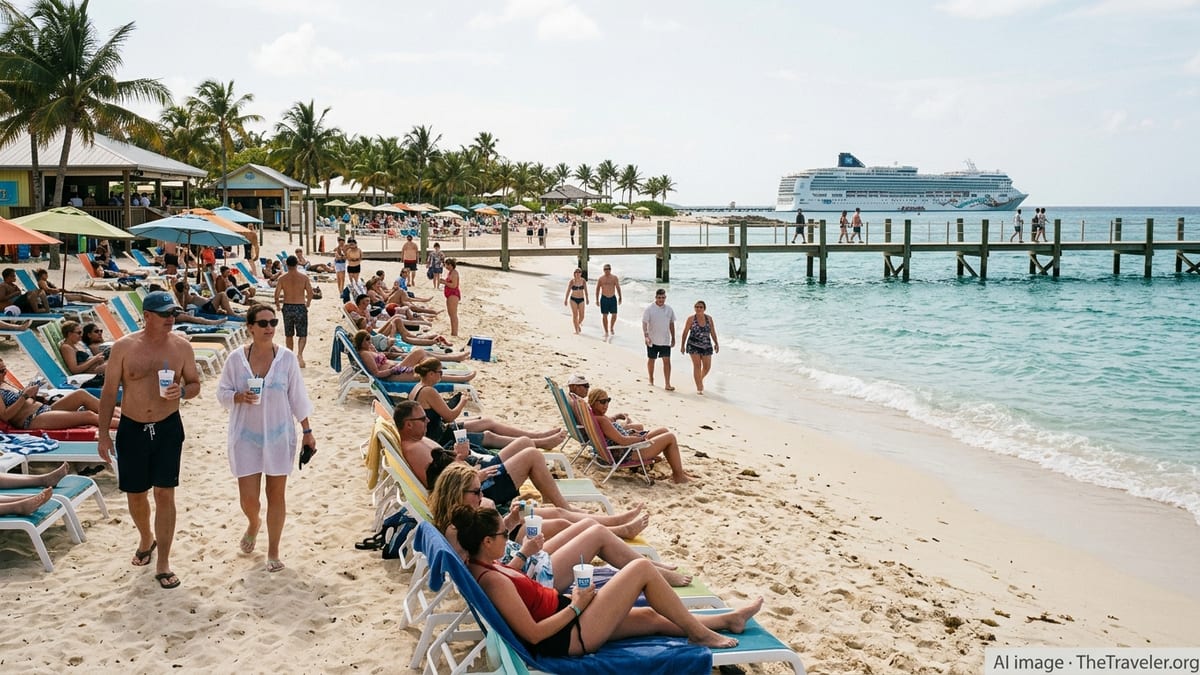
One of the most closely watched implications of the Election Day ban has been its application to cruise line private destinations in The Bahamas, which are marketed as all-inclusive beach escapes with swim-up bars and cocktail service. According to coverage by cruise-focused outlets, Royal Caribbean has confirmed that alcohol sales at its flagship private island, Perfect Day at CocoCay, will be paused in line with the national rules on May 12.
Similar questions have been raised about other Bahamian private and semi-private destinations, including Norwegian Cruise Line’s Great Stirrup Cay and Disney Cruise Line’s exclusive ports, where beverage packages are typically valid ashore. Industry reports indicate that operators are treating these locations as subject to the same liquor licensing environment as any other Bahamian venue, leading to a temporary suspension of bar service during election hours.
Despite the onshore restrictions, commentary from cruise industry observers and legal summaries of Bahamian regulations suggest that the Election Day ban focuses on businesses holding local liquor licenses. That distinction has prompted discussion about how far the rules extend to ships themselves, which generally operate under separate flag-state regimes once passengers step back on board.
For guests, however, the practical impact is straightforward: during the voting window, cocktails, wine, and beer are expected to be unavailable for purchase at Bahamian beaches, island bars, and pier-side venues, even when those facilities are operated by the cruise lines under long-term agreements with the government.
Cruise Lines Adjust Shore Experience and Messaging
In response to the impending disruption, cruise news coverage shows that major brands have begun updating pre-cruise communications, onboard announcements, and excursion descriptions for itineraries calling in The Bahamas on May 12. Passengers are being advised that beverage packages will not cover alcoholic drinks at affected ports and private islands during the designated hours, and in some cases that bar operations ashore will be fully suspended.
Some lines are reportedly exploring ways to strengthen the nonalcoholic experience at Bahamian stops on Election Day, highlighting mocktails, soft drinks, expanded food offerings, and complimentary activities to preserve the value of beach days without the usual open-bar atmosphere. Shore excursion teams are also expected to emphasize water sports, family programming, and cultural tours that are less dependent on bar revenue.
Publicly available information suggests that onboard bar service may continue under the ship’s own regulations when vessels are in port, as long as drinks are consumed on the ship rather than taken ashore. That arrangement would mirror how cruise lines already differentiate between onboard casinos and duty-free shops, which often close in port, and core hospitality services that continue for guests who remain on the vessel.
Travel planners note that the episode is also prompting internal reviews of how election calendars and local liquor laws are factored into itinerary planning and guest communications, especially in destinations where democratic processes can temporarily override standard tourism practices.
Passenger Reaction and Practical Advice for Travelers
Reaction among cruise passengers has ranged from surprise to frustration, particularly among those who purchased beverage packages or beach club access expecting unlimited cocktails. Social media posts and travel forums in recent days have carried complaints from guests who say they only learned of the Election Day restrictions shortly before sailing, or once already on board.
Travel commentators are advising would-be Bahamas cruisers to pay close attention to the date of their port calls and to read pre-cruise documentation carefully. For those scheduled to visit Nassau, Freeport, or private islands on May 12, the practical guidance is to plan for a largely alcohol-free day ashore, at least until polls close in the early evening.
Industry analysts point out that the disruption does not affect other aspects of the cruise experience: beach access, pools, waterslides, restaurants, and most shore excursions in The Bahamas are still expected to operate as normal on Election Day. Travelers are encouraged to treat the temporary dry spell as a scheduling quirk rather than a safety concern or sign of wider instability.
For guests who place a high priority on bar service in port, some advisors suggest considering spending more time on board during the restricted hours, where the ship’s lounges and pool bars are more likely to remain open under the vessel’s own rules. Others recommend shifting expectations and using the unusual day to explore cultural sites, local food, or family activities that do not revolve around drinking.
Short-Term Setback for a Strategically Vital Cruise Hub
The Bahamas has long been one of the most important cruise destinations in the world, serving as a first stop for many North American itineraries and as a testing ground for new private-destination concepts. The Election Day alcohol ban represents a rare moment in which domestic political procedures visibly intersect with the business of cruise tourism.
Travel industry commentary suggests that the short duration of the ban and its clear legal basis mean it is unlikely to cause lasting damage to the country’s reputation among travelers or cruise operators. Instead, the episode is being seen as a reminder that even highly curated tourism environments remain subject to national laws and civic events.
In the longer term, the experience may encourage closer coordination between cruise lines and Bahamian authorities on scheduling, particularly around future elections and public holidays. It may also prompt operators to diversify marketing messages for private islands, placing greater emphasis on family amenities, entertainment, and wellness offerings that are less sensitive to temporary restrictions on alcohol sales.
For now, the focus for both The Bahamas and its cruise partners is on managing a one-day disruption as smoothly as possible, keeping guests informed, and ensuring that the country’s role as a cornerstone of the Caribbean cruise network remains firmly intact once the polls close and regular bar service resumes.