


More news on this day
After more than three months at sea crossing the great arcs of the Pacific Ocean, U.S. travelers aboard Princess Cruises’ Coral Princess have completed a one-hundred-day Circle Pacific world-style voyage that stitched together Hawaii, Asia, Oceania and North America into a single extended journey.
Get the latest news straight to your inbox!
A Grand Voyage Built Around the Pacific Rim
The 100-day sailing formed part of Princess Cruises’ extended Circle Pacific program on Coral Princess, a ship that has been scheduled on lengthy world and Pacific itineraries through 2026. Publicly available deployment information shows that the current Circle Pacific season operates in segments of 115 and 131 days, with many guests embarking or disembarking in Los Angeles or Fort Lauderdale. Within that framework, a substantial number of U.S. passengers opted for a roughly 100-day configuration, combining multiple segments into a single continuous voyage.
The routing was designed to trace a broad circuit of the Pacific Rim rather than follow a traditional east–west world cruise pattern through the Suez Canal. Cruise industry coverage notes that Princess repositioned its 2026 world-cruise plans for Coral Princess into a Circle Pacific format that concentrates on Pacific nations and avoids Red Sea transits, aligning with wider industry shifts toward itineraries focused on a single ocean basin.
Over the course of the voyage, Coral Princess called at ports across 19 or more countries and territories, according to line marketing materials for the broader Circle Pacific program. The itinerary blended marquee capital cities with remote islands and smaller coastal gateways, offering U.S. guests a rare opportunity to experience an extended, continuous journey without the complex flight schedules usually required to link such distant regions.
For many travelers, the 100-day configuration represented a compromise between a shorter segment and the longest available world-style cruise, providing enough time for deep immersion without committing to the full four-plus months that some itineraries entail. Travel advisors commenting on the program have highlighted these flexible world-cruise segments as a growing niche for seasoned cruisers seeking one-off, milestone trips.
From Hawaii and Polynesia to Australia and New Zealand
The Circle Pacific arc began for many U.S. guests when Coral Princess headed west from the continental United States to the Hawaiian Islands. Itinerary details published for the season indicate that Honolulu served as a key gateway, with additional scenic cruising and calls around the archipelago. These early days at sea set the pace for the long-haul crossings that would follow, acclimating passengers to the shipboard rhythm of a world-style voyage.
From Hawaii, Coral Princess continued south and west into the heart of the South Pacific. Cruise line brochures and independent schedule trackers describe calls in French Polynesia and other island groups, blending lagoon-fringed anchorages with larger ports that support regional tourism. For U.S. travelers, this stretch of the itinerary offered a transition from familiar resort environments to more remote Pacific cultures that are less commonly visited on mainstream seven-night cruises.
The ship then moved on toward New Zealand and Australia, where the Circle Pacific program devotes extended time to coastal cruising. Marketing materials for the broader voyage emphasize marquee destinations such as Auckland, Sydney and Brisbane, along with smaller ports in Queensland and New South Wales featured on Coral Princess itineraries. This Australasian segment, broken up by sea days, allowed passengers to experience contrasting urban skylines, wine regions and subtropical coastlines over several weeks.
Observers of long-haul cruise trends note that this combination of Polynesia and Australasia has become a signature of modern Pacific world-style itineraries. By positioning these regions early in the voyage, operators give guests the chance to adjust to the pace of extended sea travel while enjoying a diverse mix of natural landscapes and developed waterfronts.
Deep Asia Focus and Scenic Return via Japan and Alaska
After its Australasian calls, Coral Princess continued north and west toward Asia, an area that Princess Cruises has positioned as a highlight of the Circle Pacific design. Company flyers and trade-press summaries point to an in-depth focus on Japan, complemented by selected calls in Southeast Asia, creating a dense sequence of culturally rich ports before the ship turns back toward North America.
Schedules released for the 2026 program show that the broader Circle Pacific route includes visits to major Japanese ports and gateway cities in Vietnam, among other stops. For U.S. travelers on the 100-day configuration, these weeks in Asia provided some of the most intensive cultural immersion of the voyage, with shore experiences ranging from historic districts and temples to modern waterfront developments and regional cuisine.
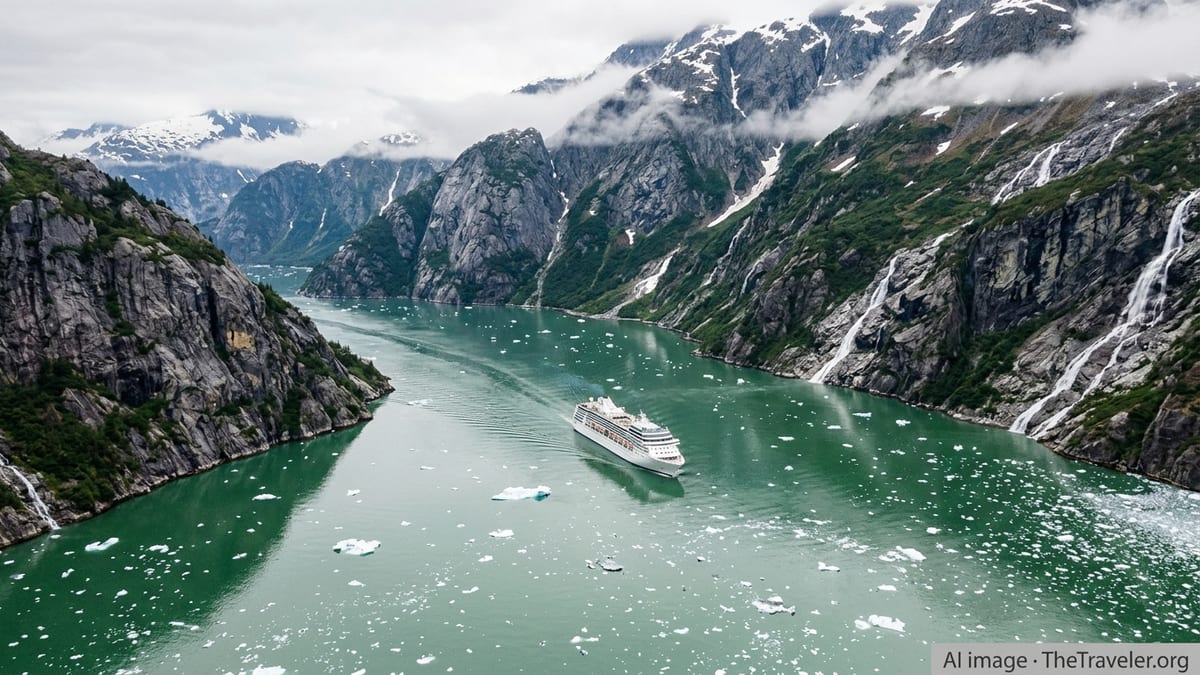
Once the Asian leg was complete, Coral Princess headed across the North Pacific toward Alaska and the Pacific Northwest, knitting the itinerary back toward the United States. Industry itineraries highlight scenic cruising in glacier regions as a defining draw of this segment, with the ship navigating fjords and icy channels that contrast sharply with the tropical scenes of earlier in the journey.
The final portion of the voyage brought guests down the West Coast of North America, with published schedules indicating calls in ports such as Vancouver, Seattle and coastal communities in Oregon and California across the wider season. For passengers finishing a 100-day journey, these familiar landscapes signaled a gradual reentry to everyday life as the ship approached its concluding call in Los Angeles.
Life On Board During a One-Hundred-Day Voyage
Spending more than three months at sea requires a different approach to cruising than a standard holiday sailing. Coral Princess, a Panamax-class ship built for longer itineraries through regions such as the Panama Canal and Alaska, has been repeatedly deployed on extended voyages, and recent dry-dock work in 2024 focused on maintenance and refreshes that support long-duration comfort. Publicly shared refit details reference hull work, system overhauls and upgrades aligned with the ship’s ongoing world-cruise role.
Passengers on a 100-day itinerary typically experience a slower, more residential style of travel, with routines built around recurring enrichment programs, lectures, and practical considerations like laundry and onboard medical services. Travel forums and cruise-community discussions about Coral Princess’ recent seasons describe a shipboard environment where crew become familiar faces and multi-week friendships form among guests who see one another daily at meals, trivia contests and deck events.
Long-haul itineraries also depend heavily on reliable connectivity and digital services, allowing guests to stay in contact with family and manage practical matters back home. Cruise-industry reporting on Princess’ wider fleet notes a continuing rollout of upgraded Wi-Fi and app-based services, elements that are particularly important for passengers committing to months away from home.
While life on board can feel insulated from shore-based headlines, extended sea days and crossings also give travelers time to reflect on the geographic scope of their journey. Over 100 days, U.S. guests see weather patterns, languages and coastlines shift steadily rather than abruptly, offering a perspective on distance and time that is difficult to replicate by air travel.
Growing Demand for Pacific-Centric World-Style Cruises
The completion of this one-hundred-day Circle Pacific journey comes as Princess Cruises and other major brands expand their offerings of world and world-style itineraries centered on a single ocean. Company materials and trade reports show that in addition to the 2026 Circle Pacific program on Coral Princess, Princess has announced similar extended voyages for later years, reflecting consistent demand among North American and international guests for months-long sailings.
Analysts following the cruise sector note that these Pacific-focused itineraries respond to several overlapping trends. Safety and geopolitical considerations have encouraged some lines to design routes that avoid traditional chokepoints, while traveler interest has shifted toward deeper exploration of fewer regions rather than fast circumnavigations. The Pacific, with its combination of island nations, major Asian hubs, Australasia and North American gateways, offers a natural canvas for this style of slow, immersive travel.
At the same time, improved air connectivity and a growing market of repeat cruisers in the United States make it easier for travelers to book partial world-cruise segments or create custom combinations that approximate a full world voyage. Travel agencies report increased interest in milestone trips tied to retirements, anniversaries and extended sabbaticals, for which a 100-day Circle Pacific journey is positioned as a once-in-a-lifetime experience.
With Coral Princess now completing a major leg of its Circle Pacific schedule and passengers disembarking after more than three months at sea, attention within the cruise community is turning to future seasons. As plans for additional world and Circle Pacific voyages roll out across the industry, the experiences of these U.S. travelers will likely inform how extended, ocean-focused itineraries evolve in the years ahead.