


More news on this day
The Bahamas is positioning itself as a laboratory for climate-resilient tourism in the Caribbean, using a new United Nations Sustainable Islands Innovation Challenge to fast-track projects that appeal to eco-conscious travelers while hardening the region’s most fragile visitor economies.
Get the latest news straight to your inbox!
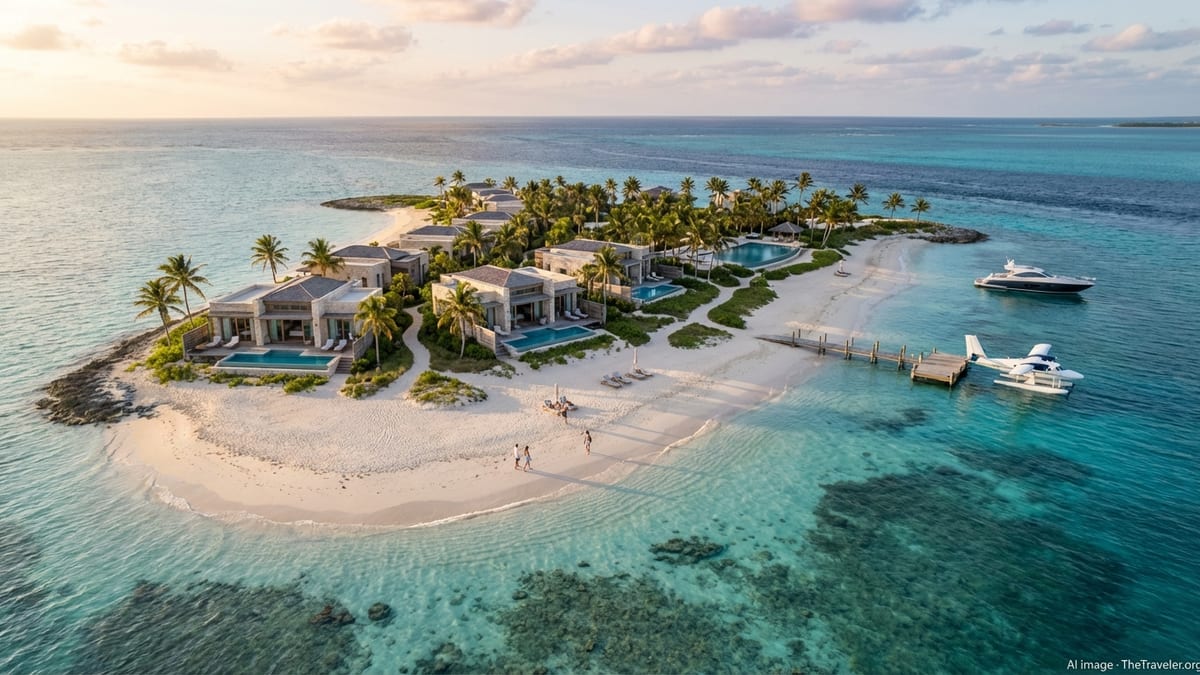
UN Challenge Puts Bahamas at Center of Regional Tourism Rethink
Publicly available information shows that UN Tourism and partners have turned the spotlight on The Bahamas through a Sustainable Islands Innovation Challenge, focused on concrete projects that strengthen tourism resilience across small islands. Recent coverage highlights the Bahamas Sustainable Islands Innovation Challenge, which singled out initiatives that reduce resource use, cut waste and create new revenue streams tied to low-impact travel experiences.
Among the winners, reports indicate that an Out Island water company’s recycling and circular-economy model drew attention as the overall champion, reflecting how essential water security and waste management have become for destinations facing sea-level rise, stronger storms and prolonged droughts. The project captures and reuses materials that would otherwise end up in landfills or coastal waters, aligning with broader UN goals for sustainable consumption and production.
By using a competitive challenge format to surface solutions from local entrepreneurs and community groups, The Bahamas is positioning itself as a regional incubator for climate-smart tourism innovation. Observers note that the model also gives investors and development banks a clearer pipeline of fundable projects, which has been a consistent constraint for Caribbean islands looking to translate climate strategies into bankable ventures.
The initiative comes as Caribbean tourism leaders warn of an “adaptation gap” between climate pledges and projects on the ground. Regional analysis emphasizes that without accelerated investment, damage to coastal assets, coral reefs and basic infrastructure could erode the very natural capital that underpins the region’s visitor appeal and long-term economic growth.
Climate Resilience Becomes Core Tourism Strategy
The Bahamas has already experienced how climate shocks can ripple through a tourism-dependent economy. Research by international financial institutions points to rising hurricane intensity, chronic coastal erosion and saltwater intrusion as structural risks that threaten hotels, ports, housing and ecosystems that draw millions of visitors each year.
Recent planning documents submitted to international climate bodies underline the role of coral reefs, mangroves, seagrass beds and blue holes in shielding shorelines and sustaining dive and snorkeling tourism. National projections value dive-related tourism alone in the hundreds of millions of dollars annually, underscoring the link between ecosystem health and fiscal stability.
To address these vulnerabilities, the country is advancing a portfolio of resilience investments that intersect directly with tourism. A newly approved climate resilience program for the water sector, backed by the Green Climate Fund, aims to modernize freshwater systems across the Family Islands. Public summaries of the project stress that securing reliable, climate-resilient water supplies is essential not only for communities but also for resorts and nature-based tourism businesses that depend on predictable service.
Analysts suggest that by embedding tourism considerations within water, coastal and energy projects, The Bahamas is moving toward a whole-of-economy approach to resilience. This integrated strategy mirrors guidance from UN agencies, which have urged small island developing states to link tourism recovery with climate adaptation rather than treat them as separate policy tracks.
Blue Economy Finance and Innovation Gain Momentum
Alongside the UN-backed challenge, The Bahamas is expanding its blue economy agenda in ways that could reshape how tourism growth is financed. Government announcements in 2025 detailed a multimillion-dollar loan agreement with the Inter-American Development Bank to support a program labeled Local Sustainability and Development in the Blue Economy of The Bahamas, targeting innovation, climate resilience and marine industry diversification.
The program is designed to channel funding into small and medium-sized enterprises operating in coastal tourism, maritime activities and sustainable fisheries. Public documents describe a focus on new business models that can both create jobs and reduce environmental pressure, for example by promoting low-impact marine excursions, eco-lodges and technology that reduces energy and water use in hospitality operations.
Separate calls for technical assistance and research, issued under regional competitiveness initiatives, identify opportunities for blue economy entrepreneurship ranging from reef-safe products to digital tools that help visitors track and offset their environmental footprint. Observers see these moves as part of a broader shift toward blended finance mechanisms, mirroring global experiments with blue bonds, reef insurance and payment systems that recycle a portion of visitor spending into conservation.
For Caribbean neighbors, the Bahamas portfolio provides real-time insight into how climate finance, innovation challenges and tourism policy can be aligned. Development partners monitoring the region have noted that widely replicable pilots are likely to attract additional funding, particularly where they demonstrate measurable benefits for coastal protection, emissions reduction and local livelihoods.
Appealing to a New Generation of Eco-Conscious Travelers
Destination marketing materials from The Bahamas now place sustainability far closer to the center of the visitor experience than in previous eras focused primarily on sun-and-sand mass tourism. Official tourism platforms promote coral restoration partnerships, marine debris cleanups and protected area expansion, presenting these not only as environmental priorities but as part of the country’s identity for travelers seeking responsible experiences.
Initiatives supported by local councils, nonprofits and resort-backed foundations highlight activities such as reef-friendly snorkeling, citizen science excursions and guided visits to mangrove nurseries. Reports from conservation groups describe large-scale debris removal operations on key islands, as well as efforts to reduce plastic use and encourage community-based waste management solutions that keep beaches and nearshore waters clean.
According to industry commentary, these narratives are resonating with a growing segment of travelers who weigh carbon footprints, social impact and authenticity when choosing where to spend their tourism dollars. Caribbean-focused travel analysts note that destinations perceived as proactive on climate risk and community benefit are better positioned to maintain demand in an era of increasingly climate-aware consumers.
By using the Sustainable Islands Innovation Challenge as a storytelling platform as well as a technical accelerator, The Bahamas is able to showcase both cutting-edge pilots and long-standing community initiatives to international tour operators and media outlets. This visibility, observers argue, helps reposition the archipelago as a living laboratory for regenerative tourism rather than a passive victim of climate impacts.
Regional Ripple Effects Across the Caribbean
The strategic bet underpinning the Bahamas-led innovation push is that practical solutions developed in one island setting can be transferred, with adaptation, across the wider Caribbean. UN agencies working with small island developing states have consistently promoted knowledge-sharing networks, regional competitions and joint financing facilities as ways to overcome the fragmentation that often slows progress in the archipelago.
Regional climate and tourism programs already document growing interest from neighboring destinations in tools such as risk-informed zoning for coastal hotels, early-warning systems tailored to tourism operators and insurance products that speed up post-disaster recovery for small businesses. Analysts point to The Bahamas as one of the first tourism-driven economies in the region to use an innovation challenge format, backed by global branding, to crowd in such ideas.
As the 2026 Atlantic hurricane season approaches, commentary in regional media underscores the urgency of turning these pilots into scalable systems. While tourism arrivals have largely rebounded across much of the Caribbean, climate projections show that a single severe storm track can erase years of gains in a matter of days, making resilience investments a competitive necessity rather than an optional add-on.
For now, The Bahamas appears intent on keeping its foot on the accelerator, linking UN-backed innovation platforms, blue economy finance and destination marketing around a single proposition: that the future of Caribbean tourism will be defined by how effectively islands adapt to a changing climate, protect their natural assets and meet the expectations of increasingly eco-conscious travelers.