


More news on this day
As airlines cautiously rebuild their long haul networks after the Strait of Hormuz crisis jolted global oil supplies, Fort Lauderdale is emerging alongside Rome, Hanoi, Orlando, Chicago, Houston, Seattle, and Santo Domingo as a key node in a reshaped map of international air travel.
Get the latest news straight to your inbox!
Airlines Recalibrate After a Historic Oil Shock
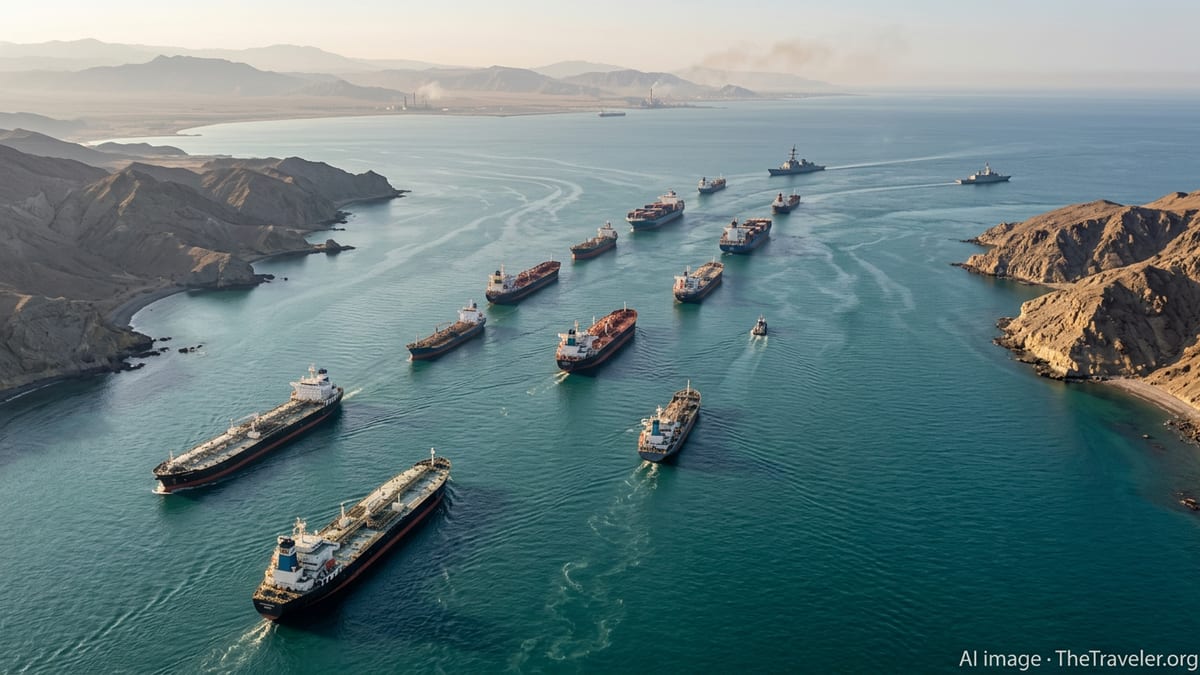
The 2026 Iran conflict and closure of the Strait of Hormuz triggered what international energy agencies and market analysts describe as the largest disruption to global oil supplies in modern history. With roughly one fifth of the world’s seaborne crude normally moving through the narrow waterway, the sudden interruption sent jet fuel prices sharply higher and raised the risk of physical shortages across major aviation hubs.
Industry assessments released in April and May indicate that even with a partial reopening of the strait under a ceasefire framework, restoring crude output, refining capacity and shipping patterns will take months. Aviation outlook reports point to a prolonged period of tight fuel markets, forcing carriers to trim frequencies, defer growth and rework route maps to concentrate on the most resilient demand corridors.
Data compiled from schedule trackers and airline filings shows that more than 150,000 international flights were removed from global timetables between March and June 2026 compared with pre conflict plans. The steepest reductions have affected fuel intensive ultra long haul operations and routes dependent on Middle East connections, accelerating a strategic shift toward more regionally focused and point to point flying.
Against this volatile backdrop, a new pattern is emerging. North American and transatlantic carriers in particular are funneling scarce widebody capacity into secondary yet high yielding cities, turning places such as Fort Lauderdale and Orlando into pressure valves for demand that might previously have flowed through Gulf or mega hub gateways.
Fort Lauderdale Steps Onto the International Stage
Fort Lauderdale Hollywood International Airport, long branded as a leisure and low cost gateway to South Florida, is increasingly being positioned as a practical alternative for transborder and mid haul international services. Publicly available schedule data for the northern summer period indicates a measured build up of flights to Latin America and the Caribbean, along with selective long range services aligned with visiting friends and relatives demand.
Industry reports note that airlines with strong point to point strategies are prioritizing Fort Lauderdale because of its dense catchment area, proximity to Miami, and lower operating costs compared with some larger coastal hubs. In an environment of elevated fuel prices, the ability to pair high load factors with relatively efficient turn times and competitive airport fees is emerging as a key differentiator.
Analysts tracking US airport throughput suggest that Fort Lauderdale is benefiting from the same dynamics that are lifting Orlando and Houston. Travelers who might once have routed via major European or Gulf hubs are increasingly booking itineraries that combine a domestic leg into Florida or Texas with nonstop or short haul international sectors operated by US, Caribbean, and Latin American carriers.
While overall capacity remains below pre crisis ambitions, the pattern of recovered services at Fort Lauderdale signals growing confidence that the market can sustain additional international flying even under constrained fuel conditions. The airport’s role as a flexible reliever for South Florida demand is likely to expand if oil markets remain volatile into the peak holiday season.
Rome and Houston Anchor a Rebalanced Transatlantic Network
On the transatlantic side, Rome and Houston have become emblematic of how airlines are reshaping networks to capture resilient flows while avoiding excessive fuel exposure. In early May, Italy’s national carrier launched its first direct Houston Rome flight, a long planned route that has taken on new significance as a stable, oil market connected city pair linking Europe with the energy and medical economy of the US Gulf Coast.
According to published route announcements and airport statements, the Houston Rome service is debuting with limited weekly frequencies but built around onward connections through Rome Fiumicino to key European and Mediterranean destinations. By emphasizing high yielding business and diaspora traffic rather than pure discretionary tourism, the airline is seeking to insulate the route from potential fare shocks if jet fuel prices spike again later in the year.
Rome itself is also gaining prominence as an alternative continental gateway at a time when some traditional Middle East stopover models remain under pressure. Aviation outlook material notes that European carriers are redeploying capacity to southern hubs with strong local demand and diversified feeder networks, using them as launchpads for North American and North African markets that can be served efficiently despite higher fuel costs.
These moves mirror a wider trend visible in schedule data out of Chicago, Houston, and Seattle, where airlines are tightening their long haul portfolios around a smaller number of strategically important intercontinental connections, while relying on domestic and short haul regional links to feed those flights.
Hanoi, Seattle and Santo Domingo Illustrate Shifting Demand Flows
Across the Pacific and into Southeast Asia, Hanoi is featuring more prominently in network rebuild plans as carriers adjust to both geopolitical and energy market shifts. Reports tracking Asian aviation indicate that some airlines have trimmed services to Gulf and South Asian hubs in favor of East Asian and Indochina routes that can be flown on more direct paths with fewer overflight complexities and more predictable fuel planning.
In North America, publicly available route guides for 2026 show that Seattle Tacoma is reinforcing its status as a transpacific and transatlantic bridge, with selective expansion to European and Asian capitals. Even as fuel costs climb, Seattle’s geographic position enables airlines to operate relatively efficient great circle routings to both regions, a factor that takes on heightened importance as carriers scrutinize block times and burn rates on every long haul sector.
Santo Domingo and other Caribbean capitals are also drawing additional capacity, particularly from US and Latin American carriers looking to sustain international flying without committing to ultra long haul missions. Industry commentary points to a pivot toward medium haul leisure and visiting friends and relatives markets where aircraft can complete multiple daily rotations on limited fuel uplift, generating better utilization under constrained supply.
Together, these adjustments illustrate how airlines are tilting networks toward city pairs where geography, demand, and operational efficiency can offset at least part of the cost shock flowing from disrupted oil supplies.
Balancing Recovery Hopes With Persistent Fuel Risks
While the ceasefire terms that have enabled some traffic through the Strait of Hormuz have eased the most acute fears of a runaway oil price spiral, energy and aviation analysts emphasize that jet fuel markets remain fragile. Damage to regional infrastructure, shipping bottlenecks and the time required to rebuild inventories are expected to keep pressure on airline cost bases well into the second half of 2026.
Industry bodies estimate that global capacity growth will slow markedly compared with earlier forecasts as carriers weigh the risk of adding seats that may become unprofitable if fuel markets tighten again. Many are turning to aggressive hedging strategies, flexible fleet deployment and dynamic pricing tools to manage volatility, even as they press ahead with carefully targeted route launches in cities like Fort Lauderdale, Rome, Hanoi, Houston, Seattle, Orlando, Chicago and Santo Domingo.
For travelers, the rebuilding of international networks through this diverse group of gateways signals that long haul connectivity is returning, but on different terms. Fares on fuel intensive routes are expected to remain elevated, while secondary hubs that offer efficient operations and strong local demand may see a larger share of new and restored services.
How long this new network geography endures will depend on the trajectory of the Hormuz situation and the broader energy market. For now, the post crisis recovery map suggests a more distributed model of global connectivity, in which airports like Fort Lauderdale play a larger role in keeping international travel moving through an era of constrained fuel and heightened geopolitical risk.