

More news on this day
Bahrain has reopened its airspace after around 40 days of shutdown linked to the wider regional security crisis, allowing Bahrain International Airport to restart commercial flights on a limited but steadily expanding basis to major hubs in the Gulf, South Asia and Europe.
Get the latest news straight to your inbox!
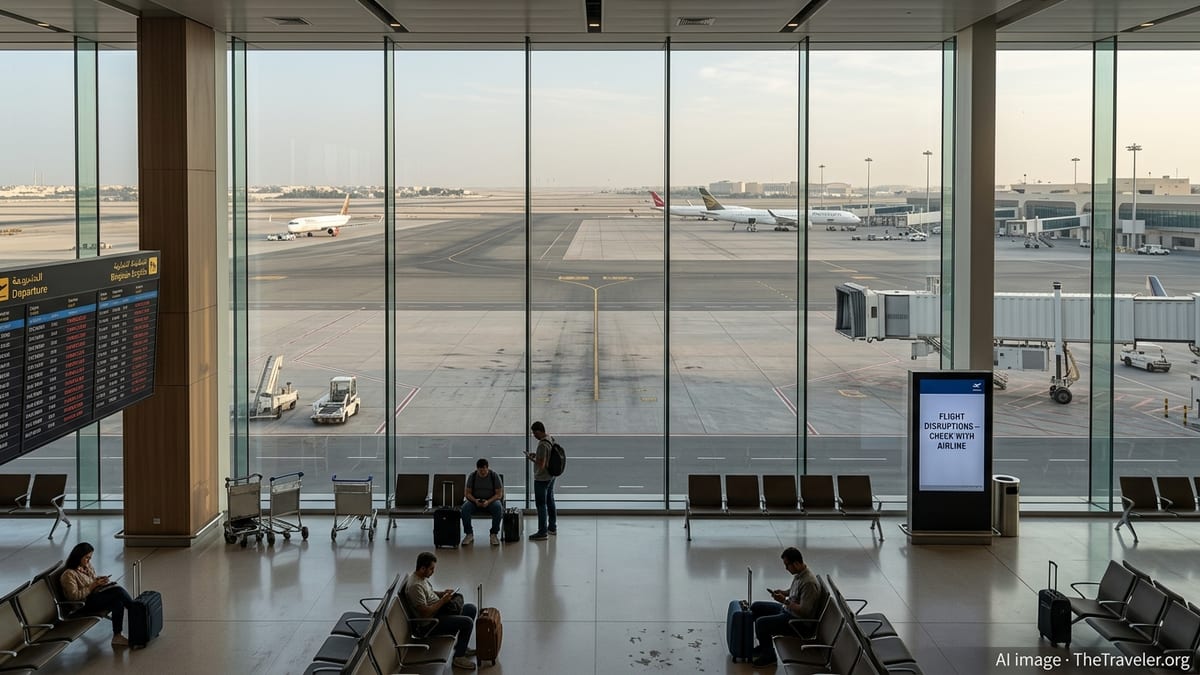
What Has Changed With Bahrain’s Airspace Reopening
Publicly available flight data and regional media coverage indicate that Bahrain’s airspace reopened in early April, ending a prolonged period of near total closure that began after missile and drone strikes in late February disrupted aviation corridors across the Gulf. For more than a month, Bahrain International Airport functioned largely as a closed hub, with commercial traffic diverted or canceled and only a small number of special or repatriation movements allowed.
Reports from outlets such as The National and the Times of India describe April 8 and 9 as key turning points, with the first scheduled Gulf Air flights returning to Bahrain from nearby Dammam and select regional cities. These initial operations marked the shift from emergency diversion plans back toward a Bahrain based network, although services remain far from pre crisis levels.
The reopening effectively restores Bahrain’s role as a transit point on east–west routes that link Europe with the Indian subcontinent and beyond. However, industry bulletins and travel advisories emphasize that the restart is being tightly managed, with capacity increases tied to ongoing security assessments and coordination across neighboring flight information regions.
For travelers, the most visible change is that Bahrain is once again appearing as both an origin and transit point in airline booking systems after having been largely removed or flagged as unavailable for several weeks. Even so, schedules are fluid, and many carriers are still operating modified routings and timings across the wider region.
Which Routes Are Back First in the Gulf, South Asia and Europe
According to published schedules and airline communications, the initial wave of resumed flights is concentrated on short and medium haul services that connect Bahrain to high demand Gulf and South Asian destinations, alongside a smaller number of long haul links to Europe. Gulf Air, Bahrain’s flag carrier, has focused its early restart on nearby regional hubs such as Dubai, Riyadh and Jeddah, which play a central role in onward connectivity for both business and leisure traffic.
On the South Asia side, publicly available information shows that cities including Mumbai, Delhi, Kochi, Dhaka, Islamabad, Lahore and other major origin points for expatriate workers and visiting friends and relatives traffic are among the first to reappear on the departure boards from Bahrain. These markets generated strong passenger numbers before the shutdown, and airlines appear to be prioritizing them as they rebuild networks and clear backlogs created by weeks of cancellations.
In Europe, reports indicate that London Heathrow has returned as a key long haul destination from Bahrain, with limited frequencies designed to support both point to point travel and connecting flows to North America. Some regional coverage also points to the gradual restoration of selected links to continental Europe, although in many cases these remain at significantly reduced capacity compared with pre crisis schedules.
The pattern follows a familiar playbook from previous major aviation disruptions: carriers restore their most commercially and strategically important routes first, often with fewer weekly flights and smaller aircraft, before scaling up as demand returns and operational confidence improves.
How the Gradual Restart Is Being Managed Day to Day
Travel advisories from global travel management companies and risk consultancies describe the Bahrain restart as phased, with airlines required to adjust routings, altitudes and scheduling to comply with updated safety guidance across the region. Some reports note that corridors through neighboring airspace remain constrained, leading to minor re routings or slightly longer flight times on certain services to and from Bahrain.
Gulf Air’s public ticketing updates indicate that flexible policies continue to apply for passengers whose travel dates fall within the wider disruption window, particularly those originally scheduled to fly between late February and mid April. These measures typically include options for free date changes, rerouting via alternative gateways and, in some cases, refunds for itineraries that remain unviable due to ongoing network adjustments.
Operationally, Bahrain International Airport is ramping up in stages. Terminal activity has increased compared with March, but published images and on the ground descriptions suggest that passenger volumes are still well below typical April levels. Airlines are staggering additional frequencies, often publishing short notice schedule changes as new clearances are granted or demand patterns become clearer.
Travel industry commentary highlights that ground handling, crew positioning and aircraft rotations all remain more complex than usual. Some aircraft and crews are still based temporarily at alternative airports used during the closure period, which can affect the reliability of early morning and tight connection banks until full rotations are restored to Bahrain.
What Passengers With Upcoming Trips Through Bahrain Should Expect
For travelers with tickets involving Bahrain in the coming weeks, publicly available guidance from airlines, airports and travel agents stresses the need for flexibility. Even with airspace reopened, schedules remain subject to short notice changes as carriers react to evolving security conditions and operational constraints across the wider Middle East.
Passengers are being advised through airline channels and travel agency bulletins to monitor their booking status closely in the 48 hours before departure, as flight numbers, departure times and even routings may shift as the network stabilizes. Some itineraries that previously involved a Bahrain connection may continue to be rebooked via alternative hubs such as Dammam, Doha or major UAE airports if that provides a more reliable or direct path on a given travel date.
Reports from consumer travel platforms indicate that many airlines are waiving change fees for journeys touching the region, particularly for tickets issued before the escalation of the crisis. Travelers are encouraged to take advantage of these options if their plans are flexible, either to move travel into later months or to opt for routings that do not depend on multiple constrained airspaces in a single itinerary.
At the airport itself, passengers should allow extra time for check in, security screening and potential secondary document checks, as procedures may be adjusted in line with evolving security protocols. While queues are not universally reported as severe, a cautious approach is recommended, especially for those making same day connections through Bahrain.
Key Planning Tips for Flying via Bahrain in the Near Term
Travel risk advisories suggest that travelers planning new journeys through Bahrain in the short term should approach bookings with a contingency mindset. Choosing longer connection windows, avoiding tight same terminal transfers and selecting fares that permit changes without heavy penalties can all help reduce the impact of last minute schedule shifts.
Industry updates also note that travel insurance with strong trip interruption and cancellation coverage may be particularly valuable while the regional aviation picture remains unsettled. Policies vary widely, so travelers are encouraged to review coverage details carefully, paying close attention to how disruptions linked to conflict or airspace closures are treated.
For those who must travel imminently, published guidance recommends checking both the operating airline’s travel alerts page and Bahrain International Airport’s official passenger information channels on the day of travel. These sources typically provide the most up to date view of which flights are operating on time, which have been retimed, and whether any new operational measures have been introduced at the airport.
Looking ahead, airline scheduling data suggests that more destinations and frequencies will return over the coming weeks if the security situation continues to stabilize. However, analysts quoted in regional aviation coverage caution that it may take several months before Bahrain’s network fully resembles its pre closure structure, particularly on thinner European routes and secondary South Asian cities.