


More news on this day
Passengers heading through Newcastle and Teesside airports over the August Bank Holiday are being urged to review what is in their hand luggage, as tighter liquid limits, electronics rules and bulky items are all expected to add pressure to security queues at one of the year’s busiest travel weekends.
Get the latest news straight to your inbox!
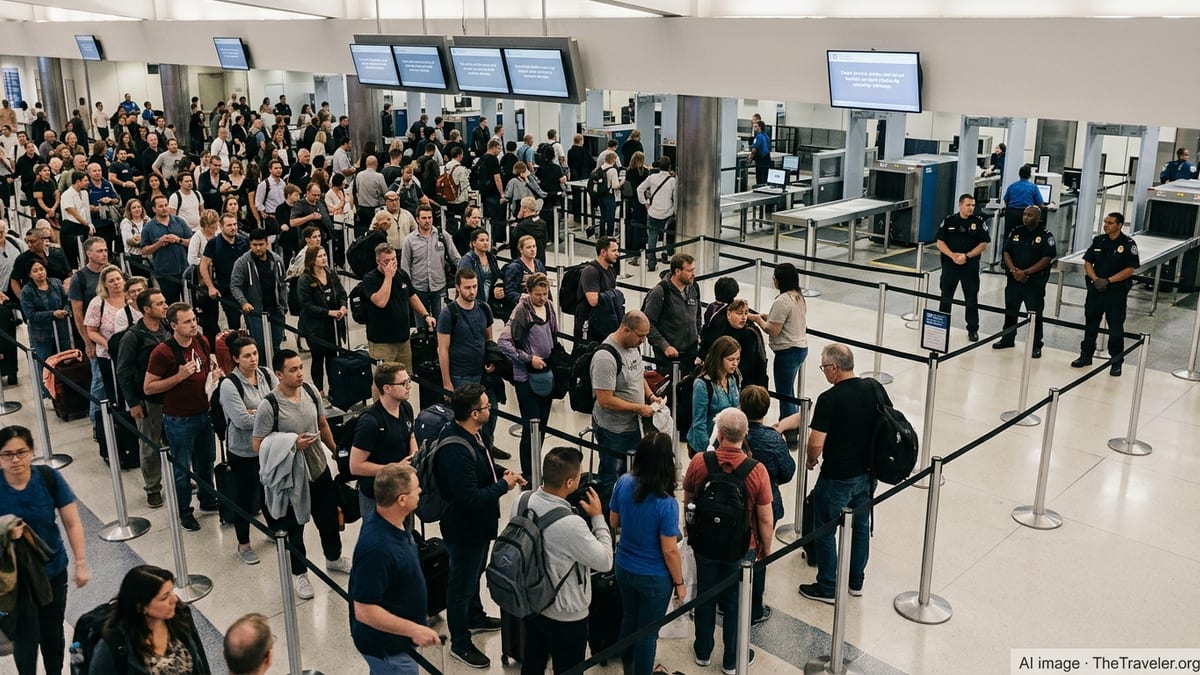
Back to 100ml liquid limits at both North East airports
Holidaymakers could face delays at security if they misjudge how much liquid they are allowed to carry. United Kingdom guidance confirms that most airports still restrict liquids in hand luggage to containers of 100ml or less, packed into a single clear bag. Recent changes to the national rollout of next generation scanners mean that, even at airports where new equipment has been installed, the 100ml ceiling remains in force for many passengers.
Newcastle International has introduced advanced scanners in its search area, but its own security advice continues to emphasise that liquids, aerosols and gels in cabin bags must be in individual containers up to 100ml. Teesside International was an early adopter of 3D screening technology and previously promoted the removal of the 100ml limit, but a statement from the Department for Transport in June 2024 temporarily reintroduced the 100ml rule for both Teesside and Newcastle. Travellers who arrive with full-size toiletries, large make-up bottles or duty-free style liquids in their cabin bags may be pulled aside and asked to surrender or repack items, which can quickly cause queues to build.
Passengers are also being reminded that double-walled flasks and some metal drinks bottles are difficult to scan. Newcastle’s security guidance notes that liquids in such containers cannot be screened in the same way as standard bottles, so filled thermal flasks or solid metal bottles are likely to be rejected at security. Arriving with these items still full can lead to additional checks and secondary bag searches.
Because rules can differ at foreign airports on the return journey, the Civil Aviation Authority and central government both advise travellers to follow the strictest interpretation of the 100ml limit when packing. That means treating Newcastle and Teesside as 100ml airports and assuming that liquids may need extra screening, particularly at peak times such as the Bank Holiday morning rush.
Electronics, batteries and power banks under closer scrutiny
Electronic devices and spare batteries are another frequent cause of delays. The UK Civil Aviation Authority’s latest Bank Holiday guidance highlights the large volumes of battery-powered gadgets now moving through airports, from smartphones and tablets to e-cigarettes, cameras, drones and portable speakers. These devices are generally required to travel in cabin baggage and must not be placed in checked bags if they contain lithium batteries, making security checkpoints a key pinch point.
While Newcastle’s new scanners are designed to handle electronics without passengers always having to remove them from bags, publicly available security information still urges travellers to pack in a way that allows quick inspection. Laptops buried under clothing, tangled charging cables and multiple loose devices in one tray all increase the likelihood of additional manual checks. If a bag image is unclear, staff must pause the belt, pull the tray for inspection and rerun the contents, which can hold up everyone in the queue behind.
Spare lithium batteries and high-capacity power banks deserve particular attention. Airline and safety rules typically require these to be carried in hand luggage with terminals protected against short circuits. If such items are found loose in checked baggage at drop-off, they may need to be removed or the bag reopened and repacked. At security, unclear labelling or large battery packs may trigger extra screening as staff verify watt-hours and ensure the devices fall within airline limits.
E-cigarettes and vaping devices, which must usually travel in hand baggage, can also slow progress when combined with liquid rules for e-liquids. Small bottles under 100ml must still be placed within the clear liquids allowance, and larger refill bottles may not pass through at all. Travellers who arrive uncertain about these rules risk having items confiscated while queues grow during the Bank Holiday peak.
Prams, medical equipment and mobility aids at security
Families and passengers with reduced mobility are being advised to build in extra time, as prams, wheelchairs and medical equipment all have to be screened before boarding. Government hand luggage guidance confirms that pushchairs and walking aids are normally permitted through the checkpoint, but they must go through security scanners or be examined manually. In practice this means children often need to be taken out of pushchairs and the equipment folded and placed on the belt, with carers then passing separately through body scanners.
Newcastle and Teesside both provide special assistance services, and information on their websites stresses the need to allow additional time for screening of wheelchairs, mobility scooters and other aids. If a wheelchair cannot fit into the standard X-ray machine, staff may carry out swab tests or physical inspections, which adds to the processing time per passenger. At busy Bank Holiday periods, a small number of complex screenings can have a noticeable impact on queue length.
Medical devices and medicines can also cause delays if they are not clearly declared or documented. Insulin pumps, nebulisers, oxygen cylinders and specialist monitoring equipment may need particular handling. Government and CAA advice recommends that passengers carry medical documentation, prescriptions and, where applicable, confirmation from airlines about accepted equipment. If travellers arrive without paperwork or with liquids and gels above 100ml for medical reasons, staff may need to call for clarification, slowing down the line.
Refrigerated medicines and sharps, such as injection pens, are generally allowed but must be separated for inspection if requested. During a Bank Holiday surge, when many families may be travelling with long-term health conditions, each additional check can add to overall waiting times at Newcastle and Teesside’s single security lanes.
Oversize cabin bags, sports gear and duty-free purchases
Oversize cabin bags and awkward sports equipment are another quiet driver of delays. Airlines serving Newcastle and Teesside publish specific size and weight limits for cabin baggage. If a bag exceeds these limits, travellers may be turned back at the gate or check-in desk to pay extra fees or transfer items into hold luggage. During Bank Holiday weekends, check-in counters and bag-drop points are already under strain, so each repacking discussion increases the chance of passengers arriving late to security.
Security screening itself can be slowed by cabin bags that are packed to the point of bursting. When trays are overloaded with belongings, bottles and electronics stacked on top of one another, X-ray images become harder to interpret. Newcastle’s own diagrams illustrating a smooth journey through security show liquids, small electronics and personal items tidied into the main bag before reaching the belt. Passengers who instead empty pockets and stuff last-minute items loose into trays may face more frequent secondary searches.
Sports gear is particularly common in late summer. Golf clubs, fishing rods and some racquet sports equipment usually must be checked in as hold luggage, while heavier items containing batteries, such as e-bikes or electric scooters, are subject to strict restrictions and are often not accepted at all. At both airports, passengers who arrive at security with items that should have been checked may be sent back to airline desks, creating further congestion.
Duty-free liquids bought after security can also create complications on connecting journeys. Government and airport advice notes that any duty-free alcohol, perfume or cosmetics carried through transfer airports must remain sealed in tamper-evident bags with the receipt visible. If Newcastle or Teesside passengers open these bags before a connecting security check abroad, or try to bring large bottles purchased outside secure areas back through UK checkpoints, they may be delayed while staff assess whether the items can travel.
How to minimise delays during the Bank Holiday peak
Regulators and airports are using the August Bank Holiday to reiterate simple packing steps that can make a significant difference to waiting times. The Civil Aviation Authority’s late-August travel advisory encourages passengers to check hand luggage rules carefully, keep lithium-powered devices in cabin bags rather than checked luggage, and ensure liquids remain within the 100ml limit for each container. Newcastle International’s security pages echo this message, adding that passengers should prepare belongings in advance rather than sorting items in the queue.
Travellers from both Newcastle and Teesside are being advised to arrive in line with their airline’s recommended check-in time, which is commonly at least two hours for short-haul and longer for some leisure flights. Building in extra time over the Bank Holiday weekend provides a buffer in case a bag is pulled aside for manual inspection because of unclear liquid containers, dense electronics or bulky items such as prams and medical equipment.
Passengers are also urged to consider their return journey when deciding what to pack in cabin bags. As different UK and overseas airports are at varying stages of introducing next generation scanners, the safest option remains to keep liquids in containers of 100ml or less and to be prepared to separate them on request. Following the strictest rules for both outbound and inbound legs reduces the risk of unexpected confiscations or last-minute repacking at foreign security checkpoints.
With around two million passengers expected to pass through UK airports over the August Bank Holiday period, any individual delay caused by mispacked liquids, unprotected batteries or oversize bags can quickly multiply at smaller regional hubs. For Newcastle and Teesside travellers, careful attention to security-sensitive items before leaving home remains the most reliable way to keep queues moving and start the long weekend on time.
UK Civil Aviation Authority Bank Holiday packing guidance
UK government liquids rules for hand luggage