


More news on this day
France has issued a heightened security advisory urging its citizens to avoid travel to Riyadh, Jeddah and Dammam, as well as their main airports, after a series of Houthi-claimed attacks struck aviation infrastructure in Saudi Arabia and raised new concerns for international travelers transiting the Gulf region.
Get the latest news straight to your inbox!
Advisory Targets Riyadh, Jeddah and Dammam After Airport Strikes
According to public notices circulated by the French embassy in Saudi Arabia on 13 October 2026, French nationals are now strongly urged not to travel to or transit through King Khalid International Airport in Riyadh, King Abdulaziz International Airport in Jeddah and King Fahd International Airport in Dammam, except in imperative circumstances. The guidance also advises against non-essential travel to the three cities themselves, citing the deteriorating security environment.
The move follows a wave of recent missile and drone attacks attributed to Yemen’s Houthi movement, including a strike on Riyadh’s King Khalid International Airport on 10 October that caused significant casualties and damage to a passenger terminal. Published reports from international news agencies describe the incident as the deadliest such attack on the Saudi capital in a decade, with more than a dozen fatalities and hundreds of injuries reported.
French diplomatic communications and local media coverage indicate that the embassy’s message was disseminated via social channels and its website, underlining the expectation that French nationals already in Saudi Arabia should avoid non-essential movements and maintain heightened vigilance, particularly around airports and other transport hubs.
The advisory aligns with a broader pattern of European and international travel guidance that has gradually tightened for central and eastern parts of Saudi Arabia, though France’s explicit reference to Riyadh, Jeddah and Dammam as cities to avoid marks a notable escalation in tone toward three of the kingdom’s most important gateways.
Escalating Houthi Threat to Saudi Airspace and Infrastructure
The latest French warning comes against the backdrop of an intensifying campaign of long-range attacks by the Houthi movement, which controls large parts of northern Yemen. Publicly available reporting describes a series of projectiles and drones targeting airports and infrastructure across Saudi Arabia, including repeated strikes around the capital since early October.
Coverage from international outlets details how a missile impact at King Khalid International Airport on 10 October led to mass casualties within the terminal area and forced airlines to divert or cancel flights. Subsequent days saw additional projectiles aimed at Riyadh’s air facilities, underlining the vulnerability of civilian aviation infrastructure despite the presence of air defenses.
Risk assessments compiled by aviation safety platforms in recent days have highlighted a sustained threat to Saudi airspace from missiles and drones originating in Yemen, with specific references to recent incidents near Dammam in the kingdom’s Eastern Province. These evaluations point to a risk profile that now extends well beyond the southern border region and encompasses core economic centers.
Publicly available analyses note that the European Union Aviation Safety Agency and several national regulators have already issued or updated warnings regarding operations in Saudi airspace, advising carriers and operators to carefully evaluate routing, altitude and alternate airport planning when flying to, from or over the country.
Impact on Commercial Flights and Transit Itineraries
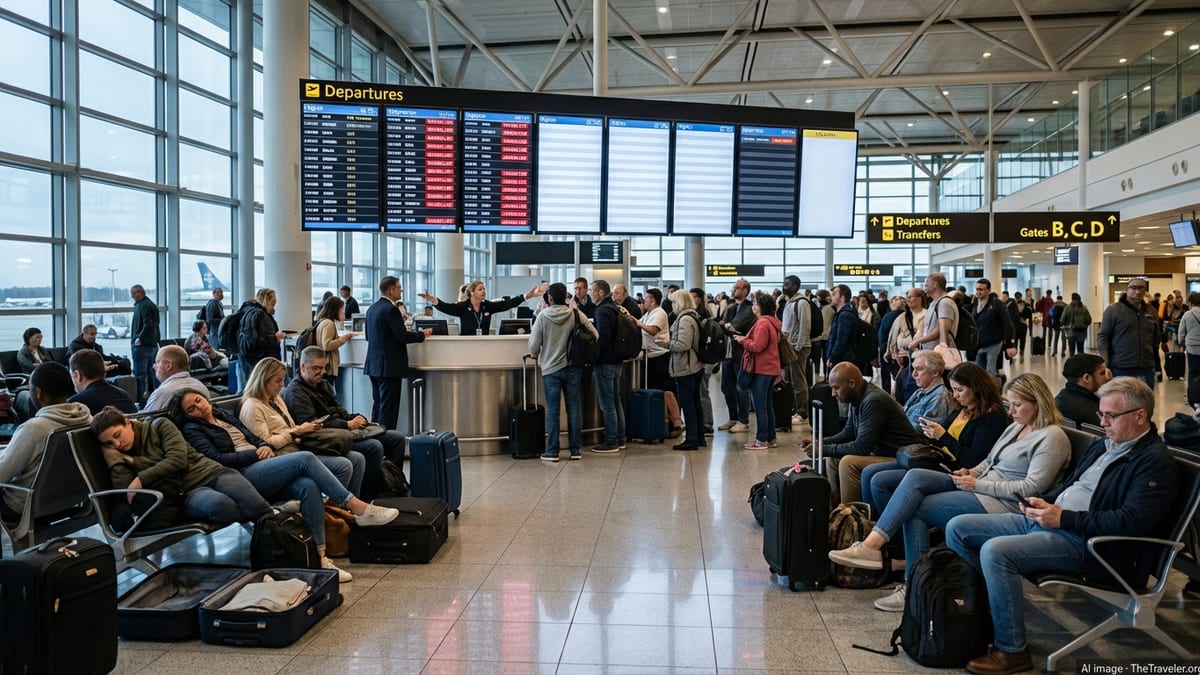
The combination of physical damage to terminals, intermittent airport closures and changing risk assessments is beginning to affect commercial flight schedules to and within Saudi Arabia. International media and traveler accounts describe diversions from Riyadh and Dammam toward other Saudi airports, particularly Jeddah and Medina, as operators seek alternatives while still serving the kingdom.
In the days following the Riyadh airport strike, some regional carriers temporarily suspended or reduced services to key Saudi gateways. Publicly accessible advisories and airline statements indicate that flights to Riyadh, Jeddah and Dammam have faced cancellations, schedule changes and routing adjustments, with travelers encouraged to monitor bookings closely and remain flexible about transit points.
Travel discussion forums and social media posts suggest that passengers with upcoming itineraries through Saudi hubs are reconsidering routings or asking airlines to rebook them via other Gulf or regional airports. Several contributors describe congestion at alternative Saudi gateways as flights are consolidated away from higher-risk airports, creating longer connection times and, in some cases, overnight layovers.
For French travelers in particular, the embassy’s recommendation to avoid transiting through the three named airports may lead to a shift toward itineraries via Doha, Abu Dhabi, Dubai or European hubs when flying between Europe, Asia and Africa. However, publicly available guidance also stresses that any rerouting decisions should take into account evolving regional security dynamics rather than focusing solely on a single country.
How the Advisory Fits into Wider International Travel Guidance
France’s updated stance mirrors a trend among several Western governments that have steadily raised their risk levels for parts of Saudi Arabia as cross-border attacks from Yemen have intensified. Official travel-advice updates published by European governments in recent weeks note elevated risks in Riyadh province and the Eastern Province, with some states advising against all but essential travel to those areas and to selected airports.
The United States has also maintained higher-level advisories for Saudi Arabia, citing the risk posed by Iran-linked groups and Yemen-based militants to both civilian and military targets, including aviation infrastructure. Recent revisions to public guidance emphasize the possibility of missile and drone attacks and encourage travelers to maintain contingency plans that do not rely exclusively on government-organized evacuations.
Independent aviation risk-monitoring services meanwhile have adjusted their summaries for Saudi airspace, highlighting new notices issued by France and other states that restrict or condition the use of certain flight information regions by their national operators. These summaries point to a patchwork of cautions, with some countries restricting flights over central and eastern Saudi Arabia below specified cruising altitudes, and others advising full avoidance of certain approaches and departure corridors.
For the travel industry, the French advisory is another sign that Saudi Arabia’s position as a major transit and religious tourism hub is being tested by regional instability. Tour operators and corporate travel managers are reported to be reassessing routing through the kingdom, particularly for travelers whose employers apply strict duty-of-care standards in higher-risk environments.
Practical Considerations for Travelers Planning or Already in Saudi Arabia
For French nationals and other foreign travelers currently in Riyadh, Jeddah or Dammam, publicly available guidance from embassies and consular services emphasizes the importance of closely following local security information, registering contact details with diplomatic missions where possible and limiting time spent in and around major transport hubs.
Travel risk advisories encourage visitors to confirm flight status directly with airlines before heading to the airport, allow extra time for security screening and be prepared for sudden schedule changes, including diversions to other Saudi or regional airports. Passengers are also urged to ensure that travel insurance policies remain valid for Saudi Arabia and that they understand what coverage is offered in case of disruption linked to conflict or security incidents.
Those still in the planning stages of travel are being advised by publicly accessible sources to consider alternative routings that avoid the three focal cities, particularly for non-essential journeys. This may involve using different Gulf hubs, reworking itineraries to connect through Europe or Asia, or postponing trips until the pattern of attacks and corresponding security responses becomes clearer.
Across the board, the message in publicly available travel guidance is that conditions can change quickly. While daily life continues in much of Saudi Arabia, the recent strikes on airports and the subsequent French advisory underscore the need for travelers to stay informed, maintain flexible plans and reassess their risk tolerance when routing through or visiting Riyadh, Jeddah and Dammam.