


More news on this day
Barclays has opened a new office in Riyadh’s King Abdullah Financial District, expanding its Saudi Arabia presence at the very moment Western governments are tightening security warnings for travel to the kingdom and the wider Middle East.
Get the latest news straight to your inbox!
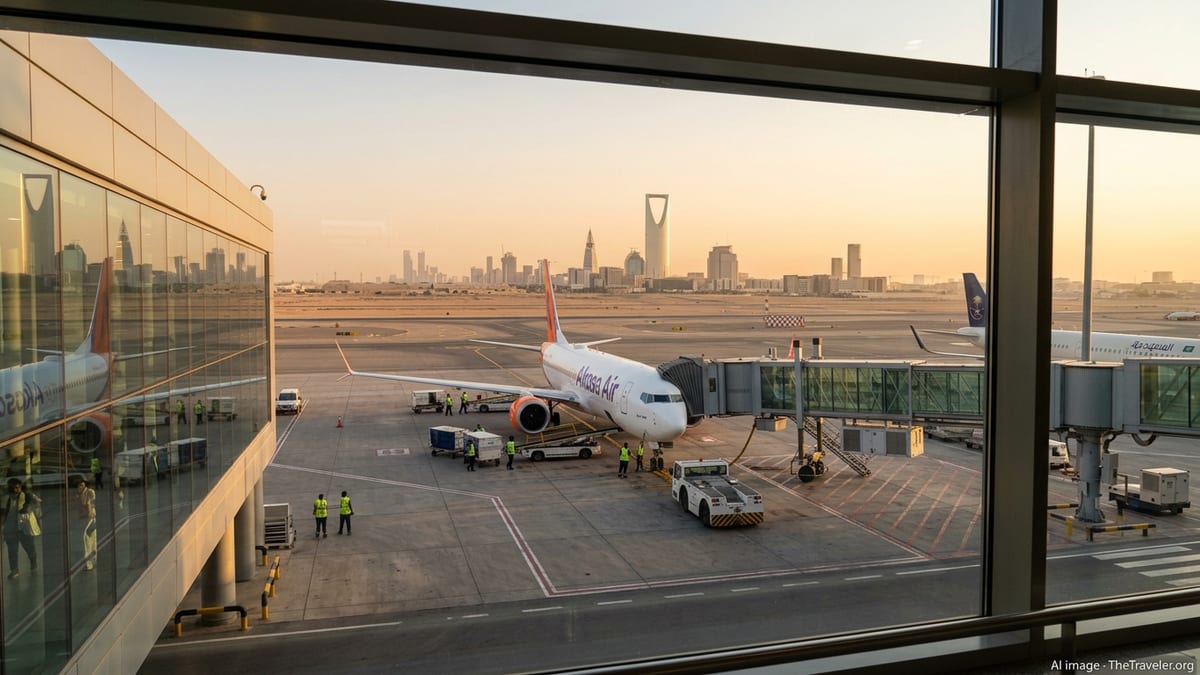
New Riyadh hub signals long-term bet on Saudi market
According to a press statement distributed on 9 November 2026, Barclays has inaugurated a new office in Riyadh’s King Abdullah Financial District, one of the flagship business zones in the Saudi capital. The bank describes the move as a milestone in the build-out of its Saudi franchise and a step toward capturing more advisory and capital markets mandates linked to the kingdom’s economic transformation.
The opening follows regulatory approvals from Saudi Arabia’s Capital Market Authority that allow Barclays to conduct investment banking and global markets activities in the country. The licence builds on an earlier regional headquarters approval granted in 2025, which was designed to encourage multinational companies to base Middle East operations in Saudi Arabia in order to qualify for certain government contracts.
Barclays has named Majed Al Hassoun as Chief Executive Officer and Head of Investment Banking for its local entity, Barclays Capital Saudi. Publicly available information indicates that he will lead efforts to expand relationships with corporate, government and institutional clients from the new Riyadh hub, supported by senior hires in markets, finance and compliance functions.
The Riyadh office adds to a growing cluster of international financial institutions establishing or enlarging their footprint in King Abdullah Financial District. Advisory firms, consultancies and banks have been encouraged by a combination of Saudi Vision 2030 reforms, a rising pipeline of initial public offerings and debt issuance, and large-scale projects in areas such as tourism and infrastructure that require cross-border financing.
U.S. travel advisory urges Americans to reconsider trips
Barclays’ expansion comes against a backdrop of heightened security warnings for travelers to Saudi Arabia. The United States currently assigns the kingdom a Level 3 “Reconsider Travel” advisory, updated on 23 October 2026. The guidance cites risks linked to drone and missile targeting of American interests, armed conflict, terrorism, exit bans and restrictions linked to local laws, particularly on online activity.
Within Saudi Arabia, the U.S. advisory highlights significantly higher-risk zones. Publicly available information shows that travelers are urged not to approach areas near the border with Yemen because of continued cross-border attacks and military activity. The notice also points to past strikes against civilian airports and energy infrastructure elsewhere in the country and advises travelers to review aviation and maritime safety notices before planning itineraries.
The advisory followed a decision in late October to order the departure of non-emergency U.S. government employees and their family members from Saudi Arabia. Updated U.S. guidance emphasizes the possibility of attacks on transport hubs, diplomatic facilities and commercial sites, and warns of potential disruptions to flights as regional tensions fluctuate.
Alongside the country-specific document, a separate worldwide caution published in July 2026 urges U.S. citizens to exercise increased vigilance when traveling through the broader Middle East. Travelers are advised to expect potential airspace closures, last-minute schedule changes and temporary route suspensions on some carriers serving the region.
UK and allied governments tighten regional risk assessments
The United Kingdom has also strengthened its public advice on travel to Saudi Arabia in 2026. The Foreign, Commonwealth and Development Office currently advises against all travel to certain areas of the country, notably zones close to the Yemen border, and against all but essential travel to other specific regions. The safety and security section of the government’s Saudi Arabia guidance notes that airports and energy facilities have been targeted in the past and that further incidents are possible.
Recent updates from the UK side draw attention to missile and drone threats, including a reported strike on Riyadh’s King Khalid International Airport in October 2026. Travelers are warned that attacks could affect major cities such as Riyadh, Jeddah and Dammam, leading to sudden flight cancellations, diversions or heightened security procedures at terminals.
Other Western governments, including Canada, Australia and several European Union members, broadly echo these concerns in their own advisories. While the exact wording varies by country, many cite a combination of risks associated with conflicts involving Iranian-backed groups, the situation in Yemen and maritime security in the Red Sea and adjacent waters.
Universities and multinational employers in Europe have issued internal notices reminding staff and students that institutional travel to parts of the Middle East, including Saudi Arabia, may require special approval or may be temporarily suspended when government warning levels rise. These notices typically point travelers back to national foreign ministry guidance as the primary reference.
Red Sea tensions and Gaza conflict reshape route planning
The tightening of travel advisories is closely linked to wider instability across the region, including the protracted conflict in Gaza and repeated attacks on shipping in the Red Sea and Bab el-Mandeb Strait. Publicly available assessments from maritime and aviation authorities describe missiles, drones and small boats being used to target commercial vessels since late 2023, prompting rerouting of shipping lanes and, at times, adjustments to flight paths.
U.S. and allied government notices emphasize that these incidents have potential knock-on effects for civilian travelers. Airlines may choose to avoid certain airspace or alter stopover patterns, while cruise operators and ferry services in affected waters may change itineraries or pause operations altogether. For travelers heading to or from Saudi Arabia, that can mean longer journey times, less predictable connections and periods of reduced capacity on key routes.
Travel advisories also reference the possibility that escalations in one part of the region can produce security alerts across multiple countries, including those not directly involved in hostilities. In practice, this has translated into short-notice checks of airline schedules, heightened terminal screening and, in some cases, restrictions on photographing or filming missile and drone activity in airports and urban areas.
For travelers combining Saudi Arabia with nearby destinations, information from consular services stresses the importance of checking separate advisories for each country. Israel and Gaza, for example, are currently subject to their own high-level warnings, and some overland crossings and air corridors are periodically closed or restricted.
Implications for business and leisure travelers
Barclays’ decision to open a Riyadh hub illustrates how global financial institutions continue to weigh commercial opportunities in Saudi Arabia against a more complex risk backdrop. For corporate travelers, the presence of additional international banks and advisory firms can make Riyadh more attractive as a regional meeting point, but risk departments are paying closer attention to government advisories, insurance conditions and contingency plans.
Companies sending staff to Saudi Arabia are increasingly formalizing pre-trip checks that include reviewing the latest U.S., UK or home-country guidance, verifying that medical and evacuation insurance covers regions under elevated warning levels, and confirming that airline routes are operating normally. Many are also registering employee travel with consular services and maintaining up-to-date contact trees in case of sudden disruption.
For independent leisure travelers, the mixed picture can be difficult to interpret. Saudi Arabia has invested heavily in tourism, from heritage sites and desert resorts to major events, yet government advisories underline that the security environment is fluid. Public information from foreign ministries suggests that travelers who do opt to visit should maintain flexible itineraries, be prepared for schedule changes and closely monitor official updates throughout their stay.
As Barclays settles into its new Riyadh base, the bank’s move underscores a broader trend across the region: economic integration with global finance is accelerating even as governments caution their citizens about travel to the same destinations. For visitors, that combination means opportunity remains, but so does the need for careful planning and constant attention to evolving security information.