


More news on this day
Rail disruption across Bedfordshire and the wider East Midlands has intensified after two East Midlands Railway trains collided south of Bedford, as a 110-tonne crane recovery operation forces an extended shutdown of the Midland Main Line between Luton and Bedford.
Get the latest news straight to your inbox!
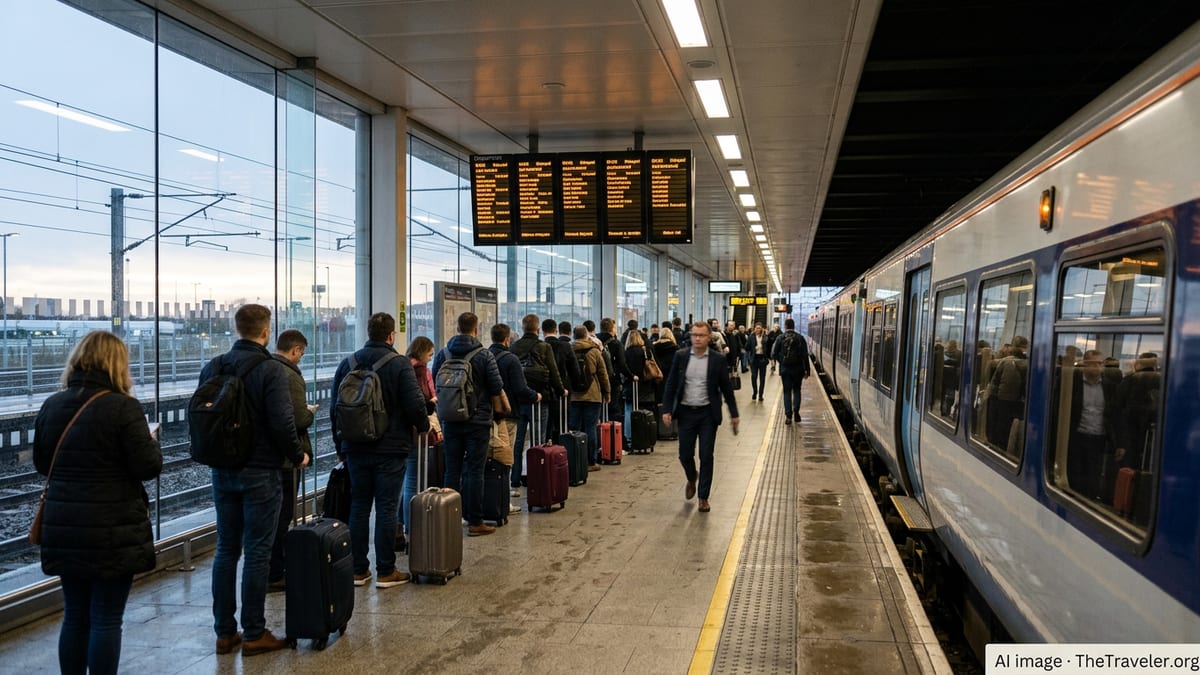
From rush-hour collision to week-long rail blackout
The crash occurred in the evening peak on Friday 19 June, when a southbound East Midlands Railway commuter service from Corby struck the rear of an intercity service from Nottingham on the Midland Main Line near Elstow, just south of Bedford. Publicly available information indicates that both trains were heading for London St Pancras on one of Britain’s busiest intercity corridors.
Reports indicate that the driver of the following electric multiple unit died at the scene and around 90 to 100 passengers and crew were injured, with several remaining in critical condition in the days since. The incident has been described by multiple outlets as the most serious UK mainline passenger crash in more than two decades, underlining its national significance as well as its local human cost.
Since the collision, services on the Midland Main Line have been completely suspended between Luton and Bedford while investigators document the scene and engineers prepare to lift and remove the damaged train sets. Replacement buses are operating but journey planners show extended travel times, missed connections and heavily altered timetables, particularly for East Midlands Railway and Thameslink passengers.
Travel advisories aimed at leisure and airport passengers have focused on the immediate delays, but the scale of the shutdown means the impact stretches well beyond a single weekend. As of 23 June, passenger information released by rail operators and journey planners suggests that through services are unlikely to resume on this core stretch of the route before the end of the week.
110-tonne crane recovery on a fragile main artery
The most visible new phase of the response began as heavy lifting equipment moved into place beside the tracks near Bedford. Images published by local and national outlets show a large rail-mounted crane and other plant positioned to recover the derailed vehicles, some of which remain partially jackknifed and out of gauge, preventing even limited traffic from passing the site.
Rail accident procedures in Britain typically require damaged rolling stock to be moved carefully, under the direction of investigators, to preserve evidence about braking, signalling and structural performance. In this case, the need to deploy a 110-tonne crane to lift modern, multi-car electric and bi-mode units off the formation adds further complexity, demanding stable ground conditions, road access for abnormal loads and the protection of nearby infrastructure such as overhead line equipment.
What is less widely highlighted in consumer-facing travel updates is that these recovery operations are taking place on a section of line that has been undergoing major upgrade and electrification works. Prior to the crash, the Midland Main Line south of Bedford was already a tightly managed worksite, with weekend blockades and speed restrictions. The collision has therefore disrupted not only passenger services but also the schedule of long-planned engineering projects intended to improve future reliability.
Until the crane lifts are complete and the track, ballast and overhead wires are inspected and repaired, trains cannot run. Publicly available disruption summaries suggest that timetable planners are working on the assumption of a multi-day closure window, rather than a rapid partial reopening that has followed some past incidents on less constrained sites.
Hidden shockwaves for Luton Airport and regional tourism
Much early reporting has framed the shutdown as a commuter story, but the location of the crash on the Luton Airport corridor means wider travel and tourism consequences are still unfolding. Services branded as Luton Airport Express and fast EMR connections normally provide a key rail link between the terminal, Bedfordshire towns and central London. With trains halted between Luton and Bedford, passengers heading for flights face longer, more complex journeys at the very start of the peak summer getaway period.
Travel advice shared by operators and booking platforms urges passengers to allow significantly more time for airport transfers, to expect crowded replacement buses and to check on-the-day updates because timings may change at short notice. For some travellers, particularly those with early departures or late arrivals, the result is a shift back to road-based options such as taxis, private hire vehicles and long-stay parking, with potential knock-on congestion around the airport and on the M1 corridor.
Beyond aviation, the Midland Main Line is a tourism lifeline linking London with destinations across the East Midlands, from market towns and cathedral cities to national parks accessible via connecting routes. The temporary loss of fast intercity trains between the capital and hubs such as Nottingham, Leicester and Derby risks deterring discretionary weekend trips and day visits. While alternative routes via the West Coast Main Line or East Coast Main Line remain available, they can be slower, more expensive or involve additional changes, all of which may discourage short-break travel.
Local businesses in Bedford and nearby communities are also likely to feel the impact as regular visitor flows stall. Hotels, attractions and hospitality venues that rely on rail-borne trade may see cancellations or no-shows, particularly where group travel has been booked far in advance on the assumption of frequent, direct services.
What the timetables and routing workarounds really mean
Behind the headline message that the line between Luton and Bedford is closed sits a complex patchwork of diversions and partial services that can be difficult for occasional travellers to interpret. Journey planning tools indicate that East Midlands Railway intercity trains are starting and terminating further north, while passengers for London are being directed onto alternative operators from different London termini, or advised to use connecting buses to reach functioning parts of the network.
For example, some long-distance passengers are being advised to travel via routes that connect into the East Coast Main Line, reaching London King’s Cross rather than St Pancras. Others are being routed through cross-country connections that add significant time and at least one extra change. These workarounds keep some capacity in the system, but they also shift pressure onto already busy main lines and suburban services, particularly at peak times.
What many short alerts do not fully spell out is the strain this places on rail staff and rolling stock diagrams. Trains and crews are out of position, maintenance windows are compressed, and contingency stock is committed to longer diagrams to cover for missing fast services. As a result, seemingly minor incidents elsewhere on the network can now trigger cascading delays that would not normally occur, a pattern visible in live running data since the crash.
For travellers, the practical takeaway is that even journeys that do not pass through Bedfordshire may still be affected by the ripple effects of the Midland Main Line closure. Anyone planning rail travel across central England this week is being advised, through open customer information channels, to check for changes right up to departure and to build in generous connection margins.
Longer-term questions on safety, capacity and resilience
As the immediate focus remains on caring for the injured and restoring the line, attention is beginning to turn to what the Bedford collision reveals about the resilience of this key corridor. Commentators and rail specialists quoted in published coverage have raised questions about signalling configurations, train protection systems and the interface between recent infrastructure upgrades and operational safety margins.
The Rail Accident Investigation Branch has launched a full inquiry, and early commentary from industry observers suggests it will examine factors such as train spacing, braking performance, driver workload and the status of additional protection technologies on the affected section. While it may be many months before definitive findings emerge, the circumstances of a rear-end collision on a modern, intensively used main line are already prompting debate about whether further investment or procedural changes are needed.
For passengers and the wider travel industry, the Bedford crash is also a stark reminder of how a single point of failure on a constrained corridor can disrupt a wide geography. With the Midland Main Line carrying airport shuttles, commuter flows and long-distance intercity traffic on the same tracks, any prolonged blockage has disproportionate effects. Future capacity and resilience plans may therefore be judged not only on journey times and carbon savings but also on how they allow the network to absorb incidents without paralysing entire regions.
Until the damaged trains are removed and the railway is declared safe to reopen, the shockwave from the Bedford collision will continue to shape travel decisions for holidaymakers, business travellers and daily commuters alike. The coming days are likely to reveal whether contingency measures are robust enough for a summer of disrupted schedules on one of Britain’s most important rail arteries.