


More news on this day
Rail and transport safety investigators have begun examining infrastructure and operating conditions after a CBH grain train derailed in Western Australia’s Wheatbelt, disrupting grain freight movements through one of the State’s key agricultural corridors.
Get the latest news straight to your inbox!
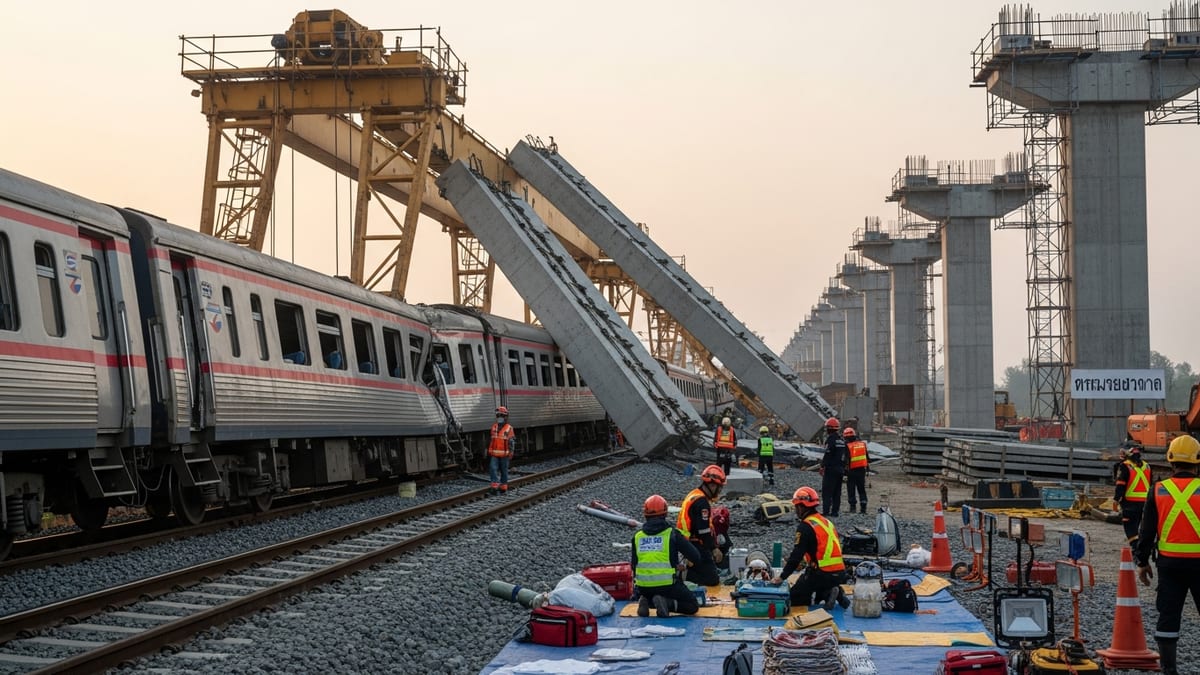
Derailment Disrupts Key Grain Corridor
Initial reports indicate that several grain wagons left the track on a CBH-operated service on a regional Wheatbelt line, spilling grain and blocking the line in both directions. The incident occurred on a section of track widely used during harvest and post-harvest periods to move export grain from receival sites to port terminals.
Publicly available information suggests there were no serious injuries, but recovery crews have been working to clear derailed wagons and assess the extent of damage to sleepers, ballast and signalling equipment. Line closures and temporary speed restrictions are expected to affect grain train scheduling in the short term.
The Wheatbelt network underpins Western Australia’s grain industry, with CBH services linking inland receival sites to major export terminals at Geraldton, Kwinana and Albany. Any prolonged disruption on these lines can quickly affect vessel loading windows at port and road freight volumes on parallel highways.
Photographs and video shared on social media appear to show grain spilled along the track formation and several covered hopper wagons on their sides, while crews use heavy machinery to stabilise rolling stock and begin rerailing operations.
Investigators Focus on Track, Wagons and Operations
According to published coverage of the derailment, technical specialists are working through standard investigative steps, including inspections of the rail, sleepers and ballast, as well as checks on wagon condition, braking systems and couplers. Weather conditions, recent maintenance activity and train handling practices are also expected to form part of the evidence base.
Recent inquiries into freight derailments in Australia and overseas have highlighted the role of drainage, culverts and ballast integrity in maintaining track geometry, particularly where heavy axle-load grain services operate through regions that experience heat, seasonal rain and soil movement. Investigations into the Wheatbelt incident are likely to consider whether any localised track defects or formation issues contributed to wagons leaving the rails.
On the rolling stock side, publicly available information on CBH’s fleet shows the cooperative has invested in higher-capacity grain wagons and modern locomotives to increase throughput on existing lines. Investigators typically examine load distribution, wagon maintenance records and any evidence of component failure when reconstructing the sequence of events leading up to a derailment.
Operational data, including train speed, braking patterns and radio communications, is expected to help establish how the train was handled on the approach to the affected section of track. Investigations of similar incidents have often drawn on event recorder data and track-side monitoring equipment to piece together a detailed timeline.
Impact on Growers, Exporters and Regional Communities
The derailment comes at a time when CBH and Western Australian growers rely heavily on efficient rail connections to move large exportable surpluses from inland bins to port. Recent seasons have produced near-record or record grain volumes, placing sustained pressure on regional logistics chains and highlighting the importance of reliable rail operations.
Disruptions on key Wheatbelt corridors can prompt short-term shifts to road freight as grain is redirected around blocked sections. Local government briefing papers and transport planning documents in Western Australia have previously noted that such diversions can increase heavy vehicle traffic through small towns, with flow-on effects for road maintenance, safety and amenity.
Export customers depend on predictable shipping schedules, and any bottlenecks between receival sites and ports can influence vessel line-ups, demurrage risks and pricing. Market analysts often monitor major rail incidents closely for potential short-term impacts on supply programs, even when total export capacity is not expected to be significantly reduced.
For regional communities, derailments are also a reminder of the close interface between freight lines and local roads, level crossings and town perimeters. Emergency access, fire risk management and the resilience of alternative routes are regular topics in Wheatbelt infrastructure forums and planning documents.
Safety Record and Investment in the Wheatbelt Rail Network
The incident has renewed attention on the condition of Western Australia’s grain rail network and ongoing investment in track upgrades, siding extensions and loading facilities. Recent project announcements have highlighted efforts to increase train lengths, reduce loading times and strengthen formation and drainage on high-use grain lines.
Parliamentary material and regional infrastructure papers from Western Australia describe the Wheatbelt as carrying the vast majority of the State’s grain by rail in recent seasons. These documents also note that higher volumes and heavier, longer trains can intensify wear on track unless matched by regular maintenance and targeted upgrades.
CBH has pursued a long-term rail strategy that includes modernising its locomotive fleet and improving supply chain efficiency. New locomotive classes being introduced on Wheatbelt routes are designed for heavier axle loads and improved fuel efficiency, providing greater capacity within existing network constraints. Investigations into the derailment are expected to consider whether the operating parameters of trains on this route were in line with network standards.
Transport safety agencies often use findings from specific derailments to inform broader recommendations on inspection regimes, asset management systems and infrastructure funding priorities. Any formal report arising from the Wheatbelt event is likely to be examined closely by rail operators, government agencies and grain industry stakeholders.
Next Steps in Recovery and Inquiry
In the immediate term, the priority for operators is to fully reopen the affected section of track, with temporary repairs typically completed before more comprehensive works follow at a later stage. Recovery operations usually involve rerailing or removing damaged wagons, replacing compromised sleepers and ballast, and testing signalling and communications systems before normal services resume.
Once the line is restored to service, investigators generally continue detailed analysis of physical evidence alongside documentation such as maintenance logs, inspection reports and operational records. This process can take several months before any formal findings, safety recommendations or regulatory responses are published.
Grain growers, traders and logistics providers across the Wheatbelt will be watching for indications of how long any residual line restrictions may affect train paths and loading programs. In past events, operators have adjusted timetables, re-routed some services and altered loading patterns at inland sites to reduce delays while permanent repairs are completed.
Observers in the rail and grain sectors view the Wheatbelt derailment as a significant test of the resilience of Western Australia’s bulk export supply chains. The outcome of the investigation is expected to contribute to ongoing debates about the balance between growing freight demand, the condition of regional infrastructure and the long-term safety and efficiency of grain rail operations in the State.