


More travelers than ever rely on a laptop and a stable connection to earn their living. When a medical emergency, canceled flight, or stolen backpack derails a trip, it can also derail your income. That is where income-focused travel insurance and related protections come in. Before you click “buy” on the first policy a booking site suggests, it pays to understand what these products really cover, how they work, and where the gaps are likely to be.
Get the latest updates straight to your inbox!
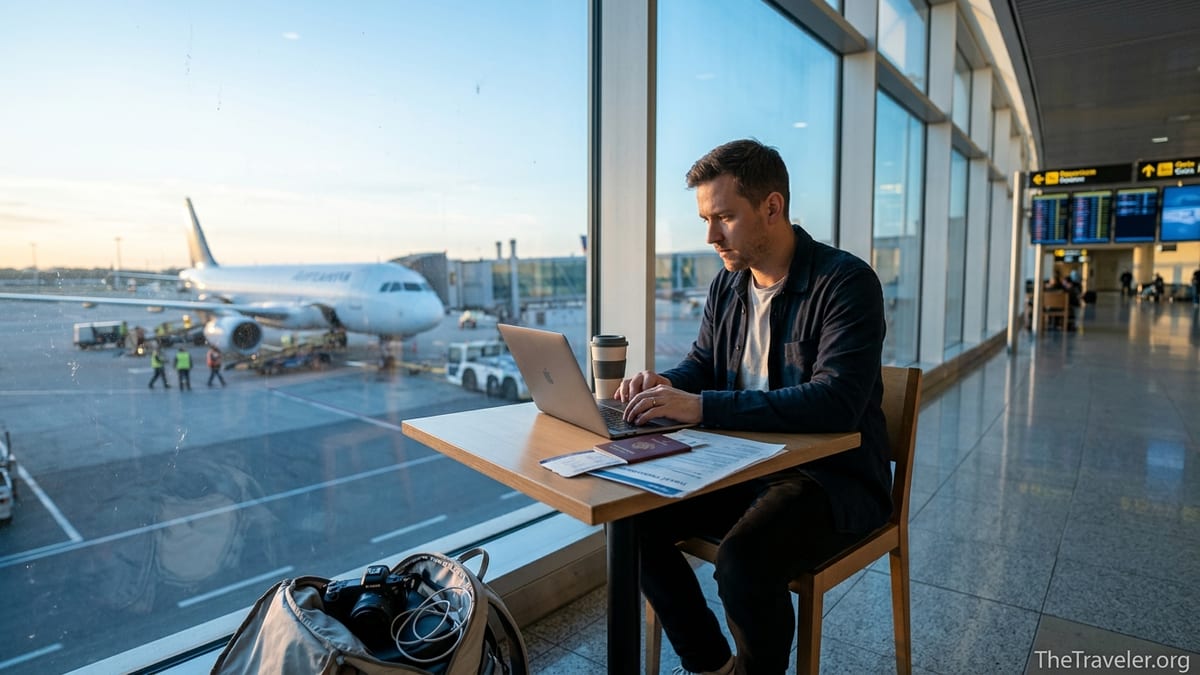
What “Income Travel Insurance” Really Means
Travel insurers rarely sell a product literally labeled “income travel insurance.” Instead, protection for your earnings while you are abroad is usually scattered across several benefits: travel medical coverage, trip interruption, trip delay, and sometimes short-term income protection or disability insurance back home. Together, those can determine whether a crisis just ruins a week of sightseeing or also wipes out a month of revenue.
For many remote workers and freelancers, the most relevant layer is travel medical insurance. Plans from providers like World Nomads, SafetyWing, or Atlas-style nomad policies focus on paying for unexpected illness or injury abroad, hospital stays, and medical evacuation, so that a sudden appendicitis in Lisbon does not leave you with a five-figure bill that follows you home and eats future earnings. Some nomad-oriented plans are sold on a monthly subscription model, with pricing that for a healthy thirty-something may start around the cost of a few coffees per week, depending on destination and options.
Trip interruption and delay benefits add a second layer of income-related protection. If a covered event forces you to cut a trip short or stay longer than expected, these benefits can reimburse prepaid nonrefundable expenses like hotels and tours, and cover extra lodging and meals during a long delay. That will not replace lost billable hours, but it can keep emergency costs from draining the cash you rely on to float your freelance work or small business.
Separate from travel policies, classic short-term income protection or disability insurance, often sold by large insurers in your home country, may replace a portion of your paycheck if you are unable to work for medical reasons. Some remote professionals combine a global travel medical plan with a domestic income protection policy, so that a serious accident abroad is covered for both hospital care and months of reduced earning power.
Key Ways Travel Problems Can Hit Your Income
To understand the role of income-focused coverage, it helps to picture the real disruptions that can knock out your ability to earn while away. Imagine a freelance photographer who books a six-week assignment across Southeast Asia. A week in, a scooter accident in Chiang Mai leaves her with a broken elbow. Local hospital care, follow-up scans, and a last-minute flight home quickly climb into the thousands of dollars. Without travel medical and evacuation cover, she might put those bills on a credit card and spend the next year paying them down instead of investing in her business.
Consider a different scenario: a software developer from New York plans a two-month “work from Europe” stretch, with Airbnbs booked in Berlin, Prague, and Split. After a family emergency, he has to return home midway through the trip. A robust trip interruption benefit can reimburse the unused, nonrefundable apartments and prebooked train tickets. That is not income replacement in the narrow sense, but it may prevent a several-thousand-dollar loss that would otherwise eat into his savings and force him to accept extra work at discounted rates just to refill the hole.
Then there are day-to-day interruptions that cost time, which for many independent workers is the same as money. A twenty-four-hour airport closure due to storms can strand a content creator in an expensive hub city. If her policy includes trip delay coverage, it may pay a set amount per day for hotels, meals, and basic necessities during the delay. She still misses client meetings, but she does not have to drain her operating cash to pay for airport hotels and last-minute food, which can make the difference between a stressful week and a full-blown financial setback.
For digital nomads, gear is another income link. If a stolen backpack in Barcelona contains a laptop, camera, and external drives, baggage and personal effects coverage or a separate electronics rider can help replace those tools. Without it, the cost of new equipment might mean canceling upcoming contracts or flying home early, which hits both current and future income.
Types of Coverage That Indirectly Protect Your Earnings
Most travelers only think about medical coverage, but several other sections of a policy can have a quiet but powerful impact on your financial stability when things go wrong. The first is trip cancellation coverage, which reimburses prepaid nonrefundable costs if you have to cancel before departure for a covered reason, such as serious illness, injury, or certain family emergencies. If you book a ten-thousand-dollar African safari a year in advance and then suffer a medical event that makes travel impossible, a cancellation benefit can keep you from losing that entire amount, money you might otherwise have to pull from your operating cash or emergency fund.
Trip interruption, related but distinct, kicks in once you have already started your journey. If a covered event forces you to cut things short or pause mid-itinerary, interruption may reimburse the unused portion of tours and accommodation, and sometimes the additional cost of getting you home or back on track. For example, a business traveler whose father is hospitalized might have to abandon a week of client meetings in Tokyo and rebook to Chicago on short notice. A strong interruption benefit can offset both the unused Tokyo hotel bill and part of the new one-way fare home, preserving cash the traveler may need to bridge any lost commissions.
Trip delay coverage is narrower but still important when thinking about income. Many credit card-linked policies, for instance, provide a daily allowance once a delay crosses a threshold number of hours. If a storm grounds flights in Atlanta overnight, a trip delay benefit might pay for a reasonable airport hotel, dinner, and breakfast. That means your rainy-day savings stay intact instead of being chipped away every time an airline schedule melts down, which matters if you are between clients or working as a contractor without paid time off.
Baggage and personal effects coverage, when properly structured, protects the tools you use to earn. Some plans specifically reference laptops, cameras, and other electronics up to a per-item and overall limit. A videographer who has a bag go missing on a connection through Dubai may be able to replace at least part of her gear through this benefit. In practice, travelers often stack this with separate coverage from homeowner or renter policies or dedicated electronics insurance, especially for high-value equipment that exceeds typical travel insurance caps.
Where Travelers Commonly Overestimate Their Protection
One of the biggest mistakes travelers make is assuming that any policy promoted at checkout on a flight or hotel booking site will meaningfully protect their livelihood. Those “add travel protection for an extra fee” boxes often focus on basic trip cancellation and some medical coverage, but they may offer modest limits, long lists of exclusions, and little or no help with ongoing income needs. A twenty-dollar add-on might reimburse a low-cost weekend trip, but it will not come close to addressing the financial fallout of a serious injury for a self-employed consultant.
Credit card benefits are another area where expectations often outrun reality. Premium cards from major issuers commonly include trip cancellation, interruption, and delay protections when you pay for your travel with that card. However, the small print often caps benefits per trip and per year, defines “covered reasons” narrowly, and may exclude certain work-related gear or activities. A traveler counting on card coverage alone could discover, during a chaotic connection, that a canceled flight due to mechanical problems or crew shortages does not qualify for reimbursement beyond a basic delay allowance.
Remote professionals also sometimes assume that their domestic health insurance or employer benefits will follow them effortlessly overseas. In reality, coverage for international care varies widely, especially once you are outside emergency-room situations or beyond a short vacation. If you break a leg on a hiking trail in Peru and need evacuation to a major city or back home for surgery, your national plan might reimburse some hospital costs but not tens of thousands of dollars in air ambulance fees. That gap can translate directly into long-term debt and reduced future earnings.
Finally, travelers frequently overestimate what “lost wages” means in a travel context. Many mainstream policies do not pay for lost business revenue if you simply cannot work due to hotel Wi-Fi failures, noisy construction next door, or a mild illness that keeps you on the couch for a few days. To get actual income replacement for inability to work, you are usually looking at separate short-term disability or income protection insurance in your home country, not a lightweight travel add-on.
How to Read Policies With Your Income in Mind
When your paycheck depends on staying healthy, connected, and mobile, reading a policy just for headline limits is not enough. The first detail to examine is how the insurer defines a “covered reason” for trip cancellation or interruption. Medical emergencies, serious illness or injury, and certain urgent family situations are typically included. Events like changing your mind, nervousness about travel, or non-essential work conflicts usually are not, unless you have added a “cancel for any reason” upgrade, which tends to be more expensive and time-sensitive to purchase.
Next, check the daily and total caps on trip delay and baggage benefits. If your work takes you through expensive hubs like Zurich or Singapore, a policy that pays a very small amount per day for delay-related lodging and meals during a multi-day disruption may still leave you reaching into your savings. Likewise, baggage coverage that tops out at a low figure per item may not meaningfully help replace a high-end camera body or a professional-grade laptop. For remote workers, it can be worth paying more for higher limits or a separate electronics rider.
Medical coverage deserves its own close read. Look for whether the plan focuses on emergency-only treatment or also offers some outpatient care, and whether it includes medical evacuation to the nearest appropriate facility or to your home country. If you are planning extended stays, investigate whether the policy allows you to remain insured continuously as you move between countries, or if coverage resets only when you depart from and return to your home base. For long-haul digital nomads, nomad-specific plans that work on a rolling monthly basis can better match their lifestyle than traditional single-trip insurance.
Finally, think about coordination between travel insurance and any income or disability protection you already have. If you carry a short-term income protection policy at home that replaces a portion of your salary while you are unable to work for medical reasons, travel medical insurance can be the bridge that gets you treated and stabilized quickly abroad. Together, those layers reduce the chance that a single accident both wrecks your trip and triggers a long, unpaid leave.
Real-World Buying Scenarios for Different Types of Travelers
Different travelers need different mixes of protection, and the cost-benefit equation shifts with each situation. A salaried employee taking a weeklong beach holiday with minimal prepaid costs and strong employer health coverage might opt for a basic travel medical policy and rely on credit card trip delay benefits for minor hiccups. Their main concern is emergency care abroad and getting back to work on time, not protecting freelance income.
By contrast, a self-employed web designer on a six-month multi-country work trip through Mexico, Spain, and Thailand faces a more complex risk profile. They might combine a nomad-style travel medical plan that allows month-to-month coverage in multiple countries with a robust trip interruption benefit on major flights and long-term apartment rentals, and an electronics add-on that specifically names their laptop and camera gear. On top of that, a simple income protection policy at home that replaces a portion of their earnings during extended illness could mean the difference between a manageable recovery and closing their business.
Families traveling while one adult continues to work remotely need to think about both the working parent and dependents. A family of four spending the summer in Portugal while one partner continues to manage clients in the United States might choose a comprehensive family travel policy with higher medical limits, strong evacuation coverage, and generous trip delay benefits. That way, if a child is hospitalized for appendicitis, the policy helps with local care and any extra accommodation for a longer stay, while an income protection policy at home supports the working partner if they have to pause projects to care for the child.
Even short business trips can benefit from careful coverage selection. A commission-based salesperson flying from Chicago to Hong Kong for an important client meeting might rely in part on their company’s corporate travel policy and in part on a personal credit card’s interruption and delay coverage. Reviewing those benefits before departure helps them understand whether a last-minute cancellation or overnight delay would at least be reimbursed for extra transportation and hotels, reducing the financial sting of a missed deal.
The Takeaway
Travel insurance is not a magic shield for your income, but it can cushion the financial shocks that most threaten your earnings when you work or freelance on the road. Medical emergencies, last-minute trip changes, long delays, and stolen gear all carry price tags that can reverberate through your budget long after you have returned home. The right mix of travel medical cover, trip cancellation and interruption benefits, delay allowances, and, where appropriate, separate income protection can turn those events from career-altering disasters into painful but manageable setbacks.
Before you buy, look past the marketing slogans and skimpy checkout add-ons. Read how each policy defines covered reasons, what the real limits are on medical care, evacuation, delay, baggage, and electronics, and how those pieces interact with any health or income coverage you already have at home. Frame every clause in terms of a simple question: if this went wrong on my next trip, would I still be able to pay my bills and keep my work or business on track. If the honest answer is no, keep shopping or adjust your coverage until your travel plans and your income are protected at a level you can live with.
FAQ
Q1. Does travel insurance actually replace my lost income if I cannot work while abroad?
In most cases, standard travel insurance does not pay you for lost freelance income or missed salary. It focuses on reimbursing specific expenses, like medical bills, prepaid nonrefundable trip costs, or reasonable costs during a covered delay. To replace wages during a longer illness or injury, you typically need a separate short-term disability or income protection policy in your home country.
Q2. What kind of coverage should digital nomads prioritize to protect their earnings?
Digital nomads should usually look first at strong travel medical and evacuation coverage, then at trip interruption and good baggage or electronics protection. Medical care and getting home safely after a serious incident come first, followed by making sure that stolen or damaged gear and unused bookings do not force you to drain the cash you rely on to keep working.
Q3. Are the insurance benefits on my credit card enough if I rely on remote work income?
Credit card travel protections can be useful, but they often come with modest limits and narrow definitions of what counts as a covered event. If you depend on your laptop and steady travel to earn, those built-in benefits may not be enough on their own. It is important to read the guide to benefits for your card and consider adding separate travel medical or income protection coverage if the caps or exclusions would leave you exposed.
Q4. Will travel insurance pay for a nicer hotel or business-class ticket if my trip is interrupted?
Trip interruption and delay benefits usually reimburse “reasonable” additional expenses up to a set limit. That typically means standard economy transportation and midrange accommodation, not luxury upgrades. If you choose a more expensive option than what is necessary to continue your trip or return home, you will often be responsible for the difference.
Q5. How do I know if my travel policy will cover my laptop and camera gear?
Check the baggage and personal effects section of the policy and look for specific per-item and overall limits, plus any sublimits for electronics. Some policies cover laptops and cameras only up to a relatively low amount, while others offer optional riders or higher caps. If your primary work tools are more valuable than the limits, consider separate electronics insurance or checking whether your homeowner or renter policy at home can extend coverage.
Q6. What is the difference between trip cancellation and trip interruption for my finances?
Trip cancellation applies before you leave, reimbursing prepaid nonrefundable costs if you have to call off the trip for a covered reason. Trip interruption applies after departure, reimbursing the unused part of your trip and sometimes the extra cost of getting home or back on track. Both are about protecting money you have already spent on travel, rather than paying for time you cannot work.
Q7. If I get sick on the road but do not need hospitalization, will travel insurance still help?
Many travel medical policies cover outpatient visits, urgent care, and prescriptions for unexpected illness, not just hospital stays, though details vary. Even relatively minor issues like a bad infection or a sprained ankle can generate bills that are significant in some countries. Having coverage for those visits helps prevent everyday health problems from snowballing into budget problems.
Q8. Can I buy travel insurance after I have already started my trip and still protect my income?
Some nomad-style policies allow you to enroll while already abroad, but there are often waiting periods and limitations on what is covered immediately. Trip cancellation coverage is usually unavailable once you have begun the journey, and preexisting conditions may be excluded. For the best protection of both travel costs and income, it is usually wise to purchase coverage before departure or as early in your planning as possible.
Q9. How long should my travel insurance last if I sometimes extend trips for work?
Your coverage should generally match the full period you expect to be away, with some buffer if your plans are flexible. If you frequently extend stays for work, look at policies that offer easy extensions or monthly billing rather than fixed single-trip coverage. The key is avoiding gaps, because medical or interruption claims that occur outside the policy dates will typically be denied.
Q10. Is income protection insurance worth it if I only travel a few times a year?
Income protection or short-term disability insurance is designed around your overall earning life, not just travel, so it can be valuable even if you only leave the country occasionally. If you are self-employed or your employer does not offer strong sick pay benefits, a policy that replaces part of your income during extended illness or injury can complement travel insurance and provide peace of mind both at home and abroad.