


More news on this day
Turkmenistan Airlines is quietly building a niche for itself on the busy Europe to Southeast Asia corridor, using Boeing 777-200LR and 777-300ER jets to link London and Bangkok via Ashgabat at prices that often undercut established Gulf and European carriers.
Get the latest news straight to your inbox!
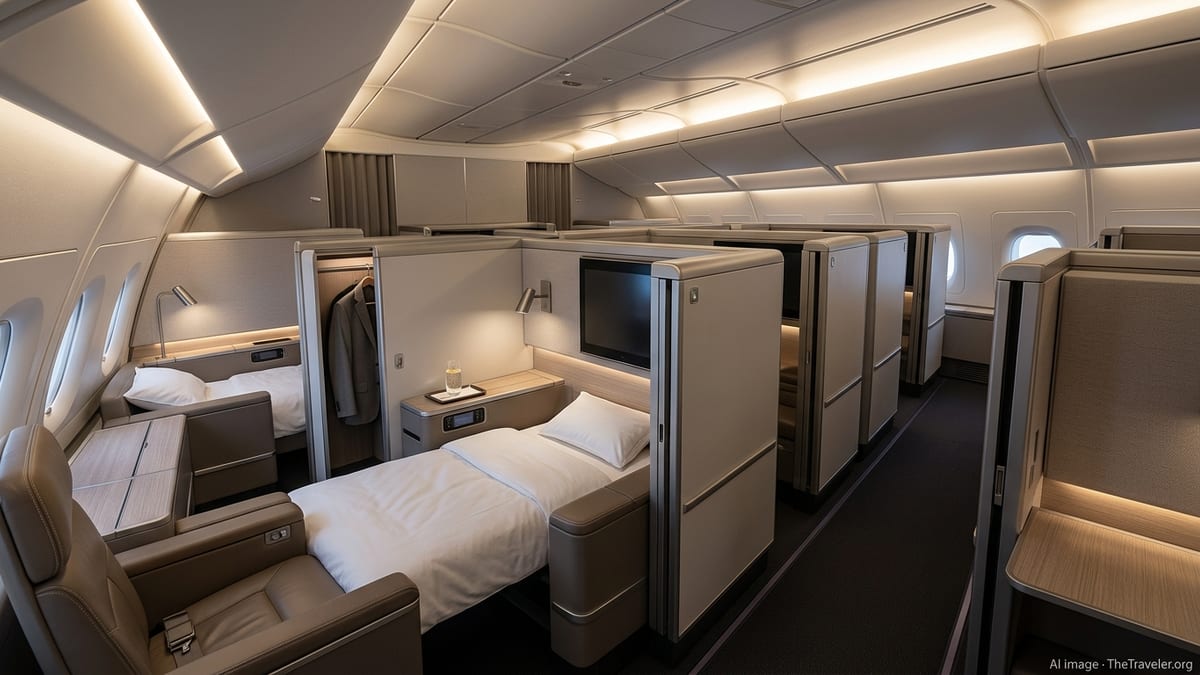
Route Overview: A New Low-Cost Challenger to Thailand
Publicly available booking data and recent fare reports show Turkmenistan Airlines positioning its Ashgabat hub as a bridge between Western Europe and Thailand, with London to Bangkok itineraries typically routed via a late-night departure from London Gatwick and an early-morning connection in Turkmenistan’s capital. The carrier’s Boeing 777-200LR generally operates the London to Ashgabat leg, with the larger 777-300ER frequently rostered on the onward sector to Bangkok.
While the airline has long served regional and expatriate traffic, the combination of competitive business class pricing and newer widebody aircraft has started to attract leisure travelers seeking lie-flat seats without premium Gulf carrier fares. Recent deal alerts have highlighted business class returns between major European gateways and Bangkok at pricing that is often closer to premium economy on mainstream rivals.
Industry fleet data indicates that Turkmenistan Airlines currently fields a small long-haul fleet built around four Boeing 777-200LRs and two Boeing 777-300ERs, all in two or three-class configurations that include a dedicated business cabin. The 777-300ERs are relatively new additions, acquired second-hand but refurbished to align with the carrier’s long-haul growth strategy.
Schedules between London and Bangkok via Ashgabat are structured to minimize backtracking, with block times that broadly match one-stop itineraries via the Gulf. However, the central Asian transit point and the airline’s limited network still make the routing feel unconventional compared with more familiar hubs in Doha, Dubai or Istanbul.
Cabin Layouts: Ex-Cathay Herringbone Meets Classic 2-3-2
The most notable aspect of Turkmenistan Airlines’ premium product is the sharp contrast between the 777-200LR and 777-300ER business cabins. On the 777-300ER, multiple independent trip reports describe a reverse herringbone, 1-2-1 configuration recognizable as an ex-Cathay Pacific layout, offering direct aisle access at every seat and fully flat beds. The cabin typically features around 40 business class seats, arranged in a single large cabin with a private, enclosed feel when loads are light.
By contrast, the airline’s 777-200LR business class retains a more traditional 2-3-2 layout, reflecting an earlier generation of widebody design. Seats still convert to lie-flat or near lie-flat positions, but middle seats and shared footwells make the cabin feel denser, particularly on fuller flights. For solo travelers departing London, this means the 777-200LR segment can feel less exclusive than the onward 777-300ER leg, although couples may find the paired window seats acceptable.
Seat width and pitch figures cited in technical documentation and enthusiast analyses place the 777-300ER business product broadly in line with legacy Asian and European carriers’ older generation cabins. Storage is adequate rather than cutting-edge, with side consoles, small cubbies and overhead bins providing space for personal items. Privacy is acceptable when seats are in bed mode, though the absence of sliding doors places the product behind the newest suites offered on some competitors.
Overall, travelers booking London to Bangkok via Ashgabat can expect a split experience: a functional, slightly dated 2-3-2 layout on the 777-200LR from London, followed by a more modern 1-2-1 cabin on the 777-300ER into Bangkok that better reflects contemporary business class expectations.
Onboard Comfort: Sleep Quality, Service and Catering
Reports from recent travelers generally describe a surprisingly comfortable experience in Turkmenistan Airlines’ 777 business cabins, especially once airborne. Light loads on some long-haul sectors translate into quiet cabins and a relaxed atmosphere, with passengers often able to spread out across multiple seats on less busy flights. This is particularly noticeable on certain overnight London departures and shoulder-season services to Bangkok.
Seat controls on both aircraft types are straightforward, with typical preset modes for take-off, lounging and bed positions. In lie-flat mode, the 777-300ER’s reverse herringbone seats offer a longer and slightly wider sleeping surface than the 777-200LR’s older design, though taller passengers may still find the tapered footwell restrictive. Bedding standards appear modest compared with top-tier competitors, but sufficient for a full night’s rest on the Ashgabat to Bangkok sector.
Catering has emerged as one of the more positive surprises. Business class meals on the 777s are frequently described as generous in portion size, with hearty meat and rice dishes, fresh salads and sweet desserts reflecting regional influences. Presentation is simple but a step above economy, using china and metal cutlery. Alcohol is served in business class in line with the airline’s international operations, although options are more limited than on larger Gulf carriers, with a small selection of wines and standard spirits.
Cabin crew interactions are characterized in most accounts as polite, reserved and serviceable rather than overtly personalized. English proficiency can vary, but core service elements such as meal delivery, drink refills and cabin checks are generally carried out efficiently, particularly in light-load cabins where staff-to-passenger ratios are favorable.
Transit in Ashgabat: A Quiet, Controlled Hub
A key element of the London to Bangkok journey on Turkmenistan Airlines is the transit experience in Ashgabat. Passengers describe the airport as architecturally striking but extremely quiet, with limited retail and dining options open during overnight banks of flights. Seating in the transfer area is typically easy to find, and the overall environment feels calm, if somewhat austere.
Available guidance from the airline and traveler forums indicates that passengers holding confirmed through-tickets in transit between London and Bangkok do not require a Turkmen visa, provided they remain airside. Movement is generally restricted to the transit area, and entering the country during a layover is not normally permitted. This arrangement simplifies formalities but also limits the opportunity to break up the journey with a city visit.
Connection times on the London to Bangkok itinerary are often under three hours, which is sufficient given the airport’s relatively small size and the absence of heavy traffic. However, short connections of around 90 minutes can feel tight if inbound flights are delayed, particularly because transit passengers are dependent on ground staff to manage any disruption and alternative routings can be limited given the airline’s compact network.
Travelers should also be aware of practical considerations such as baggage handling and check-through policies, especially when combining Turkmenistan Airlines with separate tickets on other carriers. Experiences vary, and some reports suggest that through-checking luggage beyond the airline’s own network is not always guaranteed, reinforcing the importance of booking the entire London to Bangkok journey on a single ticket where possible.
Value Proposition: Pricing, Risks and Who This Suits
From a value perspective, Turkmenistan Airlines’ 777 business class between London and Bangkok positions itself as a budget-conscious alternative to established one-stop options. Published fare examples and recent deal coverage show return business class tickets undercutting major Gulf and Asian carriers by a substantial margin, often by hundreds of dollars on peak-season dates.
This pricing, combined with fully flat or near-flat seating and generous baggage allowances, has begun to attract a mix of adventurous leisure travelers, digital nomads and cost-sensitive business passengers who prioritize horizontal sleep over extensive ground services or brand prestige. For these travelers, the trade-off of a less polished lounge and transit experience in exchange for a significantly lower fare can be compelling.
However, the airline’s relative opacity, limited online presence and tightly controlled home market introduce elements of uncertainty. Schedules and availability can shift, and customer support channels outside Turkmenistan are not as extensive as those offered by larger global carriers. Travelers who value flexible rebooking options, extensive alliance networks and seamless interline connections may find these limitations significant.
For passengers willing to accept a degree of operational risk in return for a competitive fare, Turkmenistan Airlines’ Boeing 777-200LR and 777-300ER business cabins on the London to Bangkok route offer a genuinely comfortable onboard experience, a quiet if restrained transit stop in Ashgabat, and one of the most affordable ways to secure a lie-flat seat between Europe and Thailand.