


Choosing between Income travel insurance and MSIG travel insurance has become a familiar dilemma for Singapore-based travellers. Both are established names, both frequently run eye-catching online promotions, and both offer multiple tiers of cover that look similar at first glance. Yet when you drill into medical limits, trip disruption benefits, claim experience and pricing for real itineraries, clear differences start to emerge. This guide breaks down Income and MSIG in practical, real-world terms so you can decide which is the better fit for your style of travel in 2026.
Get the latest updates straight to your inbox!
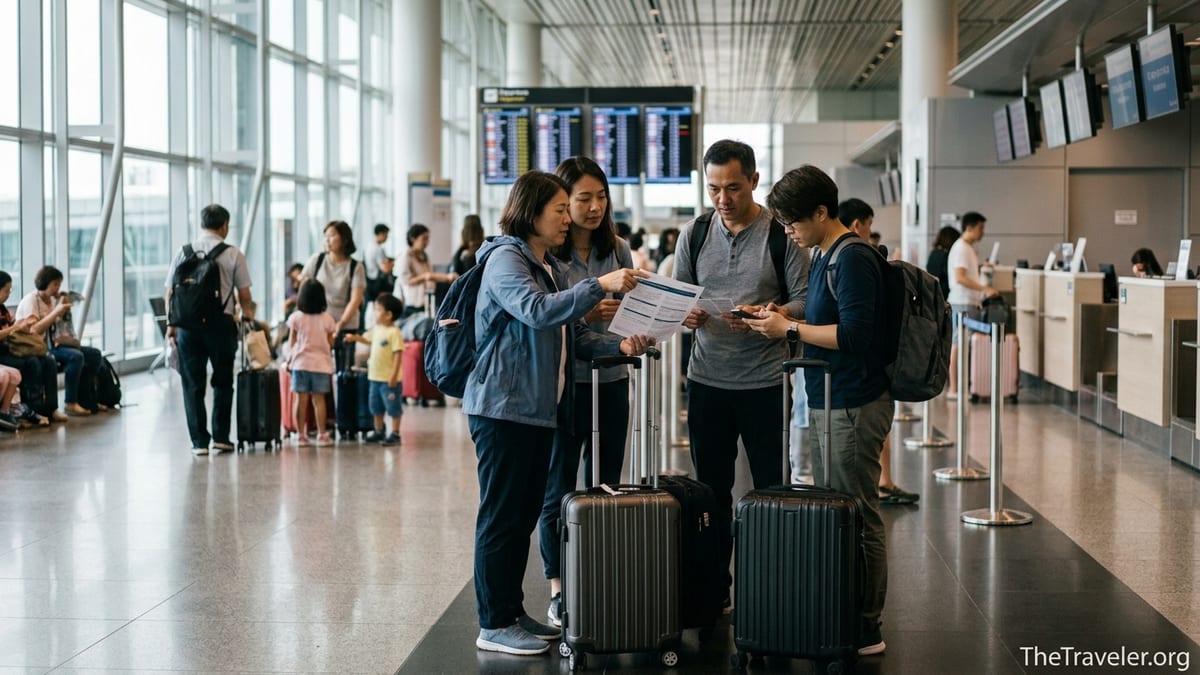
Income vs MSIG at a glance
Income Insurance and MSIG are two of the most frequently recommended brands when Singapore residents search comparison platforms for travel insurance. Income, formerly known as NTUC Income, is a local insurer with deep roots in Singapore, while MSIG is part of the Mitsui Sumitomo group, a major Japanese insurance group with more than a century of presence in the region. For travellers, this heritage matters less than the day-to-day experience: how easy it is to buy a policy online, what you actually get for the premium, and how claims are handled when things go wrong.
On price, both insurers run regular online discounts for single-trip and annual plans. For example, on comparison sites in June 2026, a 3-day trip to Thailand for one adult in their 30s could show Income’s entry-level plan somewhere in the mid-20s to low-30s Singapore dollars after promotion, while an MSIG Lite or Standard plan on promotion might appear in a similar or slightly higher band depending on the discount of the day. Exact prices shift frequently with promo codes and seasonal campaigns, so travellers should treat these as indicative ranges rather than fixed benchmarks.
Where the difference becomes clearer is in coverage design. MSIG’s TravelEasy series is built around relatively high overseas medical coverage, starting from around a quarter-million Singapore dollars at Lite level and going up towards one million dollars on Premier plans, along with strong emergency evacuation benefits across all tiers. Income’s travel plans tend to offer solid but somewhat lower medical limits at the base tier, focusing instead on a more balanced bundle of benefits. This tilt makes MSIG particularly attractive for those concerned about medical bills overseas, especially in high-cost destinations such as the United States, Japan or Western Europe.
Ultimately, both insurers are credible and regulated, and both have paid many travel claims over the years. The real “winner” depends on whether you are optimising for maximum medical protection, the lowest upfront premium, or the most convenient experience for repeat trips.
Coverage highlights: where MSIG tends to pull ahead
For many travellers, overseas medical and evacuation coverage is the single most important benefit, because a serious accident in a country like the United States can easily result in bills well above six figures in Singapore dollar terms. MSIG’s TravelEasy plans are structured with this in mind. Across the Lite, Standard, Elite and Premier tiers, overseas medical limits typically range from a few hundred thousand dollars at the lower end to around one million dollars at the top tier, with emergency medical evacuation cover also reaching around the one million dollar mark on many plans. This combination is appealing if you are heading to ski resorts in Japan, road-tripping across the United States, or spending weeks in Europe with multiple flights and train segments.
MSIG also provides a broad set of trip disruption benefits. Their plans cover pre-trip cancellation for reasons such as serious illness, injury, or death of a close relative, and they generally protect against missed connections, extended travel delays and lost or delayed baggage. For example, a family flying from Singapore to London via the Middle East might face an overnight delay due to weather. Under an MSIG Standard or Elite plan, they could potentially claim for hotel accommodation and meals up to the policy limits, as well as compensation for missed tours if those were prepaid and non-refundable.
Income travel insurance also offers medical, evacuation and trip disruption cover, but at the equivalent price point, the medical limits are often somewhat lower than MSIG’s comparable tier, and the cancellation or baggage limits can feel more modest for bigger-ticket holidays. For a short weekend in Bangkok, this difference may not matter; for a 3-week family holiday to the United States where each air ticket costs over S$1,500, some travellers will find MSIG’s higher benefit caps more reassuring.
It is worth noting that both insurers include some level of Covid-19 cover in their mainstream plans as of 2026, typically for overseas medical expenses and, at higher tiers, certain trip disruption scenarios. Exact sub-limits and triggers differ by plan and change over time, so travellers should always read the latest summary of benefits rather than assuming past Covid provisions still apply.
When Income can be the better fit
While MSIG often stands out on sheer medical muscle, Income travel insurance can still be the more practical choice for certain travellers and itineraries. One group is budget-conscious travellers taking short trips in the region, such as a 3-day food trip to Penang or a 5-day beach break in Phuket. On some comparison quotes in mid-2026, Income’s basic or standard tier has appeared a few dollars cheaper than MSIG’s equivalent for such itineraries, especially when stacked with limited-time discounts. When your main risk is a lost suitcase or a minor clinic visit, shaving a few dollars off the premium may be a reasonable trade-off.
Another scenario is when you prefer to keep multiple products under one familiar local brand. Some Singapore residents already hold Income motor or health insurance and appreciate managing everything through one insurer. For these customers, using Income for travel as well feels more straightforward. For instance, a couple who already has their Integrated Shield Plan and car insurance with Income might prefer a single contact centre and app, plus loyalty offers that occasionally extend to travel products.
Annual multi-trip plans are a further area where Income can be competitive. A frequent flyer who travels regionally for work, taking monthly trips to Kuala Lumpur, Jakarta or Hong Kong, might find an Income annual plan priced attractively versus MSIG’s equivalent, especially if they mainly visit cities with good medical infrastructure and do not engage in high-risk activities. In that case, the slightly lower medical limits may still be more than enough, and the convenience of not buying single-trip cover each time is the primary appeal.
Finally, some travellers have had good claim experiences with Income on other product lines in the past and simply prefer staying with a brand that has “worked” for them. Although travel insurance is a different segment, perceived reliability and familiarity often play a role in which policy people choose.
Real-world price and benefit comparisons
To understand how these insurers compare in practice, it helps to imagine concrete trips and approximate quotes rather than just reading benefit tables. Consider a 7-day holiday to Japan in October for a 35-year-old solo traveller. On a comparison platform in June 2026, you might see an MSIG TravelEasy Standard single-trip premium around the mid-S$30s to low-S$40s after a seasonal 40 to 50 percent discount, with overseas medical coverage in the several-hundred-thousand-dollar range and robust six-figure evacuation protection. An Income Standard or Classic plan might come in a little lower or in a similar band, but with lower medical caps and slightly smaller limits for baggage and trip cancellation.
Now imagine a more complex case: a family of four travelling to the United States and Canada for three weeks over December. Because of the high cost of medical care in North America and the duration of the trip, both MSIG and Income premiums for such a route can easily climb into the low hundreds of dollars, even after promotions. Here, MSIG’s Premier plan with medical coverage around one million dollars and very high emergency evacuation limits may be worth the extra premium compared with Income’s top tier, particularly if the family plans to rent a car, go skiing, or undertake activities where injuries are more likely.
There are also situations where Income can edge ahead. For instance, a 4-day work trip to Kuala Lumpur for one adult might show Income’s entry-level plan at a lower discounted price than MSIG’s Lite plan on the day you search, especially if MSIG’s deepest discounts are reserved for longer trips or specific marketing campaigns. In this case, a traveller who is mainly concerned about flight delays, lost laptop baggage, or a simple outpatient clinic visit could rationally choose the cheaper Income plan because the probability of catastrophic medical expenses is relatively low.
The takeaway from these examples is that there is no single, permanent price advantage on either side. Promotions, travel dates and destinations shift the numbers week by week. Travellers should compare current quotes for their specific itinerary, paying particular attention to how much medical and evacuation coverage they receive for each dollar of premium.
Claims, customer experience and reliability
Many travellers only discover how good or bad a travel insurer is when they need to claim for a missed flight or hospital visit abroad. Both Income and MSIG have long operating histories in Singapore and are regulated by the Monetary Authority of Singapore, which sets minimum standards for solvency and conduct. Each has built digital claim channels, with downloadable forms and online submissions for common claim types such as delayed baggage, cancelled trips and overseas medical expenses.
MSIG has received industry recognition in recent years for its claims capabilities, picking up awards in areas such as claims initiatives and electronic solutions. Travellers who have used MSIG for motor or other general insurance products sometimes cite relatively smooth digital workflows and responsive updates as a reason for considering MSIG for travel as well. A typical claim might involve uploading airline delay confirmation, hotel receipts and boarding passes through an online portal, with payouts credited by bank transfer once approved.
Income, as a long-established local brand, is widely known and has built trust across multiple product lines. Policyholders have the comfort of dealing with a homegrown insurer that has paid countless health, motor and life claims over decades. For travel insurance, Income also provides claim forms and instructions online, and travellers can usually submit supporting documents electronically. Some customers appreciate being able to walk into a local service centre or reach a call line they are already familiar with from other policies.
In anecdotal discussions among Singapore residents, opinions on both insurers’ claim processes are mixed but generally positive, as is typical for larger insurers. The best way to improve claim outcomes with either company is to keep proper documentation: get written delay confirmations from airlines, insist on itemised medical bills overseas, file police reports where required, and notify the insurer’s emergency assistance hotline as soon as a serious incident occurs.
Annual plans, frequent flyers and niche use cases
For frequent travellers, the choice between Income and MSIG often revolves around annual multi-trip plans. An annual plan is typically cost-effective if you take more than three or four trips a year, particularly if those trips are regional and relatively short. Both insurers offer annual options that cover unlimited trips within a 12-month period, with a maximum duration per trip, often around 90 days.
Consider a consultant based in Singapore who flies to Bangkok, Jakarta, Manila and Hong Kong several times a year, with occasional long-haul travel to Europe for conferences. An MSIG annual Premier plan focused on high medical coverage may be especially reassuring because the consultant spends a large number of days each year in airports and on planes. On the other hand, an Income annual plan that is slightly cheaper but still reasonably comprehensive could be sufficient if most trips are to regional capitals with good medical care and the consultant already has strong corporate health coverage through their employer.
There are also niche situations like overseas study or extended working holidays. MSIG has a dedicated Global Study Insurance product that provides enhanced protection for students abroad, including higher medical coverage for overseas hospitalisation, specific Covid-19 treatment limits, trauma counselling and cover for belongings at an overseas residence. A Singaporean undergraduate heading to Australia for a one-year exchange might find this tailored MSIG product more suitable than a standard travel policy from either insurer, even if it is priced higher than basic travel insurance.
By contrast, Income may be more appealing for older travellers already integrated into its ecosystem of life and health policies. A retiree couple in their late 60s, who already rely on Income for their medical and retirement products, might feel more comfortable buying Income travel insurance for annual cruises or regional tours, especially if they value face-to-face assistance and local familiarity over the absolute highest benefit limits.
The Takeaway
So which insurer “wins” the contest between Income travel insurance and MSIG travel insurance for Singapore-based travellers in 2026? Looking purely at coverage strength, especially for overseas medical and evacuation benefits, MSIG generally takes the lead. Its TravelEasy series often delivers higher medical limits at the mid and upper tiers, along with solid trip disruption benefits that suit long-haul and activity-heavy holidays. For travellers heading to high-cost destinations or engaging in sports where injury risk is higher, MSIG is usually the more robust choice.
Income, on the other hand, remains a credible, sometimes more affordable option for short, low-risk trips or for travellers who prioritise familiarity and consolidation of insurance products under a single local brand. Its annual plans can be competitively priced for frequent regional flyers whose main exposures are flight delays and lost baggage rather than catastrophic medical emergencies. For those already comfortable with Income through other policies, staying within the same ecosystem can be a reasonable decision.
The most important step is not to assume that one brand is always cheaper or always better. Promotions change, benefit tables are updated, and your own travel pattern may shift from year to year. Before each major trip, especially long-haul holidays or multi-country itineraries, take ten minutes to compare current quotes from both Income and MSIG for your exact dates and destinations. Look closely at overseas medical limits, emergency evacuation caps, trip cancellation benefits, and any Covid-19 or special activity coverage relevant to your plans.
Seen through this practical lens, MSIG often emerges as the winner for travellers who want maximum protection and are willing to pay a little more, while Income can still come out ahead for value-driven, short-haul travel and for those who prefer a familiar local name. Either way, being insured by a well-established, regulated insurer is far better than travelling uninsured, especially in a world where flight disruptions and medical surprises remain part of the travel landscape.
FAQ
Q1. Is MSIG travel insurance usually more expensive than Income?
In many real-world quotes, MSIG can cost slightly more at comparable tiers because it often provides higher medical and evacuation limits, but frequent promotions and discount codes mean that on some itineraries, particularly short regional trips, Income and MSIG premiums can overlap or even flip, so it is essential to compare current prices for your exact dates.
Q2. Which is better for long trips to the United States or Europe?
For long-haul holidays to high-cost destinations like the United States or Western Europe, MSIG’s higher overseas medical and evacuation coverage, especially on Elite and Premier tiers, generally makes it the stronger option for those willing to pay a bit more for extra protection against very large hospital bills.
Q3. Is Income travel insurance good enough for short regional holidays?
For many short trips within Southeast Asia, such as a weekend in Bangkok or a 5-day stay in Bali, Income’s basic or mid-tier plans often offer sufficient medical cover and standard benefits for delays and baggage, and can sometimes be priced a little lower than MSIG, which makes them a reasonable choice for budget-conscious travellers.
Q4. How do Covid-19 benefits compare between the two insurers?
Both Income and MSIG include some Covid-19 benefits in their mainstream travel plans as of 2026, often covering overseas medical expenses and, at higher tiers, certain cancellation or disruption scenarios, but the exact limits, conditions and trigger events differ and are revised periodically, so travellers should always read the latest benefit summaries and wording before purchasing.
Q5. Which insurer is better for frequent flyers who need an annual plan?
Frequent flyers who value higher medical and evacuation limits may gravitate towards MSIG’s annual TravelEasy plans, particularly the Elite or Premier tiers, whereas travellers whose trips are mostly short regional journeys and who are price-sensitive might find Income’s annual plans more appealing if they are modestly cheaper while still offering adequate cover.
Q6. Are claims easier with Income or MSIG?
Both insurers provide online channels for submitting travel claims and have long histories of operating in Singapore, and while individual experiences can vary, MSIG has received industry recognition for its claims initiatives and digital solutions, while Income benefits from being a well-known local brand with multiple service touchpoints, so in practice, good documentation and prompt reporting matter more than the choice between the two.
Q7. Does either insurer offer special coverage for students studying overseas?
MSIG offers a dedicated Global Study Insurance product that provides tailored protection for students overseas, including higher overseas hospitalisation and specific Covid-19 treatment limits plus benefits like trauma counselling and cover for belongings at an overseas residence, which can be more suitable than a standard travel plan for long-term study; Income’s travel policies are more focused on leisure and business trips rather than extended study stays.
Q8. Which brand is better for older travellers or retirees?
Older travellers and retirees often value familiarity and local support, so those already holding medical or life policies with Income may prefer to keep their travel insurance there, whereas retirees undertaking higher-risk activities or long stays in countries with expensive healthcare might lean towards MSIG’s higher medical limits, but in every case, age limits and pre-existing condition exclusions must be checked carefully.
Q9. If I mainly care about baggage and trip delay, which should I choose?
If your primary concerns are lost baggage, missed connections and delays rather than large medical bills, then the cheaper plan that still provides acceptable limits in those areas may be the right choice, and on some itineraries that will be Income while on others it may be a discounted MSIG Standard plan, so checking the specific baggage, delay and cancellation limits against your prepaid costs is more important than the brand name itself.
Q10. Overall, who is the winner: Income travel insurance or MSIG travel insurance?
Overall, MSIG generally comes out ahead for travellers who prioritise strong overseas medical and evacuation cover and are prepared to pay slightly higher premiums at equivalent tiers, while Income can be the better value for short, low-risk regional trips or for customers who prefer to consolidate their insurance needs with a familiar local brand, so the real winner depends on your destinations, trip length, activities and budget.