


More news on this day
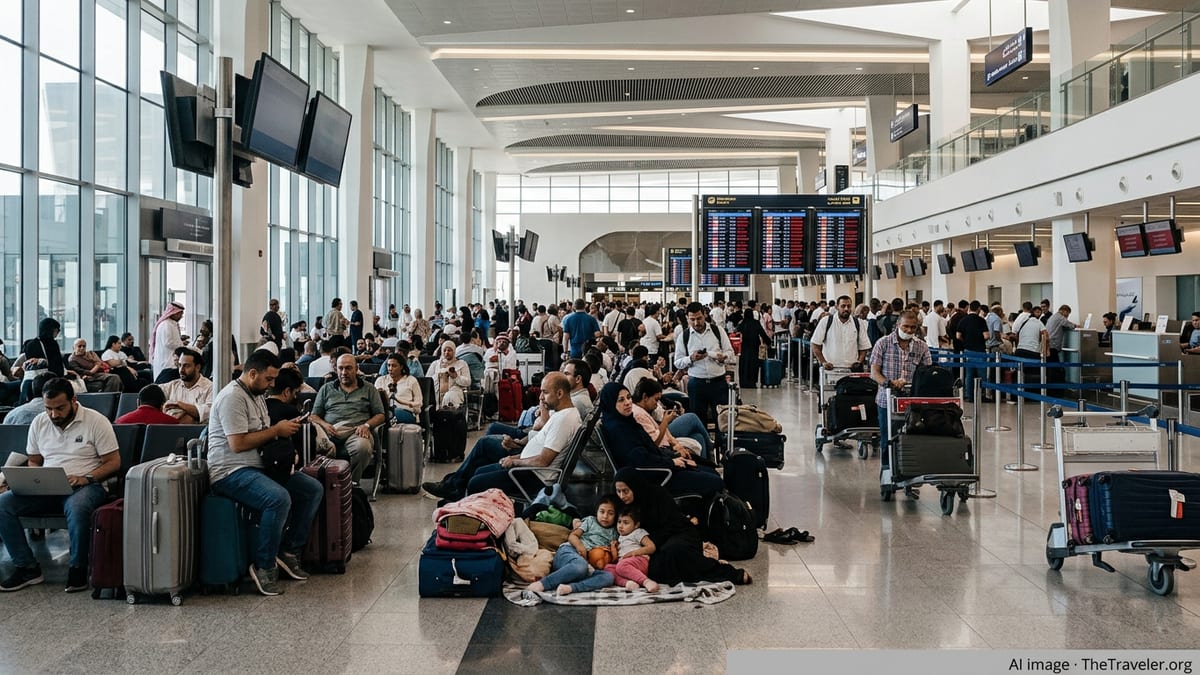
Passengers at Beirut Rafic Hariri International Airport on June 9 found themselves facing long waits, missed connections and sudden itinerary changes as a wave of delays and cancellations hit regional flights operated by Royal Jordanian, Pegasus, Middle East Airlines, Qatar Airways and Air Arabia.
Get the latest news straight to your inbox!
Live Flight Data Shows Cancellations Across Regional Carriers
Publicly available flight information from Beirut Rafic Hariri International Airport on June 9 indicates that services operated by several regional airlines were significantly disrupted, with multiple departures either heavily delayed or marked as cancelled for the day. Routes serving Amman, Istanbul, Doha, Dubai and Kuwait City appeared among the most affected, leaving travelers uncertain about when they would be able to leave the terminal.
The airport’s live departure boards showed, among others, a Pegasus service to Istanbul listed as cancelled, alongside regional flights to Amman and Gulf destinations experiencing extended delays or last minute schedule changes. While some services from carriers such as Emirates and Kuwait Airways continued to operate, the pattern of disruption across Royal Jordanian, Qatar Airways, Middle East Airlines and Air Arabia underscored how quickly conditions on these busy routes can deteriorate.
Operational data collated by independent flight tracking platforms for June 8 and June 9 also reflects irregular performance on Beirut links to Amman and Doha, with several services recording late departures and, in some cases, outright cancellations. These disruptions compound a wider trend of schedule volatility on Middle East routes since early 2026, as airlines adjust to shifting airspace restrictions and changing demand.
For passengers already at the airport, the immediate impact was evident in crowded check in areas and boarding gates, where those booked on affected flights sought rebooking options or alternative routings through other hubs in the region.
Regional Context: A Network Under Strain
The disruption at Beirut has not occurred in isolation. Over recent months, airlines serving Lebanon and neighboring markets have repeatedly revised schedules in response to evolving operational constraints, including temporary airspace closures and restrictions on specific city pairs. Service updates published by regional carriers and consolidated by travel management companies describe a network where routes to and from Jordan, Qatar, the United Arab Emirates and Kuwait are particularly exposed to sudden change.
In Lebanon itself, published coverage earlier this year described a wave of cancellations affecting flights between Beirut and several Gulf destinations, including Doha, Abu Dhabi, Kuwait and Dubai, as carriers responded to wider regional tensions. While the airport has generally remained open, the pattern of intermittent cancellations has left travelers wary about the reliability of itineraries involving multiple connections.
Middle East Airlines has also recently announced selective cancellations on routes linking Beirut to Kuwait and Baghdad on specific June dates, citing operational restrictions and regional airspace issues. Updates from service providers tracking airline operations across the Middle East similarly list delays or suspensions affecting services to Jordan, Qatar, the UAE and Kuwait, underlining the fragility of connectivity on some of Beirut’s most popular outbound routes.
This broader context helps explain why a cluster of delayed and cancelled flights on June 9 could quickly cascade into missed onward connections in hubs such as Amman, Istanbul, Doha and Dubai, amplifying the disruption well beyond Lebanon’s borders.
Impact on Routes to Amman, Istanbul, Doha, Dubai and Kuwait City
The Beirut to Amman corridor, served by Royal Jordanian and Middle East Airlines among others, is one of the key short haul links out of Lebanon. Recent flight status records show that while some services have operated on time, others have encountered substantial delays, and individual flights have been withdrawn from the schedule on select days. When even a small number of these flights are disrupted on the same date, it can quickly overwhelm airline rebooking options to Amman and onward destinations.
On the Istanbul route, Pegasus is one of the main low cost operators at Beirut Rafic Hariri International Airport. Airport departure boards on June 9 showed at least one Pegasus service to Istanbul cancelled for the day. Given Istanbul’s role as a major transit hub for Europe and Asia, any cancellation on this sector can leave Beirut based passengers with limited same day alternatives, particularly during peak travel periods.
Flights to Doha and Dubai, largely carried by Qatar Airways, Emirates, flydubai and Middle East Airlines, form a critical bridge between Lebanon and long haul networks in Asia, Africa and Oceania. Publicly available schedules and recent traveler reports show that these routes have experienced a mix of restored services and intermittent cancellations in 2026. When a Doha or Dubai departure is delayed or cancelled from Beirut, passengers risk missing long haul connections and may face overnight stays or rerouting through secondary hubs such as Amman or Istanbul.
Links to Kuwait City remain similarly sensitive. Recent airline statements have described restrictions affecting foreign carriers operating to Kuwait, prompting cancellations of specific Kuwait bound flights from Beirut and other regional airports. Travelers relying on these services for work trips or family visits have had to adjust plans at short notice, sometimes shifting to indirect routings via other Gulf states when seats are available.
Passengers Face Missed Connections and Overnight Stays
The immediate human impact of a day of concentrated disruption at Beirut airport is visible in missed connections, extended layovers and unexpected expenses. Travelers booked on Royal Jordanian flights to Amman, for example, may find that a delay out of Beirut leaves too little time to connect onto onward services to Europe, North America or the Gulf, forcing rebooking or overnight accommodation arrangements.
Similarly, a cancelled Pegasus flight to Istanbul can strand passengers who had planned tight transfers onto European or Asian flights from Turkish hubs. In such cases, options may include waiting for the next available departure on the same carrier, purchasing new tickets on alternative airlines, or rerouting through Amman or Gulf hubs if capacity exists.
On Qatar Airways, Air Arabia and other Gulf based carriers, delays on Beirut departures to Doha or Dubai can trigger a domino effect, as missed long haul connections create pressure on later flights already near capacity. Public traveler accounts in recent months highlight instances where passengers affected by cancellations on these routes were offered rebooking on later dates or different routings, sometimes involving multi stop journeys that add many hours to overall travel time.
With at least 20 delays and eight cancellations reported across a single day for Beirut’s regional flights, the cumulative number of travelers facing itinerary changes is likely to be substantial. The situation underscores how concentrated disruptions at a relatively small airport can ripple through a much larger network of connections.
Uncertain Outlook as Airlines Continue to Adjust Schedules
Looking ahead, the outlook for travelers using Beirut Rafic Hariri International Airport remains uncertain. Airlines operating in and out of Lebanon are continuing to fine tune their summer 2026 schedules, taking into account operational restrictions, demand forecasts and evolving regional dynamics. Updates from carriers and aviation data providers suggest that short notice changes are likely to remain a feature of travel on some Middle East routes in the coming weeks.
Qatar Airways has recently publicized an updated schedule for its global network through mid September 2026, while other Gulf carriers have announced frequency adjustments or equipment changes on select routes. At the same time, advisories compiled by aviation service firms continue to list delayed or suspended services affecting destinations such as Jordan, Qatar, the UAE and Kuwait, indicating that full normalization across the region has yet to be achieved.
For travelers planning journeys from Beirut to Amman, Istanbul, Doha, Dubai or Kuwait City, publicly available guidance from airlines and travel agents strongly emphasizes the importance of monitoring flight status closely, allowing additional time for connections and maintaining flexible booking arrangements where possible. Events on June 9 at Beirut airport highlight how quickly conditions can change, and how even well established routes operated by carriers like Royal Jordanian, Pegasus, Middle East Airlines, Qatar Airways and Air Arabia can experience sudden disruption.
As the peak summer travel period approaches, the experience of stranded and delayed passengers in Beirut serves as a reminder that regional aviation in the Middle East is still navigating a complex and fluid operating environment, in which resilience and flexibility are essential for both airlines and travelers.