


More news on this day
Arsenal’s preparations for their Champions League opener away to Napoli have been thrown off course after a major air traffic control problem in the United Kingdom severely delayed the team’s flight to Italy, forcing the cancellation of scheduled media duties and leaving players and supporters facing a long day of travel uncertainty.
Get the latest news straight to your inbox!
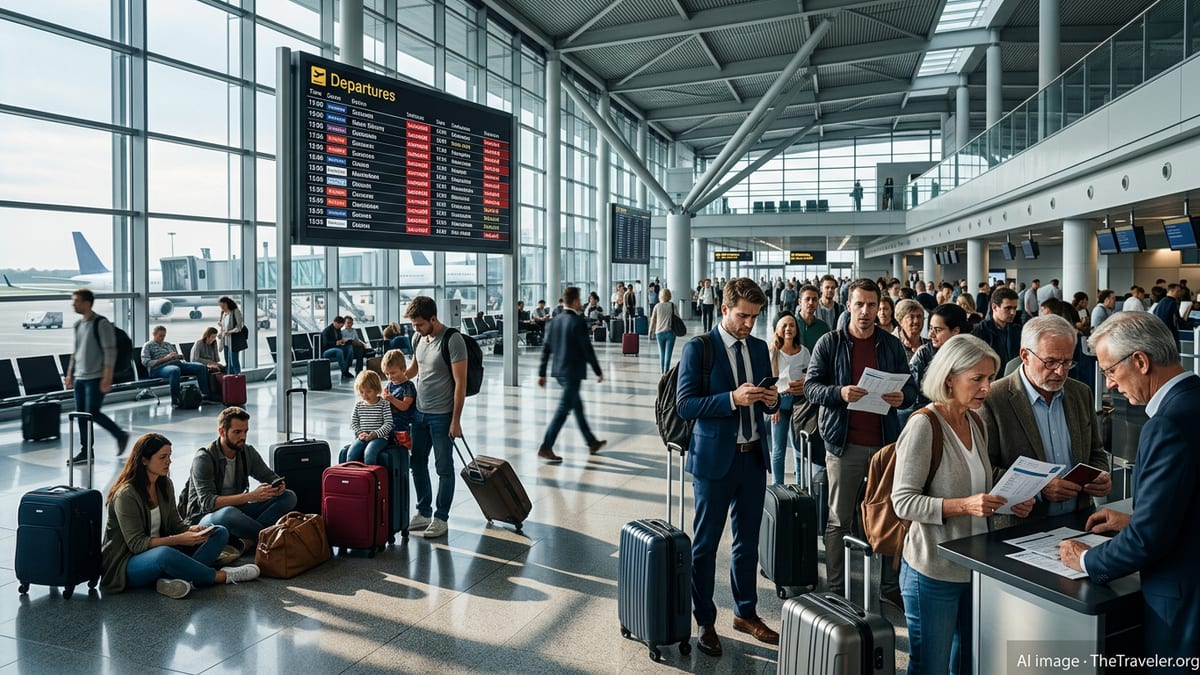
Air traffic failure disrupts Arsenal’s route to Naples
Reports from the UK and Italy indicate that a technical failure in the British air traffic control system caused widespread disruption at several major airports on Tuesday 8 September 2026, with knock-on delays to departures bound for continental Europe. Heathrow, Gatwick and other key hubs reported significant schedule problems as controllers worked to resolve the issue.
Among the flights affected was Arsenal’s charter to Naples, where the Premier League side are due to face Napoli in their opening Champions League group-stage fixture on Wednesday. Coverage in the British and Italian press describes the squad remaining at their London Colney training base for much of the day after completing a morning session, waiting for clearance before they could travel to the airport for a rescheduled departure.
The delay meant Arsenal’s arrival in southern Italy was pushed back into late evening, with several outlets reporting that the team were not expected to reach their Naples hotel until around 9.30pm local time. That timetable represents a significantly compressed match-eve schedule compared with the usual Champions League routine, in which visiting clubs typically land in the afternoon and conduct media and stadium familiarisation duties soon after.
Italian sports media further describe a broader picture of disruption across UK departures, citing a fault affecting flight data processing at the national air traffic control provider and leading to delays and cancellations on routes to multiple European destinations. Within that wider context, Arsenal’s late arrival has become one of the most high-profile sporting consequences of the outage.
Press conference scrapped as UEFA grants flexibility
The most immediate knock-on effect of the travel chaos was the cancellation of Arsenal’s pre-match press conference at the Stadio Diego Armando Maradona. According to published coverage in the UK, manager Mikel Arteta and a first-team player had been due to speak to the media in Naples on Tuesday evening, in line with standard UEFA competition requirements.
With the team plane grounded in England for much of the afternoon, the club informed tournament organisers that they would be unable to attend. Multiple reports indicate that UEFA accepted the exceptional circumstances and allowed the engagement to be called off, rather than insisting the event proceed remotely or at a much later time.
Competition regulations state that visiting clubs are expected to arrive in the host city by the evening before a match and to fulfil a set of media obligations on site. Reporting from London suggests European football’s governing body is not anticipated to pursue disciplinary action against Arsenal, given the widely documented air traffic failure and the fact that the disruption lay outside the club’s control.
As a result, Napoli’s own pre-match media schedule became the sole official press event in the stadium on Tuesday, while English and Italian outlets instead focused on the broader travel disruption story and its potential implications for the tie.
Supporters face delays and uncertainty across UK airports
The air traffic breakdown did not only affect the travelling squad. Fans heading to southern Italy from the UK reported long waits and confusion at airports as departures to Naples and nearby hubs were pushed back or reassigned. Publicly available information from flight-tracking services and airport statements showed delays rippling across services on Tuesday afternoon and evening.
Some Arsenal supporters shared accounts of extended holds at departure gates and a lack of clear information about revised timings, while others looked to rebook onto alternative routes through other European cities. Online discussion among travelling fans highlighted concerns about missing onward connections, late-night arrivals and the challenge of reaching accommodation in Naples well after midnight.
Recent history has shown how vulnerable match travel can be to system failures and staffing shortages within air traffic control, with previous disruptions at London airports leading to cancellations and diversions on popular European football routes. Tuesday’s events provided another example of how quickly a technical issue can cascade into logistical headaches for thousands of passengers, including substantial numbers of away supporters following major clubs in European competition.
For those with match tickets, the immediate priority was simply getting to Campania in time for kick-off. But many travelling fans also faced practical worries about rearranging hotel check-in, local transport from the airport and, in some cases, unpaid time off work extended beyond what had originally been planned.
Impact on Arsenal’s preparations for high-stakes opener
On the football side, the delay changes the rhythm of what is usually a tightly managed European away schedule. Instead of flying out early and settling into their base in Italy by mid-afternoon, Arsenal players were expected to spend much of Tuesday waiting in Hertfordshire and at the airport before a late-evening arrival at their team hotel.
Reports on both sides of the Channel underline that there has been no change to the match timing itself, and that the fixture remains set for Wednesday night at the Stadio Diego Armando Maradona. However, the shortened lead-in leaves less room for recovery, tactical meetings and final pitch-side preparations than would usually be the case for an away Champions League fixture of this magnitude.
The match is a significant one for both clubs. Arsenal return to the competition after deep runs in recent seasons and arrive in Italy as Premier League title holders, while Napoli, led by a new head coach, are seeking to reassert themselves among Europe’s elite after an uneven domestic campaign last year. In that context, the disruption to the visitors’ travel adds an unexpected variable to a tie already rich with sporting narrative.
Coaching and performance staff typically plan European trips around optimising sleep cycles, nutrition and recovery windows, particularly for players juggling heavy schedules across domestic, continental and international commitments. A late-night arrival, combined with an emotionally charged atmosphere in Naples and minimal margin for further delay, presents a challenge that Arsenal will have to absorb quickly if they are to begin their group-stage campaign positively.
Broader questions for UK aviation and future European travel
Beyond the immediate concerns of one match, the incident has revived questions about the resilience of the UK’s air traffic infrastructure. Previous high-profile failures and staffing shortfalls have already prompted scrutiny of capacity, contingency planning and investment in critical systems. The latest breakdown, affecting both regular passengers and a leading European football club on the eve of a marquee fixture, is likely to renew calls for further safeguards.
Travel analysts note that autumn is a particularly sensitive period for aviation, with the return of business travel, major sports events and late-season tourism placing combined pressure on schedules. Any technical issue at this time of year can therefore have an outsized impact, especially when it coincides with heavily booked flights to cities hosting major fixtures such as Champions League openers.
For clubs and competition organisers, episodes like this may strengthen the case for more conservative travel windows ahead of critical fixtures, or for alternative arrangements when technical alerts first emerge. Some commentators have also pointed to the potential for shifting more squad travel to earlier in the day, or even the previous night, during periods of known strain on air traffic systems.
For now, attention turns back to the pitch in Naples, where Arsenal will aim to ensure that an unsettled journey does not translate into an unsettled performance. The wider debate about aviation reliability and its ripple effects on elite sport, however, seems certain to continue long after the final whistle in Campania.
The Guardian: Air traffic chaos delays Arsenal flight to Naples for Champions League
The Independent: Arsenal caught up in airport travel chaos ahead of Napoli tie
Evening Standard: Arsenal hit by travel disruption before Napoli clash
la Repubblica: Arsenal in ritardo per i problemi dei voli nel Regno Unito