


More news on this day
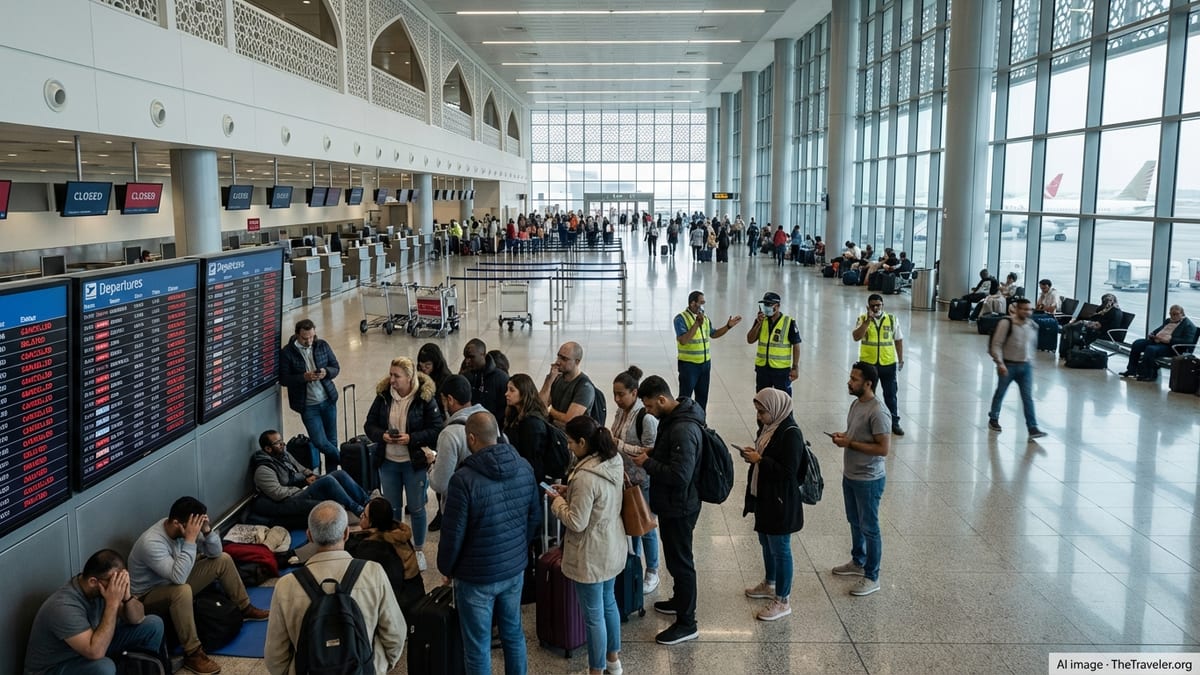
Hundreds of passengers were left stranded at São Paulo–Congonhas Airport as a wave of operational disruptions rippled through Brazil’s domestic air network, delaying around 150 flights and canceling at least six services on key routes to Rio de Janeiro, Brasília, Belo Horizonte, Porto Alegre, Curitiba and other major cities.
Get the latest news straight to your inbox!
Operational Disruptions Hit One of Brazil’s Busiest Hubs
São Paulo–Congonhas, Brazil’s second-busiest airport by passenger traffic and a critical domestic hub, experienced a sharp spike in irregular operations that quickly cascaded across airlines and routes. Publicly available airport and aviation data showed a surge in delayed departures and arrivals concentrated over a short window, pointing to a systemic disruption rather than isolated airline issues.
Reports from Brazilian media and flight-tracking platforms indicate that the disturbance was linked to an interruption in the regional air control and communications system that manages movements at Congonhas and nearby airports. Earlier this month, a similar communications failure temporarily suspended takeoffs from Congonhas and Guarulhos for more than an hour, and the latest episode appears to have produced a comparable knock-on effect for domestic schedules.
As operations slowed or briefly halted, aircraft and crews were displaced from their planned rotations. Even after departures resumed, the resulting bottleneck forced airlines to retime, merge, or cancel select services to restore some order to the day’s schedule, leaving passengers facing long waits and last-minute itinerary changes.
LATAM, Gol and Azul Bear the Brunt Across Key Domestic Routes
Major Brazilian carriers LATAM, Gol and Azul, which together operate most of Congonhas’s dense shuttle network, were among the airlines most affected. Flight boards for Congonhas showed extensive delays on high-frequency shuttles to Rio de Janeiro’s Santos Dumont Airport and Brasília, along with disruptions to popular business and leisure routes serving Belo Horizonte, Porto Alegre and Curitiba.
LATAM’s domestic operation, heavily concentrated in the São Paulo–Rio–Brasília triangle, experienced a series of late departures and rolling delays as aircraft arrived out of position from earlier legs. Gol, a key operator on the Rio shuttle and Brasília corridor, similarly saw a string of late flights as crews and aircraft cycled through congested turnarounds. Azul, which has been rebuilding its network after a financial restructuring, also reported affected services, particularly on flights connecting southern Brazil and the Southeast.
While each carrier maintained its own rebooking and assistance policies, the congestion at Congonhas limited the options for rapid recovery. With peak-hour slots tightly scheduled, there was little spare capacity to add extra sections, forcing airlines to consolidate loads and, in some cases, cancel flights entirely to prevent further knock-on delays.
Passengers Confront Long Queues, Missed Connections and Overnight Delays
Travelers passing through Congonhas described crowded departure halls, growing queues at airline service counters and long waits for updated boarding information. As delays mounted through the day, passengers reported missed connections both within Brazil and on onward international itineraries via São Paulo–Guarulhos, Rio de Janeiro and Brasília.
Publicly shared accounts on social media and travel forums pointed to travelers sleeping in terminal seating areas while awaiting rebooking, particularly on evening departures to southern Brazil and to Brasília. Others opted to abandon air travel altogether, seeking last-minute intercity buses between São Paulo and Rio de Janeiro or Curitiba once it became clear that their flights were unlikely to depart on time.
Consumer discussions also highlighted uncertainty over compensation and assistance rules in Brazil, with some passengers documenting experiences of hotel and meal vouchers being offered in cases of extended delays, while others claimed they were directed to contact airline customer service channels for future reimbursement claims. The mixed experiences underscored the complexity of domestic passenger rights regulations when disruptions stem from air traffic control and infrastructure issues rather than airline-specific failures.
Cascading Effects Felt Across Brazil’s Domestic Network
The disruption at Congonhas did not remain confined to São Paulo. Data from other large Brazilian airports showed delayed arrivals and departures on flights linked to the city, illustrating how quickly issues at one major hub can propagate through the wider network. Operations in Brasília, Belo Horizonte, Porto Alegre and Curitiba saw schedules bunching, gate changes and late-night arrivals as carriers tried to absorb the shock.
In Brasília, where several Congonhas flights feed into onward connections for northern and central Brazil, delayed aircraft arrivals threatened to push some departures into late-night hours. At Belo Horizonte’s Confins Airport, airport flight boards showed irregular timings on services to and from São Paulo, requiring airlines to adjust aircraft usage across the rest of their Minas Gerais schedules.
Porto Alegre and Curitiba, both important business and political centers, experienced similar ripple effects as late-running aircraft from São Paulo turned around for return legs. Regional airports that depend on timed connections with Congonhas also reported schedule impacts, though on a smaller scale, as aircraft and crews became tied up in recovery operations.
Recurring Strains Raise Questions About Capacity and Resilience
The latest wave of delays adds to a series of recent operational incidents affecting São Paulo’s airspace and ground infrastructure. Earlier this year, a major technical pane in the control system triggered the simultaneous suspension of takeoffs and landings at Congonhas, Guarulhos and Viracopos, sending diversions across southeastern Brazil and disrupting thousands of journeys.
Aviation analysts cited in local coverage have increasingly pointed to the vulnerability of Brazil’s busiest air corridors at times of peak traffic, particularly at airports such as Congonhas that operate at or near capacity for much of the day. Short runways, dense slot schedules and limited flexibility to add extra flights all combine to make recovery from even short interruptions a complex, multi-hour process.
For travelers, the episode serves as another reminder of the importance of buffer time on domestic connections in Brazil, especially when itineraries rely on same-day transfers between Congonhas and Guarulhos or onward flights late in the evening. As airlines and air navigation authorities review the latest disruption, passengers are likely to watch closely for any concrete measures aimed at improving communication, protection and resilience across one of Latin America’s busiest air travel systems.