

Cascais has long been one of Portugal’s most appealing seaside escapes, a former royal resort that now draws surfers, sunseekers and city-break travelers from Lisbon and beyond.
Its coastline is surprisingly varied for such a compact stretch of shore, with sheltered coves in the historic center and wild Atlantic sands framed by dunes and cliffs on the edge of the Sintra-Cascais Natural Park.
From the intimate charm of Praia da Rainha to the windswept drama of Guincho, the beaches around Cascais offer very different moods, and choosing where to go depends on what kind of day by the sea you have in mind.
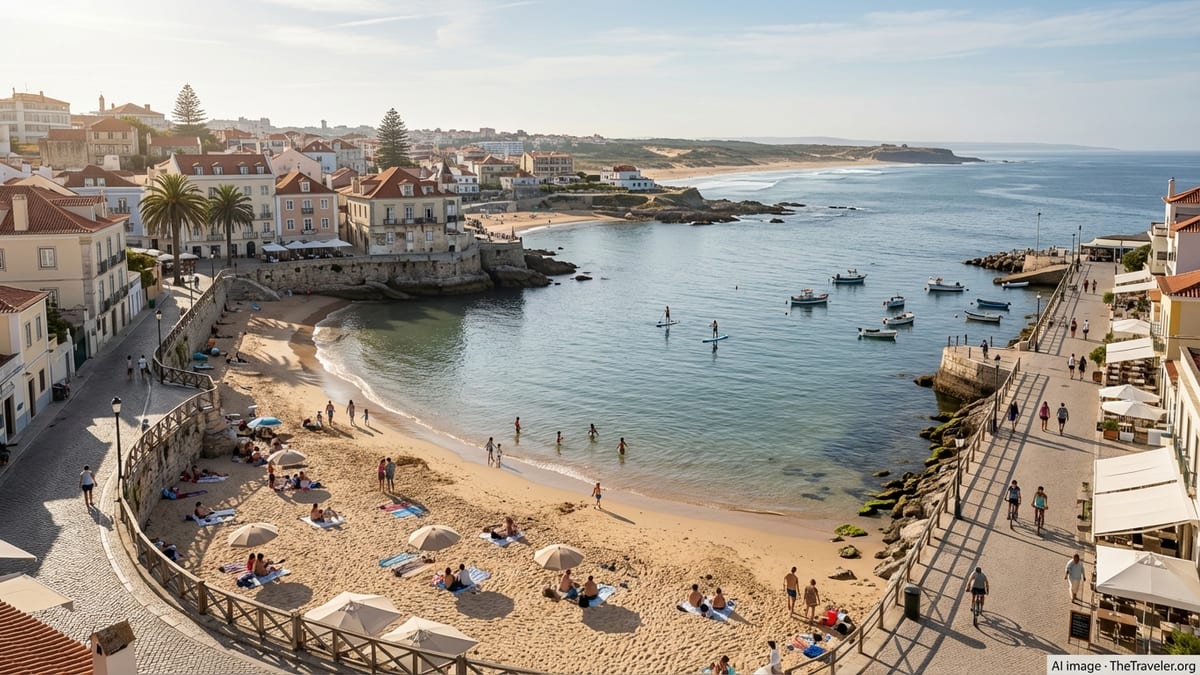
Understanding the Cascais Coastline
The beaches of Cascais unfold along the so-called Portuguese Riviera, beginning at the town’s horseshoe-shaped bay, following a paved seafront promenade toward Estoril, and stretching west into more rugged territory toward the wild Atlantic. In practical terms, that means you can step off the train from Lisbon and be floating in calm water within minutes, or rent a bike and pedal out to windswept surf breaks looking straight toward America across the ocean.
For visitors, it helps to think of the coastline in three distinct sections. Around the old town you find small, sheltered beaches with shallow water and plenty of cafés close by. Along the promenade between Cascais and Estoril, wider urban beaches share space with beach clubs, saltwater pools and family-friendly facilities. Beyond the built-up waterfront, dunes and cliffs take over, and the waves and wind increase, creating a very different, wilder personality.
The central bay: postcard Cascais
In the town center, beaches are tucked into coves between old mansions and stone quays. These are the beaches most first-time visitors see: compact, golden and framed by charming architecture. They are ideal for swimming, quick dips between sightseeing, and easy days with children, although they are also the busiest in summer.
The promenade to Estoril
Heading east from Cascais, a continuous paved promenade lines the water for several kilometers toward Estoril. Here, sand fans out a little more, and beaches feel more open but still urban in character. Families gravitate to this stretch not only for the calm sea but also for the simple logistics: plenty of cafés, changing facilities and access ramps, with the train never far away.
The wild Atlantic edge
Travel west and the atmosphere changes abruptly. The coastal road and a dedicated cycle path lead out toward the Sintra-Cascais Natural Park, where rolling dunes and low cliffs frame beaches that face directly into the Atlantic swells. The most celebrated of these is Praia do Guincho, a favorite with surfers, windsurfers and kitesurfers. It is less about a tranquil swim and more about big skies, crashing waves and untamed scenery.
Praia da Rainha: The Queen’s Pocket-Sized Retreat
Praia da Rainha is Cascais in miniature: a tiny scallop of sand surrounded by honey-colored rocks and elegant townhouses, just a few steps from the pedestrianized shopping streets. Once reserved for Queen Amélia of Portugal in the late 19th century, it retains an intimate, almost secretive feel despite its central location. For many visitors, this is the single most emblematic beach in town, both for its history and for its cinematic setting tucked below the promenade.
Atmosphere and setting
Accessed by a short flight of steps between buildings, Praia da Rainha suddenly opens up at your feet, with clear water gently lapping at the shore and fishing boats bobbing farther out in the bay. Cliffs embrace the cove on both sides, providing shelter from wind and waves and creating a natural amphitheater where sunbathers cluster on the sand and on the flat rocks.
The sense of enclosure gives the beach a cozy, almost private character, especially in the early morning or outside the peak summer months. At high season, space is at a premium, but the views remain impressive: out toward the open bay, inland to the old mansion that once overlooked the queen’s private retreat, and along the coast toward the marina and lighthouse.
Swimming conditions and facilities
The water at Praia da Rainha is typically calm and shallow near the shore, which makes it appealing for children and less confident swimmers. In summer months, lifeguards are on duty, and the protected position of the cove usually means smaller waves than at more exposed beaches nearby. Tides can make a big difference in available sand, however, and at high tide the beach can feel very compact.
Practical amenities add to the convenience. Small café terraces sit just above the sand, offering drinks and light meals with sea views, and it is easy to rent sun loungers or parasols during the main holiday season according to recent regional beach guides. Showers and basic facilities are close at hand, and because the beach is located in the heart of Cascais, visitors are never more than a few steps away from shops, restaurants and the train station.
Who it is best for
Praia da Rainha is ideal if you want a short, atmospheric beach break in between sightseeing, shopping or museum visits. Couples often choose it for its romantic scale and framed views, while families appreciate the shallow water and the fact that it is so close to town amenities. On the other hand, those who prefer long walks on the sand or more personal space may find it too small and crowded at the height of August.
- Best for: quick swims, couples, central convenience, off-season sunbathing
- Less ideal for: peak-season crowds, large groups, long beach walks
Praia da Conceição & Praia da Duquesa: Classic Town Beaches
Just around the headland from Praia da Rainha, Praia da Conceição and Praia da Duquesa form a continuous arc of sand framed by grand villas. These are arguably the main “town beaches” of Cascais, large enough to accommodate significant crowds, easy to reach from the train station, and backed by cafés and bars that stay lively from morning until late. For many visitors, this is where they spend the bulk of a beach holiday in Cascais.
Location and layout
Praia da Conceição lies closest to the train station, wedged between two historic mansions that give it a picture-book Riviera elegance. Walk east along the waterline and the sand continues seamlessly into Praia da Duquesa, named after a duchess who once owned one of the seafront palaces. At low tide the division between the two is purely nominal, creating one generous, family-friendly strand.
A paved promenade runs behind the beach, with restaurants, bars and hotel terraces that look out over the water. This urban setting means a constant flow of joggers, walkers and cyclists along the seafront, adding energy to the scene without feeling intrusive for those on the sand.
Swimming, sports and services
The bay here is sheltered enough that the sea is usually calm, more like a giant saltwater pool than the open Atlantic. This makes it particularly suitable for swimming, stand-up paddleboarding and beginner-level water sports. You will often see paddleboarders tracing slow loops across the surface or small boats anchored just offshore.
Facilities are comprehensive, especially in summer. Lifeguards patrol the water, and there are showers, changing cabins, sunbed and parasol rentals, as well as equipment hire for paddleboards and kayaks. Many beach bars offer table service directly to your lounger, blurring the lines between beach and open-air café, and making it easy to spend the entire day here without going far.
Who it is best for
Conceição and Duquesa work well for families with children, groups of friends and anyone who appreciates the convenience of an urban beach. The sand is soft, the entrance to the water is gradual, and it is easy to step off the train from Lisbon and be in the sea within minutes.
- Best for: families, casual swimmers, first-time visitors based in Cascais or Lisbon
- Less ideal for: those seeking solitude, serious surfers, or a wilderness feel
Along the Promenade: Moitas, Natural Pools and Neighboring Sands
East of the historic center, the seafront promenade links a series of smaller beaches and coastal pools that appeal to those willing to walk a little for slightly quieter corners. While still decidedly urban, these stretches feel more residential and less touristed than the main town sands, especially on weekdays or outside peak season.
Praia das Moitas and the ocean pool
A short walk from central Cascais toward Estoril brings you to Praia das Moitas, a compact sandy cove tucked below the promenade. It tends to be popular with locals due to its calm waters and easy access to the adjacent Piscina Oceânica Alberto Romano, a seawater pool built into the rocks at the ocean’s edge.
This combination of beach and pool is particularly appealing for families and cautious swimmers. At high tide, waves crash over the walls of the pool, sending plumes of spray into the air while bathers float safely inside. On calmer days, it becomes a serene place for laps and sunbathing on the surrounding concrete terraces.
Venturing farther toward Estoril
Continuing east, the line between Cascais and Estoril blurs. Beaches such as Tamariz, famously linked with the historic casino, and smaller coves tucked beneath the railway line offer alternatives when central Cascais feels crowded. These beaches are all connected by the same promenade, so visitors can simply stroll until a particular spot catches their eye.
Compared with Praia da Rainha or Conceição, these stretches are slightly more exposed to swell and wind, yet they remain much calmer than the Atlantic-facing beaches to the west. Facilities vary from beach to beach but generally include seasonal lifeguards, snack bars and rentals, especially on the larger sands near Estoril’s hotels.
Who these beaches suit
The promenade beaches are a strong choice if you prefer to mix walking with swimming and do not mind a touch of urban development in the background. They offer a good compromise between convenience and space, particularly outside the busiest weeks of July and August, and can be a little easier to enjoy on weekends when the central coves are at capacity.
- Best for: walkers, mixed beach-and-stroll days, families who like pools and sea options
- Less ideal for: those prioritizing dramatic landscapes or strong surf
Praia do Guincho: Wild Atlantic Drama
At the opposite end of the Cascais spectrum lies Praia do Guincho, around 6 to 8 kilometers northwest of town within the Sintra-Cascais Natural Park. Here, rolling dunes, rugged headlands and an open horizon create a cinematic backdrop that has made the beach a star in its own right, appearing in films and advertising campaigns. It has also long been one of the Lisbon region’s premier windsurfing and kitesurfing spots, recognized nationally for its sporting conditions.
Landscape and atmosphere
Praia do Guincho is wide and exposed, with golden sand stretching in a broad crescent backed by dunes and low vegetation. A boardwalk system helps protect the fragile dune ecosystem while providing raised viewpoints over the beach. On clear days, the hills of the Serra de Sintra rise inland, often capped with rolling cloud banks generated by moisture-laden Atlantic winds.
The atmosphere here feels markedly different from the town beaches. There are no dense clusters of apartment blocks or hotels on the waterfront, and development has been kept relatively low due to the area’s protected status within the natural park. Instead, a handful of restaurants and surf-oriented establishments sit discreetly behind the dunes or on the flanking cliffs, leaving the beach itself feeling open and largely natural.
Surf, wind and safety considerations
Guincho faces directly into the Atlantic swell and is renowned for its strong winds and powerful waves. In summer, northerly winds are common, creating prime conditions for windsurfing and kitesurfing but making sunbathing more challenging on breezier days. In winter, swells grow in size, transforming the beach into a stage for experienced surfers seeking heavy beach breaks.
These dynamic conditions demand respect. Currents can be strong, and even on calm-looking days, waves may have more power than visitors expect if they are used to the sheltered bay in front of Cascais. Seasonal lifeguard patrols focus on marked swimming areas, and flags indicate when it is safe to enter the water. In many cases, Guincho is better enjoyed as a place to walk, photograph and watch the surf rather than to swim far from shore.
Getting there and what to expect
Reaching Guincho is straightforward but requires a little planning. From Cascais, visitors can take a local bus from the central terminal, ride out along the dedicated cycle path that parallels the coast, or drive and park in designated areas behind the dunes. The bike route is particularly appealing on a clear day, turning the journey itself into part of the experience as cliffs, coves and viewpoints open up along the way.
Facilities are more limited than in town but still adequate: beachside cafés and restaurants, surf schools offering lessons and equipment rental, and seasonal lifeguard posts. On windy afternoons, sand can whip across the beach, so many regulars favor early mornings or late evenings, when the light is beautiful and the wind may be less intense.
Who Guincho is best for
Guincho is a must-visit for anyone who values scenery and surf over sun-lounger comfort. Photographers, surfers and active travelers tend to rank it as a highlight of a Cascais stay. Families with young children and casual swimmers may prefer to treat it as a spectacular lookout and walking destination rather than a primary swimming beach.
- Best for: surfing, windsurfing, kitesurfing, photography, coastal hikes
- Less ideal for: small children, those wanting calm water or sheltered sunbathing
Other Notable Beaches Around Cascais
While Praia da Rainha and Guincho bookend many visitors’ mental map of Cascais, several other beaches in the area deserve attention. Some are tiny coves with atmospheric backdrops; others are larger, more relaxed alternatives when the main sands are busy. Spending a few days in Cascais allows time to sample multiple spots and match each day’s mood to a different stretch of shoreline.
Praia da Ribeira: The fisherman’s beach
Right in front of Cascais’ main square, Praia da Ribeira is as much a cultural backdrop as a swimming spot. Fishing boats are moored just offshore, and you can often see crews tending nets or unloading catches, a reminder of the town’s pre-resort history as a working fishing village.
The beach itself is small and its water quality and scenery are shaped by the active harbor, but families do use it for short dips, and a beach volleyball net provides a permanent focal point for games. It is worth a look even if you choose to swim elsewhere, simply for the contrast with the more leisure-oriented sands only a few minutes’ walk away.
Praia de Santa Marta: Postcard-perfect cove
Near the Santa Marta lighthouse and a cluster of small museums, Praia de Santa Marta is a tiny, photogenic cove rather than a full-scale beach. It is framed by a storybook villa and a small bridge, making it particularly popular with photographers and visitors on coastal walks.
The scale makes it impractical as a full-day beach destination, but for a quick paddle in the shallows, a quiet pause between sightseeing stops, or an atmospheric evening stroll, this little nook by the lighthouse is hard to beat.
Cresmina and neighboring sands
Before reaching Guincho proper, the coast west of Cascais features stretches of sand such as Praia da Cresmina, a smaller, slightly less intense version of its famous neighbor. It shares many of Guincho’s qualities, including strong winds and Atlantic-facing surf, but can occasionally feel more relaxed in terms of crowding, especially when conditions are less ideal for water sports.
Boardwalks crisscross the dunes here, serving both as erosion control and as scenic walking routes. They provide elevated vantage points for sunsets and for watching the interplay of waves, wind and shifting sands, and they are one of the most rewarding spots for a contemplative stroll close to Cascais.
Planning Your Cascais Beach Day
With such a range of options along a relatively short section of coastline, the key to enjoying Cascais is matching each beach to the day’s conditions and your own priorities. Factors such as wind strength, swell, tide, crowd levels and even your onward dinner plans will influence where makes the most sense.
Choosing the right beach for the weather
On calm, hot days, the town beaches and promenade sands shine, offering gentle water and easy logistics. When the wind picks up strongly from the north, Guincho becomes spectacular but challenging for sunbathers, whereas the sheltered coves in central Cascais can remain comfortable thanks to their orientation and built-up surroundings.
If you wake to overcast skies and fresh wind, consider embracing the drama at Guincho or Cresmina, where the weather becomes part of the attraction, or focus your day on walking the promenade, punctuated by short swims in the more protected coves.
Timing and crowd strategies
Across much of the Portuguese Riviera, local beach culture favors late-morning arrivals and mid-afternoon peaks. To find more space on popular sands like Praia da Rainha or Conceição, aim for an early-morning swim before breakfast in town, or a later-afternoon session when many day-trippers start to leave.
Guincho, by contrast, can feel almost empty on weekdays outside high summer, but busier on windy afternoons when water sports enthusiasts converge on the waves. Scheduling a visit there earlier or later in the day often yields better light for photography and more manageable conditions underfoot.
What to pack and practical tips
For town and promenade beaches, standard urban beach gear is sufficient: swimwear, a light cover-up, sunscreen, and perhaps a small umbrella or hat if you prefer to avoid renting shade. Footwear that can handle steps and hot pavement is useful, especially when moving between different coves in a single day.
For Guincho and the western beaches, consider additional layers to cope with wind, as well as a windproof jacket outside peak summer. Sand can travel quickly in gusts, so many regulars favor sturdy beach bags and avoid taking lightweight items that may blow away. If you plan to cycle out, factor in the return journey when choosing how much to carry.
The Takeaway
The appeal of Cascais lies not in a single headline beach but in the diversity of its shoreline. Within a short distance, you can move from the refined intimacy of Praia da Rainha to the broad, elemental sweep of Guincho, with a full spectrum of urban, family-oriented and semi-wild sands in between. That variety makes Cascais unusually adaptable: a resort that works as well for surfers as for young families, romantic couples and Lisbon day-trippers in search of fresh air and a saltwater swim.
For a first-time visit focused on beaches, building an itinerary around a few contrasting spots is the most rewarding strategy. Start with Praia da Rainha and the central bay for atmosphere and convenience, walk or ride along the promenade to discover smaller coves and pools, and dedicate at least one afternoon to the dunes and waves of Guincho. In doing so, you will experience not just the best beaches of Cascais, but also the broader story of how this corner of the Portuguese Riviera balances royal heritage, natural preservation and a deep, enduring relationship with the Atlantic.
FAQ
Q1. Is Praia da Rainha suitable for children and non-swimmers?
Yes. Praia da Rainha is a small, sheltered cove with usually calm, shallow water close to shore, which makes it popular with families and less confident swimmers during the summer months when lifeguards are present.
Q2. Can I swim safely at Praia do Guincho, or is it only for surfers?
It is possible to swim at Praia do Guincho, but conditions are often challenging due to strong waves and currents. Swimmers should stay within marked bathing areas, pay close attention to flag warnings and lifeguard advice, and understand that this beach is more renowned for surfing and wind sports than for tranquil bathing.
Q3. How do I get from central Cascais to Praia do Guincho without a car?
You can take a local bus from Cascais’ central bus terminal, or rent a bicycle and follow the dedicated cycle path that runs along the coast to Guincho. Both options are straightforward, and the bike ride is particularly scenic on clear days.
Q4. Which Cascais beaches are easiest to reach from the train station?
Praia da Conceição and Praia da Duquesa are the closest, just a short walk from Cascais train station. Praia da Rainha is also nearby, accessed via a side street off the main pedestrian area, making all three very convenient for day-trippers from Lisbon.
Q5. Are there beaches in Cascais with natural or man-made pools?
Yes. Near Praia das Moitas, the Piscina Oceânica Alberto Romano is a seawater pool built into the rocks at the ocean’s edge, offering a contained swimming area with waves breaking just beyond its walls, which many families and cautious swimmers enjoy.
Q6. When is the best time of year to visit Cascais for beach weather?
Late spring through early autumn, roughly from May to October, generally provides the most reliable beach weather, with July and August being the hottest and busiest months. Outside high summer, temperatures are milder and beaches less crowded, though the Atlantic can feel cool year-round.
Q7. Do Cascais beaches have facilities like showers, rentals and lifeguards?
Most central and promenade beaches, including Praia da Conceição, Praia da Duquesa and Praia da Rainha, are equipped with seasonal lifeguards, showers, restroom facilities and sunbed or parasol rentals. More remote or rugged spots have fewer services, so it is wise to check in advance.
Q8. Is Guincho a good place for beginner surfers?
Guincho can be intense for complete beginners, especially on bigger swells or windy days. However, several surf schools operate in the area and can choose appropriate conditions, boards and lesson times to make learning safer. For very first steps, some visitors start at more sheltered beaches before progressing to Guincho.
Q9. Can I combine a cultural visit to Cascais with beach time in one day?
Yes. One of Cascais’ strengths is how closely its beaches sit to museums, historic sites and the old town. It is easy to visit a museum or the marina, explore the cobbled streets, and still enjoy several hours on the sand at Praia da Rainha, Conceição or neighboring coves in a single day.
Q10. Are there quieter alternatives if the main Cascais beaches are crowded?
On busy summer days, consider walking farther along the promenade toward Estoril to smaller coves, or heading west toward Cresmina and Guincho for a wilder feel. While none of these beaches are truly empty in high season, they can offer more space and a different atmosphere than the central sands.