


More news on this day
European connectivity across the Balkans is receiving a fresh boost as Eurowings inaugurates a new nonstop route between Berlin and Sarajevo, adding further momentum to Lufthansa Group and Wizz Air networks linking the region with major EU hubs.
Get the latest news straight to your inbox!
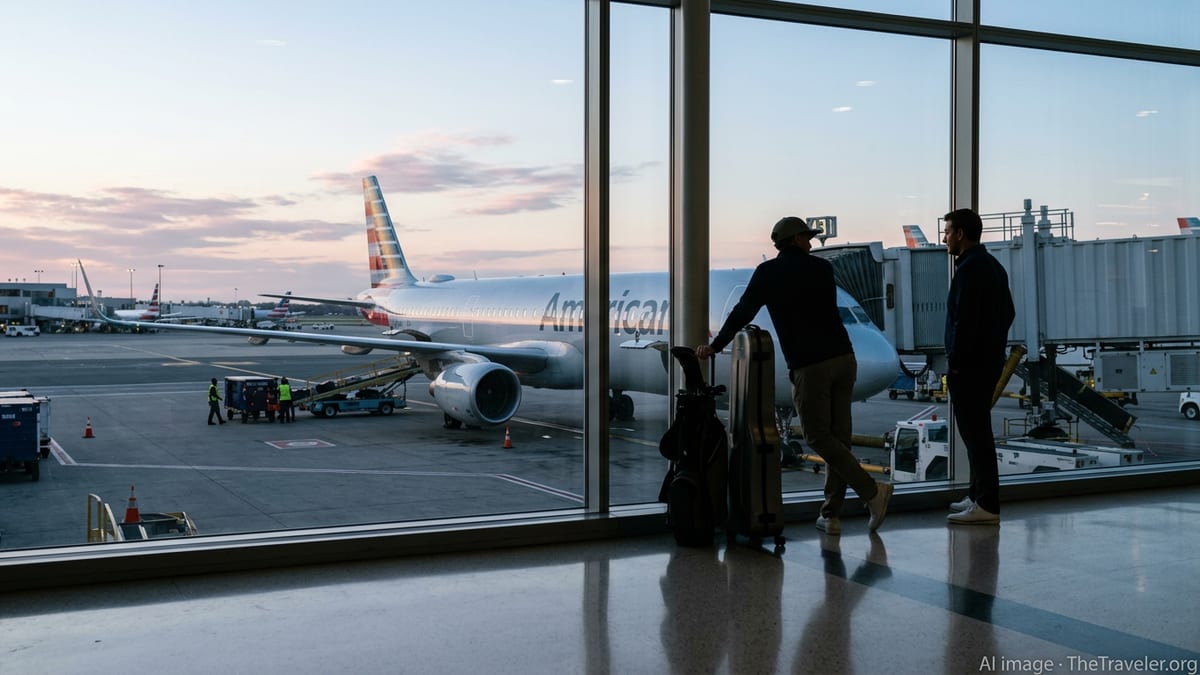
New Nonstop Link Between Berlin and Sarajevo Takes Off
The new Eurowings service connects Berlin Brandenburg Airport with Sarajevo International Airport on a nonstop basis, cutting travel times between the German and Bosnian capitals and reducing the need for transfers through other European hubs. Publicly available information from Berlin Brandenburg Airport indicates that the route launched in early May 2026 as part of Eurowings’ broader expansion from the German capital, with initial weekly flights on Saturdays and additional frequencies in the peak summer period.
Flight data services show that Eurowings is operating the Berlin–Sarajevo sector in around one hour and 55 minutes, positioning the route squarely in the short-haul city-break market. During July and August, schedules indicate that an extra weekly rotation on Thursdays will increase flexibility for both leisure and visiting-friends-and-relatives travelers, reflecting expectations of strong seasonal demand.
The connection restores a direct Berlin–Sarajevo link that had previously been served intermittently by other operators and often required passengers to route via Vienna, Frankfurt, or other European hubs. Market analysts note that nonstop capacity on this city pair has been limited in recent years, despite growing tourism to Bosnia and Herzegovina and a sizable Bosnian diaspora in Germany.
Airport and tourism board communications highlight the route’s symbolic importance as well as its commercial value, presenting it as both a practical transport link and a signal of renewed interest in Sarajevo as a city-break and gateway to the wider Balkans.
Lufthansa and Austrian Airlines Provide Hub Connectivity to the Balkans
Eurowings joins fellow Lufthansa Group carriers Lufthansa and Austrian Airlines in reinforcing Sarajevo’s access to the wider European network. Published route information shows that Lufthansa maintains services from several German airports, including Frankfurt, to Sarajevo, offering onward connections across Europe and beyond. In practice, this creates a multi-layered network in which Eurowings provides point-to-point links, while Lufthansa’s mainline operations channel transfer traffic through hub airports.
Austrian Airlines, also part of the Lufthansa Group, continues to route Berlin-originating travelers to Sarajevo via its Vienna hub. Booking platforms for Austrian Airlines list Berlin–Vienna–Sarajevo itineraries that complement the new nonstop option by adding frequency and schedule choice on days when a direct Berlin–Sarajevo flight may not operate or when travelers prefer a different time of day.
Industry observers describe this three-carrier presence as a strategic advantage for the Lufthansa Group in the Western Balkans. By combining Eurowings’ low-cost, point-to-point model with hub-and-spoke connectivity offered by Lufthansa and Austrian Airlines, the group can cater to diverse passenger segments, from price-sensitive leisure travelers to higher-yield connecting traffic heading onward to North America or Asia.
The result is a denser mesh of connections between Bosnia and Herzegovina and the European Union, making it easier for travelers from Sarajevo to reach secondary German cities and for residents of Germany to access both the Bosnian capital and smaller destinations beyond via regional ground transport.
Wizz Air’s Regional Footprint Underpins Competitive Fares
Alongside the Lufthansa Group, Wizz Air remains an influential player in Sarajevo’s broader network story, even as its route portfolio has evolved. Historical announcements and airport documents indicate that Wizz Air established a base in Sarajevo in 2021, initially launching a wave of new routes from the Bosnian capital to cities across Europe. Subsequent network adjustments led to the closure of the base and the withdrawal of several routes, reflecting the carrier’s highly flexible capacity deployment model.
Recent marketing materials and destination lists show that Wizz Air continues to count both Berlin and Sarajevo among its key markets, even if direct services between the two are not currently prominent in schedules. The airline’s broader role is to stimulate price competition on overlapping and nearby markets, affecting fares on indirectly competing itineraries that connect Germany with Bosnia and the surrounding region.
Travel industry analysts suggest that the presence of a large Central and Eastern European low-cost carrier, even without a like-for-like Berlin–Sarajevo route at present, helps keep pricing disciplined and encourages full-service groups such as Lufthansa to refine their product offering. For passengers, this translates into more aggressive promotions, ancillary options, and a wider range of departure points within a day’s travel of Sarajevo.
The interplay between Wizz Air’s agile network strategy and Eurowings’ new nonstop link reinforces Sarajevo’s profile on European route maps, with each carrier contributing in different ways to the overall competitiveness of air travel in and out of Bosnia and Herzegovina.
Tourism, Diaspora Travel, and Business Links Set to Benefit
Tourism boards and regional development agencies have long highlighted Sarajevo’s potential as a compact city destination, with a historic old town, mountain landscapes nearby, and cultural influences from both Central Europe and the Mediterranean. With Eurowings now operating a direct connection from Berlin, promotional campaigns are expected to place greater emphasis on short stays and weekend breaks aimed at the German market.
The new route is also significant for diaspora and visiting-friends-and-relatives traffic. Germany hosts one of the largest Bosnian communities in Western Europe, and travel demand between the two countries is known to be resilient across the economic cycle. Direct links from Berlin provide an alternative to established routes from Cologne, Frankfurt, and other German cities, distributing demand more evenly and offering greater convenience for those living in northern and eastern Germany.
Business travel could see a modest but meaningful uplift as well. Sarajevo’s growing technology, services, and conference sectors rely on reliable air links to European capitals in order to attract investors, partners, and participants. Nonstop access from Berlin, a major political and economic center, increases Sarajevo’s visibility in corporate travel programs and in the event-planning market.
Given the relatively short flight time, the route also enhances multi-destination tourism in the Balkans. Travelers may increasingly combine Sarajevo with other regional cities, using the capital as a starting point for onward journeys into neighboring countries by road or rail, a trend that local tour operators are likely to promote as connectivity improves.
Strategic Positioning of Sarajevo in the Western Balkans Network
The launch of Eurowings’ Berlin–Sarajevo operation highlights Sarajevo’s ambition to consolidate its role as a regional gateway in the Western Balkans. Recent years have seen the arrival and expansion of several low-cost and full-service carriers, as well as new routes to European capitals and holiday destinations, indicating growing confidence in the market.
Airport statistics and public statements point to steady growth in passenger volumes, driven by outbound leisure travel, inbound tourism, and the mobility of workers and students across Europe. The addition of a direct link from Berlin aligns with this trend by tying Sarajevo more closely into the European Union’s political and cultural center, at a time when regional integration and mobility are high on the policy agenda.
From a network-planning perspective, the route strengthens north–south traffic flows across the continent, complementing east–west corridors that already connect Sarajevo with Vienna and other hubs. If sustained, this could encourage further investment in airport infrastructure, ground transport links, and tourism services aimed at higher-spending visitors.
For travelers, the immediate impact is straightforward: fewer connections, shorter total journey times, and more choice when flying between Germany and Bosnia and Herzegovina. For airlines and airports, the Berlin–Sarajevo link is another step in the gradual reshaping of air connectivity across the Balkans, with Eurowings, Lufthansa, Austrian Airlines, and Wizz Air all playing distinct roles in a more interconnected regional market.