


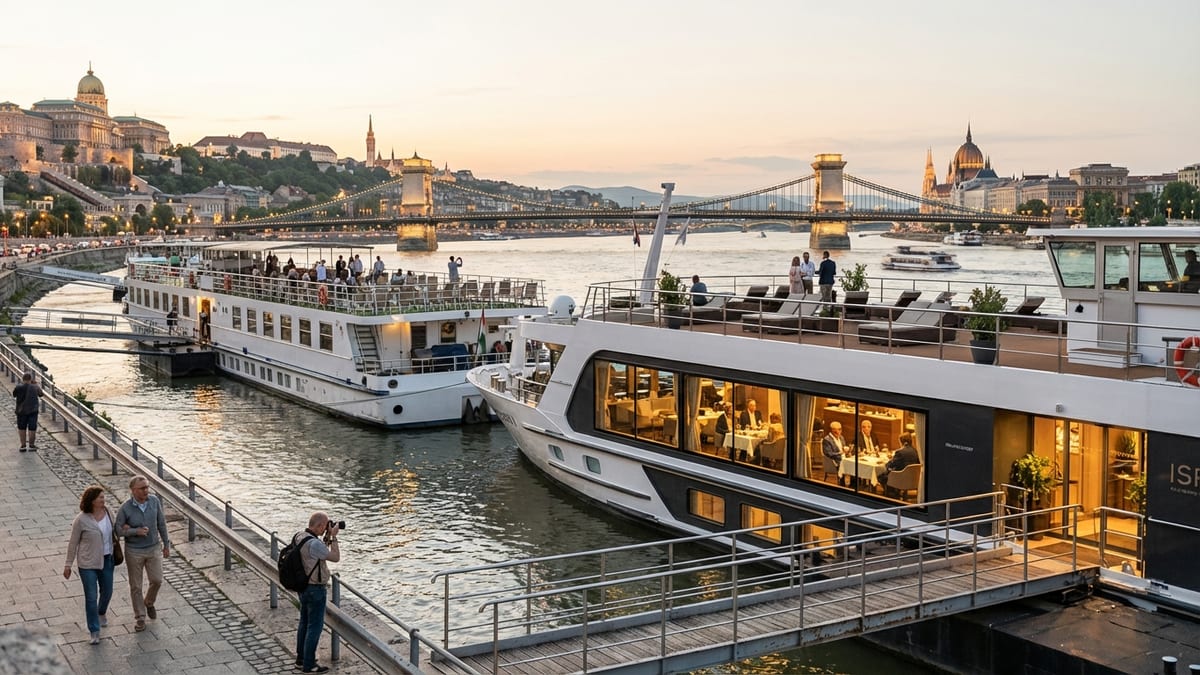
The Danube has long captured the imagination of travelers, winding from Germany’s Black Forest to the Black Sea past storybook towns, imperial capitals and terraced vineyards. In recent years it has also become one of the world’s most competitive river cruise corridors, with a spectrum of experiences that ranges from sharply priced, no-fuss sailings to lavish floating boutique hotels.
For many travelers considering a Danube voyage in 2026, the most pressing question is not which itinerary to choose but whether a luxury or budget cruise makes the most sense for their style and wallet. The answer is rarely simple, because the gap between headline price and true value can be significant on this river.
What “Luxury” and “Budget” Really Mean on the Danube
On the Danube, the labels “luxury” and “budget” are more fluid than they might be on big ocean ships. Virtually all Danube ships are constrained by the same locks and bridges, which dictate their length, width and height. Cabins will be compact by resort standards and facilities broadly similar: a lounge, restaurant, sundeck, sometimes a small gym or spa. What truly separates tiers is the ratio of inclusions to extras, the level of service and the overall atmosphere on board rather than sheer size or glitz.
Budget-oriented Danube cruises typically emphasize attractive base fares, with rates that can start around the low-to-mid 2,000 dollar range per person for a seven-night sailing in a standard cabin if booked well in advance. At this level you can expect comfortable but straightforward décor, solid food, and at least one included excursion in most ports. Beverages, gratuities, premium tours and airport transfers are often either à la carte or bundled into add-on packages, which is how the cruise line keeps the entry price low and transparent.
Luxury lines on the Danube, by contrast, commonly quote higher per-night prices that can easily run from 600 to 1,000 dollars or more per person per day once you factor in a balcony or suite. In return, these brands position themselves as near all inclusive. Wine, beer and soft drinks with meals are standard at most price points, but in the true luxury segment you may also see open bars, full-day small-group excursions included in every port, high-end airport transfers, gratuities built into the fare and more personalized service with higher staff-to-guest ratios. The look and feel aboard tends toward boutique hotel styling and gourmet, regionally driven cuisine.
There is also a substantial premium or “upper midrange” category that muddies the simple luxury versus budget divide. Lines in this band often price well below the highest-end ships yet include more than the bare minimum, such as wine and beer with lunch and dinner, Wi-Fi, and at least one guided tour per stop. For many travelers, particularly from North America, this middle ground represents the best compromise between cost and comfort on the Danube.
The onboard experience varies depending on the route, which is why reviewing the main Danube cruise itineraries is essential.
How Costs Compare: Sticker Price vs True Per Diem
Comparing river cruise prices can be tricky because different brands package inclusions differently. Travel industry analyses of Danube pricing for 2026 suggest that weeklong cruises can range from roughly 2,000 dollars per person at the most economical end of the market to more than 10,000 dollars per person on ultra-inclusive, suite-based itineraries. A more useful benchmark is the true per diem, which factors in base fare, mandatory charges and typical onboard spending divided by the number of cruise nights.
Budget-focused lines and sharp promotions can sometimes deliver a Danube cruise for an estimated 300 to 400 dollars per person per day, particularly in shoulder months like April or late October. At that level, you will almost certainly pay separately for gratuities, many alcoholic drinks and a portion of shore excursions. Once those extras are accounted for, realistic daily costs can creep closer to the 400 to 450 dollar range, though savvy travelers can manage them carefully by sticking to included city walks and house wines at meals.
Premium and luxury Danube itineraries more typically sit in the 500 to 900 dollar per person per day band, occasionally exceeding 1,000 dollars on the most exclusive brands and itineraries. The same analyses show that lines at the upper end of the spectrum tend to have higher headline fares but lower incidentals because they fold most expected costs into the package. Beverages beyond basic wine and beer, higher-end dining, all-day touring and gratuities are often included, softening the blow of the initial sticker shock once you add up what a budget sailing might cost with similar activities.
The most important cost distinction is that in river cruising, you tend to get what you pay for in terms of inclusions and crowding rather than access to destinations. Nearly all ships traverse similar stretches between marquee stops like Budapest, Vienna and Passau. That means price is primarily buying you space, service and convenience. A traveler who drinks little, prefers exploring independently and does not mind basic cabins may never realize the full value of a luxury fare. Someone who would otherwise book private tours, drink premium wines and hates signing chits for every coffee or cocktail will likely find a top-tier line more economical than it first appears.
Cost aside, many travelers still ask whether Danube cruises are worth it for a first river cruise experience.
Cabins, Space and Onboard Comfort
Because Danube vessels are constrained by lock dimensions, lines compete not by building bigger ships but by rethinking how they allocate space. Budget ships typically maximize capacity, fitting in as many standard cabins as possible. These rooms may start around 120 to 160 square feet for entry-level categories on certain fleets, with fixed windows just above the waterline. They are efficient and comfortable but basic, with compact bathrooms, limited seating and modest storage.
Premium and luxury lines invest more square footage per guest. Standard cabins on these ships often begin around 170 to 190 square feet, and many offer various balcony concepts, from traditional step-out verandas to so-called French balconies with full-height sliding glass doors. Suites can exceed 250 to 300 square feet and may include separate living areas, larger bathrooms with double sinks or bathtubs, and butler service on select brands. A few outliers operate double-width ships on the Danube that feel noticeably roomier and permit larger wellness facilities and multiple dining venues.
In day-to-day experience, these design choices matter most on longer sailings and for travelers who plan to spend significant time relaxing in their cabin. On a three or four night sampler, many guests are content with a waterline window and functional layout. On a two-week voyage, the ability to sit on a balcony with coffee while drifting past vineyards, or to unpack into a proper walk-in wardrobe, can significantly enhance the sense of indulgence. Shared spaces also follow this pattern. Luxury lines typically offer more lounge seating per passenger, better soundproofing, libraries or quiet corners, and frequently upgraded sun deck furnishings.
That said, even modest Danube ships are generally far more intimate than mainstream ocean megaships. With typical capacities hovering around 150 to 190 guests, river cruisers on a budget line still experience a convivial, small-ship environment. For many, that intimacy is the real luxury, regardless of how ornate or minimalist the décor may be.
Dining, Drinks and Shore Excursions
Cuisine is one of the key differentiators between luxury and budget experiences on the Danube. At the value end, passengers can expect well-prepared, crowd-pleasing buffets at breakfast and lunch, with plated dinners focused on hearty European classics. The aim is to satisfy a broad range of palates efficiently. Local specialties like Hungarian goulash or Austrian schnitzel will appear, but multi-course tasting menus, wine pairings and extensive à la carte choices are less common.
Premium and luxury lines treat food as a core part of the brand. Menus highlight seasonal ingredients and regional dishes, often with a stronger farm-to-table ethos. Wine programs are typically more ambitious, featuring local Austrian Grüner Veltliner, German Riesling or Hungarian varietals curated by onboard sommeliers. Some ships offer specialty restaurants with limited seating or chef’s table experiences at no extra cost. This attention to culinary detail can be especially meaningful on the Danube, where food traditions change subtly from country to country along the route.
Beverage policies also play a major role in total trip cost. On many budget and midrange lines, house wine, beer and soft drinks are included with lunch and dinner, while bar drinks and premium labels carry a charge. Others sell drinks packages that can add a few hundred dollars per person over a week. Luxury lines are more likely to offer complimentary drinks throughout the day, more generous pours of higher-end wines and fewer upcharge items. Travelers who enjoy regular cocktails, afternoon cappuccinos and late-night digestifs may find that this all-in approach prevents unpleasant surprises on the final bill.
On shore, almost every Danube cruise includes at least one guided walk or coach tour in each major port. Where the tiers diverge is in group size, variety and intensity. Budget itineraries often limit themselves to city highlights over a few hours, with optional extra-cost tours for more niche interests. Luxury brands tend to offer a menu of included excursions, from leisurely panoramic drives to more active hikes, bike rides and cooking classes, with smaller groups and higher-caliber local guides. For travelers who prefer a curated, deeply guided experience, this enrichment can justify a higher fare. Independent-minded guests, by contrast, may prefer a discount cruise that gives them a basic orientation and then leaves them free to wander on their own.
Seasonality, Water Levels and When to Sail
Choosing between luxury and budget on the Danube is not only about the ship. Timing matters, especially as climate patterns bring more volatility to European river levels. The main season for Danube cruises typically runs from late March or early April through about November, with Christmas market sailings operating on select stretches of the river into December. Peak traffic comes in the warm months of June, July and August, when school holidays and long evenings make the river busiest and most expensive.
Shoulder seasons in April, May, September and early October often provide the best compromise between price and conditions. Temperatures are comfortable, crowds in ports like Vienna and Budapest are thinner than in high summer, and many lines run promotions that lower fares by 10 to 30 percent compared with midsummer departures. For budget-conscious travelers, booking a lower-priced line in a value month can deliver outstanding per-day savings. Luxury travelers also benefit, since top-tier brands commonly keep their inclusions steady while quietly trimming fares in these windows.
Water levels are a separate but related consideration. Industry guidance notes that Danube cruises are more prone to high water in spring, particularly from March through May, when snowmelt and rain can swell the river. Low water is more common in late summer and early fall, notably July through September, as heatwaves and drought reduce depth. Severe high or low water can force lines to bus guests around certain stretches or swap ships mid-journey. No cruise line is immune, regardless of price, but more expensive brands may have more flexible contingency plans, stronger communication and staff on the ground to smooth disruptions.
In recent summers, low water on European rivers has occasionally made headlines, affecting cargo shipping and, by extension, passenger traffic. For Danube cruisers, this reality argues for a mindset of flexibility and for careful reading of each line’s water level policy. Luxury does not buy certainty, but it can buy better handling when nature does not cooperate. Travelers on a tight budget or fixed schedule might lean toward historically more stable months such as late May, June and early October, when both high and low water extremes are statistically somewhat less frequent, albeit never impossible.
Who Should Choose Luxury vs Budget?
Matching the right type of Danube cruise to the right traveler is ultimately more about psychology and priorities than income alone. Luxury options tend to suit guests who value convenience over control, detest surprise charges and see travel as a chance to be thoroughly looked after. These travelers are often celebrating a milestone, traveling with limited vacation time, or coming from a background of staying in high-end hotels and expect a comparable level of polish. For them, an extra several hundred dollars per day can be justified by having every detail handled and every indulgence close at hand.
Budget and value-focused cruises, on the other hand, serve travelers who are willing to trade some frills for a lower entry cost. This can include younger professionals taking their first European river trip, multigenerational families booking multiple cabins, or seasoned independent travelers who do not feel the need for guided tours in every city. They might be perfectly content with a simpler cabin if it means more money left over for pre- or post-cruise stays in Prague, Munich or Transylvania, or for future trips entirely.
There is also a generational shift underway on the Danube, with more active travelers demanding bikes on board, wellness programming and later-evening entertainment. Some premium lines cater strongly to this segment without positioning themselves at the ultra-luxury level, offering a design-forward product with included excursions and decent drinks policies but at prices still below the top tier. These “modern premium” ships can be a sweet spot for couples or small groups who want style and comfort but can live without the most rarefied amenities.
Personality matters too. Travelers who dislike formality or who worry about feeling out of place in a hushed, high-end environment may be happier on a friendly, more casual ship where jeans at dinner raise no eyebrows. Those who relish dressing for the captain’s welcome, chatting with experienced concierges and comparing notes on fine wines with fellow guests will likely find the luxury atmosphere invigorating rather than stiff. The same Danube views flow past either way; the difference lies in how you want to experience life on board between ports.
Strategies to Maximize Value at Any Budget
Regardless of which tier you choose, there are clear strategies to stretch your money on a Danube cruise. First, be realistic about what you will actually use. If you never drink spirits, do not book a sailing solely because it includes open bar, unless other aspects also appeal. If you prefer wandering cities with a guidebook, count the value of included excursions conservatively. Run the numbers on a budget cruise plus add-ons versus a more inclusive premium option, line by line, rather than simply comparing brochure fares.
Second, consider cabin category carefully. Upgrading from a waterline window to a French balcony can cost a four-figure sum per couple on some sailings. On an itinerary with many long days in port, you may spend most of your waking hours ashore or in public spaces, making that balcony a nice but underused luxury. On more scenic routes with extended daytime sailing through the Wachau Valley or along the Iron Gates, or on longer voyages, that investment may feel more worthwhile. Booking the smallest cabin on the best ship you can afford is a time-honored strategy that often applies on the Danube as well.
Third, timing and flexibility can unlock substantial savings. Shoulder-season sailings, last-minute promotions when capacity remains, and early booking offers a year or more in advance all feature regularly on Danube routes. Travel advisors and specialist agencies often maintain up-to-date grids of per-diem costs by line and season, helping you spot when a luxury sailing dips into premium pricing territory or when a midrange line is charging luxury-like rates during prime weeks. Keeping an open mind about direction of travel, embarkation port and exact dates widens your options.
Finally, remember that airfares, pre- and post-cruise stays, and travel insurance can collectively rival or exceed the cost of the cruise itself, especially for long-haul travelers from North America or Asia. Some luxury and premium lines offer air-inclusive promotions or business-class upgrades that materially change the value equation. Similarly, a keenly priced budget cruise may leave room in the budget for several nights in a central Budapest or Vienna hotel, extending the experience beyond the river. Think of the entire trip ecosystem rather than the cruise in isolation when deciding between luxury and budget.
The Takeaway
On the Danube, the choice between luxury and budget cruising is less a binary verdict than a spectrum of possibilities. The river itself, with its Baroque monasteries, vine-draped hillsides and luminous capital cities, delivers unforgettable scenery whether viewed from a suite with butler service or a compact cabin with a picture window. What changes with price is how curated, seamless and indulgent your days become between those views.
Luxury makes particular sense for travelers who value inclusivity over penny counting, who enjoy fine dining and elevated service, and who want a trip that feels like a special occasion from the moment they are met at the airport. Budget and value cruises are ideal for those who see the ship primarily as a comfortable platform for exploration, who prefer to design their own days ashore and who would rather stretch their travel funds over more journeys than concentrate them into one ultra-luxe week.
For many, the sweet spot lies in the middle: a well-reviewed premium or contemporary line in a smart season, paired with a carefully chosen cabin and realistic expectations about what is and is not included. With clear-eyed budgeting and a good grasp of your own travel style, the Danube can be tailored into either an affordable European sampler or an indulgent, all-inclusive escape. The key is to decide what kind of story you want this legendary river to tell for you, then choose the ship that best fits that narrative.
FAQ
Q1. Are the actual routes different between luxury and budget Danube cruises?
In most cases, no. Both luxury and budget lines tend to follow similar core routes between cities such as Budapest, Vienna and Passau or Regensburg, with only minor variations in smaller ports of call. The difference lies more in the onboard experience, inclusions and excursion style than in dramatically different itineraries.
Q2. How much should I realistically budget per person per day for a Danube cruise?
As a rule of thumb, budget-conscious travelers can expect a realistic total of around 350 to 450 dollars per person per day once extras are added, while premium and luxury guests often fall between 600 and 900 dollars per person per day. These figures exclude international air but include typical spending on gratuities, drinks and a reasonable number of excursions.
Q3. Is it worth paying extra for a balcony cabin on the Danube?
It depends on your habits and itinerary. If you love private outdoor space, expect significant daytime scenic sailing and plan to spend quiet time in your cabin, a balcony can enhance your trip. If you are mostly off the ship during daylight or happy on the sun deck, a lower-priced window cabin can free up funds for other experiences without significantly diminishing your enjoyment.
Q4. Do luxury Danube cruises handle disruptions better than budget lines?
All lines are subject to the same river conditions, but higher-end brands typically have more resources for contingency arrangements, such as additional staff to coordinate buses, clearer communication and sometimes more generous compensation policies. That said, policies vary by company, so it is important to review terms and ask specific questions before booking.
Q5. Are children welcome on Danube river cruises?
Some lines actively welcome families with interconnecting cabins and school holiday programming, while others position themselves toward adults and may have minimum age limits. Luxury brands sometimes attract older demographics and a quieter ambience, though there are exceptions. If traveling with children, it is wise to choose a line and sailing explicitly marketed as family-friendly rather than assuming all ships will be suitable.
Q6. How far in advance should I book a Danube cruise to get the best value?
For peak summer and popular Christmas market sailings, booking 9 to 12 months in advance is common, and early booking promotions can be attractive. For shoulder-season departures in April, May, September or October, six to nine months is often sufficient, and occasional last-minute deals may appear if space remains. Truly flexible travelers willing to accept limited cabin choice sometimes secure bargains closer to departure.
Q7. What hidden costs catch first-time Danube cruisers by surprise?
Common surprises include gratuities, which can total well over 100 dollars per person on a weeklong cruise if not included, as well as optional excursions, premium drinks, laundry and pre- or post-cruise transfers. Carefully reading the list of inclusions and asking for a sample onboard price list from the line or a travel advisor can help avoid unexpected charges.
Q8. Is Wi-Fi generally included on both luxury and budget Danube cruises?
Most modern Danube ships now offer Wi-Fi, and many lines include basic access in the fare across all tiers. Speeds may slow while the ship is moving or in more rural stretches. Some budget lines still charge for higher-bandwidth packages, while luxury lines are more likely to roll unlimited or faster service into their standard offering.
Q9. Can I explore ports independently on a luxury cruise, or are excursions mandatory?
Excursions are always optional. Even on luxury sailings where multiple guided tours are included in the fare, guests are free to disembark and explore on their own, provided they return to the ship by the published time. Independent exploration can be a good way to personalize your experience and, on more inclusive lines, effectively reallocate the value of an excursion you choose not to use.
Q10. For a first-time river cruiser, is it safer to start with a budget or a luxury Danube trip?
It depends on your risk tolerance and expectations. Budget or midrange cruises allow you to test whether you enjoy the rhythm of river travel without committing to a very high fare, but they may highlight trade-offs in service or inclusions. A well-chosen premium or entry-level luxury sailing can showcase the best of the experience from the outset and set a high bar, though at a higher cost. Reflect honestly on what you value in travel, then choose the tier that aligns most closely with that profile for your first voyage.