

Vienna is a city that rewards lingering, but some of Austria’s most memorable experiences start where the tram lines end. Efficient trains, scenic highways and compact historic towns make it remarkably easy to swap coffeehouses for castles, vineyards or Alpine lakes for a day. Whether you are craving wine-country views along the Danube, Mozart heritage in Salzburg, or the mirror-still waters of Hallstatt, Austria’s rail network and well-organised tours keep logistics straightforward. With a bit of planning and an early start, you can see a surprising amount of the country without ever changing hotels.
How to Plan Day Trips Across Austria
Austria’s compact size and dense rail network mean many of the country’s most famous sights are reachable from Vienna or another base in a single long day. High-speed Railjet services connect major cities such as Vienna, Salzburg, Linz, Innsbruck and Graz in roughly two to three hours, while regional trains cover shorter hops to wine regions, spa towns and lakes. For most routes you do not need to book weeks ahead, but purchasing tickets online or through the ÖBB app often secures modest savings and seat reservations on busy departures.
When planning, balance ambition with travel time. Destinations like Melk, Krems, Bratislava and Baden work well as relaxed outings with one to two hours on the train each way. Longer hauls to Salzburg, Hallstatt or Innsbruck take closer to three hours one way and are best treated as full days with early departures and late returns, or even as overnight excursions if your schedule allows. Timetables are frequent on mainlines, but smaller branch lines and lake districts may have limited evening services, so it is wise to check the last return train before you set out.
Budget-conscious travellers can take advantage of regional day passes and group tickets, which allow unlimited use of slower regional trains within a defined area. For couples or small groups, these passes can be significantly cheaper than buying individual point-to-point tickets, especially if you are stringing together several short hops in one day. Rental cars remain an option in Alpine and lake regions where buses may be infrequent, but parking in postcard-pretty villages can be tight and fuel, tolls and rental fees add up quickly compared with public transport.
Season and weather shape the experience as much as the destination. From May to October, river cruises, mountain cable cars and outdoor terraces run at full swing, while winter replaces them with Advent markets, thermal spas and snow-covered peaks. Shoulder seasons often bring fewer crowds and lower prices, but some lake ferries, smaller museums and panoramic lifts reduce hours or close entirely. Always cross-check opening times for abbeys, castles and mountain attractions, particularly outside summer.
Wachau Valley and Melk Abbey: Danube Wine Country
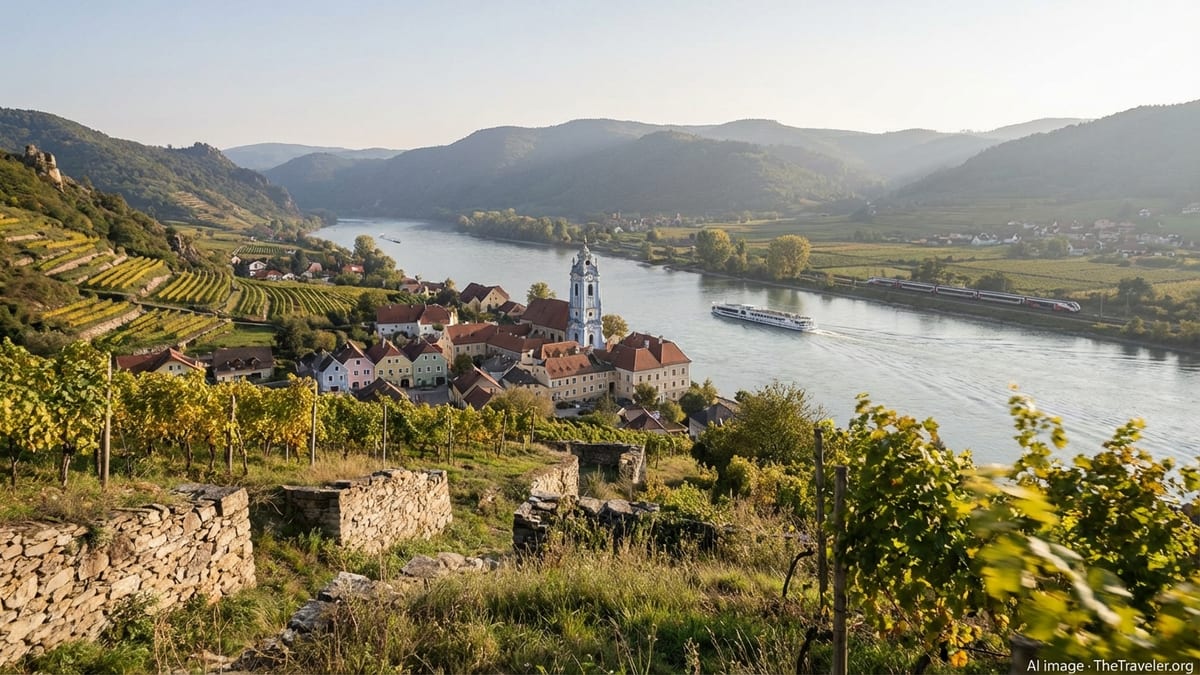
The Wachau Valley is one of the classic day trips from Vienna, prized for its steep vineyard slopes, apricot orchards and pastel villages strung along a particularly scenic bend of the Danube. The highlight is Melk Abbey, a vast baroque complex set high above the river with sweeping views, frescoed halls and one of the most photogenic libraries in Europe. Many visitors combine the abbey with a cruise or bike ride through the valley, stopping in wine villages such as Dürnstein or Spitz for tastings of the region’s signature Grüner Veltliner and Riesling.
Getting there from Vienna is straightforward. Direct trains run from Vienna’s main stations to the town of Melk in around one hour, with onward buses or boats connecting through the valley. Another popular option is to travel by train to Krems at the eastern end of the Wachau, then cruise downstream to Melk and return by rail, creating a very full but rewarding loop. In summer, longer daylight hours and frequent river services make it easier to linger in villages and still catch a comfortable train back to the city.
The Wachau is best experienced unrushed, so aim for a morning departure. If you plan to tour Melk Abbey, allow at least two hours for the museum route, church and gardens, plus additional time for the town itself. Many visitors then continue to Dürnstein, where castle ruins overlook the river and narrow cobbled lanes are packed with wine taverns and boutiques specialising in apricot products. Even in high season, it is often possible to find quieter paths by walking just a few minutes away from the main streets.
Outside peak months, river cruises operate less frequently or pause completely, but the valley remains atmospheric. Autumn brings golden vines and harvest festivals, while winter is quiet and contemplative, with mist rising from the Danube and abbey interiors offering warmth. If you are travelling in the off-season, rely more on trains and buses, check schedules carefully, and consider centring your day on Melk and one additional village rather than trying to cover the whole valley.
Bratislava: A Second Capital in a Single Day
Few cities in Europe sit as close together as Vienna and Bratislava. The Slovak capital lies roughly an hour away by direct train, making it an easy half-day or full-day escape that still allows you to sleep in your Vienna hotel. Bratislava’s compact Old Town, hilltop castle and riverside promenades pack plenty of variety into a walkable area, and the contrast with Vienna’s imperial grandeur is striking. Here, medieval alleys rub shoulders with Central European cafes and remnants of the twentieth century’s more turbulent chapters.
Frequent trains link Vienna’s central stations with Bratislava’s main and secondary stations, with journey times usually under 70 minutes. Tickets are typically inexpensive and flexible, and you can often decide on a whim to head across the border, provided you carry the appropriate identification for a Schengen crossing. River boats operate seasonally, offering a scenic but slower alternative via the Danube, and occasionally there are coach services that bundle transport with guided walking tours.
Once in Bratislava, most visitors head straight for the Old Town, where pastel facades, baroque churches and small courtyards frame cafés and wine bars. A short uphill walk leads to Bratislava Castle, whose terraces overlook both the historic core and the modern high-rises on the far bank of the river. The city is small enough that you can visit the castle, stroll the Old Town, pause for a long lunch of Slovak specialities and still be back in Vienna for an evening concert or dinner.
Because this is an international day trip, check public-holiday calendars on both sides of the border and verify current entry requirements before you go. In peak summer and on weekends, trains and boats can be busy with day trippers, so buying tickets earlier in the day or reserving seats where possible adds peace of mind. In winter, Bratislava’s Christmas markets and cosy cafés make the trip particularly atmospheric, provided you dress for wind along the riverfront.
Salzburg and the Salzkammergut: Mozart, Mountains and Lakes
Salzburg is one of Austria’s star attractions and a classic, if long, day trip from Vienna. High-speed trains typically cover the distance in roughly two and a half hours, dropping you within walking distance of the baroque Old Town, the Hohensalzburg Fortress and the riverside promenades that frame the city’s postcard views. You will not see every sight in a single day, but you can comfortably wander Getreidegasse, visit Mozart-related landmarks, ride the funicular up to the fortress and still have time for a leisurely meal in a historic inn.
Early departures from Vienna maximise your time in Salzburg’s lanes before day-tripper crowds build up. Railjet and similar high-speed services offer reserved seating, onboard Wi-Fi and café cars, making the journey itself part of the pleasure, especially as the landscape turns hillier the farther west you travel. Costs vary depending on how far in advance you book and whether you opt for flexible or discounted fares, but advance-purchase deals are common outside the very busiest weeks.
For travellers who prioritise scenery over city sightseeing, the nearby lake region of Salzkammergut tempts many visitors to stretch their Salzburg day trip. Destinations such as St. Gilgen, St. Wolfgang and Fuschl am See sit along turquoise lakes backed by gentle Alpine peaks, accessible by a mix of trains and buses from Salzburg. Each lakeside village offers waterside promenades, boat rides and walking trails, and in summer the region becomes a playground for swimming, hiking and cycling.
While it is technically possible to visit both Salzburg and an outlying lake village or Hallstatt in a single day from Vienna, the schedule leaves little room for spontaneity. If you dream of exploring the Salzkammergut more deeply, consider staying at least one night in Salzburg or one of the lakeside towns. This lets you enjoy early-morning calm and evening light on the water, when most day-trip crowds have already returned to the cities.
Hallstatt and Alpine Austria: Iconic Views with Careful Timing
Hallstatt, clinging to a narrow ledge between cliff and lake, is one of Austria’s most photographed villages. Timbered houses, church spires and boathouses reflected in the water create a scene that feels lifted from a storybook. The surrounding Dachstein Salzkammergut region adds cable cars, ice caves and spectacular viewpoints to the mix, turning the area into a magnet for visitors in all seasons. From Vienna, however, reaching Hallstatt in a single day demands careful planning and an appetite for a long travel day.
Typical rail routes involve travelling from Vienna toward the Salzkammergut and changing onto a regional line that delivers you to Hallstatt’s small station on the far side of the lake. From there, a shuttle boat timed to train arrivals carries passengers across to the village itself, turning the last leg into a scenic introduction. Combined journey times often run close to three and a half to four hours one way, depending on connections. That makes Hallstatt a feasible but intensive day trip from Vienna, and many travellers opt to base themselves overnight in Salzburg, Bad Ischl or a nearby lake town instead, using those hubs to shorten the final approach.
Once in Hallstatt, the compact historic core can be explored on foot in a couple of hours, but most visitors stay longer to ride the funicular to the salt mines and viewing platforms above the village. These elevated terraces provide the classic postcard panoramas and a welcome sense of space when streets below become crowded. In peak summer, midday brings the highest density of tour groups, so arriving early or lingering into the late afternoon creates a more relaxed experience and gentler light for photography.
If you decide to attempt Hallstatt as a true day trip from Vienna, build in generous buffers between connections and know the times of your last boat and train back toward the capital. Winter conditions can affect lake services and mountain facilities, and some attractions operate on reduced hours outside the main May to October window. An alternative for those seeking Alpine atmosphere with gentler logistics is to visit closer mountain towns such as Gmunden or Mariazell from regional hubs, where travel times are shorter and crowds thinner.
Graz, Innsbruck and Other City Escapes
Beyond Salzburg and Bratislava, Austria’s other regional capitals make rewarding day trips or overnights from Vienna, showcasing different sides of the country. Graz to the south is a favourite for architecture and food, mixing a UNESCO-listed Old Town of Renaissance and baroque facades with contemporary landmarks such as its bulbous modern art museum. Trains from Vienna generally take around two and a half hours, and once there you can ride a funicular or climb to the Schlossberg for sweeping views over terracotta rooftops before drifting through cobbled lanes and café terraces below.
Innsbruck, framed by peaks of the Nordkette range, sits farther west and is better suited to an overnight stay, but determined travellers sometimes tackle it as a very long day from Vienna. The journey west by high-speed train typically takes around four and a half hours, threading through valleys and mountain passes that mark the transition from rolling foothills to true Alpine terrain. Once in Innsbruck, a walk through the historic centre reveals arcaded streets, the famed Golden Roof and baroque churches, while cable cars whisk you up to panoramic viewpoints in less than an hour.
Within easier range lie smaller yet characterful cities such as Linz and Klagenfurt. Linz, roughly one and a half to two hours from Vienna by train, pairs a revitalised Danube waterfront with a handsome central square and strong museum scene, from contemporary art to interactive technology exhibits. Klagenfurt, closer to the Slovenian and Italian borders, sits on the shores of Lake Wörthersee and has become known for summer swimming, lakeside promenades and relaxed Mediterranean-tinged evenings. With new rail links steadily improving journey times, these cities are becoming more attractive as side trips for travellers who have already ticked off the major highlights.
When choosing among Austria’s secondary cities, think about your priorities. If you favour food and design, Graz’s markets and modern architecture stand out. Tech and contemporary culture lean toward Linz, while mountain views define Innsbruck and lakeside lounging shapes Klagenfurt. Each can be reached by straightforward rail connections from Vienna or another base, and all have compact historic centres that can be explored largely on foot, making them manageable even on a tightly scheduled day.
Closer Escapes from Vienna: Spas, Vineyards and Historic Towns
Not every day trip needs to cross half the country. Vienna is ringed by spa towns, wine villages and modest historic centres that make excellent low-stress excursions. Baden bei Wien, a traditional spa resort less than an hour away by regional train or tram-like Badner Bahn, has been drawing visitors since Habsburg times with its thermal baths, rose gardens and elegant villas. A day here might alternate between soaking in warm mineral pools, strolling leafy parks and lingering in a café with a slice of cake.
Wine lovers gravitate to the hills around Vienna itself, particularly regions such as the Wienerwald and the villages of the Thermenregion to the south. Here, family-run wine taverns known as Heuriger serve their own vintages alongside hearty, unfussy food, often in courtyard gardens or under vine-draped pergolas. Though some spots are reachable by urban tram or bus, regional trains open up a wider range of villages where it still feels you have stepped well beyond the city limits, even if you can be back in central Vienna within an hour.
To the north, hilltop towns and castle ruins line the Danube upstream from the Wachau, while to the east the flat, lake-dotted landscapes of Burgenland begin. From Vienna, trains and buses put destinations such as Eisenstadt, with its palace linked to the Esterházy family and composer Joseph Haydn, within easy reach. Farther afield, Neusiedler See offers a different kind of waterside escape, with reed-fringed shores popular for cycling, birdwatching and sailing rather than mountain views.
For these shorter trips, spontaneity is easier. You can often decide over breakfast to hop on a mid-morning train, knowing that services run regularly and attractions rarely require advance booking outside a few festival periods. Even so, checking for special events, reduced winter hours or maintenance closures can save disappointment, and it is always wise to plan a safe window for your return, especially if you are relying on the last regional train of the evening.
The Takeaway
Austria’s great advantage for travellers is that its headline destinations sit within realistic reach of one another, stitched together by efficient trains, organised tours and well-maintained roads. From Vienna, you can wake up amid baroque palaces and end the afternoon in terraced vineyards, an Alpine valley or a neighbouring capital. With thoughtful planning and an eye on travel times, even brief visits can include a surprising range of landscapes and cultural experiences.
The key is to match your ambitions to your rhythm. Choose one or two long day trips such as Salzburg or the Wachau, then balance them with closer, slower outings to spa towns or wine villages. Whenever possible, build in time for detours and unplanned pauses, whether that means a second glass of Grüner Veltliner overlooking the Danube or a sunset walk by a mountain lake. In a country as compact and well-connected as Austria, the journey is rarely just a means to an end. It is part of the pleasure, and often where the most unexpected memories are made.
FAQ
Q1. Can I see Salzburg as a day trip from Vienna, or should I stay overnight?
It is feasible to visit Salzburg on a long day trip from Vienna, with high-speed trains taking around two and a half hours each way, but an overnight stay allows a more relaxed pace and time for evening concerts or nearby lake districts.
Q2. Do I need to book train tickets for Austrian day trips in advance?
For short regional journeys you can usually buy tickets on the day, but advance online purchases often provide small discounts and seat reservations, which are useful on popular routes and peak-season departures.
Q3. Is Hallstatt realistic as a day trip from Vienna?
Hallstatt is possible as a very long day, with combined train and boat journeys often close to four hours each way, but many travellers find it more enjoyable when approached from a nearer base such as Salzburg or Bad Ischl with at least one overnight stay.
Q4. What is the easiest day trip from Vienna for wine tasting?
The Wachau Valley and the villages of the Thermenregion south of Vienna are among the easiest choices, with frequent regional trains and local buses connecting vineyards, small towns and traditional wine taverns within roughly one to two hours of the capital.
Q5. Are organised tours worth it for places like the Wachau or Bratislava?
Organised tours can be worthwhile if you prefer door-to-door transport, commentary and bundled admissions, but confident travellers may find it just as easy and often cheaper to use public transport and explore independently, especially on routes with very frequent trains.
Q6. Which season is best for day trips from Vienna?
Late spring through early autumn offers the widest range of activities, from river cruises and cable cars to lake swimming and outdoor dining, while winter brings Christmas markets, thermal spas and snow-covered mountain views but sometimes reduced opening hours for certain attractions.
Q7. How early should I start a day trip in Austria?
Leaving before 9 a.m. is sensible for most longer excursions, as it maximises sightseeing time at your destination, helps avoid the busiest late-morning trains and still leaves you with flexible options for returning in the evening.
Q8. Are day trips in Austria suitable for families with children?
Many destinations work well for families, particularly the Wachau’s boat rides, Salzburg’s fortress and museums, and lake districts with gentle hiking trails, though very long travel days to far-flung Alpine villages can be tiring for younger children.
Q9. Is it better to rent a car or rely on trains for Austrian day trips?
Trains are usually the easier and more economical choice for major cities and popular regions, while a rental car can be useful in more remote Alpine or lake areas where public transport is infrequent, provided you are comfortable with mountain driving and parking logistics.
Q10. Can I visit multiple destinations in one day, such as Melk and Dürnstein?
Combining close-by stops is common, for example pairing Melk Abbey with one or two Wachau villages, but it is wise to limit yourself to a small cluster in the same region so travel time does not eat into your day and you can enjoy each place without rushing.