


More news on this day
Ethiopia’s planned Bishoftu International Airport, a $12.5 billion mega hub east of Addis Ababa, has rapidly become a focal point of strategic competition as the United States and China vie to shape the future of African aviation and infrastructure finance.
Get the latest news straight to your inbox!
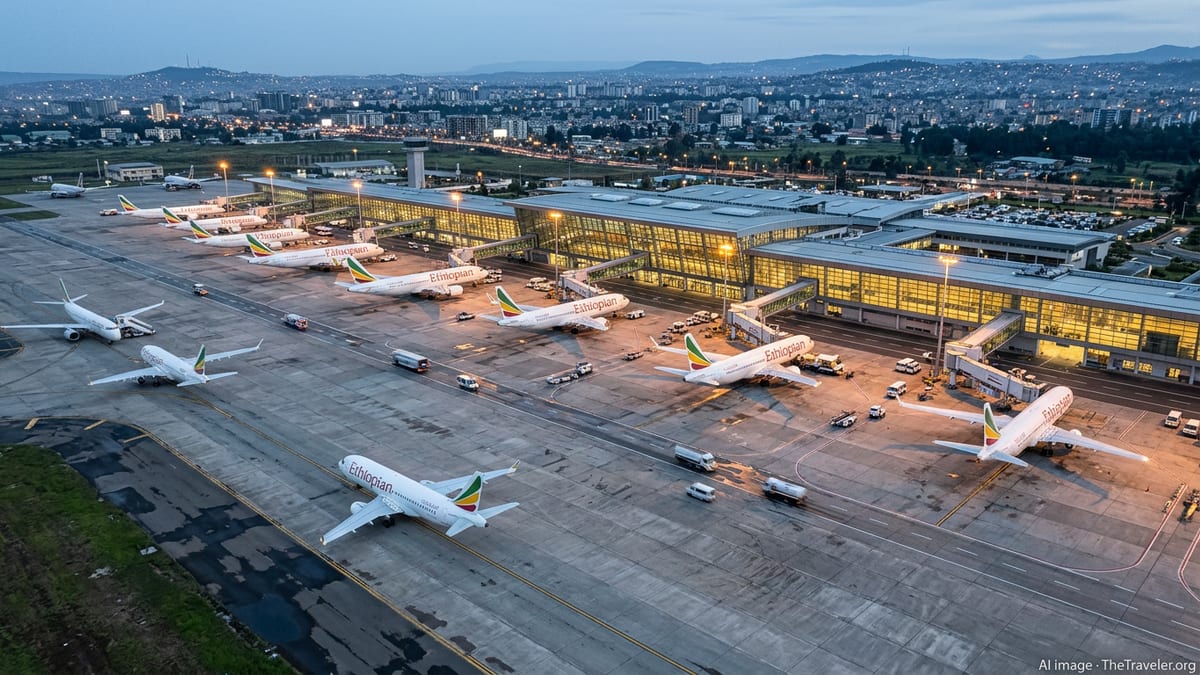
Africa’s Next Mega Hub Rises Outside Addis Ababa
Planned near the town of Bishoftu, about 50 kilometers southeast of Addis Ababa, the new airport is designed to complement and ultimately overtake Addis Ababa Bole International as Ethiopian Airlines’ main global hub. Project documents and recent assessments describe Bishoftu International Airport as one of the largest aviation investments on the continent, with an estimated total cost of around 12.5 billion dollars and phased construction over more than a decade.
The first phase is expected to deliver an initial capacity of about 60 million passengers per year, with long term plans rising to around 110 million travelers annually. That would place Bishoftu in the same league as the world’s busiest airports and far ahead of current African competitors, positioning Ethiopia as a primary transfer point between Africa, Asia, Europe, the Middle East, and North America.
For Ethiopian Airlines, already one of Africa’s most profitable and expansive carriers, the project is framed as essential to its 2040 growth strategy. Publicly available information from the airline and development lenders indicates that the current Bole hub is approaching its upper limit for passenger and cargo growth, especially during peak banked connection waves, giving momentum to the shift toward an entirely new airport city in Bishoftu.
Regional aviation studies and infrastructure reviews describe Bishoftu as part of a broader contest among African capitals to secure hub status, alongside Nairobi, Johannesburg, Cairo, Lagos, and Kigali. By opting for a greenfield mega project rather than incremental expansion alone, Ethiopia is attempting to lock in a structural advantage in the continent’s emerging air travel market.
Financing Battle Pits Washington Against Beijing
Although the project is led by Ethiopian stakeholders, the financing structure has become an arena in which U.S. and Chinese interests increasingly collide. Publicly available trade and investment briefings from the United States indicate that agencies such as the U.S. International Development Finance Corporation and the Export Import Bank of the United States have expressed strong interest in supporting Bishoftu, including preliminary discussions of multi billion dollar packages combining direct loans and political risk guarantees.
Coverage of these proposals notes, however, that some U.S. offers are explicitly conditioned on the absence of Chinese participation in the financing or construction of the airport. This stipulation reflects a wider U.S. policy effort to counter China’s infrastructure footprint in Africa, especially in strategically sensitive transport corridors that connect African markets with Asia and the Middle East.
On the other side, statements and reports from Ethiopian and Chinese outlets describe sustained talks with institutions such as the Export Import Bank of China and Chinese policy insurers on potential participation in Bishoftu’s funding. Chinese involvement would build on Beijing’s existing role in Ethiopia’s railways, industrial parks, and earlier expansions at Bole International, extending the country’s influence into what could become Africa’s primary long haul transfer hub.
The result is that a project conceived primarily as an aviation and logistics upgrade is now widely portrayed as a test case for how African states navigate great power competition. Analysts note that the financing mix Ethiopia ultimately chooses could tilt future procurement, standards, and airline alliances either closer to Western or Chinese ecosystems.
Multilateral Lenders Seek Middle Ground
Alongside the U.S. and China, multilateral institutions have moved to establish a role in Bishoftu’s development, seeking to present the project as a model for shared risk and diversified partnerships. The African Development Bank announced a mandate to help arrange a significant portion of the project finance, including a direct loan in the hundreds of millions of dollars and efforts to crowd in commercial lenders and other development finance institutions.
Recent environmental and social assessment documents from the bank describe Bishoftu as a flagship aviation infrastructure project for the continent, with an emphasis on balancing regional connectivity gains with resettlement, environmental, and climate resilience requirements. The bank’s involvement is also viewed as an effort to set governance and transparency benchmarks for a project of this scale.
Ethiopia has simultaneously engaged with newer multilateral platforms such as the Asian Infrastructure Investment Bank, according to official summaries of meetings between Ethiopian finance officials and the institution’s leadership. Discussions referenced in those reports include potential co financing or complementary support for the airport and related logistics corridors, signaling that Addis Ababa is seeking to widen its pool of partners beyond the most visible U.S. and Chinese options.
Specialists in African infrastructure finance say that such a blended approach could mitigate single partner dependency, but it also increases the complexity of aligning procurement rules, environmental standards, and debt terms across different lenders with distinct strategic interests.
Strategic Stakes: Trade Lanes, Cargo, And Connectivity
For Ethiopia, the strategic logic of Bishoftu extends beyond passenger traffic. Air cargo has become a crucial pillar of Ethiopian Airlines’ business model, connecting African producers, particularly in horticulture and perishables, with markets in Europe, the Middle East, and Asia. Bole International already ranks among Africa’s leading cargo hubs, and planners envision Bishoftu as a next generation logistics platform capable of integrating air, road, and potentially rail connections on a far larger scale.
Studies of Africa’s infrastructure corridors highlight Ethiopia’s geographic advantage astride busy North South and East West routes. From Bishoftu, non stop or one stop flights could link secondary African cities to Asian manufacturing centers and Gulf logistics hubs more efficiently, while also giving North American and European carriers another major interline partner on the continent.
The choice of technology, standards, and financing partners will have long term implications for who benefits most from these trade flows. U.S. agencies view the hub as a potential anchor for expanding American manufacturing exports, aircraft sales, and services. Chinese institutions, in turn, see the airport as a way to reinforce existing trade corridors between China and Africa and to support Chinese engineering, construction, and digital systems providers.
Regional competitors are watching closely. Policy papers and airport strategy documents from neighboring states already reference Bishoftu’s planned capacity when making the case for new terminals or runways elsewhere in East Africa, underlining how the Ethiopian project is influencing investment decisions beyond its borders.
Local Concerns And The Politics Of Scale
While much of the international attention has focused on geopolitics and finance, the project is also reshaping the landscape around Bishoftu itself. The area, long known as a lakes district and home to Ethiopia’s air force base and industrial facilities, is undergoing a transition as large tracts of land are earmarked for runways, terminals, logistics parks, and an associated airport city.
Environmental and social impact assessments prepared for lenders describe extensive resettlement and livelihood restoration programs for communities affected by land acquisition. These documents outline compensation, new housing, and support for economic activities intended to offset disruption, though civil society commentary highlights concerns about implementation timelines, consultation quality, and the cumulative pressure on local ecosystems.
Economists and urban planners are also debating the opportunity cost of concentrating such a large share of public and external financing on a single mega project. Some independent analysis argues that, if managed well, the airport city could catalyze manufacturing, tourism, and service sector growth, while others warn that cost overruns, demand shortfalls, or governance challenges could strain Ethiopia’s public finances and divert attention from smaller scale connectivity upgrades across the country.
For now, the Ethiopian government and Ethiopian Airlines present Bishoftu as a long term bet on the country’s role in global aviation and trade. As negotiations with U.S., Chinese, and multilateral financiers continue, the project sits at the intersection of local development aspirations and shifting international power dynamics, making it one of the most closely watched airport ventures anywhere in the world.